Highlights

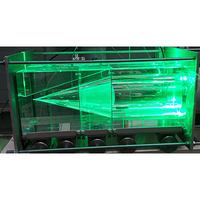
Tumbling elimination induced by permeability: An experimental approach

J. Sánchez-Rodríguez and F. Gallaire

Phys. Rev. Fluids 10, 013904 (2025) - Published 21 January, 2025

Archetypal falling behaviors of impervious objects are classified into four modes: fluttering, tumbling, steady descent, and chaotic motion. We present in this paper an experimental result of stability induced by porosity and permeability. We discover that by drilling different porosity patterns, we can avoid tumbling and chaotic behavior in plates that, due to their inertia and Reynolds values, should tumble while falling according to the regime diagram of impervious plates. Instead, the majority of the plates flutter and a few even descend steadily.

Transition time of a bouncing drop

Yahua Liu, Seyed Ali Hosseini, Cong Liu, Milo Feinberg, Benedikt Dorschner, Zuankai Wang, and Ilya Karlin

Phys. Rev. Fluids 10, 013602 (2025) - Published 16 January, 2025

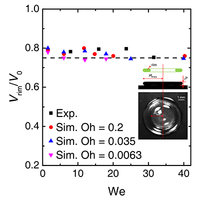
Drops impacting superhydrophobic surfaces have a rim-lamella structure at maximum spreading. The volume ratio of these two components is shown to be Weber-independent and related to a new Weber-independent characteristic time, the transition time. Volume ratios from experiments and simulations at different Ohnesorge numbers are shown.

Experimental study of the Richtmyer-Meshkov instability in spherical geometry

Mathieu Brasseur, Georges Jourdan, Christian Mariani, Diogo C. Barros, Marc Vandenboomgaerde, and Denis Souffland

Phys. Rev. Fluids 10, 014001 (2025) - Published 6 January, 2025

An experimental investigation of the Richtmyer-Meshkov instability is conducted in spherical geometry where the displacement and the growth of the perturbations at the interface are given and compared to numerical simulations and new theoretical predictions. The results show that the instability amplitude initially grows, stabilizes, and then reduces before the arrival of the reflected shock wave. The theoretical model developed here agrees well with the experiments, although a time shift is observed in the stabilization regime. Furthermore, we show that convergent Rayleigh-Taylor effects are the main stabilizing mechanisms, and that compressibility has a negligible effect.

Resonance and damping in drop-cantilever interactions

Crystal Fowler, Rehan Marshall, Maeji Son, and Sunghwan Jung

Phys. Rev. Fluids 9, 123605 (2024) - Published 23 December, 2024

Droplet and cantilever systems are often studied to further applications for energy-harvesting technologies and to model the leaf-raindrop dynamics. This paper examines the interplay between the droplet and cantilevers of varying length by measuring the oscillation frequency, phase shift, maximum displacement, and damping coefficients. There is a significant difference in the measured values when resonance happens between the droplet and cantilever of a certain length. At the cantilever resonance length, high damping coefficients are attributed to the opposing inertial forces of the droplet and cantilever.

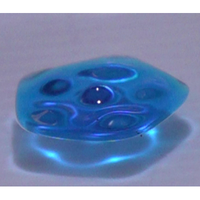
Theoretical and experimental investigation of the shapes formed by floating droplets excited with Faraday waves

L. Mazereeuw

Phys. Rev. Fluids 9, 124404 (2024) - Published 19 December, 2024

When the Faraday instability is induced in floating droplets in a viscous bath, a wave radiation pressure is exerted on the droplet boundary, causing it to evolve until a new equilibrium shape is reached. Different shapes are obtained by varying the forcing amplitude and frequency, though the system is highly hysteretic. We develop a theoretical model for the time evolution of the droplet boundary through the separation of timescales, with a strong agreement between the predicted equilibrium profiles and experimental observations.

Influence of freestream turbulence and porosity on porous disk-generated wakes

M. Bourhis and O. R. H. Buxton

Phys. Rev. Fluids 9, 124501 (2024) - Published 9 December, 2024

This paper uncovers how freestream turbulence (FST) affects the wakes of porous discs with varying porosities, often used as wind turbines surrogates in wind tunnel studies. Low-porosity disks behave similarly to solid bodies in terms of entrainment behavior and scaling laws. FST reduces both wake growth and entrainment rates in the far wake, with turbulence intensity and length scale playing distinct roles. Intriguingly, as porosity increases, these “solid body” FST effects gradually diminish and are reversed above a critical porosity. This study also sheds light on the influence of disc porosity and FST on the presence of equilibrium and nonequilibrium turbulence in the wakes.

Momentum deficit and wake-added turbulence kinetic energy budgets in the stratified atmospheric boundary layer

Kerry S. Klemmer and Michael F. Howland

Phys. Rev. Fluids 9, 114607 (2024) - Published 20 November, 2024

As wind turbines increase in scale and are deployed in diverse atmospheric conditions, understanding wake dynamics in stratified atmospheric boundary layers becomes critical. This study uses large eddy simulations to analyze the mechanisms that govern wake momentum deficit and added turbulence kinetic energy transport in stable and neutral atmospheric boundary layers. Findings reveal that dynamics are strongly influenced by effects of stratification on the atmospheric inflow, rather than buoyant forcing, and the dependence of wake-added turbulence on stability. These insights can guide new models that better predict wakes across conditions, contributing to more efficient wind power.

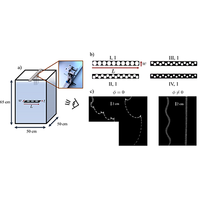
Large-scale turbulent pressure fluctuations revealed by Ned Kahn's artwork

J. Zhang and S. Perrard

Phys. Rev. Fluids 9, 114604 (2024) - Published 14 November, 2024

Ned Kahn’s artwork “Kinetic Façade” is composed of thin aluminium plates covering the entire façade of a building. When the wind blows, the panels ripple and form large scale patterns traveling downstream. We perform video analysis and laboratory experiments on a one-dimensional pendulum chain immersed in a turbulent flow. Thanks to our reduced model, we identify the mechanisms that generate the patterns on the facade: the turbulent flow carries pressure fluctuations which actuates each thin plate. Ned Kahn’s original idea, revealing the invisible aspect of the wind, now finds a scientific ground.

Clinching 1/2 scaling: Deciphering spreading data of droplet impact

Yufei Ma and Haibo Huang

Phys. Rev. Fluids 9, 113601 (2024) - Published 8 November, 2024

Although the scaling law We1/2 where We is the Weber number for describing the maximum spreading of an impacting drop in the capillary regime has been validated by subsequent works, the We1/4 scaling persists in the literature. We found not only viscous dissipation but also the initial diameter result in the gap. Taking the initial diameter and wettability into account, a generalized scaling for the drop’s maximum spreading is established, showing excellent agreement with data for both low and relatively high We.

Leidenfrost jets

D. Paulovics, T. Frisch, C. Raufaste, and F. Celestini

Phys. Rev. Fluids 9, L112001 (2024) - Published 5 November, 2024

A sub-millimetric jet impinges on a substrate heated above the boiling point of the liquid. Under specific conditions - determined by the jet radius, substrate temperature, and the impinging angle - a “Leidenfrost jet” can be observed, bouncing off the surface. Surfing on its own vapor layer, this jet rebounds without making any contact with the heated substrate.

Analytical prediction for the steady-state behavior of a confined drop with interface viscosity under shear flow

F. Guglietta and F. Pelusi

Phys. Rev. Fluids 9, 103603 (2024) - Published 30 October, 2024

The present study provides a comprehensive analytical prediction for the steady-state deformation and inclination angle of drops under shear flow, considering both confinement and interface viscosity. By merging the theories for confined and unconfined drops, the model accurately captures the behavior across a wide range of conditions, offering a robust tool for applications in complex fluids. Immersed boundary-lattice Boltzmann simulations were performed to further validate the results.

Spatio-temporal instabilities of blood flow in a model capillary network

Mathieu Alonzo, Nathaniel J. Karst, Thomas Podgorski, John B. Geddes, and Gwennou Coupier

Phys. Rev. Fluids 9, 104401 (2024) - Published 22 October, 2024

The blood microcirculatory network is where nutrients, respiratory gases, and metabolic waste products are exchanged with the neighboring cells. Here, these components can take unexpected routes to get from one point to another. Whereas a simple fluid would follow the most direct route, we show in our in vitro experiments that red blood cells, which are responsible for oxygenating the body, can intermittently take side routes and remain in the network longer than expected. These observations, backed up by associated modeling, raise new questions regarding hypoxia mechanisms in organs, even under apparently healthy conditions.

Blocking effects on mean ocean currents by offshore wind farm foundations

Jeffrey R. Carpenter and Anirban Guha

Phys. Rev. Fluids 9, 103802 (2024) - Published 11 October, 2024

Development of offshore wind farms in shallow coastal seas is becoming increasingly widespread, and raises questions as to the potential extent of hydrodynamic impacts to the oceanic environment. This work presents an idealized analytical model to study the potential alterations to the mean ocean currents due to the presence of the offshore wind farm foundation structures and their increased friction. We find that this “blocking” of ocean currents has a simple scaling that depends primarily on the ratio of the friction inside and outside the farms, and depending on the farm characteristics can either be negligible, or change mean currents by around 10% in existing farms in the North Sea.

Solvent mixing and ion partitioning effects in spontaneous charging and electrokinetic flow of immiscible liquid-liquid interface

Yunfan Huang and Moran Wang

Phys. Rev. Fluids 9, 103701 (2024) - Published 9 October, 2024

Liquid-liquid interfaces typically exhibit a diffuse nature, with an interface thickness that is comparable with the electric double layer under practical conditions. In two-liquid electrokinetics, effects of solvent mixing become particularly pronounced when imbalanced ion partitioning dominates the interface charging, which is intricately linked to the interfacial physico-chemical properties. Our study presents a holistic framework to incorporate the general charging mechanisms into a diffuse interface description, paving the way for future research in two-liquid physico-chemical hydrodynamics, where the constitutive relationship of two-liquid interface charging is pivotal.

Breaking of a floating particle raft by water waves

Louis Saddier, Ambre Palotai, Mathéo Aksil, Michel Tsamados, and Michael Berhanu

Phys. Rev. Fluids 9, 094302 (2024) - Published 27 September, 2024

We investigate breaking and fragmentation of a floating particle raft by water waves. These laboratory experiments study the fragmentation of a two-dimensional floating solid by surface waves, a situation that also occurs for sea ice. We simultaneously observe oblique fractures on the intact part of the raft and polygonal fragments of different sizes. Observed from above, the graphite raft appears dark and the water white. The wavelength is very large in front of the raft thickness. The image size is 20x20 cm² and the time 114 s after the onset of the waves.

Dispersion of inertial particles in turbulent canopy flows with buoyant and nonbuoyant plumes

Hayoon Chung, Laura K. C. Sunberg, Erika MacDonald, Nicholas T. Ouellette, and Jeffrey R. Koseff

Phys. Rev. Fluids 9, 093801 (2024) - Published 25 September, 2024

Motivated by the application of spot-fire spread, this experimental study explores how various wildfire-relevant flow properties impact particle transport. We used model firebrands and a model wildfire system to examine the role of plume momentum and buoyancy, canopy-induced turbulence, and canopy wake dynamics on the transport and landing of inertial particles. Our findings suggest that both plumes and canopy turbulence significantly impact the mean transport and dispersion of the particles. Our study emphasizes the need to better parameterize these flow properties in firebrand transport models.

Intrinsic permeability of heterogeneous porous media

Wenqiao Jiao, David Scheidweiler, Nolwenn Delouche, Pietro de Anna, and Alberto Guadagnini

Phys. Rev. Fluids 9, 094102 (2024) - Published 20 September, 2024

The traditional Kozeny-Carman formulation does not predict the permeability of complex porous structures. We develop an original model for the characterization of the intrinsic permeability of porous media with spatially heterogeneous pore size distributions. By conceptualizing the medium as a collection of smaller-scale porous units in series, our model captures spatial variability and aligns with microfluidics experiments on designed complex structures. Our model offers a fresh perspective beyond the traditional Kozeny-Carman formulation, enhancing our understanding of how pore size variability influences the overall medium permeability.

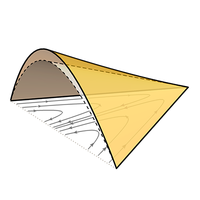
Waves beneath a drop levitating over a moving wall

Kyle I. McKee, Bauyrzhan K. Primkulov, Kotaro Hashimoto, Yoshiyuki Tagawa, and John W. M. Bush

Phys. Rev. Fluids 9, 093603 (2024) - Published 17 September, 2024

This study elucidates the origin of traveling waves observed on the lower surface of a levitating droplet rolling on a rotating cylindrical drum. The research begins with a simplified model of the lubrication flow beneath the droplet and examines the linear stability of this base state to Tollmien–Schlichting-type perturbations. By solving the Orr-Sommerfeld equation perturbatively, the study predicts the wavelength and phase velocity of the most unstable mode, yielding good agreement with experimental observations.

Coupled volume of fluid and phase field method for direct numerical simulation of insoluble surfactant-laden interfacial flows and application to rising bubbles

Palas Kumar Farsoiya, Stéphane Popinet, Howard A. Stone, and Luc Deike

Phys. Rev. Fluids 9, 094004 (2024) - Published 13 September, 2024

We present an open-source Direct Numerical Simulation framework to analyze surfactant-laden flows. With adaptive mesh refinement and parallelization, this tool enables researchers to explore the effects of surfactants on interfacial flows, particularly their impact on rising bubbles. The simulations show that surfactants slow down bubbles and alter their trajectory. Such numerical frameworks on the solutal Marangoni effect are crucial for understanding and predicting the behavior of multiphase flows in natural and industrial processes.

Weak-inertial effects on destabilized receding contact lines

Akhil Varma

Phys. Rev. Fluids 9, 084006 (2024) - Published 28 August, 2024
Beyond a threshold speed, the receding contact line of a partially wetting liquid on a solid substrate becomes unstable, forming a corner. At these speeds, one expects the inertial effects near the contact line to be significant for many liquids commonly used in industrial processes. To account for it, we provide the self-similar leading-order inertial correction to the well-known Stokes solution for the interface shape and flow field near the moving contact line. Furthermore, inspired by recent experiments, we make quantitative predictions for water and liquid mercury and argue that it is essential to consider inertial contributions when modeling fast-moving contact lines.

Sign In to Your Journals Account

Filter

Section

Filter

Article Lookup

Enter a citation