5 June, 2026

It is with pride that we mark the tenth anniversary of publishing at Physical Review Fluids.

Celebrate 10 years of Physical Review Fluids with exclusive discussions with seminal authors

6 March, 2026

PRFluids is celebrating its tenth year of publication by looking back on the many exceptional research papers published by the journal. Co-Lead Editors Beverley McKeon (Stanford University) and Eric Lauga (Cambridge University) will sit down with authors whose breakthrough results published in the journal shifted the paradigm of fluid dynamics. Their discussions will touch on many aspects of the research, including what made PRFluids the ideal venue for their critical findings.

23 October, 2026

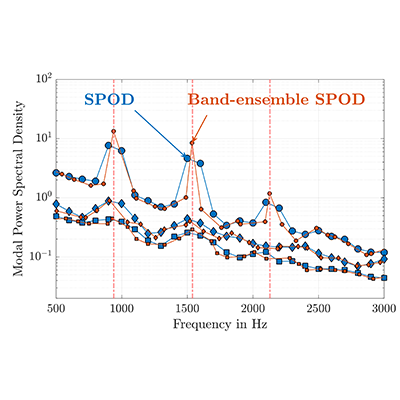
Band-ensemble Spectral Proper Orthogonal Decomposition (SPOD) computes modes from bands of neighboring Fourier modes of the full-length Fourier transform. Compared with the commonly applied Welch-based SPOD algorithm, this allows the number of modes to vary with frequency, enabling an adjustable bias–variance trade-off across the spectrum. Additionally, the resulting expansion coefficients allow precise frequency estimates to be attributed to individual modes, enabling improved detection of tonal modes in broadband–tonal flow cases.

22 October, 2026

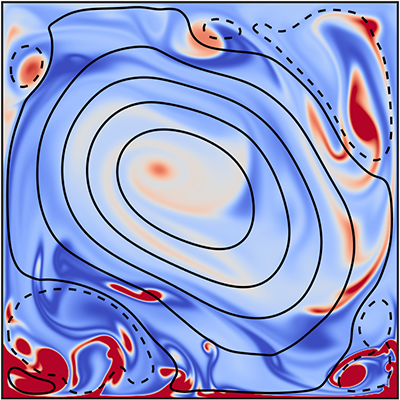
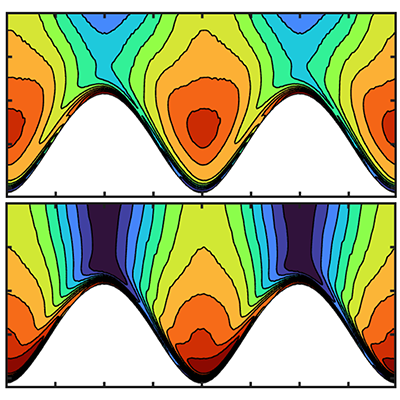
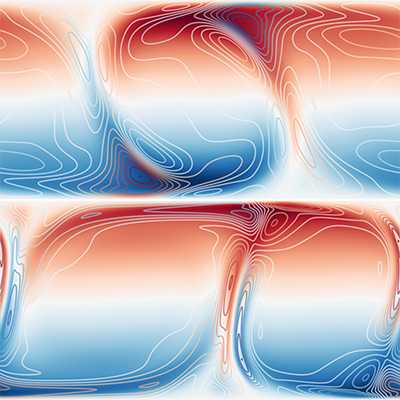
Unstable periodic orbits are thought to form the backbone of turbulence, yet their computation in thermal convection remains scarce near the onset of chaos. We compute a steady state and three families of periodic orbits in two-dimensional Rayleigh-Benárd across nearly two decades of Rayleigh number, and use Floquet analysis to characterize every bifurcation in the route to chaos. Additionally we find that all symmetries are broken before this onset, and the heat-transport scaling is unaffected throughout.

22 October, 2026

Turbulent flows contain a wide range of vortical structures, from the tiny to the large. One of the central tasks of turbulence theory is to provide a simple yet reliable means of identifying how much kinetic energy is, on average, held at each scale. Traditionally, Fourier analysis is used for this purpose. However, a decomposition into sine waves is somewhat artificial. Here we provide a real-space diagnostic, quite unrelated to Fourier space, which measures the scale-by scale distribution of kinetic energy.

22 October, 2026

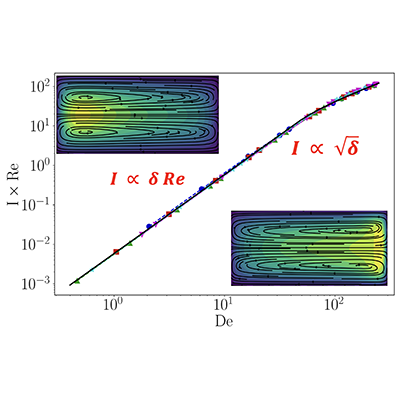
This study presents a numerical investigation of flow in a curved channel with a low height-to-width aspect ratio. By independently varying the Reynolds number, channel curvature and aspect ratio, we identify two distinct scaling laws for the intensity of secondary flows, each corresponding to a different flow regime: one governed by a balance between viscous and curvature forces, and the other by an equilibrium between inertial and centrifugal forces.

22 October, 2026

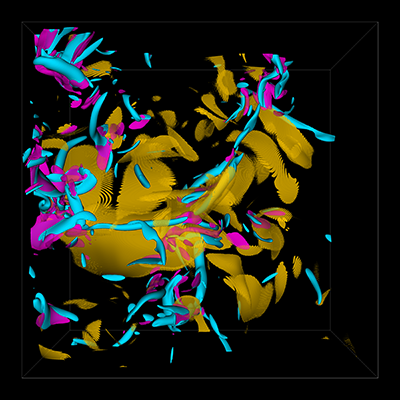
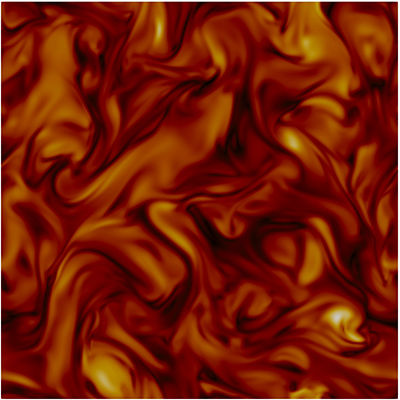
What governs the formation of scalar gradients essential for mixing in turbulent flows? Using high-resolution Direct Numerical Simulations (DNS) at high Reynolds and Schmidt numbers, we show that intense scalar gradients arise primarily from near-optimal alignment with the most compressive strain direction, rather than unusually strong strain alone. These gradients organize into thin sheets within shear layers between vortex tubes, where their amplification is ultimately arrested by molecular diffusion. Remarkably, their structure and dynamics exhibit near-universal behavior across Reynolds and Schmidt numbers, revealing a robust picture of small-scale turbulent mixing.

22 October, 2026

Horizontal convection is often modeled with a linear temperature-density relation. Two-dimensional simulations show that a density maximum, such as that of water near 4°C, can generate full-depth mixing plumes, reorganize the circulation, and enhance heat transport. An energy-budget analysis suggests that plume height controls an additional potential-energy transfer associated with this enhancement.

22 October, 2026

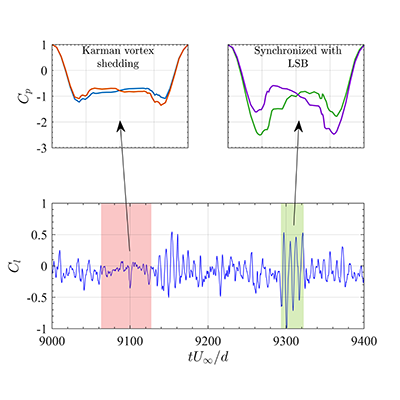
A circular cylinder undergoes drag crisis beyond the critical Reynolds number via formation of a laminar separation bubble (LSB) downstream of each shoulder. We investigate the dynamics of these LSBs at low intensity free stream turbulence (FST). We report, for the first time, a synchronization between formation of LSB and the Karman vortex shedding for a stationary cylinder, albeit only at the lowest FST investigated. Increasing the FST to mimic the background FST in some of the past studies completely alters the transition dynamics, as several subregimes observed at the lowest FST disappear at higher FST. The findings provide a valuable benchmark of unperturbed transition dynamics.

22 October, 2026

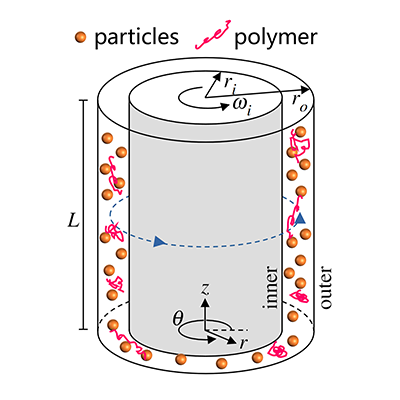
Particles and drag-reducing polymers can each strongly alter turbulent transport, but what happens when the two act together? Experiments in Taylor-Couette turbulence uncover a transition from particle-dominated to polymer-dominated dynamics as flow strength increases. The coupling is also shape dependent, with spherical particles producing a stronger drag response than oblate and prolate particles.

21 October, 2026

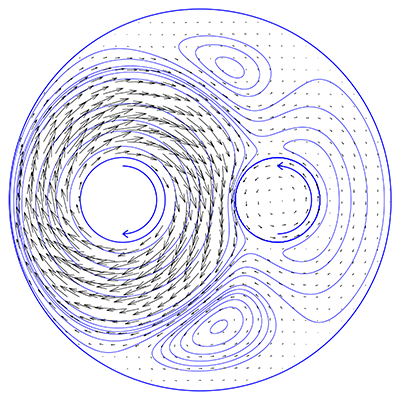
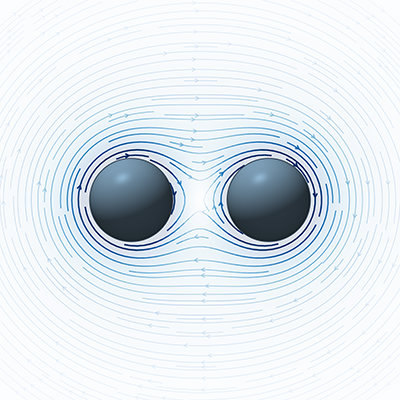
A spinning rotor can drive a free neighbor to turn either against it, like a gear, or with it, like a belt, as a recent quasi-two-dimensional experiment showed. Using direct numerical simulations of strictly planar flow, we compute the torque-free spin of the passive rotor across gaps, Reynolds numbers, and corral sizes. The planar model reproduces the observed gap-driven sequence of vortex rearrangements and the order of magnitude of the coupling, and it contains an inertia-driven spin reversal, but at a narrower gap than in the experiment, leaving finite-depth effects as candidate contributors to the difference.

21 October, 2026

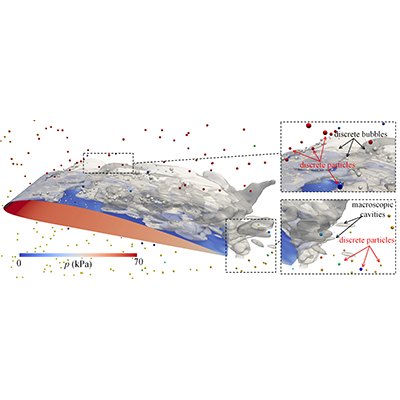
Sand-laden cavitation spans solid particles, macroscopic vapor cavities, and microbubbles, yet existing simulations rarely resolve their coupled multiscale dynamics. We develop a two-way coupled Eulerian-Lagrangian framework that simultaneously captures cavity evolution and discrete particle-bubble motion. The simulations reveal that sediment particles accelerate cavity shedding and weaken the re-entrant jet, while increasing the Hinze scale by reducing turbulent dissipation and suppressing the breakup cascade from large to small bubbles.

21 October, 2026

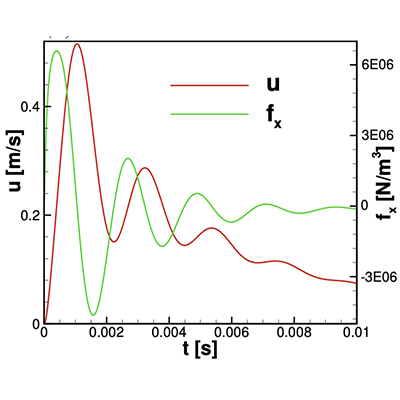
Standing Alfvén waves develop in a poloidal channel of a liquid-metal blanket of a fusion reactor during the first few milliseconds of a plasma disruption event. The waves are characterized by high-frequency oscillations of velocity, electric current, and induced magnetic field, with Lorentz forces exceeding, in some cases, 109 N/m3.

21 October, 2026

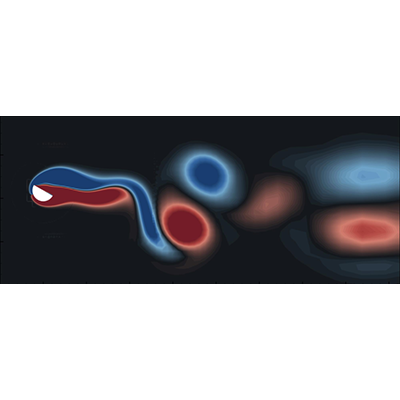
Flow-induced vibrations are often classified by frequency synchronization, but this alone can obscure changes in the coupling between fluid forces and structural motion. Simulations of an inclined D-section cylinder at low Reynolds number reveal a finite interval in which lift and motion separate in frequency and their phase difference wanders. This transitional response connects lock-in to low-amplitude, nearly antiphase motion without developing into sustained galloping.

21 October, 2026

Vortex stretching is regarded as the engine of three-dimensional turbulence, yet the separate roles of its two components, vorticity amplification and vortex tilting, remain unclear. By selectively suppressing vorticity amplification in the Navier–Stokes equations, we show that it is essential for the forward energy cascade and the dissipative anomaly: without it, energy dissipation vanishes at high Reynolds number and the flow switches to a forward enstrophy cascade with anomalous enstrophy dissipation. Yet intermittency and multifractality persist, revealing that the geometric reorientation of vortex lines by tilting alone is sufficient to sustain them.

21 October, 2026

Motivated by the underground storage of hydrogen and CO₂, we use analytical approximations to study the evolution of a gas current injected into porous, axisymmetric, dome-shaped channels. Unlike flow in flat channels, where injection dominates, flow in bell-shaped channels can remain influenced by buoyancy. In parabolic-shaped channels, slopes steepen with distance from the injection point, leading to distinct stages of spreading with different flow patterns along the channel. These results show how geological curvature can alter gas spreading and suggest that, under suitable conditions, parabolic-shaped aquifers may offer more efficient use of storage volume than flat aquifers.

21 October, 2026

In Newtonian turbulence, velocity fluctuations exhibit a complex, multifractal hierarchy of scaling laws. Here in polymeric turbulence, experiments reveal a simpler, bifractal-like scaling for longitudinal velocity structure functions in the polymer-dominated elastic range, with distinct branches for low- and high-order moments. The results suggest that sheetlike flow structures govern the rare, intense fluctuations, providing insight into how polymer elasticity reshapes turbulent intermittency.

19 October, 2026

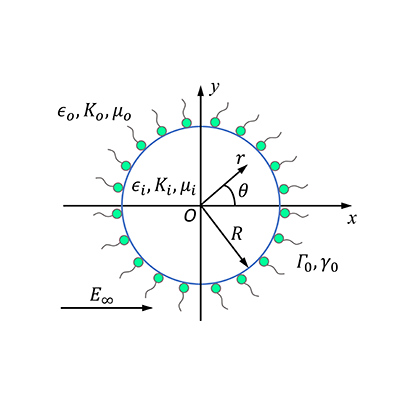
Viscous leaky-dielectric drops in electric fields can deform, translate, and spontaneously rotate through the Quincke rotation instability. We develop a three-dimensional nonlinear model coupling charge relaxation, convection, deformation, and electrohydrodynamic interactions to study the dynamics of a pair of drops. The model predicts spiraling trajectories, attraction, repulsion, and sustained pair translation, and shows how interactions can qualitatively alter the onset of Quincke rotation.

16 October, 2026

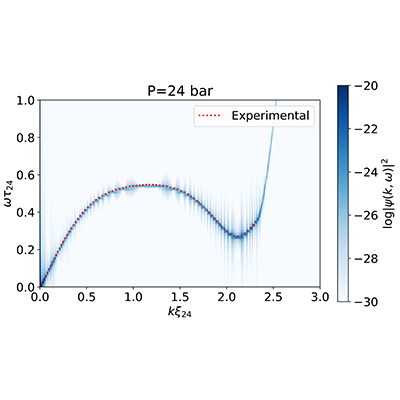
This study uses a nonlocal Gross-Pitaevskii model to probe how pressure and obstacle size govern roton emission and vortex nucleation in superfluid ⁴He — the first single-framework analysis of these critical velocities across pressures up to solidification (~25 bar). By tuning interaction parameters to match experimentally measured dispersion curves at each pressure, the authors compute both critical velocities for moving disks, mapping their dependence on pressure and size. The results show that the gap between the two critical velocities widens with increasing pressure, suggesting that roton emission should be easier to observe experimentally at higher pressures.

15 October, 2026

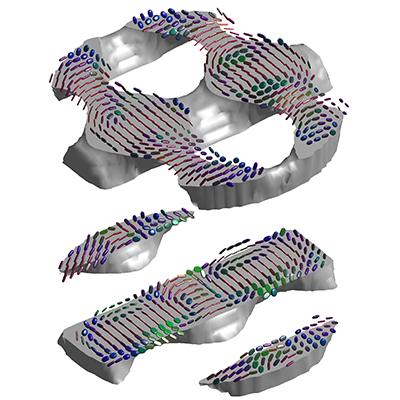
Time-resolved spiral magnetic resonance velocimetry is used to characterize turbulence in a Schwarz Diamond triply periodic minimal surface monolith. Turbulent energy spectra show that the pore geometry limits the maximum eddy size, and that Kolmogorov -5/3 scaling emerges for Reynolds numbers above 2000. Reynolds stress tensor maps reveal that local turbulence anisotropy is imposed by the channel architecture.

15 October, 2026

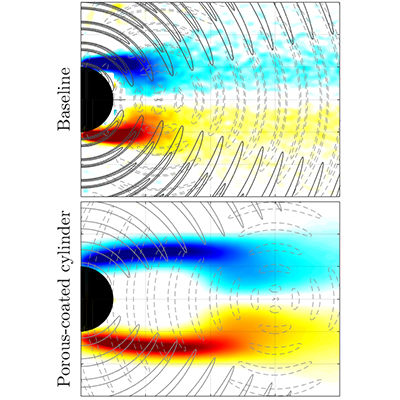
Flow-induced noise from circular cylinders involves both surface-associated dipole and wake-associated quadrupole radiation, but their coupling and relative contributions remain difficult to resolve experimentally. Here, synchronized measurements of wake velocity, surface pressure, and far-field sound are combined through coherence analysis to elucidate these source mechanisms for baseline and porous-coated cylinders. The baseline noise is predominantly dipole-related, whereas the porous coating produces a mixed dipole–quadrupole contribution, revealing how modified wake dynamics and source coupling lead to substantial noise reduction.

14 October, 2026

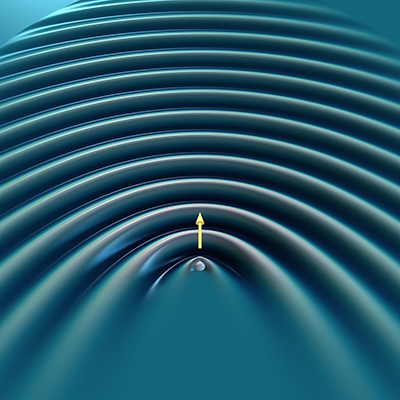
The Kelvin wake behind a ship and the herringbone waves behind a rising sphere in stratified water are classic triumphs of Lighthill’s dispersion-surface theory. We carry this approach into odd viscous liquids, whose non-dissipative, time-reversal-breaking stresses arise in chiral active matter, electron fluids and magnetized gases, yet whose viscosity coefficients remain almost entirely unmeasured. We obtain closed-form wave-crest shapes around bodies translating through two- and three-dimensional odd liquids, with or without rotation, and show that the crest radius provides a direct experimental readout of the odd-viscosity coefficients.

14 October, 2026

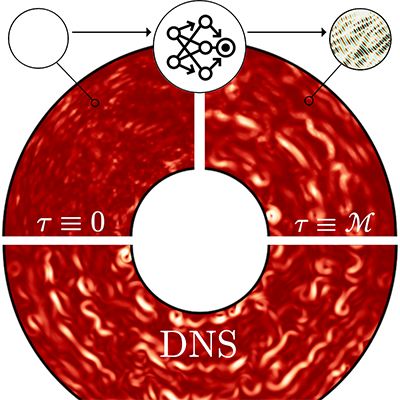
Numerical simulations of rapidly rotating planetary flows must bridge a wide range of scales, yet resolving the smallest scales over long times remains prohibitively costly. Machine-learning subgrid models offer a promising route, but online training has so far been demonstrated mainly in idealized domains without boundaries. Here, we design models for quasi-geostrophic turbulence in a bounded domain that outperform classical alternatives in both accuracy and computational efficiency. Remarkably, training over just one turnover time is sufficient to reproduce long-term phenomena such as zonal-jet migration, enabling simulations substantially beyond the reach of direct numerical resolution.

14 October, 2026

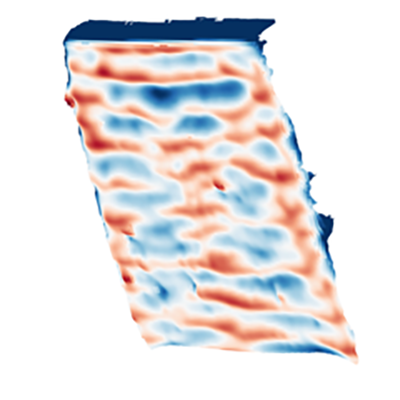
Ice melting in saline water produces complex surface patterns relevant to glacier and iceberg melting in the ocean. We experimentally identify five distinct ice-surface morphologies controlled by water salinity and ice inclination, including scalloped, channelized, and incurved structures. Using three-dimensional surface measurements, we show how salinity controls the size and uniformity of scallops and show a non-monotonic dependence of the melt rate on salinity, while inclination has little effect on the overall melt rate.

14 October, 2026

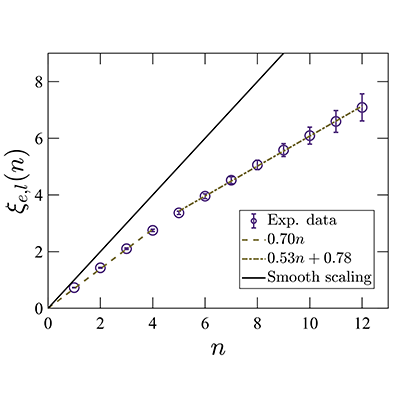
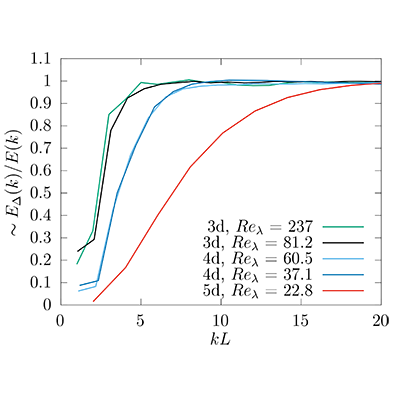
Changing dimension above the three spatial ones has helped physicists understand quantum field theories, such as with the Wilson-Fisher renormalization group fixed point. This motivated us to probe fluid turbulence through Direct Numerical Simulation (DNS) by increasing the spatial dimensionality from 3 to 6, which we found decreased the chaotic aspects of the turbulence, suppressing them to smaller length scales (shown here by the ratio of correlated to uncorrelated energy). Our 6D simulations, though at low Reynolds number, were not chaotic at all, despite behaving more like chaotic 3D than low Reynolds number 3D simulations. The study motivates further and larger future simulations.

14 October, 2026

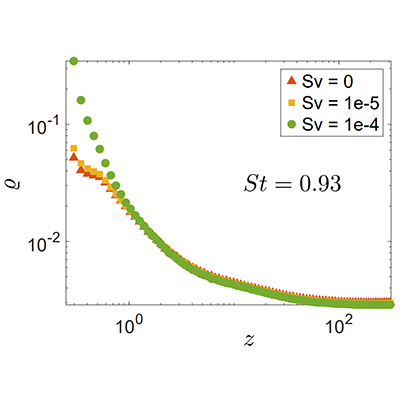
Previous work showed that even when the settling parameter is small, settling strongly influences near-wall particle concentrations. We show that this profound effect depends strongly upon the wall orientation and particle boundary conditions. We also show that for vertical channel flows, turbulence suppresses, rather than enhances, the settling velocity of the particles close to the wall due to the preferential sampling of low-speed streaks in the boundary layer. The settling is also hindered due to a turbophoretic drift-like mechanism. Further away from the wall, the preferential sweeping mechanism leads to enhanced settling velocities.

14 October, 2026

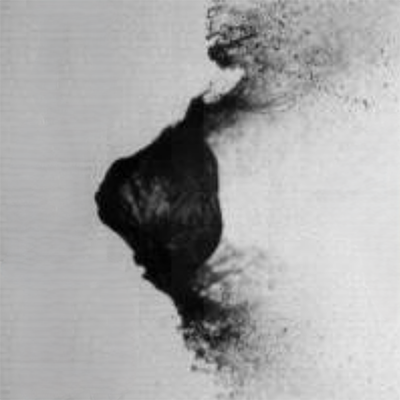
Aerodynamic breakup is well established for conventional droplets, however, remains poorly understood when evaporation alters droplet composition and interfacial mechanics. We show how evaporation-driven sol–gel transition and nanoparticle agglomeration transform a nanofluid droplet into gelatinous and solid-shelled states, shifting shock-induced atomization from conventional breakup to new shell-mediated fragmentation modes involving rupture, delamination, and brittle fracture. The resulting framework links transient shell evolution and mechanics to breakup pathways in evaporating particle-laden droplets, relevant to spray drying, coatings, additive manufacturing, and pharmaceutical aerosols.

14 October, 2026

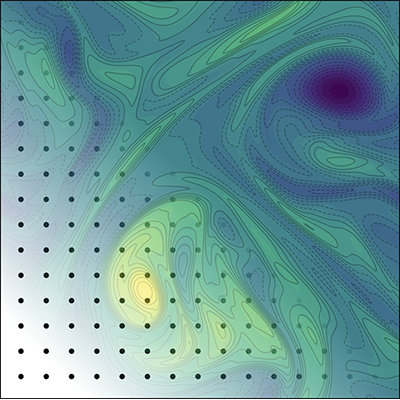
In the study of turbulence, we often rely on the interpretation of experimental measurements to probe the dynamics of the underlying flow. The conventional data-assimilation approach directly maps from the measurements to the flow state, or state space. We ask the question: can our ability to observe the turbulence be significantly improved by first mapping from the measurements to a pre-designed latent space, and subsequently to the full turbulent field? We demonstrate that this approach can lead to an accuracy improvement of two orders of magnitude across a range of scales compared to existing techniques for the interpretation of turbulence measurements.

14 October, 2026

At high wave age, curvature and advection-flux errors that do not vanish under grid refinement produce interfacial velocities comparable to the air-side flow itself, distorting the phase-averaged velocity and wave-coherent stress used to infer momentum transfer. Such artifacts can be mistaken for genuine wind-wave physics.

13 October, 2026

Understanding mass transfer across particle-laden interfaces is crucial for the design of particle-stabilized emulsions for controlled release and chemical conversion. We show using experiments and theoretical modeling, that the particle layer generally has a negligible effect in the transport dynamics, irrespective of the particle size. Only at extreme surface coverages beyond the close-packing limit, is the particle layer expected to significantly hinder transport. These findings explain why diffusion can persist through particle-stabilized interfaces and pave the way to controlled transport in emulsion-based systems.

13 October, 2026

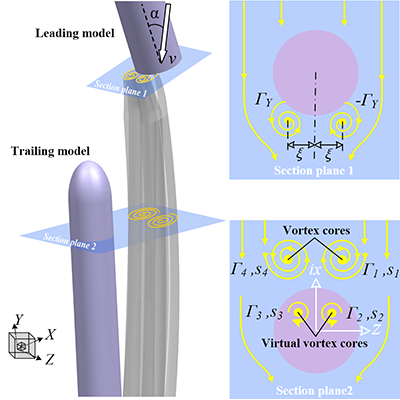
Wake interference widely occurs in maneuvering vehicle groups. The ladder-shaped packets consisting of co-rotating hairpin vortices are observed behind a slender vehicle at a small angle of attack, whose formation and breaking mechanisms, distinct from those at zero and large angles of attack, are clarified. These vortices affect the following vehicle by reducing the windward–leeward pressure asymmetry. A theoretical model based on potential theory and the slicing method predicts the hydrodynamic forces and moments on the two bodies, including cross force, axial force, and additional contributions induced by body acceleration and shed vortices, along with their axial distributions.

9 October, 2026

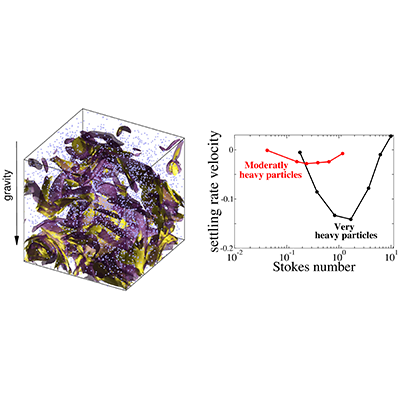
Using Eulerian-Lagrangian simulations, we investigate how particle-to-fluid density ratio influences solid particle settling in homogeneous turbulence, showing that lighter particles exhibit smaller settling rate velocities. While very heavy particles are governed by the sampled fluid velocity, moderately heavy particles decorrelate from the fluid under two-way coupling due to an added-mass force balancing the drag. Analysis reveals that increasing particle inertia broadens this velocity decorrelation, while nonlinear drag enhances departures from force equilibrium. Finally, we propose a method to account for particle self-disturbance and force-spreading operator issues in two-way coupling.

9 October, 2026

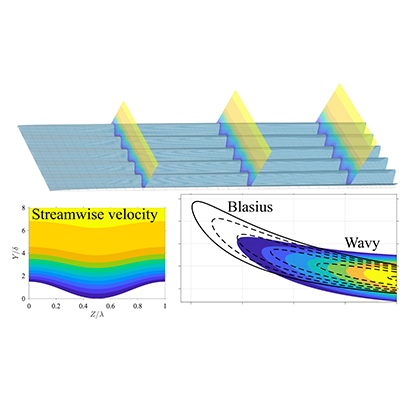
Spanwise-periodic surface patterns are attractive passive devices for damping Tollmien–Schlichting waves and delaying transition, but reported effects are fragmented and at times contradictory. Simulations and biglobal stability analysis show that spanwise sinusoidal waviness on a flat plate, growing with the boundary-layer thickness, raises the critical Reynolds number yet moves transition upstream. The culprit is wall curvature: in the concave valleys it makes the velocity profiles inflectional even at zero streamwise pressure gradient, increasingly so as the waviness grows. The results turn these competing effects into quantitative guidelines for designing wavy surfaces.

7 October, 2026

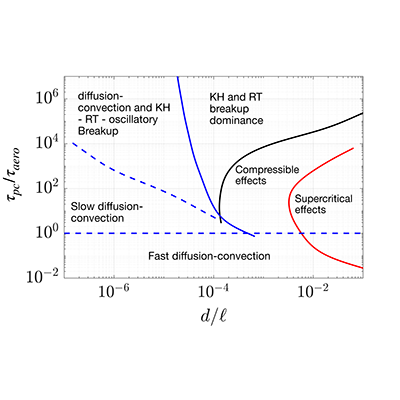
Droplet behavior in high-speed and detonative flows is governed by tightly coupled aerodynamic, thermodynamic, and phase-change processes, yet a unified framework for classifying these interactions is still lacking. This work introduces a physics-based regime diagram using two dimensionless groups that quantify thermodynamic loading and the competition between phase-transition and aerodynamic time scales. The framework connects shock–droplet interactions, liquid-fueled detonations, and rotating detonation engines, identifying conditions that favor breakup, rapid phase transition, and sustained detonation coupling.

7 October, 2026

We carry out a second‑order perturbation analysis for the equilibrium deformation of a surfactant‑laden liquid column under a weak uniform transverse electric field. Our analytical solution shows that surfactant coverage and the elasticity number alter steady‑state deformation indirectly via the electric capillary number, while the surface Péclet number and effective Boussinesq number exert no effect on deformation up to second‑order in the electric capillary number. Nevertheless, all surfactant‑governed dimensionless parameters substantially modify interfacial characteristics and bulk flow circulation.

7 October, 2026

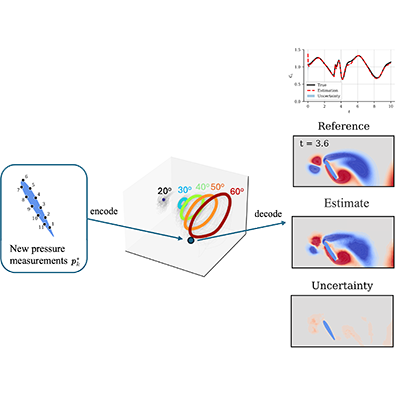
Unexpected gusts can cause rapid changes in aerodynamic flows that are difficult to detect and reconstruct in real time. We combine sparse surface-pressure measurements with ensemble Kalman filtering in a learned low-dimensional space to detect disturbances and reconstruct the evolving flow field and aerodynamic loads. The framework provides fast, uncertainty-aware estimates and remains effective for unseen gust conditions and degraded sensor configurations.

7 October, 2026

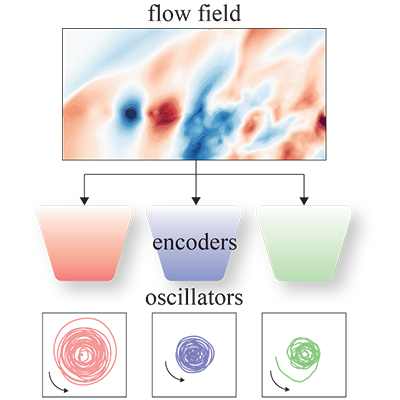
We develop a data-driven framework to model the dynamics of turbulent flows with multiple dominant frequencies based on a set of oscillators. The framework extracts oscillators that capture the dominant dynamics from the flow field data using autoencoders arranged in parallel. The dynamics of coupled oscillators are modeled by leveraging a neural ordinary differential equation, which enables accurate prediction of the multi-frequency oscillatory behavior of turbulent flows assisted by observation-based correction. We demonstrate the capability of this oscillator-based model for a three-dimensional supersonic turbulent flow over a cavity.

7 October, 2026

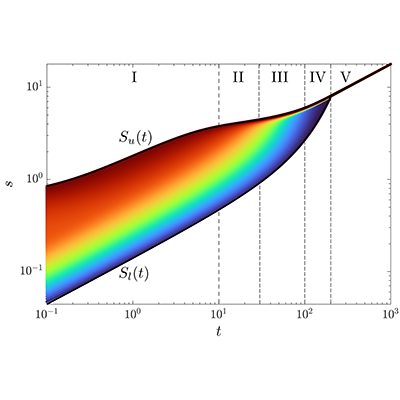
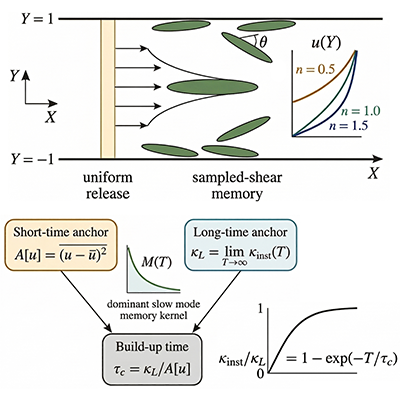
Taylor–Aris theory describes the long-time dispersion reached after transverse mixing, but finite channels often operate before this asymptotic regime is established. We develop a two-anchor, dominant-mode closure that connects the exact short-time sampled-velocity variance to the long-time Taylor enhancement through a single buildup time. Spectral benchmarks and entropic lattice Boltzmann simulations show that the closure accurately captures reduced Brownian-rod transport across power-law channel flows and rotational Péclet numbers. The resulting development times and lengths provide practical criteria for deciding when long-time dispersion models can be trusted.

7 October, 2026

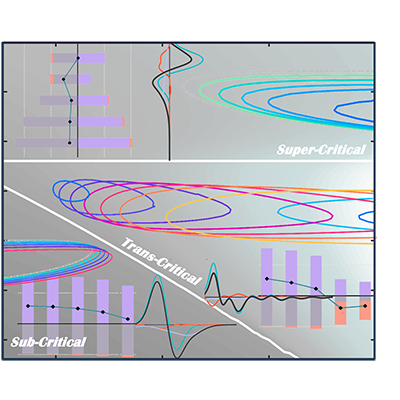
Near the pseudo-critical state, supercritical water exhibits strong thermophysical property variations with poorly understood stability consequences. Modal and non-modal analyses of plane Poiseuille flow show that non-ideality reshapes the neutral-stability landscape, producing a three-stage evolution and isolated instability islands in the trans-critical regime. Classical small-wavenumber transient-growth scaling persists outside this regime, and the fundamental lift-up mechanism remains shear driven. Non-ideal effects instead redistribute energy among shear production, thermodynamic, and viscous channels, providing a stability map and quantitative benchmarks for supercritical water flows.

6 October, 2026

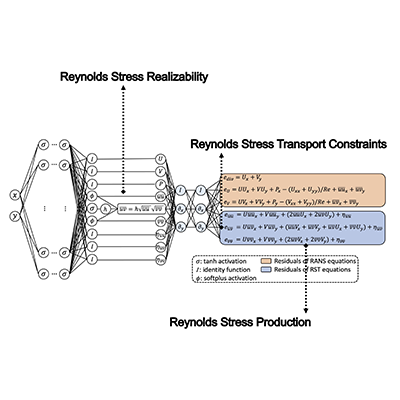
This article proposes the Reynolds stress transport nets (RSTnets) for reconstructing RANS solutions from the boundary data through embedding the Reynolds stress transport formulation via physics-informed neural networks. Different from previous works which either rely on the empirical modeling of all the unclosed terms or leave the Reynolds stress completely unmodeled, the proposed RSTnets are developed to reconstruct the flow fields in the domain based on the first- and second-order flow quantities at the domain boundary through incorporating as much physical information as possible while avoiding empirical modeling of the unclosed terms.

6 October, 2026

This manuscript presents fully developed and experimentally validated research on a ternary multicomponent droplet system, revealing how interfacial transport, phase separation, and Marangoni effects fundamentally alter cavity collapse and jet formation. By establishing new scaling laws incorporating interfacial roughness and compositional heterogeneity, it provides significant fluid mechanical insight beyond classical single-component frameworks, substantially advancing the understanding of inertial-capillary singularities in complex fluids.

6 October, 2026

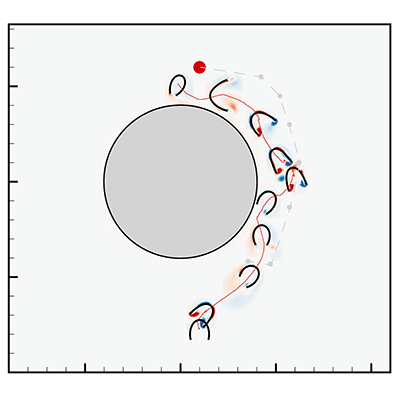
Navigating near obstacles is challenging for soft swimmers because walls reshape the surrounding flow. In two-dimensional simulations, a jellyfish-like swimmer combines local path guidance with deep reinforcement learning that uses hydrodynamic force and torque feedback. These mechanical cues enable the swimmer to exploit wall-induced flows for faster, more efficient maneuvers than a controller without this feedback. The framework also supports navigation among multiple obstacles and exploration of a model underwater cave.

6 October, 2026

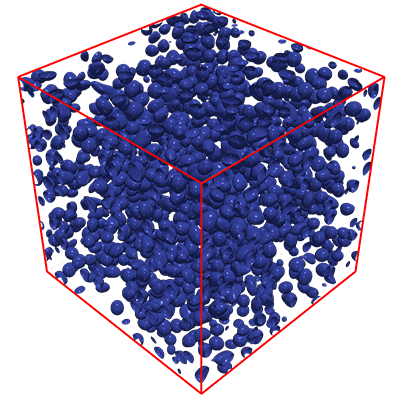
Capillary forces are usually viewed as a closed pathway that redistributes kinetic energy across scales in multiphase turbulence. We show that this picture breaks down in bubble-laden turbulence when short-range near-contact interactions become active. These interactions open an additional small-scale energy-transfer channel that compensates the residual capillary work, identifying an extended interfacial transfer as the proper energetic description.

6 October, 2026

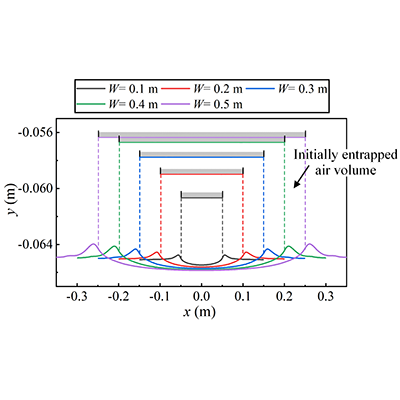
In air-cushioned flat-plate water entry, the effect of plate size on peak impact load remains unresolved. A prevailing view holds that smaller plates entrap less air, thereby weakening the buffering effect and increasing the peak load. This work numerically investigates the plate-size effect in both two and three dimensions and finds, contrary to conventional expectations, that smaller plates entrap less air yet experience lower peak loads. Further analysis reveals that the load variation is dictated by the compression dynamics of the entrapped air layer, with air-layer compression weakening as plate size decreases.

Astronomy and Astrophysics in the Physical Review

Several free-to-publish and Open Access journals from our portfolio have come together to form the Astronomy and Astrophysics Topical Group, dedicated to covering a broad range of topics in astronomy and astrophysics, from nuclear astrophysics to exoplanets and planetary atmospheres.

Sign In to Your Journals Account

Filter

Filter

Article Lookup

Enter a citation