Highlights

Edge-wave phase shifts versus normal-mode phase tilts in an Eady problem with a sloping boundary

J. Mak, N. Harnik, E. Heifetz, G. Kumar, and E. Q. Y. Ong

Phys. Rev. Fluids 9, 083905 (2024) - Published 26 August, 2024

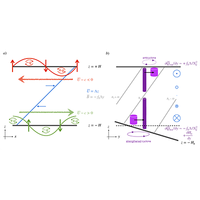
Baroclinic instability plays an important role in rotating stratified fluid systems, such as Earth’s atmosphere and ocean, and can be modeled as a pair of constructively interfering edge-waves. We provide a self-consistent explanation of how the edge-wave interaction mechanism is modified in the presence of slopes, extending existing simple but incomplete explanations. We also put forth speculations on using linear instability theory to inform eddy parameterizations, and highlight parity-time symmetry in the governing equations, finding links between shear instabilities, interacting edge-waves, eddy-mean interactions, and concepts from quantum field theory.

Single theoretical model for breakup of viscous thread with and without a fiber

Hyejoon Jun and Hyoungsoo Kim

Phys. Rev. Fluids 9, 084005 (2024) - Published 20 August, 2024

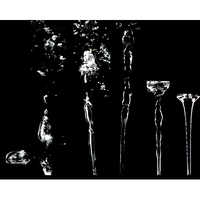
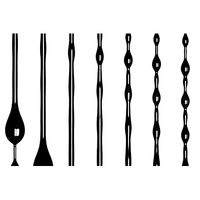
We present a theoretical model for viscous liquid systems exhibiting Rayleigh-Plateau instability, considering cases with and without a solid fiber. Using the lubrication approach and hydrodynamic interactions at the solid-liquid interface, we derive one-dimensional evolution equations for the breakup of viscous liquid threads and films on fibers. Our model aligns well with experimental results, unifying Goren’s liquid film on a fiber and Rayleigh’s viscous liquid thread findings. It identifies the most unstable mode as proportional to the wavenumber quadratically and reveals the exponential decay of satellite droplet volume with increasing wavenumber.

Numerical investigation on the heat transfer in wind turbulence over breaking waves

Min Lu, Zixuan Yang, Guowei He, and Lian Shen

Phys. Rev. Fluids 9, 084606 (2024) - Published 14 August, 2024

Wave breaking is recognized as one of the most violent air-sea interaction processes, significantly enhancing the transfer of heat, mass, and momentum between the oceans and the atmosphere. In this study, we investigate heat transfer in wind turbulence over breaking waves using direct numerical simulation, with a particular focus on the effects of wave age. Our findings suggest that temperature responds in a more complex way to wave age than velocity does, emphasizing the need to incorporate this phenomenon into air-sea interaction and weather forecasting models.

Equatorial blowup and polar caps in drop electrohydrodynamics

Gunnar G. Peng, Rodolfo Brandão, Ehud Yariv, and Ory Schnitzer

Phys. Rev. Fluids 9, 083701 (2024) - Published 1 August, 2024

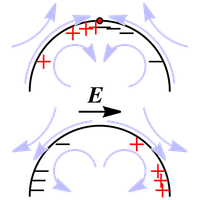
We illuminate effects of surface-charge convection intrinsic to leaky-dielectric electrohydrodynamics by analyzing the symmetric steady state of a circular drop in an external field at arbitrary electric Reynolds number ReE. In particular, we characterise the development of an equatorial charge-density blowup singularity at moderate ReE (in the case where charge relaxation is slower in the drop phase than in the suspending phase) and the formation of polar stagnant caps at large ReE (in the opposite case)

Rupture of a surfactant-laden draining thin film

Atul S. Vivek, Ranabir Dey, and Harish N. Dixit

Phys. Rev. Fluids 9, 074004 (2024) - Published 25 July, 2024

As liquid films on solid substrates approach submicron thickness, they tend to become naturally unstable due to the action of long-range dispersion forces. Interestingly, the presence of surfactants and gravitational drainage alters the stability characteristics of these films. Using linear and nonlinear stability analyses in the lubrication limit, we show that draining films containing surfactants exhibit greater stability compared to stationary films with surfactants, as well as draining films with clean interfaces. Our findings can have potential implications for the stability of a wide variety of thin films, ranging from precorneal tear films to industrial coatings.

Bifurcations and nonlinear dynamics of the follower force model for active filaments

Bethany Clarke, Yongyun Hwang, and Eric E. Keaveny

Phys. Rev. Fluids 9, 073101 (2024) - Published 15 July, 2024

The follower force model is a fundamental model for active filaments, commonly utilized to model microtubule-motor protein complexes and collections of cilia. In this work we perform a thorough analysis of this model, employing techniques from computational dynamical systems, adapted from high Reynolds number fluid dynamics, to map out the bifurcations in the system and classify emergent states. This approach allows us to bridge the gap between 2D and 3D analyses, in particular establishing the initial buckling as a double Hopf bifurcation. Additionally, we identify the existence of a quasiperiodic solution at the second bifurcation, and categorize the dynamics at higher values of forcing.

Quantifying small-scale anisotropy in turbulent flows

Subharthi Chowdhuri and Tirtha Banerjee

Phys. Rev. Fluids 9, 074604 (2024) - Published 10 July, 2024

The verification of small-scale isotropy requires three-dimensional information of the flow field, a condition rarely satisfied in experiments. To examine this we develop a framework that considers how the presence of bursts at smaller flow scales generates turbulent kinetic energy differently between the horizontal and vertical directions. This framework can be applied both to flow fields obtained via numerical simulations, and to data from field and laboratory measurements. Moreover, a universal relationship emerges to predict small-scale anisotropy from large-scale flow conditions, thus contributing towards the development of next-generation closure models of wall turbulence.

Enhancement of ice melting in isotropic turbulence

Aubrey L. McCutchan, Colin R. Meyer, and Blair A. Johnson

Phys. Rev. Fluids 9, 074601 (2024) - Published 2 July, 2024

Our experimental study explores ice melting rates in quiescent water and in turbulent flow. Particle image velocimetry measurements allow us to visualize and characterize flows generated by meltwater plumes and to non-invasively measure melt rate of an ice sphere fixed in place in the center of our isotropic turbulence tank, in which randomly actuated synthetic jets produce a core of homogeneous isotropic turbulence. We present relationships between ambient water temperature and turbulent kinetic energy on melt rates.

Fluctuation-induced transitions in anisotropic two-dimensional turbulence

Lichuan Xu, Adrian van Kan, Chang Liu, and Edgar Knobloch

Phys. Rev. Fluids 9, 064605 (2024) - Published 27 June, 2024

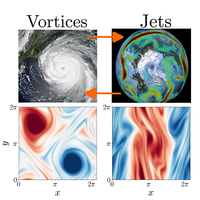
We study turbulent fluctuation-induced transitions between hurricane-like large-scale vortices and unidirectional jets in stochastically forced, viscously damped two-dimensional turbulence within an elongated periodic domain. Using direct numerical simulations of unprecedented duration, lasting up to 10000 viscous time units, we collect detailed statistical data on the lifetimes of these metastable structures and quantify the impact of the domain aspect ratio, the forcing scale, and the Reynolds number. We also uncover irreversible transition paths between jets and vortices, which consist of two stages: a rapid change in structure and a subsequent slow viscous adjustment of kinetic energy.

Enhanced transport of flexible fibers by pole vaulting in turbulent wall-bounded flow

Jérémie Bec, Christophe Brouzet, and Christophe Henry

Phys. Rev. Fluids 9, L062501 (2024) - Published 11 June, 2024

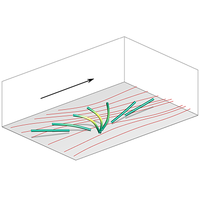
Long, flexible fibers in a turbulent channel flow showcase fascinating dynamics, sampling nonlinear fluid velocities along their length. Tumbling and colliding with boundaries, they bounce off like pole vaulters, propelling themselves toward the flow center. This motion depletes fibers near the walls and concentrates them in the bulk, boosting the net fiber flux beyond the initial flux of the fluid. The effect grows stronger with longer, more flexible fibers, highlighting crucial implications for transport phenomena in turbulent flows.

Impact of rotation change on the emptying of an ideal bottle of water

A. Caquas, L. R. Pastur, and A. Genty

Phys. Rev. Fluids 9, 064701 (2024) - Published 4 June, 2024

Have you ever tried spinning your water bottle to empty it more quickly? This experiment, familiar to the general public, has rarely been studied in the scientific literature, which focuses mainly on the non-rotational case. We show that this popular experiment is surprisingly complex. Our study reveals the presence of three flow regimes, which have a direct impact on the efficiency of the draining process.

Dynamics of soap bubble inflation

Saini Jatin Rao, Siddhant Jain, and Saptarshi Basu

Phys. Rev. Fluids 9, L051602 (2024) - Published 28 May, 2024

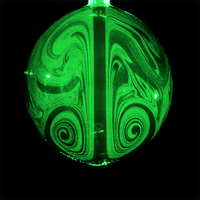
Often considered a childhood pastime, soap bubbles emerged as a captivating domain for rigorous scientific inquiry for generations. While blowing soap bubbles is familiar to everyone, the underlying physics of inflating them remains unanswered. In our investigation, we visualize the previously unexplored internal airflow experimentally, revealing a toroidal vortical flow that resembles a bound vortex ring. The air enters the bubble as a round jet, emerging from the nozzle opening and impinges on the expanding concave interior to form this toroidal vortex. We also predict several scaling laws for the inflation rate and dynamics of this confined vortical flow by varying the source pressure.

Exit dynamics of a sphere launched underneath a liquid bath surface

Xiaofeng Wei, Dege Li, Jing Lei, Jinglu Li, Javier Rivero-Rodríguez, Fangye Lin, Dongyun Wang, and Benoit Scheid

Phys. Rev. Fluids 9, 054003 (2024) - Published 17 May, 2024

In this paper, we investigate the exit dynamics of a sphere launched underneath a liquid bath surface at a prescribed impact velocity. Spheres with radii approximate or smaller than the capillary length are considered. The process can be sequenced into a partial exit stage that forms a coated layer, and a full exit stage with an attached ligament. A bouncing-off regime, a lower pinch-off penetration regime, and an upper pinch-off penetration regime are identified, separating by a penetration Weber number and a switching Weber number. The phase diagram is revealed, where the two critical Weber numbers are functions of the Bond number.

Free-space and near-wall dynamics of a flexible sheet sedimenting in Stokes flow

Yijiang Yu and Michael D. Graham

Phys. Rev. Fluids 9, 054104 (2024) - Published 14 May, 2024

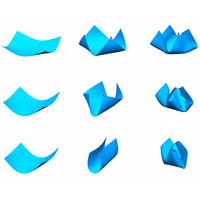
We present a numerical study of a thin elastic sheet with small extensibility sedimenting in a viscous fluid in free space or near a wall. The interplay between gravity and the elastic response of sheets gives rise to complex deformation and reorientation dynamics. Near a vertical wall, sheets exhibit asymmetric conformations that cause the sheet to drift toward or away from the wall. Near an inclined wall, sheets show qualitatively different dynamics when the wall angle is large: they either deposit on or slide along the wall with a fixed wall-normal distance.

Longitudinal and azimuthal thermoacoustic modes in a pressurized annular combustor with bluff-body-stabilized methane-hydrogen flames

Byeonguk Ahn, Håkon T. Nygård, Nicholas A. Worth, Zhijian Yang, and Larry K. B. Li

Phys. Rev. Fluids 9, 053907 (2024) - Published 10 May, 2024

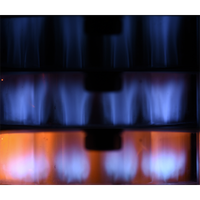
To explore the dynamics of annular combustors, we investigate azimuthal thermoacoustic instabilities under a range of hydrogen power fractions and operating conditions. Using time-series analysis and mode detection techniques, we examine the relationship between longitudinal and azimuthal modes, identifying a transition from chaos to high-amplitude periodic states. Our research sheds light on how hydrogen enrichment affects combustor stability and presents the first identification of type-II Pomeau–Manneville intermittency in annular combustors. These findings contribute to knowledge of the modal dynamics within combustors, with implications for the design and operation of future systems.

Engineering of polydisperse porous media for enhanced fluid flows through systematic topology tuning via differentiable direct numerical simulation

Mohammed G. Alhashim and Michael P. Brenner

Phys. Rev. Fluids 9, 054103 (2024) - Published 10 May, 2024

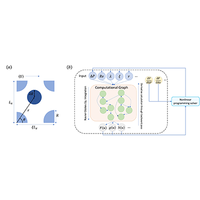
Recent advancements in automatic differentiation, which played a pivotal role in deep learning, offer a promising approach to addressing challenges in controlling fluid flow behavior. We demonstrate the power of the method by optimizing the packing of a polydisperse system of periodically arranged circular rods to minimize the pressure drop across the media. We show how the optimum topology of the porous media changes with changing the packing fraction.

Expediting viscous spreading with liquid-infused solids

Saurabh Nath and David Quéré

Phys. Rev. Fluids 9, 054001 (2024) - Published 6 May, 2024

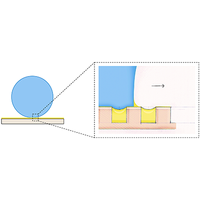
A viscous drop spreads slowly on a solid at a velocity selected by its viscosity. We show here that liquid-infused solids – a class of materials with properties in between a solid and a liquid – can expedite the spreading dynamics due to interfacial slip, which we investigate at short time.

Gyre turbulence: Anomalous dissipation in a two-dimensional ocean model

Lennard Miller, Bruno Deremble, and Antoine Venaille

Phys. Rev. Fluids 9, L051801 (2024) - Published 3 May, 2024

We unveil a gyre turbulence regime within a two-dimensional wind-driven ocean model, where energy dissipation becomes independent of fluid viscosity. This anomalous dissipation is driven by a vigorous two-dimensional vortex gas overlaying a low energy western-intensified gyre, shedding light on the effect of boundary instabilities in disrupting the inverse energy cascade.

Robust microstructure of self-aligning particles in a simple shear flow

Neeraj S. Borker, Abraham D. Stroock, and Donald L. Koch

Phys. Rev. Fluids 9, 043301 (2024) - Published 24 April, 2024

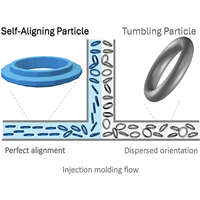
A self-aligning particle (SAP) attains near perfect alignment with the fluid lamellae of a low Reynolds number simple shear flow without application of external torques in contrast with the continuous rotation exhibited by most rigid bodies including thin fibers and disks. We characterize the robustness of the flow alignment of SAPs to secondary perturbations such as flow disturbances, Brownian motion, inter-interparticle interactions, and the presence of a wall using dynamic simulations of ring-shaped SAP geometries. The robust flow alignment of SAPs provides an alternative route to access highly aligned microstructures that are inaccessible to suspensions of traditional particle geometries.

Turbulence modulation by suspended finite-sized particles: Toward physics-based multiphase subgrid modeling

S. Balachandar, C. Peng, and L.-P. Wang

Phys. Rev. Fluids 9, 044304 (2024) - Published 11 April, 2024
The presence of a dispersed phase substantially modifies small-scale turbulence. Here we present a comprehensive mechanistically based model to predict turbulence modulation, the predictions of which, compared with particle-resolved simulations and experiments, is shown.

Sign In to Your Journals Account

Filter

Section

Filter

Article Lookup

Enter a citation