Highlights

Dependence of scalar mixing on initial conditions in turbulent channel flow

Milind Singh, Emmanuel Germaine, Laurent Mydlarski, and Luca Cortelezzi

Phys. Rev. Fluids 8, 124605 (2023) - Published 19 December, 2023

Scalar-field initial conditions can have a strong effect on the evolution(s) of scalar fields and the rate at which mixing occurs. The effects of the scalar field initial conditions are studied by analyzing the evolution of three scalar fields with interfaces oriented normal to the streamwise, wall-normal, and transverse directions. When the interface is aligned normal to the mean velocity vector, higher rates of production and destruction of the scalar dissipation, as well as strong advection and stretching of the interface by the mean flow are observed. It is therefore recommended that scalar interfaces be aligned normal to the mean velocity vector to promote mixing within internal flows.

Dynamic lift enhancement mechanism of dragonfly wing model by vortex-corrugation interaction

Yusuke Fujita and Makoto Iima

Phys. Rev. Fluids 8, 123101 (2023) - Published 7 December, 2023

Dragonfly wings, with their unique corrugated structure, may achieve superior aerodynamic performance in specific flight conditions, although these conditions are not yet fully understood. This led us to investigate the vortex dynamics and lift generation as a corrugated wing transitions from a stationary state to translational motion. The results reveal that suppression of secondary vortices generated on the wing significantly improves the overall performance of corrugated wings. This advances our understanding of flight dynamics and can also contribute to applications in engineering and biomimicry.

Viscous free-surface cusps: Local solution

J. Eggers

Phys. Rev. Fluids 8, 124001 (2023) - Published 6 December, 2023

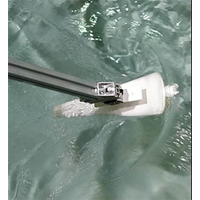
In the image, the free surface between a liquid and air is deformed into a sharp cusp by the rapid rotation of the cylinder on the left. We show that such a structure is a generic feature of viscous flow, and study its properties. This is important, since air can enter the fluid through the cusp’s tip, and thus become entrained into the interior of the fluid.

Compression-driven viscous fingering in a radial Hele-Shaw cell

Callum Cuttle, Liam C. Morrow, and Christopher W. MacMinn

Phys. Rev. Fluids 8, 113904 (2023) - Published 29 November, 2023

The viscous-fingering instability that emerges when gas is injected into a liquid-filled Hele-Shaw cell is a paradigm of pattern formation that has been extensively studied. Here, we examine a previously neglected aspect of the problem: The compressibility of the injected gas. We use experiments, numerical simulations, and an axisymmetric model to show that gas compression controls the time-dependent injection rate and systematically delays the onset of viscous fingering at high capillary number. We quantify the importance of gas compression with a single dimensionless compressibility number.

Rayleigh-number dependence of the critical vibration frequency in vibrating thermal turbulence

Ze-Lin Huang, Xi-Li Guo, Jian-Zhao Wu, Bo-Fu Wang, Kai Leong Chong, and Quan Zhou

Phys. Rev. Fluids 8, 113501 (2023) - Published 21 November, 2023

Vibration has the ability to control the convective heat transport depending on the relative direction of vibration to the gravitation. We show that horizontal vibration (perpendicular to gravitation) enhances heat transport while vertical vibration (parallel to gravitation) suppresses heat transport. The observed heat transport enhancement or suppression is indicated by the critical vibration frequency. We theoretically and numerically reveal the scaling law between the critical vibration frequency and the Rayleigh number.

Logarithmic profiles of velocity in stably stratified atmospheric boundary layers

Yu Cheng, Andrey Grachev, and Chiel van Heerwaarden

Phys. Rev. Fluids 8, 114602 (2023) - Published 16 November, 2023

In global weather and climate models, the turbulent exchange of momentum, heat, moisture and carbon dioxide between the Earth’s surface and the atmosphere is described by Monin-Obukhov similarity theory (MOST) since 1954. A fundamental assumption of MOST is that velocity near the surface does not follow a logarithmic profile due to buoyancy effects driven by stratification. In contrast to MOST, we find that buoyancy does not change the logarithmic nature of velocity profiles but instead modifies the slope of the log law. The proposed logarithmic profile can serve as an alternative to MOST, possibly leading to more realistic predictions of weather and climate, especially in polar regions.

Chemomechanical model of sperm locomotion reveals two modes of swimming

Chenji Li, Brato Chakrabarti, Pedro Castilla, Achal Mahajan, and David Saintillan

Phys. Rev. Fluids 8, 113102 (2023) - Published 15 November, 2023

We present a chemomechanical model to analyze the propulsion of mammalian spermatozoa. The model accounts for motor kinetics, flagellar deformations, and the hydrodynamics of the suspending fluid. Simulations demonstrate spontaneous oscillations leading to realistic swimming patterns. Notably, the swimming velocity exhibits two distinct peaks as a function of the activity of the molecular motors. These peaks are characterized by distinct waveforms and trajectories. Our findings contribute to a deeper understanding of the biophysical mechanisms involved in sperm locomotion.

Incorporating intrinsic compressibility effects in velocity transformations for wall-bounded turbulent flows

Asif Manzoor Hasan, Johan Larsson, Sergio Pirozzoli, and Rene Pecnik

Phys. Rev. Fluids 8, L112601 (2023) - Published 9 November, 2023

The law of the wall states that, after appropriate scaling, the mean velocity of incompressible turbulent flows near flat solid walls is a universal function of the wall-normal distance. An analogous law does not exist for compressible flows due to complexities arising from mean property variations and intrinsic compressibility effects, which occur when pressure directly changes the density of fluid elements. By accounting for both these effects, we propose a new velocity scaling that transforms the mean velocity of compressible flows to the incompressible law of the wall. This transformation is more accurate than the state-of-the-art, and is applicable to a wider range of flows.

Theoretical modeling of capillary surfer interactions on a vibrating fluid bath

Anand U. Oza, Giuseppe Pucci, Ian Ho, and Daniel M. Harris

Phys. Rev. Fluids 8, 114001 (2023) - Published 7 November, 2023

“Capillary surfers” are small objects that self-propel while floating at the interface of a vibrating fluid bath. In this paper, we construct and analyze a theoretical model for the waves generated by such surfers and thus the hydrodynamic forces exerted by one surfer on another. Our model recovers the dynamical modes of surfer pairs found in experiments, and predicts that surfer collectives may lock into a variety of quantized bound states. Generally, our work shows that capillary surfers are a promising platform for studying wave-coupled active matter.

Capillary surfers: Wave-driven particles at a vibrating fluid interface

Ian Ho, Giuseppe Pucci, Anand U. Oza, and Daniel M. Harris

Phys. Rev. Fluids 8, L112001 (2023) - Published 7 November, 2023

A small solid particle resting atop a vibrating fluid interface generates a field of outwardly propagating capillary waves due to its relative vertical motion. In this paper, we show that if the particle’s symmetry is broken, the resultant unbalanced wave stresses enable steady self-propulsion along the interface. Such “capillary surfers” interact with each other hydrodynamically at long range via their mutual wavefield and form a number of dynamic bound states. This new active system bridges the gap between dissipation- and inertia-dominated regimes and promises a number of novel collective behaviors.

Characteristic rupture height of the mediating air film beneath an impacting drop on atomically smooth mica

Ramin Kaviani and John M. Kolinski

Phys. Rev. Fluids 8, 103602 (2023) - Published 31 October, 2023

Before a droplet can contact a solid surface, it must drain the air beneath it. In our daily experience, the air doesn’t alter the global outcome of contact formation in the blink of an eye. In this work, we find that the lubricating air film formed beneath an impacting droplet can resist rupture for droplets impacting at a velocity exceeding 1/2 a meter per second; however, beyond a critical impact velocity, contact always occurs from the liquid’s closest approach to the solid surface through the air, at a distance of 20 - 30 nanometers. Below the critical velocity, contact is suppressed for impact upon atomically smooth, cleaved mica, shedding light on the critical phase of liquid-solid contact.

Observation of inertia-gravity wave attractors in an axisymmetric enclosed basin

Corentin Pacary, Thierry Dauxois, Evgeny Ermanyuk, Pascal Metz, Marc Moulin, and Sylvain Joubaud

Phys. Rev. Fluids 8, 104802 (2023) - Published 25 October, 2023

The peculiar reflection of internal waves in rotating stratified fluids enables the concentration of energy on a limit cycle, called an attractor. In this work, the existence of internal gravity wave attractors for rotating stratified fluids is predicted in three-dimensional axisymmetric geometry. This information is used to design experiments using a truncated conical shaped tank in order to form an inertia-gravity waves attractor. We highlight an important difference in the nonlinear regime between the stratification-only and the rotation-only cases.

Droplets sliding on single and multiple vertical fibers

M. Leonard, J. Van Hulle, F. Weyer, D. Terwagne, and N. Vandewalle

Phys. Rev. Fluids 8, 103601 (2023) - Published 19 October, 2023

Exploring droplet dynamics: This study sheds light on the behavior of droplets sliding down vertical fibers, a key issue in microfluidics and fog harvesting. Using real-time tracking, the research covers single and multi-fiber systems. A standout finding is that multiple vertical fibers increase droplet speed but also lead to greater liquid loss in grooves. This discovery is captured in a detailed theoretical model, offering valuable insights for optimizing droplet-based technologies.

Experimental study of the penetrative convection in gases

Valentin Dorel, Patrice Le Gal, and Michael Le Bars

Phys. Rev. Fluids 8, 103501 (2023) - Published 9 October, 2023

Penetrative convection is the interaction between a lower turbulent convective layer of fluid and an upper stably-stratified one. It plays a key role in the atmosphere’s dynamics and in stellar interiors. In this study, we built an experiment of penetrative convection in gases which is closer to the geophysical applications. The internal gravity waves field is studied, as well as the growth of the convective layer. In our setup, the convective layer grows quadratically in time which is strikingly different from the 1/2 exponent obtained with classical models and salted water experiments.

Statistical properties of shear and nonshear velocity components in isotropic turbulence and turbulent jets

Ryo Enoki, Tomoaki Watanabe, and Koji Nagata

Phys. Rev. Fluids 8, 104602 (2023) - Published 9 October, 2023

Velocity fields induced by small-scale shear layers and vortex tubes in turbulence are investigated with the triple decomposition of a velocity gradient tensor. The velocity fields are reconstructed with the Biot-Savart law applied to the vorticity vectors of shear and rigid-body rotation. The key image shows a mean flow pattern of small-scale shear layers in isotropic turbulence. The velocity associated with the shear layers dominates the turbulent kinetic energy budget, scalar transport, and energy cascade in isotropic turbulence and planar jets.

Experimental and numerical investigations on rotor noise in axial descending flight

Yuhong Li, Xiangtian Li, Han Wu, Peng Zhou, Xin Zhang, and Siyang Zhong

Phys. Rev. Fluids 8, 094803 (2023) - Published 28 September, 2023

We investigate the aerodynamic and aeroacoustic characteristics of a small-scale drone rotor operating in axial descending flight. The integrated aerodynamic forces and the far-field noise are measured by wind tunnel experiments. Then, near-field flow structures and corresponding noise source analysis are presented based on computational aeroacoustics (CAA) simulations. We found the unique acoustic feature of descending flight is the haystacking-like spectral humps, possibly caused by the interaction between the blade leading edge and the rotor wake.

Drafting of two passive swimmer scale models for open-water races

B. Bolon, C. Pretot, C. Clanet, F. Larrarte, and R. Carmigniani

Phys. Rev. Fluids 8, 094802 (2023) - Published 27 September, 2023

We examined interactions in water channels between swimmer-shaped objects moving at different speeds. Results showed that the ideal place for drafting is at the hip of a neighboring swimmer or just behind a lead swimmer. The former reduces drag by 30% and the latter reduces drag by 40%. Results were confirmed by CFD simulations.

How the fine structure of the electric double layer and the flow affect morphological instability in electrodeposition

I. Rubinstein and B. Zaltzman

Phys. Rev. Fluids 8, 093701 (2023) - Published 7 September, 2023

Dendrite formation due to morphological instability in cathodic electrodeposition of a metal and related fluid flows are investigated. We show that the electric double layer fine structure and the finite electrode reaction rate regularize the electrodeposition front short-wave singularity and select a range of unstable perturbation modes. The critical wavelength corresponds to the fastest growing mode and scales with the electric double layer width and the reaction-diffusion length. The emerging electroconvective (electroosmotic) flow in the nonequilibrium regime selects the cathodic diffusion layer width as the dominant length scale for morphological instability and emerging dendrites.

Caterpillar like motion of droplet in a shear flow

A. Chahine, J. Sebilleau, R. Mathis, and D. Legendre

Phys. Rev. Fluids 8, 093601 (2023) - Published 1 September, 2023

A special caterpillar like motion is reported for glycerin droplets sliding on a horizontal hydrophobic substrate under the influence of a shear flow. The droplet elongates in the flow direction adopting a rivulet shape with the development of waves resulting in a caterpillar like motion.

Drag on a partially immersed sphere at the capillary scale

Robert Hunt, Ze Zhao, Eli Silver, Jinhui Yan, Yuri Bazilevs, and Daniel M. Harris

Phys. Rev. Fluids 8, 084003 (2023) - Published 22 August, 2023
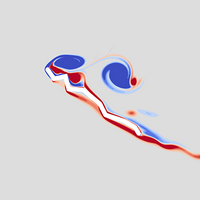
Drag on a sphere in a steady flow is an important and thoroughly studied problem in fluid dynamics, yet relatively little work includes the effects of a free surface. Through experiments and simulations, we characterize the drag on a sphere partially immersed at an air-water interface as a function of submergence depth. The presence of the free surface can induce drag forces several times greater than the equivalent fully submerged case, with pronounced hysteretic effects strongly influenced by the sphere’s wettability. We ascribe the drag increase to an asymmetric pressure loading on the sphere that persists for flows both above and below the minimum capillary-gravity wave speed.

Sign In to Your Journals Account

Filter

Section

Filter

Article Lookup

Enter a citation