Highlights

Swirl switching in spatially developing bent pipes

Valerio Lupi, Daniele Massaro, Adam Peplinski, and Philipp Schlatter

Phys. Rev. Fluids 10, 114608 (2025) - Published 14 November, 2025

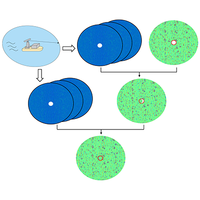
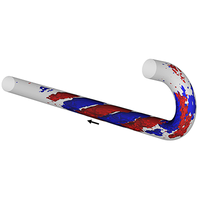
Swirl switching is the temporal rotation of the plane of symmetry of the cross-sectional vortices about the equatorial plane of a curved pipe and can induce considerable structural vibrations. We investigate the effect of bending angle and inflow conditions by performing high-fidelity direct numerical simulations of spatially developing bent pipe flows and extracting spatially coherent structures through proper orthogonal decomposition. Our results show that upstream turbulence is not the primary cause of swirl switching. Instead, the phenomenon likely arises because of a symmetry-breaking instability of the shear layer originating within the curved section.

Falling plates with leading-edge vortex shedding

Yu Jun Loo and Silas Alben

Phys. Rev. Fluids 10, 104701 (2025) - Published 29 October, 2025

We present a numerical method for thin plates falling in inviscid fluid that incorporates leading-edge vortex shedding. Including leading-edge vortex shedding restores physical dynamics to inviscid vortex sheet simulations, enabling large-amplitude fluttering and tumbling.

Viscoplasticity can stabilize liquid collar motion on vertical cylinders

James D. Shemilt, Alice B. Thompson, Alex Horsley, Carl A. Whitfield, and Oliver E. Jensen

Phys. Rev. Fluids 10, 103301 (2025) - Published 22 October, 2025

The surface-tension-driven instability of a liquid film coating a vertical tube can lead to the formation of liquid collars that drift downwards under gravity. This scenario is relevant to the flow of mucus in lung airways. Using thin-film theory, we investigate the formation and motion of collars when the liquid film is viscoplastic. In the limit of weak gravity relative to capillary effects, we quantify the reduction in steady collar speed due to viscoplasticity, and identify conditions under which viscoplastic collars translate steadily, whilst steady motion does not occur in the Newtonian case.

Imprints of turbulence on heterogeneous deposition of adhesive particles

Max Herzog and Jesse Capecelatro

Phys. Rev. Fluids 10, 104302 (2025) - Published 21 October, 2025

We present results from direct numerical simulations of turbulent channel flow laden with adhesive (viscoelastic) particles. Particles demonstrate higher adhesion strengths at elevated temperatures, an effect we probe by varying the adhesion number. Using spanwise radial distribution functions, we show that particle heterogeneity near and on the wall is promoted by turbulence. Furthermore, low-adhesion, high-inertia particles demonstrate spanwise creep along the wall, leading to elongated streamwise deposits. Abrasive wear profiles highlight the consequences of heterogeneity, with local wear exceeding ten times the mean.

Toward scale-separated weak-field spherical dynamos

R. J. Teed and E. Dormy

Phys. Rev. Fluids 10, 103702 (2025) - Published 15 October, 2025

Recent numerical experiments of dynamo action relevant to the generation of the geomagnetic field have produced different regime branches identified within bifurcation diagrams. In this work, we identify a variety of dynamo states on the weak-field branch beyond the known dipolar solutions. Some solutions exhibit clear scale separation between small-scale flow and large-scale magnetic field, despite the large ratio of viscosity to magnetic diffusion. Numerical solutions in this regime have not been observed before and they offer a first connection with earlier theoretical work based on mean-field theory.

Shape of ice stalagmites

Daniel Papa, Christophe Josserand, and Caroline Cohen

Phys. Rev. Fluids 10, L101602 (2025) - Published 9 October, 2025

Do ice stalagmites grow purely vertically? Our work shows that depending on the substrate temperature and the water flow rate, ice stalagmites can take a wide variety of shapes and forms. We determined a criterion that distinguish a purely vertical growth to a combined vertical and lateral growth dynamics. We also show that the main driving factor is the heat diffusion at the stalagmite’s tip and that the combined knowledge of both the vertical and lateral growth allows us to determine the asymptotic aspect ratio of the ice stalagmites. Our predictions are compared and validated by experiments and can serve as a model experiment to study related physical phenomena.

Nonlinear wave reconstruction and prediction by a shipborne radar with a dynamic averaging algorithm

Jinyu Yao, Xinshu Zhang, Huawei Zhou, Xingyu Song, and Alessandro Toffoli

Phys. Rev. Fluids 10, 094801 (2025) - Published 18 September, 2025

We develop a nonlinear wave reconstruction and prediction model with a dynamic averaging algorithm, in which shipborne radar images are used for data assimilation to improve the accuracy of wave reconstruction and prediction. Waves around the ship can be accurately predicted for the next few minutes under various sea states. Compared with the linear and second- order models, the new model includes the third-order nonlinear effects; thus, it significantly improves the prediction accuracy of extreme waves under rough sea states, providing effective safety guarantees for ship navigation and operations.

Pore network modeling for evaporation of complex fluids in porous media

Romane Le Dizès Castell, Marc Prat, Noushine Shahidzadeh, and Sara Jabbari-Farouji

Phys. Rev. Fluids 10, 094302 (2025) - Published 15 September, 2025

Drying of complex fluids in porous media is crucial for applications such as preserving cultural heritage materials, yet the role of sol–gel transitions in evaporation kinetics remains unclear. We develop a pore-network model to investigate the emergence of gel-like skin at the evaporation interface. By incorporating pore size gradients and a viscosity-dependent vapor pressure rule, the model captures skin formation. Its predictions quantitatively match experiments and explain the evaporation slowdown during sol–gel transition.

Shape evolution and capsize dynamics of melting ice

Bobae Johnson, Scott Weady, Zihan Zhang, Alison Kim, and Leif Ristroph

Phys. Rev. Fluids 10, 093801 (2025) - Published 12 September, 2025

Ice melting is an important part of the climate system that involves complex fluid dynamics and interactive processes. Here we address the capsize problem in which melting-induced changes in size and shape of free floating ice can trigger it to rotate and turn over. Experiments show that “lab icebergs” lock to the waterline while gradually melting, then abruptly lose stability and roll over to assume a new posture, and this process repeats many times as the ice melts down. A particular angle of rotation is selected and, consequently, the ice tends towards a polygonal shape. These results are reproduced by a model that predicts the coupled shape-posture dynamics and uncovers the key mechanisms.

Stability of co-annular active and passive confined fluids

Tanumoy Dhar, Michael J. Shelley, and David Saintillan

Phys. Rev. Fluids 10, 083103 (2025) - Published 21 August, 2025

We investigate the stability of two configurations: a passive viscous Newtonian droplet immersed in an active nematic liquid crystal, and an active nematic droplet surrounded by a passive layer, both under circular confinement. Our results reveal how capillary, active, elastic, and viscous stresses interact to govern droplet dynamics. These findings may inform our understanding of diverse biological systems featuring interfaces between active and passive fluids, from droplets in bacterial suspensions to subcellular compartments within the cytoplasm and cell nucleus.

Data-driven shape inference in three-dimensional steady-state supersonic flows: Optimizing a discrete loss with JAX-Fluids

Aaron B. Buhendwa, Deniz A. Bezgin, Petr Karnakov, Nikolaus A. Adams, and Petros Koumoutsakos

Phys. Rev. Fluids 10, 084902 (2025) - Published 12 August, 2025

We present a method for the simultaneous inference of flow fields and obstacle shapes from sparse measurements in steady-state compressible flows. Such inverse problems are highly ill-posed and require strong regularization. We address this by combining the Optimizing a Discrete Loss (ODIL) technique with JAX-Fluids. ODIL minimizes the discrete residual of the governing equations, preserving both the accuracy and convergence properties of the underlying numerical methods. The employed conservative finite-volume scheme, including shock-capturing reconstruction and a sharp-interface immersed boundary method, is crucial for effective regularization and therefore accurate flow field inference.

Bistability and charge-density blowup in the onset of drop Quincke rotation

Gunnar G. Peng and Ory Schnitzer

Phys. Rev. Fluids 10, L081701 (2025) - Published 12 August, 2025

The Quincke effect is a striking symmetry-breaking phenomenon in which a particle undergoes spontaneous rotation when subjected to a sufficiently strong electric field. This study, focused on Quincke rotation of a two-dimensional circular (non-deformable) drop, numerically demonstrates the emergence of bistability as the drop viscosity is reduced relative to that of the surrounding fluid — consistent with experimental observations. It is found that capturing this transition entails resolving the formation of charge-density blowup singularities driven by surface convection.

Viscoelasticity reduces the droplet size in mucosalivary film fragmentation during intense respiratory events

Mogeng Li, Youssef Saade, Stéphane Zaleski, Uddalok Sen, Pallav Kant, and Detlef Lohse

Phys. Rev. Fluids 10, 084001 (2025) - Published 8 August, 2025

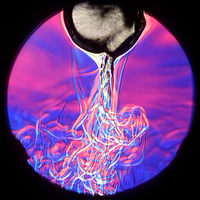
We examine the fundamental fluid dynamical mechanisms dictating the generation of bioaerosols in the human trachea during intense respiratory events, such as coughing and sneezing. Using a ‘cough machine’ and numerical simulations, we observe that when subject to intense shear from the airflow, the mucosalivary-mimetic fluid lining forms bag-like structures. These structures rupture through the appearance of retracting holes on the bag surface, generating droplets via the unstable retraction of liquid rims bounding these holes. Viscoelasticity of the mucosalivary-mimetic fluid promotes the formation of larger, thus thinner bags, leading to the production of smaller droplets upon rupture.

Sail dynamics during tacking maneuvers

Christiana Mavroyiakoumou and Silas Alben

Phys. Rev. Fluids 10, 073901 (2025) - Published 17 July, 2025

Tacking is a sailing maneuver that is necessary for upwind navigation. In this work, using a sail membrane and vortex-sheet model, we systematically characterize how a wide range of sail material parameters and tacking motions affects the sail dynamics during the tacking maneuver. We focus on whether a given set of parameters will result in a successful tack, meaning that the sail will flip around to adopt its mirror-image shape, or if it will remain stuck in a metastable state that is close to its initial shape.

Controlling droplets at the tips of fibers

Mengfei He, Samay Hulikal, Marianna L. Marquardt, Hao Jiang, Anupam Pandey, Teng Zhang, Christian D. Santangelo, and Joseph D. Paulsen

Phys. Rev. Fluids 10, 073602 (2025) - Published 14 July, 2025

A carefully designed wave form orchestrates sequential 2-fiber interactions on a soft substrate planted with a fiber array. Between identical neighboring fibers, a droplet goes through a strongly asymmetrical breakup as the wave pushes across, ensuring a near-complete liquid transfer from one fiber to the next in the direction of wave propagation.

Propulsive performance of a windsurf-inspired pitching foil

Gauthier Bertrand, Tristan Aurégan, Benjamin Thiria, Ramiro Godoy-Diana, and Marc Fermigier

Phys. Rev. Fluids 10, 074401 (2025) - Published 7 July, 2025

At the start of a race or in light winds, windfoil athletes use intermittent propulsion by pumping the sail to get or keep the board in foiling mode, for example after a tack change. This involves periodically changing the angle of the sail relative to the wind by moving the center of mass up and down. We experimentally investigated the impact of the incidence angle on the aerodynamic forces using a pitching foil at a reduced scale, as well as different frequency and amplitude combinations within a certain range of Strouhal numbers. Our measurements revealed aerodynamic behaviors that enabled us to explore sailing race strategies.

Fringe around a beet slice: Wetting-induced dimple in a thin liquid film

Zhengyang Liu, Yicong Fu, Abhradeep Maitra, Kunal Kumar, Justin Chen, and Sunghwan Jung

Phys. Rev. Fluids 10, 064004 (2025) - Published 26 June, 2025

How does a beet slice sitting in a thin layer of its own juice develop a translucent fringe? This curious kitchen pattern originates from a dimple (i.e., an indentation in the liquid surface) caused by wetting-induced suction at the beet’s edge. In this study, we show how surface tension, gravity, and viscosity compete to shape this fringe pattern.

Roll-wave instability and evolution of single-phase debris flows

X. Meng, L. Zhao, and Z. You

Phys. Rev. Fluids 10, 064303 (2025) - Published 24 June, 2025

The threshold Froude number associated with instability onset in grain-water mixture flows has not been well defined. In this study, we conduct a temporal stability analysis, perform periodic box numerical simulations, and construct a traveling-wave solution within a debris flow model that incorporates distinct basal friction laws for grains and water. The coupled fluid–particle dynamics reveals an instability onset and subsequent roll wave coarsening behavior which differs from previous findings. The approach is applied to the debris flow event in the Illgraben torrent, Switzerland. The results lead to insights into roll wave initiation and evolution as observed in the field.

Preventing sinking of a disk by leveraging the boundary jump phenomenon

Jan Turczynowicz, Radost Waszkiewicz, and Łukasz Gładczuk

Phys. Rev. Fluids 10, L062801 (2025) - Published 16 June, 2025

A metal disk placed on the water surface normally sinks; however, it has been observed that the disk can remain afloat when a vertical water jet is directed at it from above. The jet displaces water from the disk’s upper surface and, by a mechanism analogous to a hydraulic jump, enlarges the effective immersed volume. The resulting increase in buoyant force offsets the disk’s weight, enabling flotation. A theoretical model based on scaling laws specifies the conditions under which this occurs. Experiments on both flotation and sinking confirm the model’s predictions. A brief video demonstration is available at https://youtu.be/as0wRQj1Zws.

Weak-strong uniqueness and extreme wall events at high Reynolds number

Gregory Eyink and Hao Quan

Phys. Rev. Fluids 10, 064610 (2025) - Published 9 June, 2025

Weak Euler solutions have been hypothesized to explain the d’Alembert paradox of non-vanishing drag. A difficulty is the “weak-strong uniqueness” property, which requires that an admissible weak Euler solution must coincide with the smooth Euler solution for the same initial data. Using the Josephson-Anderson relation adapted from superfluids, we show that weak-strong uniqueness for d’Alembert’s solution requires mild conditions. To explain drag we therefore predict that these conditions are violated by violent eruption of very thin boundary layers. We discuss observational signatures and explain how the small length-scales involved could threaten the validity of a hydrodynamic description.

Sign In to Your Journals Account

Filter

Section

Filter

Article Lookup

Enter a citation