Recent Articles

Programming multivortex polarization states in BaTiO3/SrTiO3 ferroelectric-dielectric composites

Xianjiang Qin, Taoping Bai, Zhongyou Li, Tengang Liu, Xuhui Lou, Haidong Fan, Qingyuan Wang, Delong He, Jinbo Bai, Chuan Qiao, Wentao Jiang, and Xiaobao Tian

Phys. Rev. B 113, 014105 (2026) - Published 7 January, 2026

Interpretation of excitation spectrum of 1T−TiSe2 in the time-dependent density functional theory framework

J. P. Echeverry, E. V. Chulkov, and V. M. Silkin

Phys. Rev. B 113, 014303 (2026) - Published 7 January, 2026

Toward tunable carrier polarity in monolayer ZrS2: A hybrid functional study of intrinsic and extrinsic defects

Hongyang Ma, Jahan E. McLeod, and Catherine Stampfl

Phys. Rev. B 113, 024102 (2026) - Published 7 January, 2026

Mechanical enhancement of quantum oscillations

Maximilian Daschner, Ivan Kokanović, and F. Malte Grosche

Phys. Rev. B 113, 024103 (2026) - Published 7 January, 2026

Comprehensive study of phonon chirality under symmetry constraints

Shuai Zhang, Zhiheng Huang, Muchen Du, Tianping Ying, Luojun Du, and Tiantian Zhang

Phys. Rev. B 113, 024302 (2026) - Published 7 January, 2026

Electronic transport, thermal transport, thermal expansion, and magnetization in the strongly correlated metal LaNiO3

J.-S. Zhou, B. Dabrowski, J. F. Mitchell, and M. D. Johannes

Phys. Rev. B 113, 035115 (2026) - Published 7 January, 2026

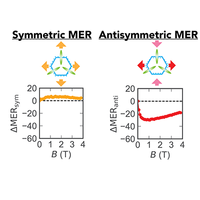
Symmetry-resolved magnetoelastoresistance in multivalley bismuth

Suguru Hosoi, Fumu Tachibana, Mai Sakaguchi, Kentaro Ishida, Masaaki Shimozawa, Koichi Izawa, Yuki Fuseya, Yuto Kinoshita, and Masashi Tokunaga

Phys. Rev. B 113, 035116 (2026) - Published 7 January, 2026

Here, the authors show that symmetry-resolved magnetoelastoresistance reveals two distinct mechanisms by which strain and magnetic fields shape electronic transport. The antisymmetric component captures the magnetic field response via field-modified mobility anisotropy, whereas the symmetric component remains nearly field independent. These findings establish a fundamental criterion for understanding magnetoelastoresistance and how strain and magnetic fields jointly govern electronic transport.

Lifshitz transition and anisotropic plasmons in altermagnetic two-dimensional Cairo pentagonal metal-organic frameworks

Zhihua Zhang, Haotian Sun, Kehan Liu, Leiming Zhang, Mimi Dong, Aizhu Wang, Xiaofei Shao, and Mingwen Zhao

Phys. Rev. B 113, 035411 (2026) - Published 7 January, 2026

Field-induced magnetic phase transitions and transport anomalies in GdAlSi

Zheng Li, Sheng Xu, Yi-Yan Wang, Tian-Hao Li, Shu-Xiang Li, Jin-Jin Wang, Jun-Jian Mi, Qian Tao, and Zhu-An Xu

Phys. Rev. B 113, 045113 (2026) - Published 7 January, 2026

Diffusion mechanisms via vacancies of a magnesium acceptor in gallium nitride

Kaori Seino, Kenji Shiraishi, and Atsushi Oshiyama

Phys. Rev. B 113, 045201 (2026) - Published 7 January, 2026

Dispersion model for the optical absorption of two-dimensional materials

K. Lizárraga, Cesar E. P. Villegas, R. Lira, E. Serquen, Hsiang-Lin Liu, J. A. Guerra, A. R. Rocha, and P. Venezuela

Phys. Rev. B 113, 045410 (2026) - Published 7 January, 2026

Demonstration of electron-mediated voltage-controlled exchange coupling in perpendicular magnetic tunnel junctions

Qi Jia, Yu-Chia Chen, Delin Zhang, Yang Lv, Shuang Liang, Onri Jay Benally, Yifei Yang, Brahmdutta Dixit, Deyuan Lyu, Brandon Zink, and Jian-Ping Wang

Phys. Rev. B 113, L020402 (2026) - Published 7 January, 2026

Loss of interface spin transparency from conductivity mismatch in topological insulator based spintronic terahertz emitters

Jon K. Gustafson, Nicholas S. Sirica, Nicholas G. Combs, Enrique D. Cobas, Mehmet A. Noyan, Connie H. Li, and Olaf M. J. van ‘t Erve

Phys. Rev. B 113, 014302 (2026) - Published 6 January, 2026

Thickness-dependent magnon spin transport in antiferromagnetic insulators: Crossover from a quasi-three-dimensional to quasi-two-dimensional regime

Mathias Åsan Myhre, Verena Brehm, Thomas Delvaux, Arne Brataas, and Alireza Qaiumzadeh

Phys. Rev. B 113, 014405 (2026) - Published 6 January, 2026

Enhanced Kohn-Luttinger superconductivity in geometric bands

Ammar Jahin and Shi-Zeng Lin

Phys. Rev. B 113, 014504 (2026) - Published 6 January, 2026

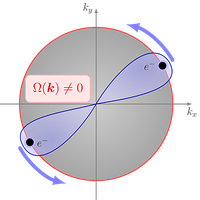
The authors reveal here that quantum geometry, encoded in the Berry curvature and wavefunction structure of electronic bands, can dramatically enhance Kohn–Luttinger superconductivity in two dimensions. They show that electrons in a geometrically nontrivial band can form a high-Tc topological superconductor purely from repulsive interactions, enabled by a resonance between the Cooper pair angular momentum and the Berry flux enclosed by the Fermi surface. These results provide a geometric route to strong superconductivity and offer new insight into rhombohedral graphene and twisted transition metal dichalcogenide systems.

Quantized crossed Andreev reflection in altermagnet/altermagnet topological superconductor/altermagnet heterojunction

Xing Wang, Kai-Yi Lyu, Yong Guo, and Yu-Xian Li

Phys. Rev. B 113, 014505 (2026) - Published 6 January, 2026

Spectral statistics and energy-gap scaling in k–local spin Hamiltonians

Sasanka Dowarah

Phys. Rev. B 113, 024201 (2026) - Published 6 January, 2026

Signatures of coherent phonon transport in frequency-dependent lattice thermal conductivity

Đorđe Dangić

Phys. Rev. B 113, 024301 (2026) - Published 6 January, 2026

Phase transitions and critical exponents in the six-vertex model on kagome lattices

Wei Zhang, Wanzhou Zhang, Jie Zhang, Chengxiang Ding, and Youjin Deng

Phys. Rev. B 113, 024407 (2026) - Published 6 January, 2026

Large enhancement in anomalous Nernst effect of the iron-based binary ferromagnet Fe3Ga through trace doping of the rare-earth element Ho

Xinzhe Hu, Minghang Li, Yuanchen Shen, Yuying Liu, Botao Jiang, Jiacheng Huang, Changmin Xiong, Jirong Sun, Tongyun Zhao, Dingnan Liu, Lichen Wang, Haipeng Wang, Fengxia Hu, Hongming Weng, Zian Li, Quansheng Wu, Yunzhong Chen, and Baogen Shen

Phys. Rev. B 113, 024408 (2026) - Published 6 January, 2026

The authors demonstrates here that trace doping of rare-earth elements leads to a significant enhancement (over 44%) of the anomalous Nernst effect (ANE) in melt-spun Fe3Ga. DFT calculations show that the structural modification, particularly the Ga deficiency in the D03 phase, shift the Fermi level to a larger Berry curvature distribution in the proximity of the Fermi surface and thus a higher transverse thermoelectric conductivity. The trace doping of a rare-earth element provides a new approach to further enhance the giant ANE in magnetic topological materials.

Sign In to Your Journals Account

Filter

Recent Issues

Vol. 114, Iss. 24
15 October 2026
Vol. 114, Iss. 23
15 October 2026
Vol. 114, Iss. 22
15 October 2026
Vol. 114, Iss. 21
1 October 2026
Category
Article Type
Section

Filter

Article Lookup

Enter a citation