Highlights

Translation symmetry restoration under random unitary dynamics

Katja Klobas, Colin Rylands, and Bruno Bertini

Phys. Rev. B 111, L140304 (2025) - Published 8 April, 2025

The authors study here how a system initialized in a non translationally symmetric initial state eventually becomes translationally invariant. They consider the average distance between the time-evolved state, and its translationally symmetric counterpart under the dynamics given by a brickwork circuit with randomly chosen local unitary gates. They find that the timescale for the restoration of translational symmetry coincides with the thermalization time, suggesting that the memory of initial state is not immediately lost, but rather persists until times comparable with the system size.

Breakdown of hydrodynamics in a Galilean quantum Hall crystal

Xiaoyang Huang and Andrew Lucas

Phys. Rev. B 111, L161107 (2025) - Published 8 April, 2025

Strongly interacting quantum Hall liquids can spontaneously break translational symmetry, forming a quantum Hall (Wigner) crystal. Here, the authors investigate its finite-temperature out-of-equilibrium dynamics, and show that nonlinear fluctuations drive the system to an unusual dynamical universality class, analogous to a “fracton fluid”. The authors provide supporting numerical evidence and propose experimental observation of this phenomenon in high-quality GaAs heterostructures using microwave impedance microscopy.

Sine-Gordon model at finite temperature: The method of random surfaces

M. Tóth, J. H. Pixley, D. Szász-Schagrin, G. Takács, and M. Kormos

Phys. Rev. B 111, 155112 (2025) - Published 7 April, 2025

The authors study here the sine-Gordon quantum field theory, relevant for many 1D gapped systems and experimental settings. Despite its integrability, computing correlation functions, especially at finite temperatures, remains challenging. Existing methods like perturbative expansions, Monte Carlo simulations, and Hamiltonian truncation have limitations. The authors develop here a numerical approach using the method of random surfaces, which is efficient, scalable, and free from the sign problem. They validate their results against established techniques and propose future applications for multipoint functions and quench dynamics.

Variable-temperature and carrier-resolved photo-Hall measurements of high-performance selenium thin-film solar cells

Rasmus S. Nielsen, Oki Gunawan, Teodor Todorov, Clara B. Møller, Ole Hansen, and Peter C. K. Vesborg

Phys. Rev. B 111, 165202 (2025) - Published 3 April, 2025

Selenium is a promising absorber material for the next generation of solar cells, but unlocking its full potential requires a deeper understanding of both the minority and majority charge carriers. Using the recently developed photo-Hall technique, the authors simultaneously map here the properties of both electrons and holes under varying illumination conditions. Combining this with temperature-dependent Hall measurements, as well as photovoltaic device characterization and simulations, they clarify several reported discrepancies in carrier mobilities, lifetimes, and doping densities. These new insights into the intrinsic properties of trigonal selenium reveal a performance potential greater than previously thought, while also providing a valuable guide for researchers to further optimize the optoelectronic quality of selenium thin films.

Pressure-induced superconductivity, amorphization, and topological phase transitions in the topological semimetal MoP4

Chutong Zhang, Xiangzhuo Xing, Song Huang, Xiao Tang, Linchao Yu, Na Zuo, Bin Li, Xiaolei Yi, Yan Meng, Xiaoran Zhang, Bingchao Yang, Xin Chen, Xiaofeng Xu, and Xiaobing Liu

Phys. Rev. B 111, L140502 (2025) - Published 3 April, 2025

Pressure-induced superconductivity in topological materials offers a promising avenue for discovering the so-called topological superconductors. Here, the authors report the emergence of pressure-induced superconductivity, amorphization, and topological quantum phase transitions in the topological semimetal MoP4. Notably, they observed unexpected superconducting fluctuations concurrent with the amorphous phase transition, extending up to Tsf ~ 20 K, an exceptionally high value besides high-temperature superconductors. These findings position MoP4 as a compelling platform for investigating the intricate interplay between superconductivity, amorphization, and topological phenomena.

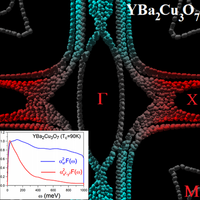
Calculations of spin fluctuation spectral functions α2F in high-temperature superconducting cuprates

Griffin Heier and Sergey Y. Savrasov

Phys. Rev. B 111, 134503 (2025) - Published 2 April, 2025

Accurate computations of pairing interaction and Tc for unconventional superconductors is a challenge for current methods. Here, the authors present the calculation of the α2F(ω) spectral functions from the Kramers-Kronig transformation of the spin-fluctuational FLEX pairing vertex. Justifying the use of the Bardeen-Cooper-Schrieefer (BCS) approximation, calculations are then used to benchmark theory against experimental data, with discussions of the pitfalls and improvements required to improve current computational methods.

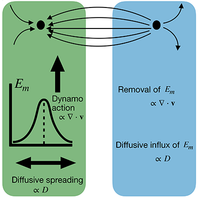
Monopole magnetohydrodynamics on a plane: Magnetosonic waves and dynamo instability

Debarghya Banerjee, Roderich Moessner, and Piotr Surówka

Phys. Rev. B 111, 165104 (2025) - Published 2 April, 2025

Magnetohydrodynamic (MHD) regimes in plasmas are often used to study large-scale astrophysical flows. Here, the authors have shown how an emergent MHD of magnetic monopoles can be used to study linear and nonlinear problems in two-dimensional spin liquids. The authors have demonstrated the presence of an isotropic phase velocity of linear waves and a compressibility induced dynamo-like effect in the emergent MHD regime. It is expected that future experiments and microscopic simulations will unveil this regime.

Magnetoferroelectric phase transition induced by latent spin-lattice coupling in the geometrically frustrated magnet CuFe0.95Al0.05O2

H. Tamatsukuri, T. Uchihara, S. Mitsuda, Y. Ishii, H. Nakao, K. Takehana, and Y. Imanaka

Phys. Rev. B 111, 134403 (2025) - Published 1 April, 2025

In multiferroic CuFe0.95Al0.05O2, applying uniaxial pressure generates a novel magnetoferroelectric phase. This study reveals that the magnetic structure of this phase is of the collinear sinusoidal type, which itself does not break the inversion symmetry in this system. Nevertheless, the sinusoidal magnetic structure likely contributes to the emergence of ferroelectric polarization in this phase through spin-lattice coupling, requiring a mechanism for a spin-associated ferroelectricity.

Valley-dependent giant orbital moments and transport features in rhombohedral graphene multilayers

Xingchi Mu and Jian Zhou

Phys. Rev. B 111, 165102 (2025) - Published 1 April, 2025

Light-element systems with marginal spin-orbital coupling effect serve as an excellent platform for investigating orbital degrees of freedom and exotic physical behaviors. Here, the authors determine via first-principles calculations the orbital magnetic moments, the orbital Hall effect, and the ordinary magnetoconductivity in gated rhombohedral multilayer graphene sheets. Furthermore, the topological properties can be effectively changed for the broken time-reversal symmetry, induced by Floquet light engineering. The study reveals the remarkable tunability of rhombohedral multilayer graphene in orbitronics, valleytronics, and multiferroic applications.

Near room-temperature ferromagnetism from double exchange in the van der Waals material CrGeTe3: Evidence from optical conductivity under pressure

Jihaan Ebad-Allah, Daniel Guterding, Meera Varma, Mangesh Diware, Shraddha Ganorkar, Harald O. Jeschke, and Christine A. Kuntscher

Phys. Rev. B 111, L140402 (2025) - Published 1 April, 2025

The van der Waals material CrGeTe3 is a ferromagnetic charge-transfer insulator at ambient pressure. When compressed, the material transforms into a semimetal with near room temperature ferromagnetism. Here, the authors present temperature- and pressure-dependent measurements of its optical conductivity, combined with density functional theory and dynamical mean-field theory calculations. A novel approach to analyzing the experimental data reveals that the pressure-induced insulator-to-metal transition alters the mechanism of ferromagnetism in CrGeTe3 from superexchange to double exchange.

Classification of 1+1D gapless symmetry protected phases via topological holography

Rui Wen and Andrew C. Potter

Phys. Rev. B 111, 115161 (2025) - Published 31 March, 2025

Classifying gapless phases of matter remains a fundamental challenge in condensed matter theory. The authors pioneer here a systematic classification of 1+1D bosonic gapless symmetry-protected topological phases via the Symmetry Topological Field Theory (SymTFT) framework. They derive, from physical considerations, the algebra of symmetry operators in a 1+1D bosonic gSPT and show that it precisely matches the structure of condensable algebras in the SymTFT. This study marks the first systematic classification of gapless quantum phases in the SymTFT paradigm.

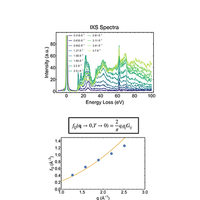
Quantum entanglement and quantum geometry measured with inelastic x-ray scattering

David Bałut, Barry Bradlyn, and Peter Abbamonte

Phys. Rev. B 111, 125161 (2025) - Published 31 March, 2025

The authors experimentally investigate here the quantum geometry and quantum information in the insulator LiF. Using sum rules for the measured density-density response, the authors compute the quantum Fisher information of LiF associated with density perturbations, and from these extrapolate a component of the quantum metric tensor. These results serve as a proof of principle that scattering techniques can quantify state-of-the-art quantum geometric quantities in materials, and establishes the quantum Fisher information as an experimentally accessible generalization of quantum geometry to real materials.

FeGe as a building block for the kagome 1:1, 1:6:6, and 1:3:5 families: Hidden d-orbital decoupling of flat band sectors, effective models, and interaction Hamiltonians

Yi Jiang, Haoyu Hu, Dumitru Călugăru, Claudia Felser, Santiago Blanco-Canosa, Hongming Weng, Yuanfeng Xu, and B. Andrei Bernevig

Phys. Rev. B 111, 125163 (2025) - Published 31 March, 2025

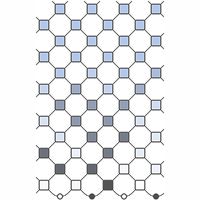
The authors develop here a trustworthy framework to model the electronic structure and interactions in kagome metals, starting with FeGe. By identifying symmetry-based orbital groupings, they construct minimal models that capture flat bands, von Hove singularities, and topology. Using these “LEGO-like” building blocks, they extend their approach to a wide range of kagome materials in the 1:1, 1:6:6, and 1:3:5 families, including MgFe6Ge6 and CsCr3Sb5. This framework provides realistic many-body models in order to explore interaction-driven phases in kagome and other materials.

Temporal chirp, temporal lensing, and temporal routing via space-time interfaces

Victor Pacheco-Peña, Mathias Fink, and Nader Engheta

Phys. Rev. B 111, L100306 (2025) - Published 31 March, 2025

Here, the authors propose photonic time interfaces (rapid modulations of the permittivity of the medium where the wave travels) to induce/create spatial interfaces, that is, space-time interfaces. They explore perpendicular, parallel, and oblique spatial interfaces created in time. In so doing, they show how such space-time metamaterials can be seen as the generalization of Snell’s law in four dimensions (x,y,z,t). Applications such as temporal chirp, lensing, and routing are then proposed as examples.

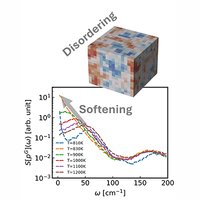
Thermal disorder and phonon softening in the ferroelectric phase transition of lead titanate

Pinchen Xie, Yixiao Chen, Weinan E, and Roberto Car

Phys. Rev. B 111, 094113 (2025) - Published 27 March, 2025

The authors find here, with first-principles molecular dynamics simulations enhanced by machine learning, that on submicrometer scales the first-order ferroelectric phase transition in PbTiO3 is driven by dipolar fluctuations at the nanoscale, while nucleation is suppressed by strong elastic-dipole coupling. The study shows that the ideal “phonon softening” observed in experiments is likely a secondary effect of the Debye relaxation that accompanies an order-disorder transformation, suggesting that spectroscopical softening is not necessarily an indicator of displacive structural transition.

Hopfions in chiral magnetic trilayers

X. C. Hu, X. S. Wang, C. Wang, and X. R. Wang

Phys. Rev. B 111, 094436 (2025) - Published 27 March, 2025

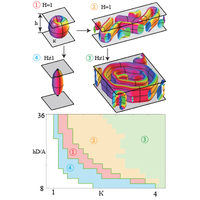
The stabilization of hopfions in chiral magnetic trilayers requires three essential conditions: (1) the middle layer must possess sufficiently strong Dzyaloshinskii-Moriya interaction (DMI) relative to collinear interactions to establish skyrmions as the ground state in a 2D film, yet not so strong as to fragment the spin texture; (2) the layer thickness must provide adequate space for skyrmion tubes to twist and form closed-loop configurations; and (3) two capping layers with strong magnetic anisotropy are necessary to confine the hopfion and prevent its expansion. These combined criteria ensure the formation and stability of hopfion structures in the trilayer system.

Structural and magnetic properties of CoTeMoO6

Yu Li, Jared Coles, Xin Gui, Hyowon Park, Yan Wu, Xinglong Chen, Jing-han Chen, Xiaoping Wang, Huibo Cao, Shane Stadler, Omar Chmaissem, David P. Young, Stephan Rosenkranz, and John F. DiTusa

Phys. Rev. B 111, 104434 (2025) - Published 27 March, 2025

The coexistence of helical structural motifs with 21 screw axes and orthorhombic unit cell in CoTeMoO6 allows for subtle tunability under external uniaxial pressure, significantly affecting its magnetic and optical properties. The study here uncovers the presence of structural and magnetic domains, along with their intrinsic anisotropy. These findings highlight a complex interplay among structural, magnetic, and optical degrees of freedom, suggesting potential ferroic behavior.

Spin-polarized specular Andreev reflections in altermagnets

Yutaro Nagae, Andreas P. Schnyder, and Satoshi Ikegaya

Phys. Rev. B 111, L100507 (2025) - Published 27 March, 2025

The authors theoretically show here that the characteristic spin-split bands of altermagnets give rise to distinctive spin polarized specular Andreev reflections at altermagnet–superconductor interfaces. By utilizing this feature, they propose a device that integrates the functions of both a Cooper pair splitter and a spin beam splitter, thereby creating energy entangled electron pairs. The positive nonlocal conductance and the positive noise cross-correlation are unambiguous signatures of specular Andreev reflections in the proposed device.

Exploring the accuracy of the equation-of-motion coupled-cluster band gap of solids

Evgeny Moerman, Henrique Miranda, Alejandro Gallo, Andreas Irmler, Tobias Schäfer, Felix Hummel, Manuel Engel, Georg Kresse, Matthias Scheffler, and Andreas Grüneis

Phys. Rev. B 111, L121202 (2025) - Published 26 March, 2025

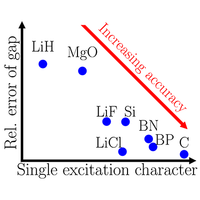
Calculating with controllable accuracy electronic band gaps in materials is a challenge for currently available ab initio methods. Here, the authors present a hybrid approach that combines equation-of-motion coupled-cluster theory with the GW approximation to efficiently estimate band gaps for semiconductors and insulators in the thermodynamic limit. The method significantly reduces the computational cost, while showing that errors in predicted gaps correlate with the reduced single excitation character of many-electron states.

Observation of amplitude-driven nonreciprocity for energy guiding

Mathieu Padlewski, Romain Fleury, and Hervé Lissek

Phys. Rev. B 111, 125156 (2025) - Published 25 March, 2025
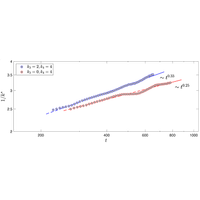
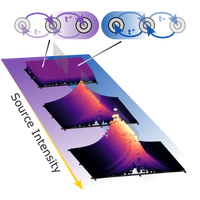
Imagine a tabletop composed of atoms that are nonlinearly and nonreciprocally coupled towards its center. A light tap on the surface generates typical nondispersive acoustic waves across the plane. In contrast, a hard hit triggers nonlinear nonreciprocity, directing energy towards the center, regardless of the impact location. By employing an extended Hatano-Nelson model and a highly configurable active acoustic metamaterial, the authors demonstrate here nonreciprocal systems where nonlinearities can strategically control energy guiding.

Sign In to Your Journals Account

Filter

Section

Filter

Article Lookup

Enter a citation