Highlights

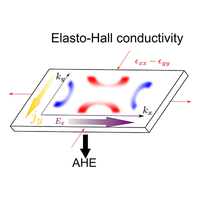
Elasto-Hall conductivity and the anomalous Hall effect in altermagnets

Keigo Takahashi, Charles R. W. Steward, Masao Ogata, Rafael M. Fernandes, and Jörg Schmalian

Phys. Rev. B 111, 184408 (2025) - Published 5 May, 2025

Altermagnets, in which time-reversal symmetry is broken but net magnetization is zero, have attracted much attention recently as a novel class of magnetic materials. Because the anomalous Hall effect (AHE) is only allowed for certain moment directions, it is not a generic property of altermagnets. Instead, the authors show here that a transport coefficient they call elasto-Hall conductivity, corresponding to a strain-induced AHE, can be used to directly probe the altermagnetic order parameter. Moreover, the elasto-Hall conductivity arises from the strain-induced deformation of the Berry curvature quadrupole that characterizes altermagnets.

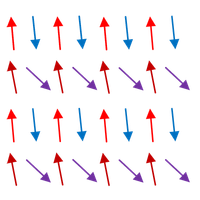
Coexistence of antiferromagnetism and ferrimagnetism in adjacent honeycomb layers

D. Szaller, L. Prodan, K. Geirhos, V. Felea, Y. Skourski, D. Gorbunov, T. Förster, T. Helm, T. Nomura, A. Miyata, S. Zherlitsyn, J. Wosnitza, A. A. Tsirlin, V. Tsurkan, and I. Kézsmárki

Phys. Rev. B 111, 184404 (2025) - Published 2 May, 2025

Ferromagnetic/ferrimagnetic and antiferromagnetic orders are typically mutually exclusive, coexisting only in engineered heterostructures. Challenging this paradigm, the authors report here on an atomic-scale hybrid spin state in three-dimensional crystals of the polar antiferromagnet Co2Mo3O8. The realization of layer-by-layer stacking of ferromagnetic and antiferromagnetic orders through tailored microscopic interactions opens new routes for nanoscale engineering of unconventional magnetic states.

Systematic investigation of dynamic nuclear polarization with boron vacancy in hexagonal boron nitride

Yuki Nakamura, Shunsuke Nishimura, Takuya Iwasaki, Shu Nakaharai, Shinichi Ogawa, Yukinori Morita, Kenji Watanabe, Takashi Taniguchi, Kento Sasaki, and Kensuke Kobayashi

Phys. Rev. B 111, 195404 (2025) - Published 2 May, 2025

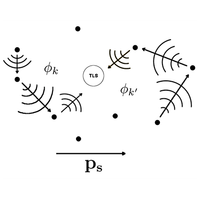
The authors present here a systematic investigation of dynamic nuclear polarization (DNP) using the negatively charged boron vacancy (VB−) in hBN. They measure optically detected magnetic resonance (ODMR) spectra across a wide magnetic field range, including the ground state level anticrossing, and develop Lindblad-based simulations with a single electron spin and three 15N nuclear spins. The results reveal limitations of standard fitting methods and symmetry-induced constraints on maximum nuclear polarization.

Properties of two-level systems in current-carrying superconductors

T. Liu, A. V. Andreev, and B. Z. Spivak

Phys. Rev. B 111, L180502 (2025) - Published 2 May, 2025

The authors show here that in disordered superconductors, the coupling of two-level systems to external AC electric fields can be dramatically enhanced by the presence of a DC supercurrent. This giant enhancement of the two-level system coupling manifests in all AC phenomena, both linear and nonlinear.

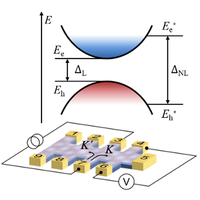
Majorana modes in quantum dots coupled via a floating superconducting island

Rubén Seoane Souto, Virgil V. Baran, Maximilian Nitsch, Lorenzo Maffi, Jens Paaske, Martin Leijnse, and Michele Burrello

Phys. Rev. B 111, 174501 (2025) - Published 1 May, 2025

The authors investigate here Majorana modes in quantum dots, coupled via a floating superconducting island with charging energy. They identify Majorana sweet spots away from charge-degeneracy points. This finding opens routes for engineering interacting topological devices based on hybrid quantum dot–superconductor platforms that can reveal unique Majorana properties, including electron teleportation and topological Kondo effect.

Topological phase transitions in superconductors with chiral symmetry

Kristian Løvås Svalland, Maria Teresa Mercaldo, and Mario Cuoco

Phys. Rev. B 111, 184501 (2025) - Published 1 May, 2025

This study explores topological transitions in one-dimensional superconductors supporting multiple Majorana bound states, protected by chiral symmetry. It introduces the concept of “marginal topological superconductors” — gapless systems where minimal, chirality-preserving perturbations can induce a topological phase. These systems are significant because they allow for the easy creation and manipulation of Majorana states with small parameter changes, making them promising candidates for topological quantum devices requiring precise control of Majorana bound states at the edges.

Optical orientation of excitons and charge carriers in methylammonium lead iodide perovskite single crystals in the orthorhombic phase

Nataliia E. Kopteva, Dmitri R. Yakovlev, Eyüp Yalcin, Ilya A. Akimov, Mladen Kotur, Bekir Turedi, Dmitry N. Dirin, Maksym V. Kovalenko, and Manfred Bayer

Phys. Rev. B 111, 195201 (2025) - Published 1 May, 2025

The authors demonstrate here efficient optical spin orientation in orthorhombic MAPbI3 perovskite crystals at a temperature of 1.6 K. Exciton polarization reaches 85% and persists throughout their lifetime. It is robust to detuning excitation energy up to 0.4 eV. Spin dynamics reveal inactive Dyakonov-Perel spin relaxation, long spin-relaxation times, and distinct Landé g-factors for electrons and holes. Magnetic field effects and spin beats expose contributions from localized carriers.

Fermi surfaces of the nodal-line candidates CaCdGe and CaCdSn: Discrepancy between band structure calculations and quantum oscillation measurements

B. V. Schwarze, F. Husstedt, P. Chekhonin, S. Galeski, T. Helm, J. Liu, Yu. Prots, T. Romanova, M. Uhlarz, M. v. Zimmermann, D. Kaczorowski, and J. Wosnitza

Phys. Rev. B 111, 155154 (2025) - Published 30 April, 2025

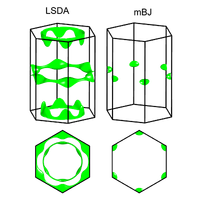
The authors report here quantum oscillation measurements and density functional theory calculations on the nodal-line semimetal candidates CaCdGe and CaCdSn. Remarkably, the measurements reveal many quantum oscillation frequencies that are not predicted by the calculations. The calculated band structures and Fermi surfaces are very susceptible to the applied approximations. This casts doubt on the validity of calculations and, thus, on the precise nature of the topology of these systems.

Polarization-resolved core exciton dynamics in LiF using attosecond transient absorption spectroscopy

Kylie J. Gannan, Lauren B. Drescher, Rafael Quintero-Bermudez, Navdeep Rana, Chengye Huang, Kenneth Schafer, Mette B. Gaarde, and Stephen R. Leone

Phys. Rev. B 111, 134306 (2025) - Published 28 April, 2025

The authors introduce here linear dichroism into attosecond transient absorption spectroscopy measurements to explore the orbital character of core exciton excited states in LiF thin films during their few-femtosecond exciton coherence lifetimes. The dichroic effect is well-described by atomic alignment angular momentum rules, which allow or forbid transitions from an aligned p-like state to a resonant s-like state, depending on the beam polarizations. A few-level model simulation and density functional theory calculations are used to corroborate the orbital character assignments of the core exciton states in the solid.

Eliashberg theory and superfluid stiffness of band-off-diagonal pairing in twisted graphene

Bernhard Putzer and Mathias S. Scheurer

Phys. Rev. B 111, 144513 (2025) - Published 28 April, 2025

Superconductivity typically involves Cooper pairs forming between degenerate electronic states. This work examines an unconventional case where pairing occurs exclusively between nondegenerate, off-resonant bands, motivated by recent experimental observations in twisted graphene systems. The authors uncover a range of unusual phenomena, including modified thermal phase transitions, coexistence of normally incompatible frequency dependencies, and distinctive temperature behavior of the superfluid stiffness. These results provide theoretical insights into the mechanisms and signatures of band-off-diagonal superconductivity and offer a compelling framework for interpreting experimental results.

Probing the electronic structure at the boundary of topological insulators in the Bi2Se3 family by combined scanning tunneling and atomic force microscopy

Christoph S. Setescak, Irene Aguilera, Adrian Weindl, Matthias Kronseder, Andrea Donarini, and Franz J. Giessibl

Phys. Rev. B 111, 165305 (2025) - Published 28 April, 2025

Topological insulators, such as Bi2Se3, Bi2Te3 and Bi2Te2Se, are materials with an insulating bulk band structure and linearly dispersing, spin-polarized electronic bands at the boundary. In this study, the authors demonstrate that scanning tunneling microscopy can probe the density of states and is able to image the wave functions with atomic scale resolution – properties that are theoretically calculated using a tight-binding model derived from DFT+GW calculations. Used in conjunction with AFM, simultaneous structural and electronic characterization from the atomic scale upward becomes possible.

Tunable Dirac nodal line in orthorhombic RuO2

Ece Uykur, Oleg Janson, Victoria A. Ginga, Marcus Schmidt, Nico Giordano, and Alexander A. Tsirlin

Phys. Rev. B 111, 134114 (2025) - Published 24 April, 2025

Hydrostatic pressure lowers the symmetry of RuO2 and controls the amount of orthorhombic strain in this material. The structural transformation upon compression is traced via single-crystal x-ray diffraction combined with ab initio calculations. It is shown that pressurized RuO2 does not become altermagnetic, but it retains the key feature of the parent tetragonal phase, the Dirac nodal line that can be shifted across the Fermi level by varying pressure.

Phase diagram of the XXZ pyrochlore model from pseudo-Majorana functional renormalization group

Yannik Schaden, Matías G. Gonzalez, and Johannes Reuther

Phys. Rev. B 111, 134442 (2025) - Published 24 April, 2025

Pyrochlore materials exhibit exotic spin physics, which can be well described by a spin-½ nearest neighbor XXZ model. Here, the pseudo-Majorana functional renormalization group is used to compute the entire phase diagram as a function of the temperature and transverse coupling. The authors identify an extensive nonmagnetic regime accompanied by quantum order-by-disorder effects and the possibility of a lattice nematic ground state. In the spin ice phases, the method predicts structure factors with characteristic pinch points, broadened by thermal fluctuations.

Probing Hilbert space fragmentation with strongly interacting Rydberg atoms

Fan Yang, Hadi Yarloo, Hua-Chen Zhang, Klaus Mølmer, and Anne E. B. Nielsen

Phys. Rev. B 111, 144313 (2025) - Published 24 April, 2025

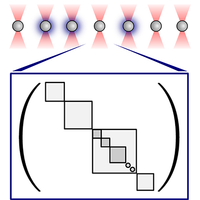
Hilbert space fragmentation provides a novel route to ergodicity breaking in isolated quantum many-body systems. The authors present here a feasible scheme to systematically explore Hilbert space fragmentation in a Rydberg atom array. They show that asymmetric quasiparticle transport can be used to tune Krylov-subspace ergodicity, and that atomic position disorder can selectively induce a many-body localization transition. The proposed scheme is expected to be realized on state-of-the-art Rydberg quantum simulators.

Exact correlation functions at finite temperatures in a Tomonaga-Luttinger liquid with an open end

Naira Grigoryan and Piotr Chudzinski

Phys. Rev. B 111, 155439 (2025) - Published 24 April, 2025

The authors derive here exact analytic expressions for correlations in Tomonaga-Luttinger liquids with a boundary at finite temperature and discuss two distinct regimes: Coulomb and Hund metals. The difference between Coulomb and Hund is in the value of K. It is found that only the Hund metal has a peak in the single-particle density of states on its edge. Peak splitting due to coupling with plasmon polaritons is also studied. This shows how boundaries and external environmental coupling can shape the local density of states.

Coexistence of electronic and phononic higher-order band topology in group III-V monolayers

Xijian Zhu, Kanghan Zackery Ye, Fangyang Zhan, Xianyong Ding, Da-Shuai Ma, and Rui Wang

Phys. Rev. B 111, 165205 (2025) - Published 24 April, 2025

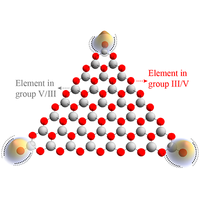
The authors reveal here that III-V monolayers of XY (X=B, Al, Ga, In; Y=N, P, As, Sb), with planar and low-buckled honeycomb structures, exhibit both electronic and phononic higher-order band topology. The explicit existence of hallmark corner states with quantized fractional charge is presented clearly. Moreover, they point out that the variation of atomic masses in III-V monolayers can induce phonon band inversion, leading to different quantized fractional charges.

Exact spectral form factors of noninteracting fermions with Dyson statistics

Tatsuhiko N. Ikeda, Lev Vidmar, and Michael O. Flynn

Phys. Rev. B 111, 144312 (2025) - Published 23 April, 2025

Random matrix theory (RMT) is a cornerstone of quantum dynamics that predicts universal features of interacting many-body systems. Here, the authors establish exact methods to compute the spectral form factor (SFF) of noninteracting models whose single-particle states exhibit random matrix statistics. This regime is characterized by exponential growth of the SFF, in sharp contrast to the linear growth of typical interacting systems. These exact results provide a rigorous foundation for future studies of the crossover to many-body RMT and the onset of thermalization.

Analytical model of metasurfaces comprising meta-atoms with anisotropic polarizabilities and for arbitrary incident angles

Izzatjon Allayarov, Vladimir R. Tuz, Antonio Calà Lesina, and Andrey B. Evlyukhin

Phys. Rev. B 111, 155438 (2025) - Published 23 April, 2025

The use of powerful numerical methods to study the optical properties of metasurfaces poses new challenges in developing analytical models for analysis of numerical results. This paper presents an analytical approach to studying the electromagnetic response of metasurfaces consisting of dipolar meta-atoms with anisotropic polarizabilities and irradiated at an arbitrary incident angle. The presented approach allows one to trace and explain the influence of the coupling between electric and magnetic dipole moments in metasurfaces on their transmission and reflection resonances.

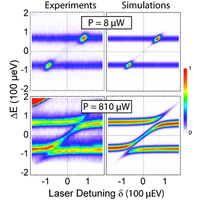
Coherent spectroscopy of a single Mn-doped InGaAs quantum dot

J. Filipovic, A. Kundu, N. K. Vij, S. Fécherolle, A. Lemaître, S. Gupta, and O. Krebs

Phys. Rev. B 111, 165302 (2025) - Published 23 April, 2025

A single Mn atom in an InGaAs epitaxial quantum dot provides an effective spin J=1, which couples optically to excitonic states, offering an original spin-based platform for applications in quantum photonics. The authors investigate here the coherence of this spin by using one- and two-laser resonant optical spectroscopy in continuous wave regime to evidence and probe the Autler-Townes splitting generated at high excitation power. From the careful analysis of these data with a model based on optical Bloch equations, the authors can infer the pure dephasing rate of the addressed spin states.

Tunable atomically enhanced moiré Berry curvatures in twisted triple bilayer graphene

Konstantin Davydov, Ziyan Zhu, Noah Friedman, Ethan Gramowski, Yaotian Li, Jack Tavakley, Kenji Watanabe, Takashi Taniguchi, Mitchell Luskin, Efthimios Kaxiras, and Ke Wang

Phys. Rev. B 111, L161120 (2025) - Published 23 April, 2025
In consecutively twisted trialyer material platforms, the complex atomic landscape of coexisting moiré superlattices gives rise to rich electronic properties. Near band-insulator gaps of each moiré superlattices, the authors report here transport signatures of strong Berry curvatures in twisted triple bilayer graphene, enhanced by tunable inter-moiré lattice reconstruction. This work shed new insights in understanding the atomic and electronic properties of twisted multilayers, and paves a path towards engineering the band structure and its topology for designer material functionalities.

Sign In to Your Journals Account

Filter

Section

Filter

Article Lookup

Enter a citation