Highlights

Magnetic field suppression of tomographic electron transport

Habib Rostami, Nitay Ben-Shachar, Sergej Moroz, and Johannes Hofmann

Phys. Rev. B 111, 155434 (2025) - Published 22 April, 2025

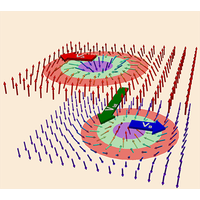
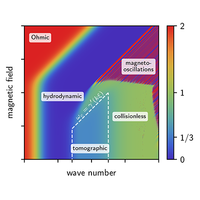
The authors describe here magnetic field effects on two-dimensional electron gases in a “tomographic” regime, a predicted transport regime between ballistic and hydrodynamic transport expected to be generic in high mobility devices. They show that tomographic scaling features in the transverse conductivity, which describes the conductance in finite geometries, are rapidly suppressed by a magnetic field. This suppression could both serve as a “smoking-gun” signature of the tomographic transport regime and be used to switch between hydrodynamic and tomographic transport.

Magnetic excitations in Ndn+1NinO3n+1 Ruddlesden-Popper nickelates observed via resonant inelastic x-ray scattering

Sophia F. R. TenHuisen, Grace A. Pan, Qi Song, Denitsa R. Baykusheva, Dan Ferenc Segedin, Berit H. Goodge, Hanjong Paik, Jonathan Pelliciari, Valentina Bisogni, Yanhong Gu, Stefano Agrestini, Abhishek Nag, Mirian García-Fernández, Ke-Jin Zhou, Lena F. Kourkoutis, Charles M. Brooks, Julia A. Mundy, Mark P. M. Dean, and Matteo Mitrano

Phys. Rev. B 111, 165145 (2025) - Published 22 April, 2025

The authors present here a resonant inelastic x-ray scattering study of magnetic and electronic excitations in the layered Ruddlesden-Popper nickelates Ndn+1NinO3n+1. As the number of layers increases, holes are doped into ligand sites and magnetic excitations soften modestly–an effect attributed to competing influences of hole doping and enhanced interlayer exchange. These findings highlight structural tuning as an effective route to manipulate electronic and magnetic properties, establishing a promising platform for unconventional superconductivity.

Eliminating the confined dark-exciton qubit precession using an externally applied magnetic field

Zu-En Su, Dan Cogan, Ido Schwartz, Ayal Beck, and David Gershoni

Phys. Rev. B 111, L161302 (2025) - Published 21 April, 2025

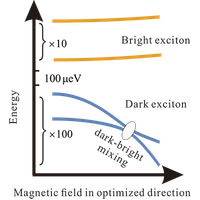
Quantum dots host short- and long-lived bright and dark excitons (DEs). The long-lived DEs form coherent integer-spin qubits that can be written, controlled, read, and reset using single picosecond optical pulses. These qubits enable the deterministic generation of multi-entangled photon clusters, crucial for quantum communication. With nondegenerate eigenstates, DEs exhibit a natural precession in their coherent superposition, which can challenge qubit control. The authors present here experimental and theoretical methods to reduce and eliminate this precession, while discovering the polarization of this optically inactive qubit.

Revealing rotational symmetry breaking charge density wave order in the kagome superconductor (Rb,K)V3Sb5 by ultrafast pump-probe experiments

Qinwen Deng, Hengxin Tan, Brenden R. Ortiz, Stephen D. Wilson, Binghai Yan, and Liang Wu

Phys. Rev. B 111, 165134 (2025) - Published 18 April, 2025

The authors clarify here the microscopic structure and symmetry breaking of the charge density wave phase in the kagome superconductors RbV3Sb5 and KV3Sb5 by ultrafast time-resolved reflectivity. Based on measuring coherent phonon spectra and comparing them to calculated phonon frequencies via density-functional theory, the authors show the CDW structure of both compounds is the staggered inverse Star-of-David pattern with interlayer π phase shift. This corroborates the sixfold rotational symmetry breaking in the charge density wave phase, providing a new perspective to resolve the dispute on CDW structure in these compounds.

Role of antisymmetric orbitals and electron-electron interactions on the two-particle spin and valley blockade in graphene double quantum dots

S. Möller, L. Banszerus, K. Hecker, H. Dulisch, K. Watanabe, T. Taniguchi, C. Volk, and C. Stampfer

Phys. Rev. B 111, 165416 (2025) - Published 18 April, 2025

The authors study here spin and valley blockades in bilayer-graphene double quantum dots and discuss limiting mechanisms of the blockades. Magnetotransport measurements and rate-equation simulations reveal a magnetic field tunable blockade, which is limited by the orbital splitting, the strength of the electron-electron interaction, and the difference in the valley g factors between the symmetric and antisymmetric two-particle orbital states. These findings offer new insights into two-particle double quantum dots in graphene, relevant for the exploration of different qubit regimes in the future.

Chiral instabilities in driven-dissipative quantum liquids

Zhi-Xing Lin, Bastien Lapierre, Per Moosavi, and Shinsei Ryu

Phys. Rev. B 111, 165131 (2025) - Published 17 April, 2025

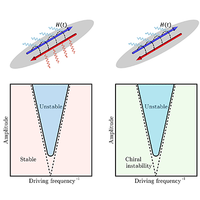
The interplay between drives and dissipation in quantum many-body systems can lead to a plethora of nonequilibrium phenomena, yet such setups remain particularly challenging to study. Here, the authors explore analytically the dynamics of periodically driven Tomonaga-Luttinger liquids —paradigmatic interacting quantum matter— coupled to thermal baths. While in the detailed-balance regime, dissipation suppresses parametric resonances partially, the researchers find that chiral dissipation leads to a novel nonreciprocal phase, reminiscent of the non-Hermitian skin effect.

Moiré optical phonons coupled to heavy electrons in magic-angle twisted bilayer graphene

Hao Shi, Wangqian Miao, and Xi Dai

Phys. Rev. B 111, 155126 (2025) - Published 16 April, 2025

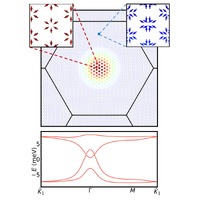
The authors propose here a projection scheme to simplify electron-phonon coupling in magic-angle twisted bilayer graphene, highlighting the coupling with low-energy heavy electrons. Several active moiré phonons that strongly couple to the flat band are identified. These modes exhibit unique envelope functions at the moiré scale and preserve monolayer oscillations at the atomic scale. Further incorporating them into an extended Holstein model will facilitate studies of correlated insulating and superconducting phases.

Electron-magnon coupling mediated magnetotransport in antiferromagnetic van der Waals heterostructures

Sujan Maity, Soumik Das, Mainak Palit, Koushik Dey, Bikash Das, Tanima Kundu, Rahul Paramanik, Binoy Krishna De, Hemant Singh Kunwar, and Subhadeep Datta

Phys. Rev. B 111, L140407 (2025) - Published 16 April, 2025

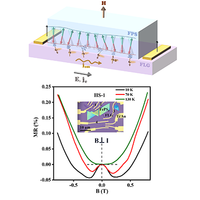
Magnons — wavelike spin excitations in magnets — transfer energy and information without moving charge, like ripples on water. Here, the authors find that in FePS3, an antiferromagnetic insulator, magnons interact with the electrons of few-layer graphene when in a heterostructure, enabling spin waves to convert into electrical signals. In FePS3, magnons soften below 40 K, reducing stiffness with cooling, while few-layer graphene exhibits negative magnetoresistance at low fields (±0.2 T) up to 100 K, transitioning to positive beyond this point. This experiment also proposes a “magnon capacitor”, where spin waves regulate charge transport by influencing carrier dynamics at the interface. With possible applications in energy-efficient computing, this breakthrough advances next-generation spintronic technologies.

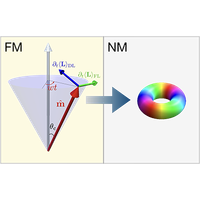
Orbital pumping by magnetization dynamics in ferromagnets

Dongwook Go, Kazuya Ando, Armando Pezo, Stefan Blügel, Aurélien Manchon, and Yuriy Mokrousov

Phys. Rev. B 111, L140409 (2025) - Published 16 April, 2025

The authors theoretically predict here that magnetization dynamics in ferromagnets can pump orbital angular momentum, establishing it as the Onsager reciprocal process of orbital torque, where orbital angular momentum drives magnetization dynamics. This orbital pumping mechanism enables the generation of orbital angular momentum through ferromagnetic resonance via an rf field, incoherent magnons from laser heating, and other means. First-principles calculations reveal that orbital pumping in ferromagnetic Ni is significantly stronger than in Fe, aligning with recent experimental observations.

Tunable anomalous Hall effect by selective mirror symmetry breaking in the kagome magnet GdMn6Ge6

Zicheng Tao, Tianye Yu, Jianyang Ding, Zhicheng Jiang, Zhenhai Yu, Wei Xia, Xia Wang, Xuerong Liu, Yulin Chen, Dawei Shen, Yan Sun, and Yanfeng Guo

Phys. Rev. B 111, L161114 (2025) - Published 16 April, 2025

The authors report here that an external magnetic field can selectively break the mirror symmetries along different crystallographic directions in the kagome magnet GdMn6Ge6, which can thereby realize distinct Berry curvatures and tunable large anomalous Hall conductivities. The results set an explicit example demonstrating that the strong correlation between mirror symmetry and Berry curvature can generate a significant intrinsic anomalous Hall effect, as well as tunable topological properties in a single magnetic topological phase.

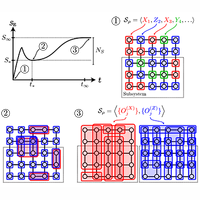
Slow measurement-only dynamics of entanglement in Pauli subsystem codes

Benedikt Placke and S. A. Parameswaran

Phys. Rev. B 111, 144308 (2025) - Published 15 April, 2025

The authors explore here the measurement-only dynamics of a class of models built from subsystem error correcting codes and uncover a wide range of features in entanglement dynamics, with a surprising connection to Hilbert-space fragmentation.

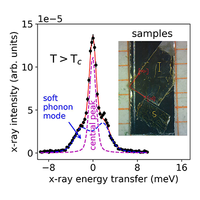
Soft phonon and the central peak at the cubic-to-tetragonal phase transition in SrTiO3

Avishek Maity, Klaus Habicht, Michael Merz, Ayman H. Said, Christo Guguschev, Danny Kojda, Britta Ryll, Jan-Ekkehard Hoffmann, Andrea Dittmar, Thomas Keller, and Frank Weber

Phys. Rev. B 111, 134108 (2025) - Published 14 April, 2025

The authors reexamine here the lattice dynamical footprint of the canonical antiferrodistortive phase transition in SrTiO3 by inelastic x-ray scattering with high energy and momentum resolution for differently grown single crystals. In combination with thermodynamic, transport, and defect-sensitive probes, the study reveals a surprising four-fold enhancement of the eponymous central peak in the sample with lower defect concentration. Anisotropic correlation lengths observed on cooling towards Tc indicate that local properties of the crystals are at the origin of the central peak in SrTiO3.

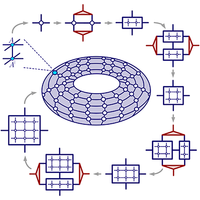
Finite-size scaling on the torus with periodic projected entangled-pair states

Gleb Fedorovich, Lukas Devos, Jutho Haegeman, Laurens Vanderstraeten, Frank Verstraete, and Atsushi Ueda

Phys. Rev. B 111, 165124 (2025) - Published 14 April, 2025

Projected entangled pair states (PEPS) provide a powerful variational class for strongly correlated ground states in two dimensions, but how to apply them to clusters with periodic boundary conditions was an open question. To solve this problem, a novel algorithm is introduced to contract PEPS on a torus and variational ground state optimization is performed using gradient methods in combination with state-of-the-art automatic differentiation. The authors observe finite-size scaling of critical (2+1)d quantum models and use this to successfully extract scaling dimensions.

Moving skyrmions in antiferromagnets by sublattice displacements

Michael Lau, Wolfgang Häusler, and Michael Thorwart

Phys. Rev. B 111, 144411 (2025) - Published 11 April, 2025

Magnetic skyrmions are topologically protected swirls in magnets. They behave like quasiparticles which, in ferromagnets, don’t exhibit inertial mass. In antiferromagnets, a skyrmion can be viewed as composed of two coupled ferromagnetic skyrmions of opposite orientation. Interestingly, antiferromagnetic skyrmions behave like classical particles, with finite inertial mass. Here, the authors trace this mass generation back to a small displacement between the sublattice skyrmions that arises when applying forces to the skyrmion. They further predict the velocity of a current-driven antiferromagnetic skyrmion.

Spin Hall effect driven photocurrent in nonmagnetic single metals

Taiki Nishijima, Ryo Ohshima, Youichi Yanase, Ryota Ishii, Masashi Shiraishi, and Yuichiro Ando

Phys. Rev. B 111, L140406 (2025) - Published 10 April, 2025

The authors unveil here the unexplored potential of nonmagnetic single-element metals by focusing on one type of nonlinear phenomenon: photocurrent generation induced by spin accumulation at the material edges. Distinctive behavior at the material edges, where the spatial symmetry is intrinsically broken, leads to observation of the nonlinear phenomenon. The resulting photocurrent is associated with both time-reversal symmetry breaking and space-inversion symmetry breaking. This groundbreaking observation challenges the prevailing notion that nonlinear phenomena are exclusively observed in more exotic materials.

Estimation of spin-orbit torques in the presence of current-induced magnon creation and annihilation

Paul Noel, Emir Karadža, Richard Schlitz, Pol Welter, Charles-Henri Lambert, Luca Nessi, Federico Binda, Christian L. Degen, and Pietro Gambardella

Phys. Rev. B 111, 144409 (2025) - Published 9 April, 2025

Current-induced spin-orbit torques (SOTs) are widely used to control magnetization in spintronic devices. However, the electrical injection of spin currents, which drives the SOTs, also generates and annihilates magnons, affecting both magnetization and magnetoresistance. This work demonstrates that neglecting magnonic effects can significantly overestimate the damping-like torque and misestimate the magnitude and sign of the field-like torque. By combining magneto-optical Kerr effect and magnetotransport measurements, the authors propose here a method for accurately assessing SOTs. These findings highlight the importance of considering magnon contributions to improve the reliability of SOT quantification across different material systems.

Transformer wave function for two dimensional frustrated magnets: Emergence of a spin-liquid phase in the Shastry-Sutherland model

Luciano Loris Viteritti, Riccardo Rende, Alberto Parola, Sebastian Goldt, and Federico Becca

Phys. Rev. B 111, 134411 (2025) - Published 8 April, 2025

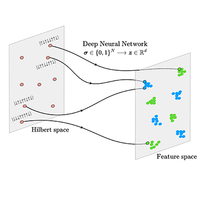
The authors propose here a variational ansatz based on the Transformer architecture to investigate frustrated quantum magnets. The key idea is based on constructing a map, parametrized with a Transformer, from the space of the physical spin configurations to an abstract space, where the determination of the properties of the system is simplified. This method achieves an exceptionally accurate description of the ground-state properties of the Shastry-Sutherland model, successfully identifying the presence of a gapless quantum spin liquid phase.

Detecting the topological winding of superconducting nodes via local density of states

Lena Engström, Pascal Simon, and Andrej Mesaros

Phys. Rev. B 111, 134505 (2025) - Published 8 April, 2025

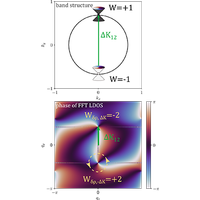
The authors propose here a method to use impurity scattering to detect interference effects between two superconducting nodes, each of which carries locally a winding number as a topological invariant. Steps are outlined for choosing an impurity and a tip for the scanning tunnelling microscope, such that the winding difference of the nodes becomes measurable via the local density of states around the impurity. The formalism is demonstrated on a model of a two-dimensional superconductor, but applies to any nodal system with chiral symmetry.

Variational approach to the dynamics of dissipative quantum impurity models

Yi-Fan Qu, Martino Stefanini, Tao Shi, Tilman Esslinger, Sarang Gopalakrishnan, Jamir Marino, and Eugene Demler

Phys. Rev. B 111, 155113 (2025) - Published 8 April, 2025

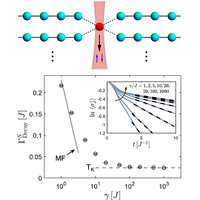
Simulating dissipative quantum many-body systems presents a significant theoretical challenge. Here, the authors develop an efficient nonperturbative framework that is tailored to dissipative impurity problems, combining a superposition of Gaussian states (SGS) variational ansatz with the quantum trajectory approach. They showcase the method with a model of a spinful impurity subject to two-body losses embedded in a fermionic bath, for which they explore the full crossover from weak to strong dissipation. Their approach captures the emergence of a loss-induced Kondo effect under strong dissipation, and reveals an exotic negative conductance phenomenon at intermediate loss rates.

Theory of band gap reduction due to conduction electrons in two-dimensional transition metal dichalcogenides: Imaginary frequency formalism

Jack N. Engdahl, Harley D. Scammell, Dmitry K. Efimkin, and Oleg P. Sushkov

Phys. Rev. B 111, 155408 (2025) - Published 8 April, 2025

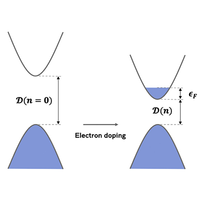
Two-dimensional transition metal dichalcogenides have a large direct band gap that shrinks with electron doping, with a sharp reduction at low density. Here, the authors develop the theory of band gap renormalization from many-body screening within the random phase approximation, where they consider full dynamical screening in the imaginary frequency domain. This method is analytically convenient and numerically accurate, with the results reproducing the low density δD∼n1/3 behavior expected from analysis of the self-energy integral, and agreeing well with available experimental data. This technique may be easily extended to other two dimensional semiconductors.

Sign In to Your Journals Account

Filter

Section

Filter

Article Lookup

Enter a citation