Highlights

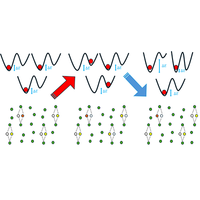
Thermal cycling: Evidence for a generalized tunneling model and a tool to distinguish noise sources in quantum circuits

Yigal Reiss and Moshe Schechter

Phys. Rev. B 111, L201403 (2025) - Published 16 May, 2025

The authors show here that the evolution of the excitation spectrum of tunneling structural two-level systems (TLSs) under thermal cycling reveals the generic existence of two types of TLSs, distinguished by a bimodal coupling to strain. These findings advance the understanding of low-temperature universality in amorphous solids, identify thermal cycling as a unique protocol for isolating TLS noise from other noise sources in quantum devices, and pave the way towards improved stability and scalability of quantum circuits.

Strong-to-weak spontaneous symmetry breaking and average symmetry protected topological order in the doubled Hilbert space

Yoshihito Kuno, Takahiro Orito, and Ikuo Ichinose

Phys. Rev. B 111, 174110 (2025) - Published 15 May, 2025

There are two kinds of symmetries in quantum mixed states (QMSs) – called strong and weak symmetries– and studying their spontaneous symmetry breaking (SSB) pattern helps classify QMSs, which is an ongoing important issue. The authors study here a decohered cluster model with Z2⊗Z2 symmetry and uncover two kinds of symmetry-protected topological (SPT) mixed states. Using doubled Hilbert formalism, they demonstrate a transition between the two states, named strong and double average SPT states, where the latter features coexisting SPT and SSB.

Chiral breakdown engineered by mesoscale Dzyaloshinskii-Moriya interaction in biaxial magnetic nanotubes

Kostiantyn V. Yershov, Svitlana Kondovych, and Denis D. Sheka

Phys. Rev. B 111, 184419 (2025) - Published 15 May, 2025

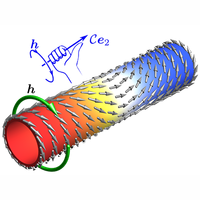
The authors analytically explore here domain wall statics and dynamics in biaxial magnetic nanotubes with intrinsic chiral Dzyaloshinskii–Moriya interaction (DMI) of different symmetries. The interplay between curvature, chiral, and dipolar interactions governs domain wall profiles and their response to external fields. While domain wall dynamics in nanotubes with bulk-type DMI is subject to chirality symmetry breaking, interfacial-type DMI primarily shifts the Walker breakdown field. These findings unlock new functionalities of chiral magnetization dynamics in curvilinear systems for advanced applications.

Crystal symmetry selected pure spin photocurrent in altermagnetic insulators

Ruizhi Dong, Ranquan Cao, Dian Tan, and Ruixiang Fei

Phys. Rev. B 111, 195210 (2025) - Published 15 May, 2025

Spin current generation in altermagnets is a central focus in spintronics. While the time-reversal-odd spin Hall effect is significant in metallic systems, insulating behavior is more common in antiferromagnets. Here, the authors demonstrate that pure spin currents can be generated in altermagnetic insulators through nonlinear photogalvanic effects, specifically via shift and injection currents. Remarkably, these mechanisms remain effective in producing directional pure spin currents even with spin-orbit coupling, in contrast to previous findings in nonmagnetic and parity-time symmetric antiferromagnetic materials.

Capturing the dynamics of the phase transition of skyrmions with a nonstationary machine learning approach

Long Xiong, Neng-Ji Zhou, Shi-Qian Hu, Lei-Lei Nian, and Bo Zheng

Phys. Rev. B 111, 184415 (2025) - Published 14 May, 2025

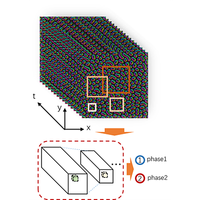
The authors propose here a nonstationary machine learning approach specifically designed for analyzing dynamic phase transitions. By employing a subsampling technique in the short-time regime, this method overcomes the difficulty of critical slowing down. It demonstrates high effectiveness and generalization in determining critical points, and static and dynamic critical exponents in the depinning transition of skyrmions.

Transition metal–hydrogen complexes in SnO2

F. Herklotz, I. Chaplygin, E. V. Lavrov, V. V. Melnikov, Z. Galazka, and L. Vines

Phys. Rev. B 111, 195208 (2025) - Published 14 May, 2025

The authors investigate here transition metal–hydrogen complexes in SnO2 using infrared spectroscopy, SIMS, and first-principles calculations. They identify distinct OH vibrational modes linked to Fe and Cr substitutional centers, and observe a new electronic transition tentatively assigned to Ir. These findings clarify how hydrogen interacts with dopants in SnO2, offering insights into defect structures that influence conductivity, catalytic activity, and optical properties, critical for optimizing this material in sensing, electronics, and energy applications.

Disorder-order interface propagating over the ferromagnetic ground state in the transverse field Ising chain

Vanja Marić, Florent Ferro, and Maurizio Fagotti

Phys. Rev. B 111, 205118 (2025) - Published 14 May, 2025

When matter in different phases is brought into contact, an interface with unexpected properties can emerge. In the transverse-field Ising chain, the authors investigate the interface formed by joining a disordered state with a ferromagnetically ordered one. They show that, within this emergent region, order parameters and entanglement asymmetries of subsystems exhibit universal behavior. Correlations extend across the entire region, and the Wigner–Yanase skew information of large subsystems reveals macroscopic multipartite entanglement.

Geometric and conventional contributions of superconducting diode effect: Application to flat-band systems

Jin-Xin Hu, Shuai A. Chen, and K. T. Law

Phys. Rev. B 111, 174513 (2025) - Published 12 May, 2025

The authors investigate here the conventional and quantum geometric origins of superconducting nonreciprocity and explore their implications for flat-band superconductors. They show that, while the conventional effect stems from an asymmetric Fermi surface, the quantum metric dipole generates a band-geometric contribution to the superconducting diode effect—even in systems with symmetric single-particle band dispersion.

Quantum master equation for many-body systems based on the Lieb-Robinson bound

Koki Shiraishi, Masaya Nakagawa, Takashi Mori, and Masahito Ueda

Phys. Rev. B 111, 184311 (2025) - Published 12 May, 2025

The authors derive here a local quantum master equation for many-body open quantum systems on the basis of the Lieb-Robinson bound, which places a fundamental upper bound on the propagation speed of correlations of observables. This approach clarifies the conditions under which local quantum master equations are valid and provides a microscopic justification for their use in strongly interacting systems. Numerical simulations on a one-dimensional fermionic chain demonstrate the accuracy of the derived equation.

Efficient optimization and conceptual barriers in variational finite projected entangled pair states

Daniel Alcalde Puente, Erik Lennart Weerda, Konrad Schröder, and Matteo Rizzi

Phys. Rev. B 111, 195120 (2025) - Published 12 May, 2025

The authors investigate here a sampling-based optimization scheme for finite projected entangled pair states (PEPS), uncovering an entanglement phase transition in random PEPS that corresponds to a computational complexity shift in tensor network contractions, and extend the complexity analysis to physically relevant states. The method is applied to challenging systems, including a chiral spin liquid and Rydberg atom arrays with long-range interactions, demonstrating its ability to model state-of-the-art cold atom experiments.

Optical absorption of subwavelength silicon nanoparticles at telecom wavelengths

Moritz Jünnemann, Nicola Carlon Zambon, Hiroshi Sugimoto, Minoru Fujii, Lukas Novotny, and Martin Frimmer

Phys. Rev. B 111, 195304 (2025) - Published 12 May, 2025

This study investigates the absorption of light at 1550 nm wavelength by silicon nanoparticles. The authors identify a temperature dependence of the optical absorption, which grows as the particles become hotter. The presented measurements indicate a thermal runaway that leads to destruction of the particles when heated beyond a critical temperature. This work can support the development of quantum optomechanics experiments, where silicon nanoparticles have been considered promising candidates to serve as test masses to investigate quantum superposition effects.

Fabry-Pérot resonance modes in a MoS2-based vertical stacking cavity for light-matter coupling and topological phase singularity

Zhonglin Li, Yingying Wang, Xianglin Li, Bo Zhong, Wenjun Liu, and Zexiang Shen

Phys. Rev. B 111, 205414 (2025) - Published 12 May, 2025

The authors study here the angle-resolved reflectance of resonance modes in a vertical Fabry-Pérot cavity, constructed using multilayer PMMA-MoS2 hybrid structures. It is found that monolayer MoS2 contributes to the absorption in this system, further leading to formation of multiple perfect absorption and topological phase singularities in parameter space. The generation, evolution, and annihilation of these singularities could be controlled by the cavity parameters. This work provides a flexible platform for advancing studies in topological photonics.

Strong-to-weak spontaneous symmetry breaking meets average symmetry-protected topological order

Yuchen Guo and Shuo Yang

Phys. Rev. B 111, L201108 (2025) - Published 12 May, 2025

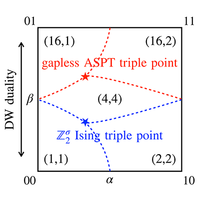
The authors uncover here a new quantum phase — the double average symmetry-protected topological (ASPT) phase — that arises uniquely in open quantum systems, where symmetry breaking and topological order coexist. Using the imaginary-time Lindbladian formalism, they establish a rich phase diagram featuring distinct gapless phases and topological triple points. This work highlights how environmental interactions can lead to novel quantum phenomena with no analog in closed systems.

Role of superconducting fitness in pairing from fluctuating order

Yufei Zhu and P. M. R. Brydon

Phys. Rev. B 111, 174511 (2025) - Published 9 May, 2025

Unconventional superconductivity is often observed near other ordered states. Although fluctuations of the ordered state are believed to mediate a pairing interaction, a general principle relating the ordered state to the pairing symmetry is lacking. Here, the authors analyze the pairing interaction from a general fluctuating order and develop a simple heuristic test to determine whether a given pairing channel is attractive or repulsive. This is based on a well-known measure of the compatibility of the ordered and pairing states.

Broken symmetry in ideal Chern bands

Hui Liu, Kang Yang, Ahmed Abouelkomsan, Zhao Liu, and Emil J. Bergholtz

Phys. Rev. B 111, L201105 (2025) - Published 9 May, 2025

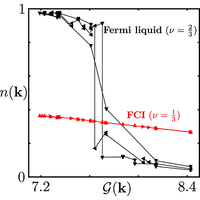
The chiral limit of twisted bilayer graphene, where Landau level-like states form an “ideal” flat band, has been central to understanding fractional Chern insulators in analogy with Landau level physics. The authors show here that even in this limit, fluctuating quantum geometry strongly breaks particle-hole symmetry, favoring a Fermi liquid at 2/3 filling and distorting Laughlin-like states at 1/3 filling. With Coulomb interactions, the system hosts trivial charge density waves at 1/4 filling and a quantum anomalous Hall crystal at 3/4 filling — phases absent in the lowest Landau levels.

Percolative supercurrent in superconductor–ferromagnetic insulator bilayers

A. Maiani, A. C. C. Drachmann, L. Galletti, C. Schrade, Y. Liu, R. Seoane Souto, and S. Vaitiekėnas

Phys. Rev. B 111, 174509 (2025) - Published 8 May, 2025

The competing interplay between superconductivity and magnetism can lead to the emergence of intriguing phases of matter. Here, researchers explore thin layers of superconducting aluminum and magnetic-insulator europium sulfide, revealing that supercurrents survive even as spin splitting overcome the paramagnetic limit. The supercurrent weaves through the material, following paths shaped by magnetic textures. These results open new directions for understanding superconductivity in complex magnetic landscapes and for designing next-generation quantum devices.

Subharmonic spin correlations and spectral pairing in Floquet time crystals

Alexander-Georg Penner, Harald Schmid, Leonid I. Glazman, and Felix von Oppen

Phys. Rev. B 111, 184308 (2025) - Published 8 May, 2025

The authors show here that the temporal spin correlations in a Floquet time crystal are asymptotically related to the statistics of eigenvalue repulsion of the defining Floquet operator. The eigenvalue statistics are found to be log-normal, which implies that apart from initial transients, the boundary spin correlations can be described analytically and are characterized by two parameters only. The relation between spectral statistics and temporal spin correlations opens new perspectives on time crystals.

Surface acoustic wave direction sensing enabled by resonant mode interference in a single micropillar resonator

Taehwa Lee, Hyung-Suk Kwon, Xiaopeng Li, Ziqi Yu, Taishi Kimura, Yukihiro Tadokoro, and Hideo Iizuka

Phys. Rev. B 111, 174101 (2025) - Published 6 May, 2025

A single micropillar resonator can detect the direction of surface acoustic waves (SAWs) by harnessing interference between distinct vibrational modes. Here, the authors demonstrate how this compact design enables robust directional sensing, offering a scalable solution for SAW-based diagnostics in compact devices and laying the groundwork for future integration with quantum acoustic systems.

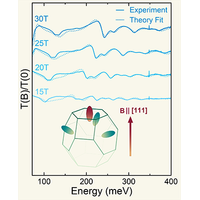
Spectral analysis of the magneto-optical response in valley-polarized Pb1−xSnxSe

Xiaoqi Ding, Jiashu Wang, Mykhaylo Ozerov, Sara Bey, Muhsin Abdul Karim, Seul-Ki Bac, Xinyu Liu, Badih A. Assaf, Yi-Ting Hsu, and Xiao Li

Phys. Rev. B 111, 205302 (2025) - Published 6 May, 2025

Magneto-optical measurements of (111)-oriented valley-degenerate Pb1−xSnxSe reveal an anomaly in the optical interband Landau level transitions, deviating from the expected valley degeneracy ratio. Through detailed analysis, the authors attribute this behavior to a difference in carrier densities between oblique and longitudinal valleys, together with a magnetic field dependent multiple-beam interference effect. Their findings shed light on the optical signatures of valley splitting in three-dimensional semiconductors.

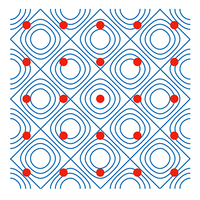
Emulating moiré materials with quasiperiodic circuit quantum electrodynamics

T. Herrig, C. Koliofoti, J. H. Pixley, E. J. König, and R.-P. Riwar

Phys. Rev. B 111, L201104 (2025) - Published 6 May, 2025

Moiré superstructures are currently intensely studied in solid state physics, in connection with the generation of nontrivial flat bands that lead to exotic many-body ground states. The authors show here that moiré flatbands can be conveniently engineered and exploited in a very different space: the one defined by the number of transported charges in superconducting quantum circuits. In particular, all circuit designs proposed require only very basic and experimentally highly accessible materials and structures. The authors thus establish quasiperiodic circuit QED as a promising new research area, exploring deep connections between quantum transport and recent developments in condensed matter physics.

Sign In to Your Journals Account

Filter

Section

Filter

Article Lookup

Enter a citation