Highlights

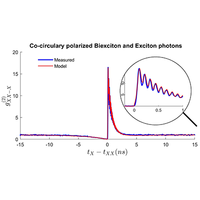
Temporal CW polarization-tomography of photon pairs from the biexciton radiative cascade: Theory and experiment

Noam Tur, Ismail Nassar, Ido Schwartz, Joseph Avron, Dan Dalacu, Philip J. Poole, and David Gershoni

Phys. Rev. B 111, 235304 (2025) - Published 23 June, 2025

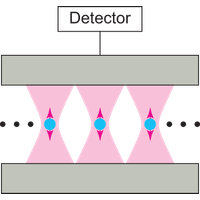
The authors investigate here temporal correlations in the polarization states of photon pairs emitted during the biexciton-exciton radiative cascade from a single semiconductor quantum dot, excited by a continuous-wave light source. The system is modeled using a Lindbladian framework coupled to two Markovian baths—one representing the excitation source and the other the emitted radiation. The model consolidates previous approaches that separately addressed the system’s incoherent and coherent dynamics. It accurately describes a series of polarization-sensitive, time-resolved two-photon correlation measurements.

Oscillate and renormalize: Fast phonons reshape the Kondo effect in flat-band systems

Liam L. H. Lau, Andreas Gleis, Daniel Kaplan, Premala Chandra, and Piers Coleman

Phys. Rev. B 111, 245149 (2025) - Published 23 June, 2025

This paper revisits an age-old question: when are phonons important in strongly correlated materials? As you will see, the answer lies in in the frequency of the phonons compared to the electrons; slow phonons cannot respond to valence fluctuations and are irrelevant, whereas fast phonons always change the charge dynamics, irrespective of the strength of the coupling. This result may be particularly relevant for 2D moiré systems such as twisted bilayer graphene (TBG), where phonons are fast compared to the moiré energy scales.

Broadband electron paramagnetic resonance spectroscopy of Er167:LiYF47 at millikelvin temperatures

Ana Strinić, Patricia Oehrl, Achim Marx, Pavel A. Bushev, Hans Huebl, Rudolf Gross, and Nadezhda Kukharchyk

Phys. Rev. B 111, 214430 (2025) - Published 20 June, 2025

The authors characterize here the hyperfine transitions of 167Er:7LiYF4 in terms of the selection rules and the magnetic field and temperature dependence using broadband EPR spectroscopy between 0 and 50 mT. Refined hyperfine and quadrupole parameters are obtained with high precision by fitting the spin Hamiltonian to the zero-field spectrum. Since the technique allows to address the hyperfine transitions over a wide frequency and magnetic field range, the linewidth narrowing around a zero first-order Zeeman (ZEFOZ) point is studied.

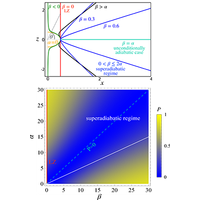
Partial Landau-Zener transitions and applications to qubit shuttling

Jonas R. F. Lima and Guido Burkard

Phys. Rev. B 111, 235439 (2025) - Published 20 June, 2025

The authors introduce here the partial Landau-Zener model, which lends itself to the prediction and optimization of valley transition probabilities during spin shuttling in semiconductors. This is an essential problem for semiconductor qubits. It is revealed that the Hamiltonian curve plays a crucial role in the transition probability of two-level systems without a geometric factor. This allows for the superadiabatic regime, including an unconditionally adiabatic scenario without transitions no matter how fast the system evolves, opening new avenues for quantum control.

Optimal qubit-mediated quantum heat transfer via noncommuting operators and strong coupling effects

Marlon Brenes, Jakub Garwoła, and Dvira Segal

Phys. Rev. B 111, 235440 (2025) - Published 20 June, 2025

The authors study here quantum heat transfer through a spin impurity. Using numerical simulations and an analytical theory, they identify pairs of system-bath coupling operators that maximize heat transfer at arbitrary coupling strengths to the environments. They reveal a stark contrast in the conditions required for optimal heat transfer depending on whether the system is weakly or strongly coupled to the heat baths. Notably, in the strong-coupling regime, noncommuting system-bath coupling operators between the hot and cold reservoirs are necessary to achieve optimal heat transfer.

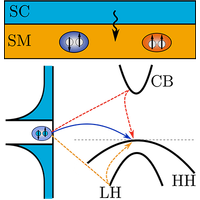
Theory of superconducting proximity effect in hole-based hybrid semiconductor-superconductor devices

D. Michel Pino, Rubén Seoane Souto, Maria José Calderón, Ramón Aguado, and José Carlos Abadillo-Uriel

Phys. Rev. B 111, 235443 (2025) - Published 20 June, 2025

Hybrid systems combining superconductors and hole-based semiconductors are rapidly gaining prominence as a foundational platform for quantum technologies, including the pursuit of robust topological qubits with novel materials combinations. Despite their promise, a comprehensive theoretical understanding of how the superconducting proximity effect manifests in two-dimensional hole gases has remained elusive—until now. Here, the authors present the first unified theoretical framework that captures the full complexity of proximity-induced superconductivity in such systems.

Superconducting proximity effect in two-dimensional hole gases

Serafim S. Babkin, Benjamin Joecker, Karsten Flensberg, Maksym Serbyn, and Jeroen Danon

Phys. Rev. B 111, 214518 (2025) - Published 18 June, 2025

In superconductor–semiconductor heterostructures, superconducting correlations can be induced in the semiconductor via the proximity effect. The authors propose here a model for such superconductivity in a two-dimensional hole gas, where multiple strongly spin-orbit-coupled bands are involved. Using three interface parameters, they derive explicit intraband and interband pairing terms for heavy-hole and light-hole bands. The obtained model opens the door to systematic modeling of proximized hole gases and predicts a coexistence of s-wave and d-wave singlet pairings, as well as triplet-type superconducting correlations.

Experimental realization of antiferromagnetic Ising ground state on the triangular lattice

Ke Wang, Xing-Jian Liu, Li-Ming Tu, Jia-Jie Zhang, Vladimir N. Gladilin, and Jun-Yi Ge

Phys. Rev. B 111, 224418 (2025) - Published 18 June, 2025

Here, the authors experimentally realize an antiferromagnetic Ising ground state on a rigid triangular lattice using macroscopic magnets. The as grown protocol, vibrational thermalization, and simulations reveal that magnets spontaneously form a striped phase in cylindrical cavities, where the lowest-energy configuration emerges from collective dipolar interactions rather than pairwise Ising behavior. These results demonstrate the observation of a long-predicted geometrically frustrated ground state and establish a tunable macroscopic platform for studying ideal frustration physics.

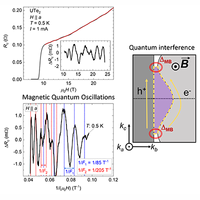
Slow magnetic quantum oscillations in the c-axis magnetoresistance of UTe2

Freya Husstedt, Motoi Kimata, Sajal Naduvile Thadathil, Beat Valentin Schwarze, Markus König, Gerard Lapertot, Jean-Pascal Brison, Georg Knebel, Dai Aoki, J. Wosnitza, and Toni Helm

Phys. Rev. B 111, 235131 (2025) - Published 18 June, 2025

The authors investigate here the Fermi surface of the potential spin-triplet superconductor UTe2 to gain insight in its dimensionality and properties. They perform transport measurements on bulk and microfabricated samples that show low-frequency quantum oscillations perpendicular to the quasi-2D Fermi surface sheets, most likely of unconventional origin such as quantum interference or quasiparticle lifetime oscillations. Their findings do not support the presence of a 3D pocket. Additionally, two distinct frequencies indicate a change in the Fermi surface topology, associated with a Lifshitz transition.

Signatures of valley drift in the diversified band dispersions of bright, gray, and dark excitons in MoS2 monolayers under uniaxial strains

Ching-Hung Shih, Guan-Hao Peng, Ping-Yuan Lo, Wei-Hua Li, Mei-Ling Xu, Chao-Hsin Chien, and Shun-Jen Cheng

Phys. Rev. B 111, 245422 (2025) - Published 18 June, 2025

The authors present here a comprehensive theoretical investigation of the excitonic band dispersions in uniaxially strained MoS2 monolayers by solving the Bethe-Salpeter equation within a first-principles based Wannier tight-binding framework. As a consequence of strain-induced valley drift, applying uniaxial strain to a MoS2 monolayer is found to lead to diversified exciton band dispersions, diffusive transport properties, and angle-resolved optical patterns of bright, gray, and dark excitons. Interestingly, the band dispersion of the dark exciton undergoes the most significant reshaping, accompanied by an unusual sign reversal of the exciton effective mass.

Spectroscopic probe of ultrafast magnetization dynamics in the extreme ultraviolet spectral range

Johanna Richter, Somnath Jana, Robert Behrends, Carl S. Davies, Dieter W. Engel, Martin Hennecke, Daniel Schick, Clemens von Korff Schmising, and Stefan Eisebitt

Phys. Rev. B 111, 214423 (2025) - Published 13 June, 2025

Advances in spectroscopic techniques in the extreme ultraviolet (XUV) spectral range have significantly improved our understanding of ultrafast magnetization dynamics. Here, the authors present an experimental geometry that extends XUV spectroscopy to systems with an out-of-plane magnetization, grown on XUV-opaque substrates. The approach allows the use of linearly polarized radiation without requiring additional polarizing optics. A comprehensive analysis is provided through simulations and experimental data, examining the technique’s performance across probe energy, polarization, and time following optical excitation.

Possible unconventional surface superconductivity in the half-Heusler compound YPtBi

Eylon Persky, Alan Fang, Xinyang Zhang, Carolina Adamo, Phillip Wu, Eli Levenson-Falk, Chandra Shekhar, Claudia Felser, Binghai Yan, and Aharon Kapitulnik

Phys. Rev. B 111, 245417 (2025) - Published 13 June, 2025

The authors uncover here time-reversal symmetry breaking superconductivity at the (111) surface of the half-Heusler compound YPtBi. Scanning tunneling microscopy, mutual inductance, and polar Kerr effect measurements reveal that surface superconductivity and magnetism onset together at temperatures up to three times higher than the bulk. The results indicate distinct origins and order parameter symmetries for surface and bulk superconductivity.

Dipole-quadrupole coupling in triplet exciton-polaron quenching in a phosphorescent OLED emission layer

Clint van Hoesel, Reinder Coehoorn, and Peter Bobbert

Phys. Rev. B 111, 224204 (2025) - Published 12 June, 2025

From quantum chemical calculations, triplet-polaron quenching in phosphorescent Ir(ppy)2acac:m-MTDATA host–guest films, such as those used in OLEDs, is shown to be governed not only by dipole–dipole Förster transfer, as is often assumed, but also by quadrupolar interactions. At typical emitter-host separations, quadrupolar contributions even dominate. This work quantifies these contributions by generalizing Förster spectral overlap method to dipole-quadrupole coupling, based on near-field quadrupolar absorption. The study resolves a discrepancy between Förster radii found from spectral overlap calculations and device experiments.

Impurity states in altermagnetic superconductors

Andrea Maiani and Rubén Seoane Souto

Phys. Rev. B 111, 224506 (2025) - Published 12 June, 2025

Altermagnetic superconductors have been predicted as a new class of materials with potential for novel phases of matter, but have not been demonstrated so far. The authors show here that a single nonmagnetic impurity induces spin-polarized bound states with distinctive “cross-shaped” spatial patterns that follow the hidden Néel order. The orientation of these states leads to spin-selective coupling between impurities. The predicted signatures—spatial extent and energy splitting as a function of magnetic field—are observable via scanning tunneling microscopy, offering a route to identify altermagnetic superconductivity and control atomic-scale quantum tunneling.

Long-lived coherence between incoherent excitons revealed by time-resolved angle-resolved photoemission spectroscopy: An exact solution

Zhenlin Zhang, Wei Hu, Enrico Perfetto, and Gianluca Stefanucci

Phys. Rev. B 111, 235124 (2025) - Published 12 June, 2025

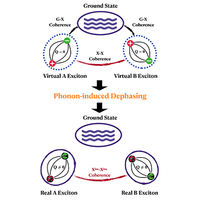
The authors study here exciton dynamics in an exactly solvable two-band semiconductor model, including light-matter, electron-electron, and electron-phonon interactions. They identify a long-lived coherence between incoherent excitons that persists despite phonon-induced dephasing. This coherence manifests as quantum beats in time-resolved angle-resolved photoemission spectroscopy spectra, revealing dynamics distinct from previously known excitonic coherences.

Chiral vortex-line liquid of three-dimensional interacting Bose systems with moat dispersion

Bahar Jafari-Zadeh, Chenan Wei, and Tigran A. Sedrakyan

Phys. Rev. B 111, 245130 (2025) - Published 12 June, 2025

The chiral vortex-line liquid (CVLL) is a newly predicted quantum phase in three-dimensional Bose systems with “moat” dispersion, where energy minima create continuous surfaces in momentum space. By generalizing Chern-Simons flux attachment to 3D-combining planar Chern-Simons phases with Jordan-Wigner strings along the vortex lines, the CVLL emerges as a noncondensed topologically ordered liquid that exhibits broken time-reversal symmetry, vortex-line excitations, and gapless surface states. Monte Carlo simulations confirm that, at low densities, the CVLL energetically outcompetes conventional condensates, making it a ground-state candidate for frustrated magnets, excitonic insulators, ultracold atoms, superfluid helium, and heavy-ion collision physics.

Linear scaling relation between two-dimensional massless Dirac fermion Fermi velocity and Fe-As bond length in iron arsenide superconductor systems

Chengpu Lv, Jianzhou Zhao, Yueshan Xu, Yu Song, Chenglin Zhang, Mykhaylo Ozerov, Pengcheng Dai, Nan-Lin Wang, and Zhi-Guo Chen (谌志国)

Phys. Rev. B 111, L241110 (2025) - Published 12 June, 2025

Using magneto-infrared spectroscopy, the authors identify here the existence of topologically nontrivial 2D massless Dirac fermions in the superconducting and antiferromagnetic bulk state of NaFeAs. Also, the Fermi velocity of 2D massless Dirac fermions in NaFeAs and AFe2As2 (A=Ca, Ba) exhibits a linear relationship with the Fe-As bond length. This work opens up new avenues for exploring and tuning novel quantum phenomena based on topologically nontrivial 2D massless Dirac fermions in the superconducting bulk states of 3D materials.

Lifetime of triplet excitons in organic LEDs based on thermally activated delayed fluorescence

G. A. H. Wetzelaer

Phys. Rev. B 111, L241201 (2025) - Published 11 June, 2025

In organic light-emitting diodes (OLEDs) based on thermally activated delayed fluorescence (TADF), the interactions between triplet excitons and other quasiparticles cause device degradation and a decreased efficiency at high brightness. Here, it is demonstrated that the lifetime of triplet excitons in a TADF OLED closely follows the delayed fluorescence lifetime of the TADF emitter. Therefore, the triplet concentration in a working OLED can be directly inferred from a photoluminescence experiment, enabling facile quantification of triplet-related interactions.

Dephasing-induced jumps in non-Hermitian disordered lattices

Emmanouil T. Kokkinakis, Konstantinos G. Makris, and Eleftherios N. Economou

Phys. Rev. B 111, 214204 (2025) - Published 10 June, 2025

Within the framework of non-Hermitian photonics, the authors explore the effects of dephasing—random phase changes of the wavefunction—on wave propagation in disordered lattices. While in Hermitian lattices dephasing leads to diffusion rather than Anderson localization, the introduction of non-Hermiticity dramatically alters this behavior. Specifically, the authors demonstrate that in weakly disordered non-Hermitian lattices, dephasing enhances eigenmode localization, triggering abrupt jumps of the wavefunction between spatially distant regions, a phenomenon absent under purely coherent conditions.

Measurement-induced phase transition in free bosons

Kazuki Yokomizo and Yuto Ashida

Phys. Rev. B 111, 235419 (2025) - Published 10 June, 2025

A measurement-induced phase transition originates from the competition between quantum many-body dynamics and quantum measurements. Here, the authors study a measurement-induced phase transition in free bosons with long-range coupling. The theoretical results indicate that the transition belongs to an unconventional universality class other than, e.g., the Berezinskii-Kosterlitz-Thouless class.

Sign In to Your Journals Account

Filter

Section

Filter

Article Lookup

Enter a citation