Browse by Subject

Random-Access Quantum Memory Using Chirped Pulse Phase Encoding

James O’Sullivan, Oscar W. Kennedy, Kamanasish Debnath, Joseph Alexander, Christoph W. Zollitsch, Mantas Šimėnas, Akel Hashim, Christopher N. Thomas, Stafford Withington, Irfan Siddiqi, Klaus Mølmer, and John J. L. Morton

Phys. Rev. X 12, 041014 (2022) - Published 7 November, 2022

A new quantum random-access memory device reads and writes information using a chirped electromagnetic pulse and a superconducting resonator, making it significantly more hardware-efficient than previous devices.

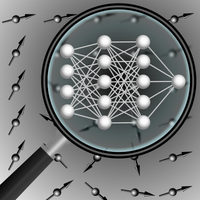
Replacing Neural Networks by Optimal Analytical Predictors for the Detection of Phase Transitions

Julian Arnold and Frank Schäfer

Phys. Rev. X 12, 031044 (2022) - Published 28 September, 2022

A new theory for how neural networks detect phase transitions from data reveals that popular methods rely on detecting changes in probability distributions rather than recognizing prevalent patterns.

Transverse Electron-Beam Shaping with Light

Marius Constantin Chirita Mihaila, Philipp Weber, Matthias Schneller, Lucas Grandits, Stefan Nimmrichter, and Thomas Juffmann

Phys. Rev. X 12, 031043 (2022) - Published 26 September, 2022

A new method that uses laser light to both generate and shape electron beams could improve the resolution of electron microscopy.

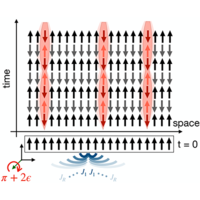
Discrete Time-Crystalline Response Stabilized by Domain-Wall Confinement

Mario Collura, Andrea De Luca, Davide Rossini, and Alessio Lerose

Phys. Rev. X 12, 031037 (2022) - Published 14 September, 2022

A proposal for stabilizing time-crystalline states of matter avoids hard-to-control features required by current experimental methods, introducing a new idea in the effort to stabilize nonequilibrium phases in general.

Generation of a Single-Cycle Acoustic Pulse: A Scalable Solution for Transport in Single-Electron Circuits

Junliang Wang, Shunsuke Ota, Hermann Edlbauer, Baptiste Jadot, Pierre-André Mortemousque, Aymeric Richard, Yuma Okazaki, Shuji Nakamura, Arne Ludwig, Andreas D. Wieck, Matias Urdampilleta, Tristan Meunier, Tetsuo Kodera, Nobu-Hisa Kaneko, Shintaro Takada, and Christopher Bäuerle

Phys. Rev. X 12, 031035 (2022) - Published 7 September, 2022

Like a surfer riding a wave, a single electron is transported by an acoustic pulse traveling along the surface of a microchip.

Quantifying n-Photon Indistinguishability with a Cyclic Integrated Interferometer

Mathias Pont, Riccardo Albiero, Sarah E. Thomas, Nicolò Spagnolo, Francesco Ceccarelli, Giacomo Corrielli, Alexandre Brieussel, Niccolo Somaschi, Hêlio Huet, Abdelmounaim Harouri, Aristide Lemaître, Isabelle Sagnes, Nadia Belabas, Fabio Sciarrino, Roberto Osellame, Pascale Senellart, and Andrea Crespi

Phys. Rev. X 12, 031033 (2022) - Published 2 September, 2022

A new optical device measures photon indistinguishability—an important property for future light-based quantum computers.

Stirring by Staring: Measurement-Induced Chirality

Matthew Wampler, Brian J. J. Khor, Gil Refael, and Israel Klich

Phys. Rev. X 12, 031031 (2022) - Published 24 August, 2022

In quantum mechanics, the observer necessarily plays an active role in the dynamics of the system, making it difficult to probe a system without disturbing it. Here, we show that this apparent difficulty may be turned into a tool for driving an initially trivial system into a desired quantum many-body state simply by observing it.

Monitoring Fast Superconducting Qubit Dynamics Using a Neural Network

G. Koolstra, N. Stevenson, S. Barzili, L. Burns, K. Siva, S. Greenfield, W. Livingston, A. Hashim, R. K. Naik, J. M. Kreikebaum, K. P. O’Brien, D. I. Santiago, J. Dressel, and I. Siddiqi

Phys. Rev. X 12, 031017 (2022) - Published 26 July, 2022

A new method for weakly monitoring a quantum state uses a neural network to learn and adapt to detector effects that typically prevent measurements of rapidly changing states.

Growth of Rényi Entropies in Interacting Integrable Models and the Breakdown of the Quasiparticle Picture

Bruno Bertini, Katja Klobas, Vincenzo Alba, Gianluca Lagnese, and Pasquale Calabrese

Phys. Rev. X 12, 031016 (2022) - Published 25 July, 2022

The rate of growth of entanglement in a quantum many-body system that is out of equilibrium can unexpectedly be interpreted as an equilibrium quantity.

Optimal Purification of a Spin Ensemble by Quantum-Algorithmic Feedback

Daniel M. Jackson, Urs Haeusler, Leon Zaporski, Jonathan H. Bodey, Noah Shofer, Edmund Clarke, Maxime Hugues, Mete Atatüre, Claire Le Gall, and Dorian A. Gangloff

Phys. Rev. X 12, 031014 (2022) - Published 21 July, 2022

A new method for cooling a collection of spins reveals their state to within one spin flip and could be used to create exciting new quantum states.

Many-Body Quantum Teleportation via Operator Spreading in the Traversable Wormhole Protocol

Thomas Schuster, Bryce Kobrin, Ping Gao, Iris Cong, Emil T. Khabiboulline, Norbert M. Linke, Mikhail D. Lukin, Christopher Monroe, Beni Yoshida, and Norman Y. Yao

Phys. Rev. X 12, 031013 (2022) - Published 20 July, 2022

A new mechanism for quantum teleportation leverages the thermalizing dynamics of complex quantum systems and points the way to a powerful experimental tool for characterizing these dynamics.

Nonzero Momentum Requires Long-Range Entanglement

Lei Gioia and Chong Wang

Phys. Rev. X 12, 031007 (2022) - Published 12 July, 2022

A new theorem demonstrates a deep connection between quantum entanglement and discrete translation symmetry, a link with far-reaching applicability given that this type of symmetry is ubiquitous.

In situ Tuning of the Electric-Dipole Strength of a Double-Dot Charge Qubit: Charge-Noise Protection and Ultrastrong Coupling

P. Scarlino, J. H. Ungerer, D. J. van Woerkom, M. Mancini, P. Stano, C. Müller, A. J. Landig, J. V. Koski, C. Reichl, W. Wegscheider, T. Ihn, K. Ensslin, and A. Wallraff

Phys. Rev. X 12, 031004 (2022) - Published 7 July, 2022

Two studies improve the status of artificial atoms—called quantum dots—as qubit candidates for quantum technologies.

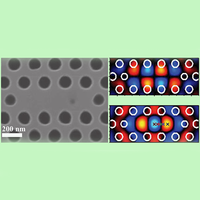
Mode Interference Effect in Optical Emission of Quantum Dots in Photonic Crystal Cavities

A. Lyasota, C. Jarlov, M. Nyman, A. Miranda, M. Calic, B. Dwir, A. Rudra, A. Shevchenko, and E. Kapon

Phys. Rev. X 12, 021042 (2022) - Published 20 May, 2022

A new experiment on the emission spectrum of quantum dots in photonic- crystal microcavities supports a recently proposed theory of cavity quantum electrodynamics.

Symmetry Classification and Universality in Non-Hermitian Many-Body Quantum Chaos by the Sachdev-Ye-Kitaev Model

Antonio M. García-García, Lucas Sá, and Jacobus J. M. Verbaarschot

Phys. Rev. X 12, 021040 (2022) - Published 18 May, 2022

A mathematical analysis classifies variants of the Sachdev-Ye-Kitaev (SYK) model for many-body fermion interactions that do not conserve probability, essential for analyzing the SYK model coupled to an environment.

Enhancing Generative Models via Quantum Correlations

Xun Gao, Eric R. Anschuetz, Sheng-Tao Wang, J. Ignacio Cirac, and Mikhail D. Lukin

Phys. Rev. X 12, 021037 (2022) - Published 13 May, 2022

Quantum nonlocality and contextuality are the source of improvements to machine learning algorithms enhanced by ideas from quantum physics.

Intracavity Rydberg Superatom for Optical Quantum Engineering: Coherent Control, Single-Shot Detection, and Optical π Phase Shift

Julien Vaneecloo, Sébastien Garcia, and Alexei Ourjoumtsev

Phys. Rev. X 12, 021034 (2022) - Published 11 May, 2022

New schemes based on Rydberg superatoms placed in optical cavities can be used to manipulate single photons with high efficiency.

Ytterbium Nuclear-Spin Qubits in an Optical Tweezer Array

Alec Jenkins, Joanna W. Lis, Aruku Senoo, William F. McGrew, and Adam M. Kaufman

Phys. Rev. X 12, 021027 (2022) - Published 3 May, 2022

By trapping 171Yb atoms in optical tweezers for the first time, experiments demonstrate the attributes of these atoms that make them a powerful platform for quantum information applications.

Coherent Spin-Spin Coupling Mediated by Virtual Microwave Photons

Patrick Harvey-Collard, Jurgen Dijkema, Guoji Zheng, Amir Sammak, Giordano Scappucci, and Lieven M. K. Vandersypen

Phys. Rev. X 12, 021026 (2022) - Published 2 May, 2022

Coupling between remote spins on a chip via virtual photons exchanged through a superconducting resonator could lead to gate operations between distant spin qubits.

Efficient Classical Simulation of Random Shallow 2D Quantum Circuits

John C. Napp, Rolando L. La Placa, Alexander M. Dalzell, Fernando G. S. L. Brandão, and Aram W. Harrow

Phys. Rev. X 12, 021021 (2022) - Published 27 April, 2022

Programming a quantum computer with a random sequence of gates was thought to achieve the largest speedups over classical computers. A new analysis shows that this is not true.

Sign In to Your Journals Account

Filter

Filter

Article Lookup

Enter a citation