Browse by Subject

Quantum Simulations of Interacting Systems with Broken Time-Reversal Symmetry

Yotam Shapira, Tom Manovitz, Nitzan Akerman, Ady Stern, and Roee Ozeri

Phys. Rev. X 13, 021021 (2023) - Published 9 May, 2023

A trapped-ion quantum computer simulates the behavior of many-body quantum spin systems with interesting geometries and the effects of magnetic fields and interactions on them.

Consistent Quantization of Nearly Singular Superconducting Circuits

Martin Rymarz and David P. DiVincenzo

Phys. Rev. X 13, 021017 (2023) - Published 1 May, 2023

An analysis of a common approach to describing singular superconducting circuits quantum mechanically shows that it can lead to wrong predictions of the system’s dynamics.

Entanglement Phase Transition Induced by the Non-Hermitian Skin Effect

Kohei Kawabata, Tokiro Numasawa, and Shinsei Ryu

Phys. Rev. X 13, 021007 (2023) - Published 12 April, 2023

In open quantum systems, a macroscopic flow of particles and concomitant anomalous localization play an important role in the entanglement dynamics.

Protecting the Quantum Interference of Cat States by Phase-Space Compression

Xiaozhou Pan, Jonathan Schwinger, Ni-Ni Huang, Pengtao Song, Weipin Chua, Fumiya Hanamura, Atharv Joshi, Fernando Valadares, Radim Filip, and Yvonne Y. Gao

Phys. Rev. X 13, 021004 (2023) - Published 7 April, 2023

Compressing the spectral content of quantum interference features in Schrödinger cat states to lower frequencies protects them against photon loss and preserves the most valuable characteristics that enable many quantum technologies.

Nonlocal Temporal Interferometry for Highly Resilient Free-Space Quantum Communication

Lukas Bulla, Matej Pivoluska, Kristian Hjorth, Oskar Kohout, Jan Lang, Sebastian Ecker, Sebastian P. Neumann, Julius Bittermann, Robert Kindler, Marcus Huber, Martin Bohmann, and Rupert Ursin

Phys. Rev. X 13, 021001 (2023) - Published 3 April, 2023

High-dimensional entanglement among photons allows for a roughly 10-km free-space quantum communication link in an urban environment that is robust to noise.

Terahertz Vibrational Molecular Clock with Systematic Uncertainty at the 10−14 Level

K. H. Leung, B. Iritani, E. Tiberi, I. Majewska, M. Borkowski, R. Moszynski, and T. Zelevinsky

Phys. Rev. X 13, 011047 (2023) - Published 28 March, 2023

Researchers have attained a 100-fold increase in the accuracy of a molecular clock that could serve as a terahertz-frequency standard and as a platform for investigating new physics.

Coherent Fluctuations in Noisy Mesoscopic Systems, the Open Quantum SSEP, and Free Probability

Ludwig Hruza and Denis Bernard

Phys. Rev. X 13, 011045 (2023) - Published 24 March, 2023

Fluctuations of quantum mechanical coherences in small, nonequilibrium systems can be described by a universal mathematical framework that draws from free probability theory, a tool that may aid understanding of noisy many-body quantum systems.

Optically Coherent Nitrogen-Vacancy Defect Centers in Diamond Nanostructures

Laura Orphal-Kobin, Kilian Unterguggenberger, Tommaso Pregnolato, Natalia Kemf, Mathias Matalla, Ralph-Stephan Unger, Ina Ostermay, Gregor Pieplow, and Tim Schröder

Phys. Rev. X 13, 011042 (2023) - Published 20 March, 2023

An analysis and improvement of the spectral properties of nitrogen-vacancy defects in diamond nanostructures paves the way for efficient entanglement generation necessary for many quantum information applications.

Thermalization of Dilute Impurities in One-Dimensional Spin Chains

Dries Sels and Anatoli Polkovnikov

Phys. Rev. X 13, 011041 (2023) - Published 17 March, 2023

Strongly disordered interacting systems remember their initial conditions for very long times. But a popular explanation invoking emergent local integrals of motion appears to be unstable in interacting models.

Superdiffusive Energy Transport in Kinetically Constrained Models

Marko Ljubotina, Jean-Yves Desaules, Maksym Serbyn, and Zlatko Papić

Phys. Rev. X 13, 011033 (2023) - Published 7 March, 2023

Kinetic constraints in many-body quantum systems can give rise to an intriguingly fast “superdffusive” transport of energy, suggesting a new class of transport behaviors whose origin remains to be understood.

Nanoscale Torsional Dissipation Dilution for Quantum Experiments and Precision Measurement

J. R. Pratt, A. R. Agrawal, C. A. Condos, C. M. Pluchar, S. Schlamminger, and D. J. Wilson

Phys. Rev. X 13, 011018 (2023) - Published 15 February, 2023

Experiments show that the torsion modes of nanostructures can experience dissipation dilution, yielding a new class of ultrahigh-Q resonators with broad applications to quantum experiments and precision measurement.

Autonomous Quantum Devices: When Are They Realizable without Additional Thermodynamic Costs?

Mischa P. Woods and Michał Horodecki

Phys. Rev. X 13, 011016 (2023) - Published 13 February, 2023

Unaccounted for thermodynamic costs in controlling quantum systems can be made arbitrarily small, as long as the control is not implemented too quickly.

Thermodynamic Unification of Optimal Transport: Thermodynamic Uncertainty Relation, Minimum Dissipation, and Thermodynamic Speed Limits

Tan Van Vu and Keiji Saito

Phys. Rev. X 13, 011013 (2023) - Published 3 February, 2023

A new, unified thermodynamic theory reveals an intimate relationship between optimal transport distances and stochastic and quantum thermodynamics in discrete-state systems.

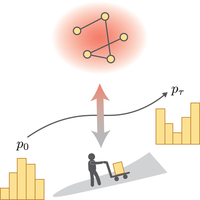
Observation of Wave-Packet Branching through an Engineered Conical Intersection

Christopher S. Wang, Nicholas E. Frattini, Benjamin J. Chapman, Shruti Puri, S. M. Girvin, Michel H. Devoret, and Robert J. Schoelkopf

Phys. Rev. X 13, 011008 (2023) - Published 26 January, 2023

A quantum device shows promise for simulating molecular dynamics in a difficult-to-model photochemical process that is relevant to vision.

Two-Emitter Multimode Cavity Quantum Electrodynamics in Thin-Film Silicon Carbide Photonics

Daniil M. Lukin, Melissa A. Guidry, Joshua Yang, Misagh Ghezellou, Sattwik Deb Mishra, Hiroshi Abe, Takeshi Ohshima, Jawad Ul-Hassan, and Jelena Vučković

Phys. Rev. X 13, 011005 (2023) - Published 19 January, 2023

The integration of an optically coherent, long-lived spin qubit in a silicon carbide-on-insulator photonics platform showcases the potential of silicon carbide in quantum computing and communications applications.

Precise Control of Entanglement in Multinuclear Spin Registers Coupled to Defects

Evangelia Takou, Edwin Barnes, and Sophia E. Economou

Phys. Rev. X 13, 011004 (2023) - Published 18 January, 2023

An analysis of the electron-nuclear entanglement structure in solid-state defect spins leads to protocols for generating multinuclear entanglement, opening the full potential of nuclear spin memories in quantum networks.

Observation of 2D Cherenkov Radiation

Yuval Adiv, Hao Hu, Shai Tsesses, Raphael Dahan, Kangpeng Wang, Yaniv Kurman, Alexey Gorlach, Hongsheng Chen, Xiao Lin, Guy Bartal, and Ido Kaminer

Phys. Rev. X 13, 011002 (2023) - Published 6 January, 2023

Experiments provide the first observation of Cherenkov radiation emitted into 2D light modes, achieving a unity free-electron–photon coupling strength, paving the way for unexplored phenomena in free-electron quantum optics.

Imprinting Persistent Currents in Tunable Fermionic Rings

G. Del Pace, K. Xhani, A. Muzi Falconi, M. Fedrizzi, N. Grani, D. Hernandez Rajkov, M. Inguscio, F. Scazza, W. J. Kwon, and G. Roati

Phys. Rev. X 12, 041037 (2022) - Published 30 December, 2022

Experiments in atomic Fermi superfluids demonstrate fast and on-demand generation of persistent ring currents, opening a new platform for quantum technology applications.

Probing Phases of Quantum Matter with an Ion-Trap Tensor-Network Quantum Eigensolver

Michael Meth, Viacheslav Kuzmin, Rick van Bijnen, Lukas Postler, Roman Stricker, Rainer Blatt, Martin Ringbauer, Thomas Monz, Pietro Silvi, and Philipp Schindler

Phys. Rev. X 12, 041035 (2022) - Published 27 December, 2022

A hybrid quantum-classical algorithm for studying topologically ordered quantum matter on a trapped-ion quantum simulator offers a powerful tool for studying this sought-after state.

Quick Quantum Steering: Overcoming Loss and Noise with Qudits

Vatshal Srivastav, Natalia Herrera Valencia, Will McCutcheon, Saroch Leedumrongwatthanakun, Sébastien Designolle, Roope Uola, Nicolas Brunner, and Mehul Malik

Phys. Rev. X 12, 041023 (2022) - Published 30 November, 2022

Researchers demonstrate a loss-tolerant method for so-called quantum steering, a phenomenon that could give quantum communication networks complete security.

Sign In to Your Journals Account

Filter

Filter

Article Lookup

Enter a citation