Highlights

Detecting partial synchrony in a complex oscillatory network using pseudovortices

Yasuhiro Yamada and Kensuke Inaba

Phys. Rev. E 108, 024307 (2023) - Published 17 August, 2023

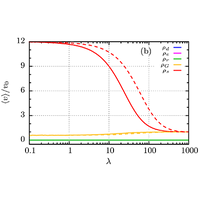
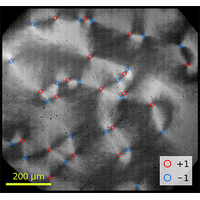
The dynamics of a collection of coupled neurons resemble that of vortices in a commonly studied two-dimensional lattice model, a finding that could help in understanding brain function and dysfunction.

Geometric properties of the complete-graph Ising model in the loop representation

Zhiyi Li, Zongzheng Zhou, Sheng Fang, and Youjin Deng

Phys. Rev. E 108, 024129 (2023) - Published 15 August, 2023

In this article, a worm algorithm is used to study the problem of the Ising model on a complete graph. The approach shows connections between different representations of the model and leads to a better understanding of its scaling properties and critical behavior.

Dynamic hysteresis at a noisy saddle node shows power-law scaling but nonuniversal exponent

Satyaki Kundu, Ranjan Kumar Patel, Srimanta Middey, and Bhavtosh Bansal

Phys. Rev. E 108, 024101 (2023) - Published 2 August, 2023

Dynamic hysteresis is a delay in the response of a bistable system because it cannot keep up with the rate of change of a driving field. The authors study this phenomenon experimentally for a metal-insulator transition in a thin film, and show theoretically that the system exhibits power-law scaling with a nonuniversal exponent.

Substrate-mediated leg interactions play a key role in insect stability on granular slopes

Miguel Piñeirua, Anna Verbe, and Jérôme Casas

Phys. Rev. E 108, 014903 (2023) - Published 25 July, 2023

Experiments show that an optimal distance between points of contact helps insects and other multilegged creatures avoid slipping down a steep granular slope.

Stability of the modulator in a plasma-modulated plasma accelerator

J. J. van de Wetering, S. M. Hooker, and R. Walczak

Phys. Rev. E 108, 015204 (2023) - Published 19 July, 2023

Laser-plasma accelerators can provide a compact method for acceleration of particles. The authors of this paper derive a three-dimensional analytic theory for a laser-plasma accelerator that some of the authors introduced earlier. Using theory and simulations, they evaluate the influence of various parameters on the stability of the accelerator and conclude that higher energies can be achieved than those demonstrated in the original proposal.

Coupled instabilities drive quasiperiodic order-disorder transitions in Faraday waves

Valeri Frumkin and Shreyas Gokhale

Phys. Rev. E 108, L012601 (2023) - Published 17 July, 2023

A vibrated layer of fluid can form an ordered pattern of standing waves known as Faraday waves, or a disordered state full of defects. The authors experimentally study the transitions between these two states and find an explanation for their quasiperiodicity in time.

Current fluctuations in stochastically resetting particle systems

Costantino Di Bello, Alexander K. Hartmann, Satya N. Majumdar, Francesco Mori, Alberto Rosso, and Grégory Schehr

Phys. Rev. E 108, 014112 (2023) - Published 7 July, 2023

The authors investigate the effects of stochastic resetting on current fluctuations for two different models for particle motion: Brownian motion and run-and-tumble motion. Using analytical and numerical methods, they find large differences in how the two models approach the steady state in the annealed and the quenched cases.

Forecasting landslides using community detection on geophysical satellite data

Vrinda D. Desai, Farnaz Fazelpour, Alexander L. Handwerger, and Karen E. Daniels

Phys. Rev. E 108, 014901 (2023) - Published 6 July, 2023

A new method based on satellite data and network models can identify hillsides that may be at risk of catastrophic landslides.

One-point height fluctuations and two-point correlators of (2+1) cylindrical KPZ systems

Ismael S. S. Carrasco and Tiago J. Oliveira

Phys. Rev. E 107, 064140 (2023) - Published 27 June, 2023

This numerical study examines the properties of (2+1)-dimensional Kardar-Parisi-Zhang growth models in a cylindrical geometry. The authors use simulations to analyze height distributions as well as spatial and temporal correlations, and show their universality.

Small-scale dynamo with finite correlation times

Yann Carteret, Dominik Schleicher, and Jennifer Schober

Phys. Rev. E 107, 065210 (2023) - Published 27 June, 2023

Magnetic fields are ubiquitous in astrophysics and they are generally believed to be generated by dynamo processes. The authors extend a well known model for a small-scale dynamo by including the effects of nonzero compressibility and a finite correlation time.

Bound for the moment generating function from the detailed fluctuation theorem

Domingos S. P. Salazar

Phys. Rev. E 107, L062103 (2023) - Published 21 June, 2023

The author proves a theorem in nonequilibrium physics that is related to the second law of thermodynamics. The result is valid arbitrarily far from equilibrium and is quite general, with applications in stochastic and quantum thermodynamics.

Mechanism for giant enhancement of transport induced by active fluctuations

K. Białas and J. Spiechowicz

Phys. Rev. E 107, 064120 (2023) - Published 20 June, 2023

Transport of a particle diffusing in a periodic potential can be greatly enhanced by active fluctuations. In this paper, the authors investigate the effect of different kinds of active noise and construct a simple model that provides additional insight.

Role of herbivory in shaping the dryland vegetation ecosystem: Linking spiral vegetation patterns and nonlinear, nonlocal grazing

Mrinal Kanti Pal and Swarup Poria

Phys. Rev. E 107, 064403 (2023) - Published 6 June, 2023

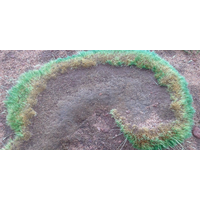
Model improvements uncover more information on the link between grazing animals and the formation of spiral vegetation patterns in arid climates.

Models of vimentin organization under actin-driven transport

Youngmin Park, Cécile Leduc, Sandrine Etienne-Manneville, and Stéphanie Portet

Phys. Rev. E 107, 054408 (2023) - Published 30 May, 2023

Several processes interact in the formation of intermediate filament networks. This paper reports on a study of one of those processes, a continuous flow towards the cell center caused by movement of actin filaments. The authors use mathematical modeling to compare several biologically realistic scenarios to interpret their experimental data. They conclude that the data are best explained by some spatial variation of transport and trapping.

Oblique impact of a buckling table-tennis ball on a rigid surface

Théophile Rémond, Vincent Dolique, Renaud G. Rinaldi, and Jean-Christophe Géminard

Phys. Rev. E 107, 055007 (2023) - Published 26 May, 2023

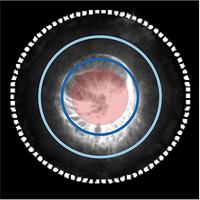
The angle of incidence and the friction of the surface are the only factors that impact the spin of a table tennis ball after it collides with a rigid surface.

Information-to-work conversion in single-molecule experiments: From discrete to continuous feedback

Regina K. Schmitt, Patrick P. Potts, Heiner Linke, Jonas Johansson, Peter Samuelsson, Marc Rico-Pasto, and Felix Ritort

Phys. Rev. E 107, L052104 (2023) - Published 25 May, 2023

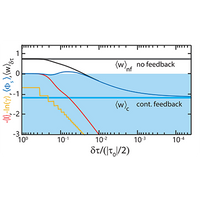
The authors analyze work extraction in a simple two-state model for single-molecule folding experiments with applied feedback. They find qualitative agreement with Monte Carlo simulations of DNA hairpin unfolding-folding dynamics.

Cluster percolation in the two-dimensional Ising spin glass

L. Münster and M. Weigel

Phys. Rev. E 107, 054103 (2023) - Published 2 May, 2023

Phase transitions in spin models can be described in terms of percolation by clusters of spins, but for frustrated systems such as spin glasses our understanding is not complete. The authors make progress by identifying several types of clusters in two-dimensional spin glasses that are consistent with this system’s transition at zero temperature.

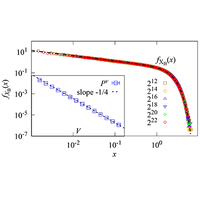
Dynamical fluctuations in the Riesz gas

Rahul Dandekar, P. L. Krapivsky, and Kirone Mallick

Phys. Rev. E 107, 044129 (2023) - Published 27 April, 2023

This article studies the dynamical properties of single-file Brownian particles interacting via a Riesz potential. The authors observe an anomalous scaling of the fluctuations of the current and the position of the particles with time when the interaction is long ranged, and a subdiffusive behavior for particles with short-range interactions that is reminiscent of fractional Brownian motion.

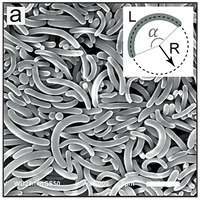
Effect of curvature on the diffusion of colloidal bananas

Justin-Aurel Ulbrich, Carla Fernández-Rico, Brian Rost, Jacopo Vialetto, Lucio Isa, Jeffrey S. Urbach, and Roel P. A. Dullens

Phys. Rev. E 107, L042602 (2023) - Published 21 April, 2023

This letter describes an experimental study of diffusion of smoothly curved colloidal rods as a function of their opening angle. The authors measure translational and rotational diffusion of these colloidal bananas with opening angles ranging from 0o to nearly 360o. Their results demonstrate the impact of curvature on diffusive behavior of elongated colloidal particles.

Topological defect coarsening in quenched smectic-C films analyzed using artificial neural networks

Ravin A. Chowdhury, Adam A. S. Green, Cheol S. Park, Joseph E. Maclennan, and Noel A. Clark

Phys. Rev. E 107, 044701 (2023) - Published 3 April, 2023
After quenching, a liquid crystal film might contain thousands of topological defects which annihilate during coarsening. The authors analyze high-speed video of the coarsening process using neural networks, and find agreement with theoretical predictions and simulations.

Sign In to Your Journals Account

Filter

Section

Filter

Article Lookup

Enter a citation