Highlights

Phase transitions in a p-spin glass model: A numerical study

Prerak Gupta, Auditya Sharma, Bharadwaj Vedula, J. Yeo, and M. A. Moore

Phys. Rev. E 114, 044116 (2026) - Published 8 October, 2026

Large-scale Monte Carlo simulations of p-spin glass models show no evidence of replica symmetry breaking, suggesting that three-dimensional structural glasses lack a finite-temperature thermodynamic phase transition.

#OpenDebate #ClassicProblem #WellStructured

History state formalism for time series with application to finance

F. Lomoc, N. Canosa, A. P. Boette, and R. Rossignoli

Phys. Rev. E 114, 045303 (2026) - Published 8 October, 2026

By embedding temporal data into quantum coherent states, researchers use system-time entanglement entropy to map dynamical regimes and quantify financial volatility.

#Interdisciplinary

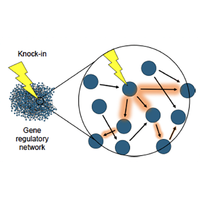
Restoring information in aged gene regulatory networks by single knock-ins

Ryan LeFebre, Tyler Schutt, Fabrisia Ambrosio, and Andrew Mugler

Phys. Rev. E 114, 044401 (2026) - Published 2 October, 2026

Recent analyses have demonstrated that aging is associated with a loss of information within gene regulatory networks. In this article, a simple theoretical framework is developed for information transmission in gene regulatory networks and this framework is applied to gene expression data from muscle cells in young and old mice. The authors predict how much of the lost information is restored by “knocking in” (exogenously expressing) each gene and find that single knock-ins can restore network information by up to 10%.

#BiophysicsSpotlight #ClearMotivation

Force-extension model of cellular membrane extrusion

Fabio Manca and Stefano Giordano

Phys. Rev. E 114, 034409 (2026) - Published 22 September, 2026

This statistical-mechanical framework elucidates how adhesion and device stiffness govern mechanically induced transitions in cellular membranes. Exact analytical relations explain characteristic experimental signatures like force peaks and plateaus during peeling. A central outcome of the analysis is that the constant-force and constant-extension conditions provide qualitatively different force-extension statistics for the same membrane system.

#BiophysicsSpotlight #Interdisciplinary #TechnicalAdvancement

Context-dependent adaptation in a neural computation

Charles J. Edelson, Sima Setayeshgar, William Bialek, and Rob R. de Ruyter van Steveninck

Phys. Rev. E 114, 034408 (2026) - Published 21 September, 2026

By probing a motion-sensitive neuron in the fly visual system, this work shows that neural responses depend on contrast and vary significantly with their surrounding environment. Incorporating this adaptive structure with memory makes the neuron’s coding more efficient.

#BiophysicsSpotlight

Experimental evidence of grain size-shape correlation effects on the critical-state shear strength of granular media

Quyen Le Van, Carlos Ovalle, Emilien Azéma, Mathieu Renouf, Jonathan Barés, Sylvain Buonomo, and Arcesio Lizcano

Phys. Rev. E 114, 035426 (2026) - Published 21 September, 2026

Particle-scale parameters, such as particle size distribution and grain shape, play a relevant role in controlling the collective behavior of granular assemblies. In this paper, a systematic experimental study of granular systems with varying particle sizes and shapes reveals a previously unreported size-shape coupling that affects the shear strength of granular media.

#WellStructured #ClearMotivation

Growth-driven avalanche behavior in bacterial monolayers

Blake Langeslay, Ethan A. Mullen, Gabriel Juarez, and Karin A. Dahmen

Phys. Rev. E 114, 035421 (2026) - Published 18 September, 2026

This paper models growing bacterial colonies under confinement and reports intermittent pressure drops reminiscent of avalanche behavior. A statistical analysis of these events shows that their scaling exponents are similar to mean-field predictions for avalanches in granular materials, suggesting that a new type of avalanche behavior takes place in bacterial colonies driven by particle growth rather than shearing or compression.

#BiophysicsSpotlight #AdvancingField

Kinetic theory of pattern formation in a generalized multispecies Vicsek model

Eloise Lardet, Letian Chen, and Thibault Bertrand

Phys. Rev. E 114, 034117 (2026) - Published 9 September, 2026

Stability and breakdown of chiral motion in nonreciprocal flocking

Aditya Kumar Dutta, Swarnajit Chatterjee, Matthieu Mangeat, and Raja Paul

Phys. Rev. E 114, 034115 (2026) - Published 8 September, 2026

Two intermingled species of active matter can exhibit coherent rotation or disorderly scrambling depending on their mutual interactions.

Reduced finite-dimensional model of two-dimensional protein cluster formation

Kevin Chen and Paul C. Bressloff

Phys. Rev. E 114, 034402 (2026) - Published 8 September, 2026

In neurons, postsynaptic domains are critical protein clusters that trap neurotransmitter receptors to regulate synaptic strength during learning and memory. By reducing a complex reaction-diffusion model to a lower-dimensional system, this study directly links the radii of these interacting clusters to bulk protein concentrations. This mathematical reduction reveals the conditions required for multicluster stability.

#BiophysicsSpotlight #TechnicalAdvancement

Thin active nematohydrodynamic layers: Asymptotic theories and instabilities

Mehrana R. Nejad and L. Mahadevan

Phys. Rev. E 114, 034403 (2026) - Published 8 September, 2026

Active nematic models typically assume fixed layer thickness. A long-wavelength theory shows that evolving thickness couples active stresses to curvature, explaining how internal forces drive tissue invagination.

#BiophysicsSpotlight #TechnicalAdvancement

Faster-than-adiabatic cooling of non-neutral plasmas

Jan Bartsch, Alfio Borzì, Paul-Antoine Hervieux, and Giovanni Manfredi

Phys. Rev. E 114, 035208 (2026) - Published 8 September, 2026

This paper proposes an optimal control strategy to cool an antiproton plasma in a time much shorter than that required by an adiabatic process. The authors examine the length and stability of the plasma, in addition to its duration. The work suggests that optimal control techniques may be useful for experiments with plasmas, in particular with antimatter plasmas, which need to be confined and cooled before significant losses and annihilation occur.

#TimelyTopic #TechnicalAdvancement #ClearMotivation

Granular clogging across gravities: A unified scaling

Oliver Gaida, Olfa D'Angelo, and Jonathan E. Kollmer

Phys. Rev. E 114, 035405 (2026) - Published 2 September, 2026

This paper presents a predictive framework to scale granular flow from Earth to other gravitational environments, and shows that low gravity dramatically increases the probability of clogging. These findings explain previous contradictory results and establish a foundation for predicting and controlling granular flow in space.

#UniversalBehavior #ClearMotivation

Large-scale portfolio optimization with variational neural annealing

Nishan Ranabhat, Behnam Javanparast, David Goerz, and Estelle Inack

Phys. Rev. E 114, 024311 (2026) - Published 24 August, 2026

Using a variational neural annealing approach to solve constrained portfolio optimization problems, the authors establish a connection between phase transitions in physics and computational complexity in finance. They demonstrate scaling behavior in financial optimization problems analogous to critical phenomena in spin glasses.

#Interdisciplinary #UniversalBehavior

Dissipative self-assembly of colloidal suspensions

Jason Conradt and Eric M. Furst

Phys. Rev. E 114, 025416 (2026) - Published 21 August, 2026

Microgravity experiments reveal how toggled magnetic fields drive paramagnetic colloids past kinetic arrest into dynamic, highly anisotropic phases that are sustained by continuous energy dissipation.

#SoftMatterSpotlight #ElegantVisuals #ClearMotivation

Insight into the composition-dependent transition from auxetic nematic to frustrated smectic in liquid crystal elastomers

Emily J. Cooper, Stuart R. Berrow, Karine Margaryan, Gevorg Gevorgyan, Mariam Hakobyan, Thomas Raistrick, Ethan I. L. Jull, Devesh Mistry, Peter Hine, Aidan Street, Rafik Hakobyan, and Helen F. Gleeson

Phys. Rev. E 114, 025417 (2026) - Published 21 August, 2026

This paper provides a systematic investigation into composition-dependent properties of side-chain acrylate liquid crystal elastomers. The work shows how small changes in mesogenic content can induce a phase transition and suggests design approaches for customization of material properties.

#ClearMotivation #TimelyTopic

Arousal tunes neuronal avalanches across a directed percolation critical point

Brandon R. Munn, Christopher Whyte, Eli J. Müller, and James M. Shine

Phys. Rev. E 114, 024403 (2026) - Published 18 August, 2026

The authors present a study of critical phenomena in neural systems. They present evidence that cortical networks display criticality flexibly through arousal tuning. The work points out that arousal should be treated as an experimental control parameter, not as a source of noise.

#BiophysicsSpotlight #TimelyTopic

Supersonic and superluminal energy and speed of information via temporal interference in a dispersionless environment

John L. Spiesberger and Eugene Terray

Phys. Rev. E 114, 025107 (2026) - Published 18 August, 2026

A theory inspired by whale tracking suggests that interference could make the peak of a light-wave packet appear to travel faster than light—without transmitting information superluminally.

Towards probing velocity distributions in dense granular fluids: Utilizing fiber Bragg gratings

Marlo Kunzner, Luis Henriques, Fahad Puthalath, Leonardo Facchini, Mohammadhossein Shahsavari, Léa Gommeringer, Martin Angelmahr, Peidong Yu, Matthias Sperl, Till Böhmer, and Jan Philipp Gabriel

Phys. Rev. E 114, 025410 (2026) - Published 17 August, 2026

Velocity distributions in dense granular systems are difficult to measure because optical particle-tracking methods are hindered by opacity at high particle densities. In this work, a fiber Bragg grating sensor is introduced and shown to accurately recover granular velocity distributions by detecting collision-induced strain in an optical fiber, offering a viable alternative to existing methods for high volume fractions.

#ClearMotivation #TechnicalAdvancement

Thermodynamic geometry of friction on graphs: Resistance, commute times, and optimal transport

Jordan R. Sawchuk and David A. Sivak

Phys. Rev. E 114, L022105 (2026) - Published 17 August, 2026

Geometric ideas play a role in areas such as stochastic thermodynamics, spectral graph theory, and optimal transport. In this Letter, the authors link a thermodynamic friction metric that governs dissipation in slowly driven systems with two graph-theoretic geometries, the commute-time and resistance distances.

#TechnicalAdvancement #AdvancingField

Sign In to Your Journals Account

Filter

Section

Filter

Article Lookup

Enter a citation