Highlights

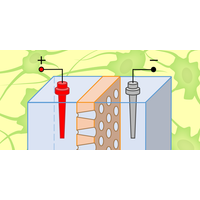
Memristive arrangements of nanofluidic pores

Patricio Ramirez, Sergio Portillo, Javier Cervera, Juan Bisquert, and Salvador Mafe

Phys. Rev. E 109, 044803 (2024) - Published 24 April, 2024

Experiments with membranes offer a path toward scalable neuromorphic computing.

Evidence of scale-free clusters of vegetation in tropical rainforests

Pablo Villegas, Tommaso Gili, Guido Caldarelli, and Andrea Gabrielli

Phys. Rev. E 109, L042402 (2024) - Published 19 April, 2024

The distribution of vegetation clusters in a tropical rainforest shows evidence of scale-invariance, suggesting a system close to a critical state. This observation could help to diagnose the health of rainforests and other ecosystems in the face of environmental change.

Probe particles in odd active viscoelastic fluids: How activity and dissipation determine linear stability

Charlie Duclut, Stefano Bo, Ruben Lier, Jay Armas, Piotr Surówka, and Frank Jülicher

Phys. Rev. E 109, 044126 (2024) - Published 10 April, 2024

Odd viscoelastic materials obey fewer symmetries than traditional materials, and as a consequence exhibit unusual features. This paper reports an investigation into the motion of a probe particle in an odd viscoelastic fluid, as a means to explore the consequences of the broken symmetries.

Dislike of general opinion makes for tight elections

O. Devauchelle, P. Szymczak, and P. Nowakowski

Phys. Rev. E 109, 044106 (2024) - Published 4 April, 2024

The authors investigate an Ising model of an electorate in which voters are influenced by opinion polls, as well as by their neighbors. The voters hold one of two opposite opinions. The work shows that opinion polls tend to bring about polarized societies, with spatially separated groups having different opinions. The authors discuss factors that influence the voters and note that electorates with greater than a million voters tend to have very close elections.

Pair filamentation and laser scattering in beam-driven QED cascades

Kenan Qu, Alec Griffith, and Nathaniel J. Fisch

Phys. Rev. E 109, 035208 (2024) - Published 27 March, 2024

According to quantum electrodynamics, in very strong electromagnetic fields electron–positron pairs can be created, and with a high density of pairs an electron-positron plasma can form. In this paper, the authors simulate this process for a relativistic electron beam colliding with an intense laser pulse, and identify observations that could be used as diagnostics in future experiments.

Identifying hubs in directed networks

Alec Kirkley

Phys. Rev. E 109, 034310 (2024) - Published 20 March, 2024

Nodes with high connectivity, also called hubs, play a critical role in determining the structural and functional properties of networked systems. The author develops classification methods for directed networks that provide a definition of network hubs, and demonstrates them in a range of example applications.

Interaction of soliton gases in deep-water surface gravity waves

Loic Fache, Félicien Bonnefoy, Guillaume Ducrozet, François Copie, Filip Novkoski, Guillaume Ricard, Giacomo Roberti, Eric Falcon, Pierre Suret, Gennady El, and Stéphane Randoux

Phys. Rev. E 109, 034207 (2024) - Published 15 March, 2024

A soliton gas, a large random ensemble of solitons, does not reach thermodynamic equilibrium because there are infinitely many conserved quantities. The authors report water wave experiments with two interacting jets of soliton gases, and find good quantitative agreement with the predictions of spectral kinetic theory.

Shape effects in the fluctuations of random isochrones on a square lattice

Iván Álvarez Domenech, Javier Rodríguez-Laguna, Rodolfo Cuerno, Pedro Córdoba-Torres, and Silvia N. Santalla

Phys. Rev. E 109, 034104 (2024) - Published 4 March, 2024

In first-passage percolation one is interested in the region that can be reached from an origin within a given time. The authors show that on a square lattice with disorder, the boundary of this region behaves as a fluctuating interface in the Kardar-Parisi-Zhang universality class.

Current fluctuations in a partially asymmetric simple exclusion process with a defect particle

Ivan Lobaskin, Martin R. Evans, and Kirone Mallick

Phys. Rev. E 109, 024127 (2024) - Published 23 February, 2024

An exclusion process on a ring is studied in this paper, where the presence of a defect particle immersed in a bath of normal particles leads to phase transitions between localized and shock phases. The authors use the functional Bethe ansatz to analytically compute the mean current and, for the first time, the diffusion constant, and report good agreement with Monte Carlo simulations.

Discord in the voter model for complex networks

Antoine Vendeville, Shi Zhou, and Benjamin Guedj

Phys. Rev. E 109, 024312 (2024) - Published 21 February, 2024

The formation and evolution of opinion in social networks is a topic receiving increasing attention. By employing the multistate voter model on a network, the authors derive a general method to compute the probability of disagreement between a pair of agents in the model, which is applicable to any directed, weighted network.

Mean-field method for generic conductance-based integrate-and-fire neurons with finite timescales

Marcelo P. Becker and Marco A. P. Idiart

Phys. Rev. E 109, 024406 (2024) - Published 14 February, 2024

This article presents a mean-field method to determine the transfer function that describes the behavior of spiking neurons in a network. The authors extend a Fokker-Planck approach to the case of conductance-based integrate-and-fire neurons with various sources of noise, and find good agreement with data from simulations.

Buckling kinetics of graphene membranes under uniaxial compression

Aristotelis P. Sgouros, Evangelos Drougkas, Spyros V. Kallivokas, and Doros N. Theodorou

Phys. Rev. E 109, L023001 (2024) - Published 8 February, 2024

This work provides a framework for determining the buckling kinetics of membranes under compressive stress. The authors investigate a model of graphene with molecular dynamics simulations and find three regimes: I. Buckling time increases with temperature, II. Buckling time decreases with temperature, and III. Buckling time is independent of temperature.

Observations and properties of the first laboratory fusion experiment to exceed a target gain of unity

A. Pak et al.

Phys. Rev. E 109, 025203 (2024) - Published 5 February, 2024

The target gain greater than unity achieved in a recent fusion experiment was made possible by using additional laser energy at fixed power and controlling sources of degradation. This resulted in increased compression of the fuel and a high fusion yield corresponding to a novel physical regime. This paper describes the experimental evidence for these critical aspects and new observables.

Design of the first fusion experiment to achieve target energy gain G>1

A. L. Kritcher et al.

Phys. Rev. E 109, 025204 (2024) - Published 5 February, 2024

In 2022, a National Ignition Facility controlled-fusion experiment reached a target gain G>1, with the fusion energy produced exceeding the amount of laser energy required to drive the target. This result was obtained thanks to careful design described in this paper. This design has been shown to be robust and allows a better understanding of the physical conditions necessary to reach ignition.

Multiscale Richtmyer-Meshkov instability experiments to isolate the strain rate dependence of strength

Michael B. Prime, Saryu J. Fensin, David R. Jones, Joshua W. Dyer, and Daniel T. Martinez

Phys. Rev. E 109, 015002 (2024) - Published 26 January, 2024

This work describes Richtmyer-Meshkov experiments to measure the strain-rate sensitivity of copper in the high-rate regime. The authors extend the maximum strain rate by more than two orders of magnitude. At higher strain rates, their strength estimates show a steep increase that agrees well with extrapolations from some of the data in the literature. The work contributes to the important effort to understand how impacts can affect the strength of solids.

Dynamics of a time-delayed relay system

Lucas Illing, Pierce Ryan, and Andreas Amann

Phys. Rev. E 109, 014223 (2024) - Published 23 January, 2024

Time-delayed relay systems, systems with switches transmitting a signal with a time delay, can be found in the biological world as well as in mechanical or electrical systems. In this paper, the authors model them using second-order linear delay differential equations and analyze their solutions, finding that, for the same values of the parameters, many stable solutions coexist.

Quantitative characterization of run-and-tumble statistics in bulk bacterial suspensions

Yongfeng Zhao, Christina Kurzthaler, Nan Zhou, Jana Schwarz-Linek, Clemence Devailly, Jochen Arlt, Jian-Dong Huang, Wilson C. K. Poon, Thomas Franosch, Vincent A. Martinez, and Julien Tailleur

Phys. Rev. E 109, 014612 (2024) - Published 19 January, 2024

A new technique could allow researchers to distinguish the swimming motion of a species of microorganisms without the need to track individuals within a population.

Thermodynamic bound on quantum state discrimination

José Polo-Gómez

Phys. Rev. E 109, 014119 (2024) - Published 16 January, 2024

The limitations that thermodynamics imposes on quantum information theory are investigated in this paper, which examines an ideal gas with an internal quantum degree of freedom undergoing a cycle. By considering a demon capable of distinguishing two quantum states, the author shows that the ability to distinguish quantum states is bounded by the second law of thermodynamics.

Neutron radiography of an anisotropic drainage flow

Artem Skrypnik, Katie Cole, Tobias Lappan, Pablo R. Brito-Parada, Stephen J. Neethling, Pavel Trtik, Kerstin Eckert, and Sascha Heitkam

Phys. Rev. E 109, 014609 (2024) - Published 16 January, 2024

Usually, gravity causes liquid to drain out of a foam vertically, but simulations have predicted that if the foam is sheared, the drainage will be anisotropic. This paper describes an experimental verification of that prediction by neutron radiography, which shows that the vertical drainage flow is indeed deflected horizontally.

Formation and mechanics of fire ant rafts as an active self-healing membrane

Chung-Hao Chen, Ting-Heng Hsieh, Hong-Yue Huang, Yu-Chuan Cheng, and Tzay-Ming Hong

Phys. Rev. E 109, 014607 (2024) - Published 9 January, 2024

The rate at which a raft made of ants is stretched determines its properties because the ants take time to fix holes.

Sign In to Your Journals Account

Filter

Section

Filter

Article Lookup

Enter a citation