Recent Articles

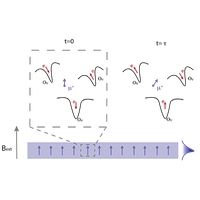
Positional memory of skyrmions in magnetic bilayers

Bruno Barton-Singer, Anusree Navallur, and Stavros Komineas

Phys. Rev. B 113, 134448 (2026) - Published 30 April, 2026

Topology driven magnetic memory of OsB2 surface states

Nikhlesh S. Mehta, Bikash Patra, Mona Garg, Ghulam Mohmad, Pooja Bhardwaj, Savita Chaudhary, Jaskaran Singh, Yogesh Singh, Bahadur Singh, and Goutam Sheet

Phys. Rev. B 113, 134529 (2026) - Published 30 April, 2026

Contact points open wide band gaps in all two-dimensional Bravais lattices

David Röhlig, Ralf Zichner, Thomas Blaudeck, Angela Thränhardt, and Vincent Laude

Phys. Rev. B 113, 144319 (2026) - Published 30 April, 2026

Observation of planar Ettingshausen effect in 3d ferromagnetic materials

Yulong Chen, Jiachen Zhang, Peng Wang, Haolin Pan, Wenzhi Peng, Xuhao Yu, and Dazhi Hou

Phys. Rev. B 113, 144438 (2026) - Published 30 April, 2026

Interplay between superconductivity and altermagnetism in disordered materials and heterostructures

Rodrigo de las Heras, Tim Kokkeler, Stefan Ilić, Ilya V. Tokatly, and F. Sebastian Bergeret

Phys. Rev. B 113, 144516 (2026) - Published 30 April, 2026

Superconductivity and altermagnetism are distinct states of matter, both characterized by zero net magnetization. The authors show here that when these two orders coexist in heterostructures, their interplay generates a finite magnetization texture in real space that reflects the symmetry of the altermagnet’s spin splitting in momentum space. This “proximity-induced magnetization” arises from singlet–triplet mixing when the superconducting order parameter varies in space, leading to nonlinear magnetoelectric effects driven by supercurrents, as well as tunable 0–π transitions in Josephson junctions.

Nonperturbative isotope effect on light-matter interaction in boron arsenide

Huan Wu

Phys. Rev. B 113, 134316 (2026) - Published 29 April, 2026

Electric field effects in the one-dimensional spin-12K1J1Γ1Γ1′K2J2 model with ferromagnetic Kitaev coupling

Wang Yang, Helin Wang, and Chao Xu

Phys. Rev. B 113, 134444 (2026) - Published 29 April, 2026

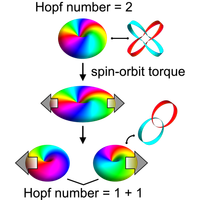
Nonequilibrium dynamics of magnetic hopfions driven by spin-orbit torque

Shoya Kasai, Shun Okumura, and Yukitoshi Motome

Phys. Rev. B 113, 134445 (2026) - Published 29 April, 2026

Magnetic hopfions are three-dimensional topological spin textures labeled by the Hopf invariant H, whose rich knot topology and spatial mobility offer potential for cutting-edge memory devices. Here, the authors investigate hopfion dynamics driven by spin-orbit torque. Notably, high-H hopfions exhibit hierarchical splitting dynamics. For instance, an H=4 hopfion becomes unstable and divides into two H=2, each of which subsequently splits into two H=1. These findings suggest that the spin-orbit torque provides an effective means of switching the hopfion knot topology.

Experimental observation of short-range magnetic correlations in amorphous Nb2O5 and Ta2O5 thin films

Y. V. Krasnikova, A. A. Murthy, D. Bafia, F. Crisa, A. Clairmont, Z. Sung, J. Lee, D. M. T. van Zanten, M. Bal, A. Romanenko, A. Grassellino, M. Shinde, A. Cano, R. Dhundhwal, D. Fuchs, T. Reisinger, I. M. Pop, A. Suter, T. Prokscha, and Z. Salman

Phys. Rev. B 113, 134446 (2026) - Published 29 April, 2026

Low-energy muon spectroscopy is a unique and sensitive way to probe local magnetic fields in thin films. Amorphous oxide thin films are a significant limiting factor for superconducting qubit performance. Both amorphous tantalum and niobium pentoxides exhibit magnetism, likely originating from oxygen vacancies, but with fundamentally different behavior. Niobium pentoxide shows magnetically disordered, lossy fluctuations exceeding to the qubit operational frequency range, whereas tantalum pentoxide exhibits static magnetic order with local fields exceeding the critical field, pointing to different decoherence mechanisms.

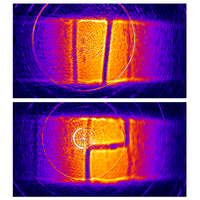
Topological object of chiral superfluid He−A3 confined in a parallel plate geometry

Y. Ikegai, Y. Hino, B. Tang, Z. Xu, T. Takagi, and Y. Sasaki

Phys. Rev. B 113, 134528 (2026) - Published 29 April, 2026

Chiral superfluid 3He confined in parallel plate geometry may contain topological objects such as chiral domain walls. The existence of those topological objects is mainly studied through spectroscopic measurement of nuclear magnetic resonance together with theoretical modeling of the texture. Here, the authors use magnetic resonance imaging to obtain real-space images of the topological objects. They identify various textures of the observed topological objects through spectroscopic and relaxometric magnetic resonance imaging. Real-time motion and pair annihilation of the domain walls is also studied.

Superconducting ternary compounds Li-X-B (X=Mo, W) within the mild pressure range: First-principles predictions

Bangshuai Zhu, Juefei Wu, Dexi Shao, Junjie Wang, Yu Han, Cuiying Pei, Qi Wang, Jian Sun, and Yanpeng Qi

Phys. Rev. B 113, 144115 (2026) - Published 29 April, 2026

Anderson localization on Husimi trees and its implications for many-body localization

Dafne Prado Bandeira and Marco Tarzia

Phys. Rev. B 113, 144207 (2026) - Published 29 April, 2026

Dynamical detection of a topological invariant defined via a Hamiltonian subspace in a one-dimensional non-Hermitian Floquet system

Ruozhen Wang, Zhi Tan, Bo Zhu, Shufang Hu, Fuqiu Ye, and Honghua Zhong

Phys. Rev. B 113, 144318 (2026) - Published 29 April, 2026

Field-free magnetization switching in (111)-TmIG enabled by threefold symmetry and Dzyaloshinskii-Moriya interaction

Junya Huang, Yan Li, Shanshan Hu, Jintao Ke, J. W. Cai, Zongzhi Zhang, and Yaowen Liu

Phys. Rev. B 113, 144437 (2026) - Published 29 April, 2026

Topological surface state destruction via trivializing proximity effect: Lattice localization despite continuum criticality

Arthur Niwazuki and Matthew S. Foster

Phys. Rev. B 113, 155445 (2026) - Published 29 April, 2026

The tenfold classification of topological insulators and superconductors was recently refined to distinguish “localizable” phases, whose surface states are fragile to disorder. Here, the authors demonstrate this fragility for a 3D class-CI topological superconductor: it can be Anderson localized by weak disorder and hybridization with a trivial 2D band. By contrast, 2D continuum Dirac models fail to capture this behavior, with stronger disorder instead restoring criticality, highlighting fundamental limitations of effective field theory in describing localizable topological phases.

Sliding phasons in moiré ladders

Paula Mellado, Francisco Muñoz, and Javiera Cabezas-Escares

Phys. Rev. B 113, 165152 (2026) - Published 29 April, 2026

Nonlocal transport signatures of topological superconductivity in a dimerized Kitaev chain

Rafael Pineda Medina, Pablo Burset, and William J. Herrera

Phys. Rev. B 113, L140504 (2026) - Published 29 April, 2026

Compressive strain turns s±- into d-wave pairing in a one-unit-cell La3Ni2O7 thin film via substrate-induced hole doping

Yang Zhang, Ling-Fang Lin, Adriana Moreo, Satoshi Okamoto, Thomas A. Maier, and Elbio Dagotto

Phys. Rev. B 113, L140505 (2026) - Published 29 April, 2026

Pressure-induced reentrant superconductivity in the misfit layered compound (SnS)1.15(TaS2)

Chutong Zhang, Jiajia Feng, Xiao Tang, Xiangzhuo Xing, Na Zuo, Xiaolei Yi, Yan Meng, Xiaoran Zhang, Rajesh Kumar Ulaganathan, Raman Sankar, Xiaofeng Xu, Xin Chen, and Xiaobing Liu

Phys. Rev. B 113, L140506 (2026) - Published 29 April, 2026

Misfit layered compounds are a class of natural van der Waals heterostructures that enable bulk realizations of quasi-two-dimensional electronic states. Using pressure as a tuning knob, the authors uncover here pressure-induced reentrant superconductivity in the prototypical misfit compound (SnS)1.15(TaS2). They reveal an intimate connection between the reemergence of superconductivity and a pressure-driven electronic reconstruction, establishing pressure as an effective means to tune carrier topology and superconducting states in misfit systems.

Band renormalization in monolayer MoS2 induced by multipole screening

Woojoo Lee, Seungwoo Yoo, Marios Zacharias, Junho Choi, and Young-Kyun Kwon

Phys. Rev. B 113, L161120 (2026) - Published 29 April, 2026

Sign In to Your Journals Account

Filter

Recent Issues

Vol. 114, Iss. 24
15 October 2026
Vol. 114, Iss. 23
15 October 2026
Vol. 114, Iss. 22
15 October 2026
Vol. 114, Iss. 21
1 October 2026
Category
Article Type
Section

Filter

Article Lookup

Enter a citation