Highlights

Relating spin-polarized STM imaging and inelastic neutron scattering in the van der Waals ferromagnet Fe3GeTe2

Christopher Trainer, Olivia R. Armitage, Harry Lane, Luke C. Rhodes, Edmond Chan, Izidor Benedičič, J. A. Rodriguez-Rivera, O. Fabelo, Chris Stock, and Peter Wahl

Phys. Rev. B 106, L081405 (2022) - Published 15 August, 2022

Information about the magnetic properties of van der Waals ferromagnets comes so far largely from macroscopic techniques, with much less being known about the magnetism at the microscopic level. By comparing atomic-scale imaging of domain walls at the surface of the van der Waals ferromagnet Fe3−xGeTe2 with inelastic neutron scattering measurements of the magnon dispersion in the bulk, the authors elucidate here the interplay between the bulk and surface magnetism and image the low-energy electronic structure.

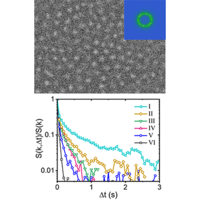
Weakly pinned skyrmion liquid in a magnetic heterostructure

Rhodri Mansell, Yifan Zhou, Kassius Kohvakka, See-Chen Ying, Ken R. Elder, Enzo Granato, Tapio Ala-Nissila, and Sebastiaan van Dijken

Phys. Rev. B 106, 054413 (2022) - Published 10 August, 2022

Magnetic skyrmions are topological quasiparticles that can be formed in systems with particular magnetic interactions. Here, the authors study dense arrays of skyrmions in a thin film heterostructure, showing that the skyrmions form a liquid, the properties of which depend strongly on the size and density of the skyrmions. The presence of pinning sites alters the behavior of the skyrmion liquid compared to typical liquids, but these pinning sites are shown to have a narrow energy distribution compatible with proposed applications.

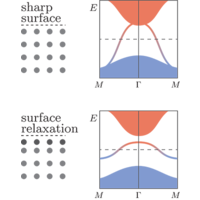
Delicate topology protected by rotation symmetry: Crystalline Hopf insulators and beyond

Aleksandra Nelson, Titus Neupert, A. Alexandradinata, and Tomáš Bzdušek

Phys. Rev. B 106, 075124 (2022) - Published 10 August, 2022

Within topological band theory, stable, fragile, and recently discovered delicate topological insulators are distinguished based on their stability against addition of trivial degrees of freedom. In this manuscript, the authors study delicate topological insulators protected by crystalline symmetries. They demonstrate that sharp boundaries of these insulators possess conducting states, while states localized at nonsharp boundaries are generically insulating but have anomalous symmetry eigenvalues. These boundary signatures are qualitatively unique among the known topological insulators.

Ab initio self-consistent many-body theory of polarons at all couplings

Jon Lafuente-Bartolome, Chao Lian, Weng Hong Sio, Idoia G. Gurtubay, Asier Eiguren, and Feliciano Giustino

Phys. Rev. B 106, 075119 (2022) - Published 9 August, 2022

A self-consistent many-body theory of polarons is presented. This unifies weak- and strong-coupling approaches to the electron-phonon interaction from first principles, opening the door toward a full characterization of polaronic effects in materials at all coupling strengths.

Weak itinerant magnetic phases of La2Ni7

J. M. Wilde, A. Sapkota, W. Tian, S. L. Bud'ko, R. A. Ribeiro, A. Kreyssig, and P. C. Canfield

Phys. Rev. B 106, 075118 (2022) - Published 8 August, 2022

The authors investigate the low-moment magnetic phases of La2Ni7 using neutron diffraction on single crystals. At intermediate temperatures, there are two incommensurate magnetic phases with the same temperature-dependent propagation vector, but different magnetic-moment directions. At low temperatures, the magnetic structure abruptly becomes a uniaxial commensurate antiferromagnet through a first-order transition. These properties make La2Ni7 an interesting candidate in the search for interesting phenomena such as superconductivity via suppressing weak magnetic order through pressure and/or chemical substitution.

Tunable transport in the mass-imbalanced Fermi-Hubbard model

Philip Zechmann, Alvise Bastianello, and Michael Knap

Phys. Rev. B 106, 075115 (2022) - Published 5 August, 2022

Transport dominates the late-time dynamics of quantum many-body systems with conserved quantities and is described by the laws of hydrodynamics. Within the framework of a quantum kinetic theory, the authors study the recently experimentally realized mass-imbalanced Fermi-Hubbard model in one dimension and investigate the emergence of diffusive hydrodynamics. Excellent agreement with both tensor network computations and experimental data is found. Furthermore, they analyze the influence of external potentials and show that the presence of a tilt gives rise to a more exotic type of subdiffusive transport.

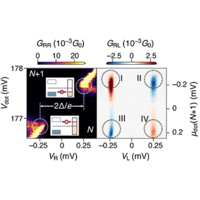
Nonlocal measurement of quasiparticle charge and energy relaxation in proximitized semiconductor nanowires using quantum dots

Guanzhong Wang, Tom Dvir, Nick van Loo, Grzegorz P. Mazur, Sasa Gazibegovic, Ghada Badawy, Erik P. A. M. Bakkers, Leo P. Kouwenhoven, and Gijs de Lange

Phys. Rev. B 106, 064503 (2022) - Published 3 August, 2022

The nonlocal conductance of semiconductor-superconductor heterostructures is increasingly used to study the bulk properties of such systems. However, the microscopic details governing this conductance are poorly understood. Here, the authors fabricate a three-terminal device, based on an InSb nanowire proximitized by a thin Al layer. They show that the measured nonlocal conductance is a nonequilibrium process carried by charge-neutral quasiparticles, taking place at the energy of the superconducting gap.

Dirac nodal lines and nodal loops in the topological kagome superconductor CsV3Sb5

Zhanyang Hao, Yongqing Cai, Yixuan Liu, Yuan Wang, Xuelei Sui, Xiao-Ming Ma, Zecheng Shen, Zhicheng Jiang, Yichen Yang, Wanling Liu, Qi Jiang, Zhengtai Liu, Mao Ye, Dawei Shen, Yi Liu, Shengtao Cui, Jiabin Chen, Le Wang, Cai Liu, Junhao Lin, Jianfeng Wang, Bing Huang, Jia-Wei Mei, and Chaoyu Chen

Phys. Rev. B 106, L081101 (2022) - Published 2 August, 2022

Recently, V-based kagome superconductors have emerged as a new research topic in condensed matter physics by intertwining superconductivity, charge density wave, and strong correlation. Here, the authors identify CsV3Sb5 as a Dirac nodal-line semimetal by determining multiple Dirac nodal lines and loops close to the Fermi level with the help of ARPES and first-principles calculations. These nodal lines and loops could provide yet another source for obtaining larger Berry curvature and, hence, larger anomalous Hall conductivity, thus offering essential insight into the exotic transport behavior observed.

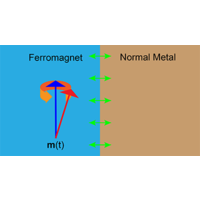
Quantum scattering theory of spin transfer torque, spin pumping, and fluctuations

Arne Brataas

Phys. Rev. B 106, 064402 (2022) - Published 1 August, 2022

Spin transfer torque and spin pumping are central reciprocal phenomena in spintronics. The author demonstrates a way to understand these effects within a quantum out-of-equilibrium path-integral model. At a finite temperature, frequency, or spin accumulation, the magnet also experiences fluctuating torques. In the quantum regime, transport coefficients related to electron shot noise caused by the discrete spin angular momentum of electrons govern the fluctuations at low temperatures. The results open a path for exploring low-temperature magnetization dynamics and spin caloritronics.

Bulk localized transport states in infinite and finite quasicrystals via magnetic aperiodicity

Dean Johnstone, Matthew J. Colbrook, Anne E. B. Nielsen, Patrik Öhberg, and Callum W. Duncan

Phys. Rev. B 106, 045149 (2022) - Published 29 July, 2022

Topological edge states can form when a charged particle confined to a crystalline lattice interacts with a magnetic field. These edge states are localized to the boundary and can support transport along the edge even with an insulating bulk. Here, the authors show that a different state that supports transport in the bulk can emerge when the charged particle is on a quasicrystalline lattice. Utilizing a recently developed spectral computation technique, they show that these new bulk localized transport (BLT) states survive in the infinite-size limit.

Gate-tunable heavy fermion quantum criticality in a moiré Kondo lattice

Ajesh Kumar, Nai Chao Hu, Allan H. MacDonald, and Andrew C. Potter

Phys. Rev. B 106, L041116 (2022) - Published 27 July, 2022

The authors propose a transition metal dichalcogenide moiré heterostructure that realizes a Kondo lattice and is capable of tuning across a quantum phase transition corresponding to the breakdown of Kondo screening. For a dual-gated setup, they theoretically identify the requisite gating conditions and find a quantum critical scenario where the local moments in a chiral spin-liquid state dissolve in the conduction electron Fermi sea to form an anomalous Hall heavy-fermion liquid. They discuss how the proposed gate-tunable Kondo lattice simulator can experimentally distinguish between various competing scenarios for the quantum phase transition, and thereby enable progress in the understanding of heavy-fermion quantum criticality.

Nonlinear nonreciprocal transport in antiferromagnets free from spin-orbit coupling

Satoru Hayami and Megumi Yatsushiro

Phys. Rev. B 106, 014420 (2022) - Published 26 July, 2022

Relativistic spin-orbit coupling is a fundamental source of nonlinear nonreciprocal transport. It has been believed that large spin-orbit coupling is necessary to cause nonlinear nonreciprocal transport, which strongly narrows down candidate materials. Here, the authors theoretically propose an alternative mechanism of nonlinear nonreciprocal transport using local spin scalar chirality instead of spin-orbit coupling. They demonstrate two types of nonlinear nonreciprocal transport and clarify their microscopic parameter conditions. The findings significantly promote emergent noncentrosymmetric physics in the magnetic phase.

Revisiting flat band superconductivity: Dependence on minimal quantum metric and band touchings

Kukka-Emilia Huhtinen, Jonah Herzog-Arbeitman, Aaron Chew, Bogdan A. Bernevig, and Päivi Törmä

Phys. Rev. B 106, 014518 (2022) - Published 26 July, 2022

Flat band systems such as twisted bilayer graphene superconduct thanks to nontrivial band wave functions. The work here relates the superfluid weight and the Cooper pair mass in isolated flat bands to the new concept of minimal quantum metric, solving an underappreciated, yet crucial issue in previous work. Moreover, the authors demonstrate that flat bands do not need to be energetically isolated to maximize the critical temperature, showing that many more materials are candidates for superconductivity at elevated temperatures.

Height-conserving quantum dimer models

Zheng Yan, Zi Yang Meng, David A. Huse, and Amos Chan

Phys. Rev. B 106, L041115 (2022) - Published 26 July, 2022

Quantum dimer models (QDM) are paradigmatic models of strongly correlated systems subject to strong local constraints. Bipartite QDMs admit a dual model of surfaces called height field models. By imposing the lattice sum of height fields as a conserved quantity, the authors show that the Hilbert space “fragments”, i.e. it splits into disconnected subspaces. Using an emergent spin description and Monte Carlo simulations, the authors obtain the distribution of dynamical exponents within different sectors as well as the ground-state phase diagram.

Skyrmion superconductivity: DMRG evidence for a topological route to superconductivity

Shubhayu Chatterjee, Matteo Ippoliti, and Michael P. Zaletel

Phys. Rev. B 106, 035421 (2022) - Published 25 July, 2022

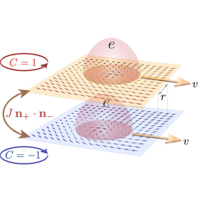
Superconductivity is caused by the binding of electrons into Cooper pairs, which requires an attractive “pairing glue” to overcome Coulomb repulsion. Usually this attraction is mediated by bosonic fluctuations such as phonons or spin waves. Here, the authors numerically demonstrate the viability of another possibility: band topology can force electrons to bind into charge-2e topological textures, skyrmions. Using density matrix renormalization group calculations to solve for the ground state of the Coulomb interaction projected into topological bands, the authors show that the lowest-energy charged excitations are skyrmions that superconduct at finite density, thereby illustrating a distinct all-electronic mechanism for superconductivity.

Electric and chiral response to a pseudoelectric field in Weyl materials

A. A. Herasymchuk, P. O. Sukhachov, and E. V. Gorbar

Phys. Rev. B 106, 045132 (2022) - Published 22 July, 2022

One of the unique features of Weyl and Dirac materials is the possibility to realize effective pseudo-electromagnetic (axial) fields by perturbing the band structure. These fields couple with a different sign to quasiparticles of different chirality. Here, the authors show that a dynamical pseudoelectric field allows for a Hall-like electric current response resembling the celebrated anomalous Hall effect. The conductivity for this nondissipative response is determined by the wave vector of perturbation, for example, sound.

Antichiral order and spin reorientation transitions of triangle-based antiferromagnets

Leon Balents

Phys. Rev. B 106, L020403 (2022) - Published 22 July, 2022

Antiferromagnetically coupled spins on a triangle tend to order at 120° angles to one another. When confined to a plane, the pattern is antichiral if the spins rotate counterclockwise while traversing the triangle clockwise. The author shows that in this situation spin reorientation transitions generically occur as an applied field is increased, with spins rotating in the same/opposite sense as the field for high/low fields. The complex spin evolution provides tunability for magnetic and spintronic applications.

Generalized Gibbs ensemble description of real-space entanglement spectra of (2+1)-dimensional chiral topological systems with SU(2) symmetry

Mark J. Arildsen and Andreas W. W. Ludwig

Phys. Rev. B 106, 035138 (2022) - Published 20 July, 2022

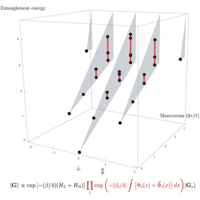
Li and Haldane observed that low-lying entanglement spectra of ground states of (2+1)D chiral topological phases display characteristic degeneracies of the (1+1)D conformal field theory (CFT) appearing at a physical boundary. This work explains the finite-size splittings of these degeneracies by irrelevant deformations of a (1+0)D boundary of the CFT, representing the ground state. These intriguingly arise from operators of fractional dimension in certain entanglement spectra. This approach has applications for diagnosing chirality in topological projected entangled pair states (PEPS).

Spectral functions of the half-filled one-dimensional Hubbard chain within the exchange-correlation potential formalism

F. Aryasetiawan and T. Sjöstrand

Phys. Rev. B 106, 045123 (2022) - Published 19 July, 2022

A new formalism based on an exchange-correlation (xc) potential to determine the Green’s function of many-electron systems was recently proposed. Here, the formalism is applied to calculate the band gap and spectral functions of the one-dimensional Hubbard chain at half filling by utilizing the exact xc potential of the Hubbard dimer. Comparison with benchmark results shows favorable agreement despite the simplicity of the approximations used. The xc potential formalism may form a viable alternative route for treating electron correlations.

Classical algorithms for many-body quantum systems at finite energies

Yilun Yang, J. Ignacio Cirac, and Mari Carmen Bañuls

Phys. Rev. B 106, 024307 (2022) - Published 15 July, 2022

Properties of quantum many-body systems at finite energy densities, such as microcanonical averages, are in general difficult to compute with classical algorithms. Quantum algorithms that combine quantum dynamics with filtering and sampling techniques can however access some of these quantities. Here, the authors show that simulating the time evolution part with tensor networks provides quantum-inspired classical algorithms that reach much larger systems than other numerical methods.

Sign In to Your Journals Account

Filter

Section

Filter

Article Lookup

Enter a citation