Highlights

Nonexistence of the decahedral Si20H20 cage: Levinthal's paradox revisited

Deb Sankar De, Bastian Schaefer, Bernd von Issendorff, and Stefan Goedecker

Phys. Rev. B 101, 214303 (2020) - Published 1 June, 2020

For C60, the potential energy surface exhibits a driving force toward the ground state that allows it to be found rapidly. However, the potential energy surface of a cluster can also exhibit features that prevent us from finding its global minimum. In the case of decahedral Si20H20, which is a theoretically postulated stable ground state but was never synthesized, there is no driving force towards the global minimum. The system visits a huge number of low energy structures during its evolution without ever falling into the global minimum. This is exactly the scenario described by Levinthal in his famous paradox about protein folding.

Quantum many-body scars from virtual entangled pairs

Sambuddha Chattopadhyay, Hannes Pichler, Mikhail D. Lukin, and Wen Wei Ho

Phys. Rev. B 101, 174308 (2020) - Published 18 May, 2020

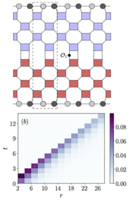
Quantum many-body scarring is a recently discovered weak ergodicity-breaking phenomenon in quantum many-body systems. It was first seen in experiments with Rydberg atom array simulators, and characterized by nonthermalizing periodic revivals of certain initial-state configurations. Here, the authors extend our understanding of the physical origins of this phenomenon by showing through an explicit construction that scars can arise through the presence of entangled virtual degrees of freedom undergoing periodic dynamics. This demonstrates a novel analytic scenario, whereby intrinsically entangled states can exhibit periodic revivals in an otherwise chaotic many-body system, enriching the phenomenology of quantum many-body scarring.

Observation of topological edge states induced solely by non-Hermiticity in an acoustic crystal

He Gao, Haoran Xue, Qiang Wang, Zhongming Gu, Tuo Liu, Jie Zhu, and Baile Zhang

Phys. Rev. B 101, 180303(R) (2020) - Published 6 May, 2020

Most existing non-Hermitian topological systems derive their nontrivial topology from Hermitian factors. Here, the authors report on the experimental observation of acoustic topological edge states induced solely by non-Hermiticity. They show that non-Hermiticity is able to create a topological band gap from a gapless Hermitian system. The study offers the possibilities for actively steerable topological wave manipulations in applications ranging from acoustics to photonics.

Phonon rotoelectric effect

Masato Hamada and Shuichi Murakami

Phys. Rev. B 101, 144306 (2020) - Published 29 April, 2020

Here, the authors theoretically propose a new method to generate phonon angular momenta – rotational motions of atoms in crystals by the electric field. From a symmetry analysis, they consider multiferroic materials without both time-reversal and inversion symmetries and with their product being conserved. When the electric field is applied, the phonon angular momentum is generated via the spin-phonon interaction and the lattice distortion due to the electric field.

Ultracold quantum wires with localized losses: Many-body quantum Zeno effect

Heinrich Fröml, Christopher Muckel, Corinna Kollath, Alessio Chiocchetta, and Sebastian Diehl

Phys. Rev. B 101, 144301 (2020) - Published 1 April, 2020

The effect of localized loss on a one-dimensional gas of interacting fermions is investigated. Here, the interplay of gapless quantum fluctuations and particle interactions strongly renormalizes the dissipative impurity. As a result, the loss probability for modes close to the Fermi energy vanishes for arbitrary strength of the dissipation, as a many-body incarnation of the quantum Zeno effect. This is reflected in the shape of the particle momentum distribution, exhibiting a peak close to the Fermi momentum.

Edge states and topological pumping in stiffness-modulated elastic plates

Emanuele Riva, Matheus I. N. Rosa, and Massimo Ruzzene

Phys. Rev. B 101, 094307 (2020) - Published 23 March, 2020

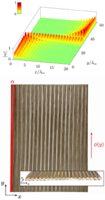
The authors demonstrate the existence of edge states in elastic plates with spatial modulations of stiffness. They show that smooth variations of the phase of the modulation profile along one spatial dimension produces a transition of the edge states from one edge to another, thus implementing a “topological pump.” The results on a mechanical substrate open new pathways for the efficient transfer of information through topological protection, for the general investigation of topological phases of matter relying on continuous property modulations, and for the pursuit of topology-based waveguiding relying on slow modulations along a second dimension, spatial or temporal.

Tracking the ultrafast nonequilibrium energy flow between electronic and lattice degrees of freedom in crystalline nickel

P. Maldonado, T. Chase, A. H. Reid, X. Shen, R. K. Li, K. Carva, T. Payer, M. Horn von Hoegen, K. Sokolowski-Tinten, X. J. Wang, P. M. Oppeneer, and H. A. Dürr

Phys. Rev. B 101, 100302(R) (2020) - Published 12 March, 2020

Femtosecond laser excitation of ferromagnetic Ni opened up the field of ultrafast magnetism in the mid-1990’s. However, it is only today that it has become possible to track the ultrafast energy flow between laser-heated electrons and lattice vibrations. Ultrafast electron scattering and first-principles calculations establish that the phonon system remains in a nonequilibrium state for many picoseconds and that it can even transfer energy back to the electrons.

Exact dynamics in dual-unitary quantum circuits

Lorenzo Piroli, Bruno Bertini, J. Ignacio Cirac, and Tomaž Prosen

Phys. Rev. B 101, 094304 (2020) - Published 9 March, 2020

Recently, random unitary quantum circuits have received increasing attention as minimal models for the chaotic quantum many-body dynamics, since they allow for exact computation of quantities that are notoriously hard to study in traditional Hamiltonian systems. A natural question is whether nonrandom quantum circuits exist, also allowing for the derivation of analytic results. The answer is provided in this work, where the authors exhibit a class of interacting quantum circuits for which they are able to compute exactly for an infinite family of initial configurations the dynamics of correlation functions and entanglement.

Transient three-dimensional structural dynamics in 1T−TaSe2

Shaozheng Ji, Oscar Grånäs, Kai Rossnagel, and Jonas Weissenrieder

Phys. Rev. B 101, 094303 (2020) - Published 5 March, 2020

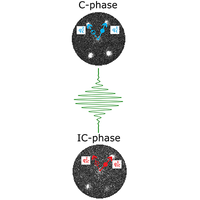
The coupling between electron and lattice dynamics is fundamental for the understanding of matter. Here, the authors investigate how an optical excitation of a charge density wave transition in 1T-TaSe2 affects its three-dimensional atomic structure. Excitation by a short laser pulse results in the formation of a short-lived metastable phase and reconfiguration of the stacking order on a picosecond time scale. The authors observe the activation of a coherent shear mode by uncompensated shear forces between the layers, formed as a result of local transient velocity disparities in the Se sublattice.

Theory of the phase transition in random unitary circuits with measurements

Yimu Bao, Soonwon Choi, and Ehud Altman

Phys. Rev. B 101, 104301 (2020) - Published 3 March, 2020

The interplay of entanglement, measurement, and noise in near-term quantum devices may lead to novel emergent phenomena. This work presents a theoretical framework to understand collective effects in the dynamics of quantum entanglement and information, using the tools of statistical mechanics. The new effective description of generic quantum circuits lends insight into a measurement-induced phase transition in the information content of the system and points toward novel schemes to identify this transition in experiments.

Measurement-induced criticality in random quantum circuits

Chao-Ming Jian, Yi-Zhuang You, Romain Vasseur, and Andreas W. W. Ludwig

Phys. Rev. B 101, 104302 (2020) - Published 3 March, 2020

A new class of quantum entanglement transitions separating phases with different entanglement entropy scaling has been observed in recent numerical studies. Despite the numerical efforts, an analytical understanding of such transitions has remained elusive. Here, the authors propose a theory for the area-law to volume-law entanglement transition in many-body systems that undergo both random unitary evolutions and projective measurements. Using the replica method, the authors map analytically this entanglement transition to an ordering transition in a classical statistical mechanics model. They derive the general entanglement scaling properties at the transition and show a solvable limit where this transition can be mapped onto two-dimensional percolation.

Quantum many-body scar states with emergent kinetic constraints and finite-entanglement revivals

Thomas Iadecola and Michael Schecter

Phys. Rev. B 101, 024306 (2020) - Published 29 January, 2020

Strongly interacting systems with quantum many-body scars exhibit persistent fidelity oscillations when prepared in a certain class of initial states, but otherwise undergo ergodic dynamics. Previous examples of scars have interpreted the characteristic periodic dynamics in terms of the precession of a macroscopic SU(2) spin in an effective magnetic field. Here, the authors uncover a new exactly solvable example of many-body scars in a spin-½ model and show that the scarred dynamics in this model evades such an interpretation. This unusual coherent dynamics arises due to an emergent kinetic constraint that endows the time-evolving many-body state with constant area-law entanglement. The model studied in this work is relevant to experiments on Rydberg-atom quantum simulators in the antiblockade regime.

Higher-order acoustic phonon oscillations in Au nanoparticles controlled by a sequence of ultrashort strain pulses generated by superdiffusive hot electrons

Yooleemi Shin, Yu Liu, Mircea Vomir, and Ji-Wan Kim

Phys. Rev. B 101, 020302(R) (2020) - Published 22 January, 2020

One of the quests in ultrafast plasmonics is the development of devices, based on surface plasmons and operating at high frequency and negligible heating conditions. Towards this goal, the authors use ultrashort strain pulses, generated by superdiffusive hot electrons to excite high-order spheroidal modes of Au nanoparticles. Their vibrations are accessed via periodic shifts of the surface plasmon band and further coherently controlled by a sequence of strain pulses. These results open new perspectives for ultrafast acoustoplasmonics towards the terahertz frequency regime.

Variational Schrieffer-Wolff transformations for quantum many-body dynamics

Jonathan Wurtz, Pieter W. Claeys, and Anatoli Polkovnikov

Phys. Rev. B 101, 014302 (2020) - Published 10 January, 2020

The description of nonequilibrium dynamics in interacting quantum systems is a long-standing challenge within condensed matter physics. In this theoretical work, the authors introduce a method to block-diagonalize low-energy sectors of strongly interacting Hamiltonians by variationally computing generators of rotations, equivalent to a nonperturbative dressing of quasiparticle excitations. This procedure allows for the calculation of effective dynamics including quenches and response functions, as is demonstrated in a Fermi-Hubbard model and an integrability-broken XY model, both of which demonstrate excellent convergence.

Uncovering electron-phonon scattering and phonon dynamics in type-I Weyl semimetals

Jennifer Coulter, Gavin B. Osterhoudt, Christina A. C. Garcia, Yiping Wang, Vincent M. Plisson, Bing Shen, Ni Ni, Kenneth S. Burch, and Prineha Narang

Phys. Rev. B 100, 220301(R) (2019) - Published 24 December, 2019

Topological semimetals display remarkable transport properties. Here, the authors use Raman spectroscopy to probe the phonons and electron-phonon coupling in the Weyl semimetals NbAs and TaAs. An anomalous temperature dependence of phonon linewidths is shown to be consistent with decay into electron-hole pairs near the Weyl nodes. First-principles calculations observe this coupling and reveal yet-to-be-measured coupling hot spots at finite phonon momentum. The authors show that such couplings would contribute to the temperature-dependent mobility in these Weyl semimetals.

High-resolution resonant inelastic x-ray scattering study of the electron-phonon coupling in honeycomb α−Li2IrO3

J. G. Vale, C. D. Dashwood, E. Paris, L. S. I. Veiga, M. Garcia-Fernandez, A. Nag, A. Walters, Ke-Jin Zhou, I.-M. Pietsch, Anton Jesche, P. Gegenwart, R. Coldea, T. Schmitt, and D. F. McMorrow

Phys. Rev. B 100, 224303 (2019) - Published 18 December, 2019

Resonant inelastic x-ray scattering (RIXS) is an element- and orbital-specific, momentum-resolved technique which couples to multiple degrees of freedom in a material. The field has evolved significantly in recent years thanks to advances in instrumentation. The authors present oxygen K-edge RIXS data, collected on a honeycomb iridate. Clear multiphonon harmonics can be observed, indicative of significant electron-phonon coupling (EPC). They conclude that the EPC is comparable in magnitude to that found for a range of 3d transition metal oxides.

Quantum many-body scars from magnon condensation

Thomas Iadecola, Michael Schecter, and Shenglong Xu

Phys. Rev. B 100, 184312 (2019) - Published 27 November, 2019

According to quantum statistical mechanics, generic many-body systems decohere and thermalize regardless of their initial state. A recent experiment found a surprising exception to this rule, wherein an otherwise thermalizing system maintains its coherence only for a particular initial condition, a phenomenon dubbed “quantum many-body scarring.” Here, the authors propose and provide numerical evidence for a physical mechanism underlying the observed phenomena: Bose-Einstein condensation, wherein macroscopic numbers of quasiparticles occupy a single quantum state. While this phenomenon is well known at equilibrium, its emergence in a strongly interacting, far-from-equilibrium system is striking and unexpected. The physical principle explored in this work can be applied to other systems to reveal new examples of quantum many-body scars.

Compressive sensing lattice dynamics. I. General formalism

Fei Zhou (周非), Weston Nielson, Yi Xia, and Vidvuds Ozoliņš

Phys. Rev. B 100, 184308 (2019) - Published 20 November, 2019

Anharmonic vibrational effects in solids, although essential for the finite-temperature properties, remain difficult to model via first-principles calculations. The authors detail a systematic information-theory based approach: compressive sensing lattice dynamics. The conventional lattice dynamics theory is recast into a form, suited for complex multicomponent compounds with large unit cells. With L1 regularization, the anharmonic force constants can be obtained efficiently using modest sets of training structures. The approach therefore allows for easier access to finite-temperature properties of complex solids.

Microscopic nonequilibrium energy transfer dynamics in a photoexcited metal/insulator heterostructure

N. Rothenbach, M. E. Gruner, K. Ollefs, C. Schmitz-Antoniak, S. Salamon, P. Zhou, R. Li, M. Mo, S. Park, X. Shen, S. Weathersby, J. Yang, X. J. Wang, R. Pentcheva, H. Wende, U. Bovensiepen, K. Sokolowski-Tinten, and A. Eschenlohr

Phys. Rev. B 100, 174301 (2019) - Published 5 November, 2019

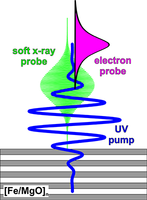
Heterostructures promise tailored, ultrafast functionality. However, the nonequilibrium pathways for the relaxation of optical excitations and attendant energy transfer are highly complex, as they involve the interaction of electronic and lattice degrees of freedom both within and among the constituents. With complementary femtosecond time-resolved probes, the authors analyze the microscopic nonequilibrium dynamics in metal/insulator heterostructures. They identify subpicosecond coupling of hot electrons in the metal to hybrid interface phonon modes extending into the insulator.

Natural analog to cosmology in basic condensed matter physics

Eugene B. Kolomeisky

Phys. Rev. B 100, 140301(R) (2019) - Published 31 October, 2019

What do charge oscillations in conductors and expansion of the Universe have in common? More than meets the eye as the author demonstrates. A collection of identical charged particles in the presence of a uniform compensating background charge could evolve as if the system were part of an expanding or contracting homogeneous and isotropic Universe with the “wrong” sign of interaction: while gravity is attractive, the charges repel each other. Otherwise, the equations of motion are identical with the cosmological equations of general theory of relativity.

Sign In to Your Journals Account

Filter

Section

Filter

Article Lookup

Enter a citation