Highlights

Customizing zero modes with arbitrary spatial profiles

Luohong Liu (刘烙宏), Qicheng Zhang (张起成), Shuaishuai Tong (童帅帅), and Chunyin Qiu (邱春印)

Phys. Rev. B 114, L260304 (2026) - Published 12 November, 2026

Here, the authors demonstrate a universal head-body architecture that creates spectrally isolated zero modes with fully customizable spatial profiles in arbitrary lattices. Unidirectional couplings to a zero-energy head site enable independent amplitude and phase design, as visualized by the Tai Chi zero-mode pattern. Acoustic experiments realize diverse one- and two-dimensional morphologies, including “WHU” letters and phase vortices, underscoring the scheme’s robustness and practical versatility for on-demand wave-field engineering.

Balanced electron and phonon heat transport in metallic ε-TaN

Sungyeb Jung, Hongze Li, Yudan Li, Noah Rossignol, Woongchul Choi, Yaguo Wang, Jianshi Zhou, Li Shi, and Feliciano Giustino

Phys. Rev. B 114, 274301 (2026) - Published 4 November, 2026

High thermal conductivity in materials is typically dominated by either electronic or lattice transport channels. Here, combining theoretical calculations with experimental measurements, the authors report ε-TaN breaks this conventional picture: both electrons and phonons make substantial contributions to heat conduction, resulting in a room-temperature thermal conductivity that lies between those of aluminum and gold. By establishing a clear physical descriptor, these findings introduce a novel strategy for designing next-generation thermal conductors.

Importance of nonlinear long-range electron-phonon interaction for the carrier mobility of anharmonic halide perovskites

Matthew Houtput, Ingvar Zappacosta, William Wenborn, Serghei Klimin, Samuel Poncé, Jacques Tempere, and Cesare Franchini

Phys. Rev. B 114, L200301 (2026) - Published 8 October, 2026

The carrier mobility in many materials is dominated by scattering of the carriers with phonons. It is often calculated using only linear, one-electron–one-phonon interaction. Here, the authors present a first-principles calculation of the mobility including the nonlinear, long-range electron-phonon interaction, for the representative halide perovskite CsPbI3. It is shown that the temperature dependence of the carrier mobility decreases by about 10% due to the one-electron–two-phonon interaction, which is attributed to the strong anharmonicity and low phonon frequencies present in halide perovskites.

Significant modulation of acoustoelectric current associated with charge density wave transitions

Natsumi Nikaido, Takuya Kawada, Koji Fujiwara, Jihoon Park, Nan Jiang, Kouta Kondou, Shintaro Takada, and Yasuhiro Niimi

Phys. Rev. B 114, 144309 (2026) - Published 29 September, 2026

How collective electronic order responds to strain remains a central question in quantum materials. Here, the authors find that charge density wave (CDW) transitions in NbSe3 and 2H-TaSe2 strongly modulate the acoustoelectric current driven by surface acoustic waves. A simple phenomenological model based on strain-dependent conductivity captures the essential behavior. The work demonstrates acoustoelectric transport as a sensitive probe of CDW physics and opens new avenues for strain-based control of electronic states in van der Waals materials.

Dynamically robust counterdiabatic topological pumping

Joshua Chiel, Christopher Jarzynski, and Jay Sau

Phys. Rev. B 114, 154308 (2026) - Published 28 September, 2026

Adiabatic Thouless pumps, which undergird the modern theory of polarization, have potential applications ranging from metrology to adiabatic quantum computing. Here, the authors use counterdiabatic driving to develop a non-adiabatic Thouless pump. Their analytic model, which has only nearest neighbor interactions, exhibits exactly quantized charge pumping that is topologically robust to disorder, and dynamically robust to disorder and noise for sufficiently rapid driving – which the authors demonstrate is a universal feature of counterdiabatic driving. The fast, robust and locally tuned pump cycle also models qubit flips, which may have quantum hardware applications.

Intrinsic temporal and spectral mixing in time-resolved terahertz spectroscopy

Benjamin J. Dringoli and David G. Cooke

Phys. Rev. B 114, 134308 (2026) - Published 21 September, 2026

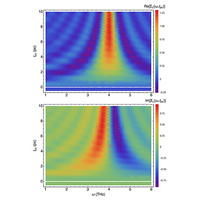
Ultrafast studies of photoinduced phase transitions increasingly rely on terahertz probes to track structural reorganization. Here, the authors show that when materials are altered faster than the THz probe duration, measured response functions can generate spurious time-frequency oscillations mimicking coherent dynamics. THz measurements on photoexcited SnSe, FDTD simulations, and an extended nonequilibrium response formalism demonstrate that these artifacts arise from fast photoinduced changes combined with long momentum relaxation times. This result offers a diagnostic for separating genuine signatures of photoinduced transitions from measurement-induced distortions.

Phonon fluctuation diagnostics: Origin of charge order in AV3Sb5 kagome metals

Stefan Enzner, Jan Berges, Arne Schobert, Dongjin Oh, Mingu Kang, Riccardo Comin, Ronny Thomale, Tim Wehling, Domenico Di Sante, and Giorgio Sangiovanni

Phys. Rev. B 114, 144304 (2026) - Published 21 September, 2026

The authors utilize phonon fluctuation diagnostics here to resolve the open question of the microscopic origin of charge density wave order in AV3Sb5 (A=K, Rb, Cs) kagome metals. Here, combining momentum-resolved ab initio calculations with ARPES measurements, they identify electron-phonon coupling as the primary driver of the lattice instability, rather than Van Hove singularities or nesting alone. Remarkably, the strongest contributions arise away from the high-symmetry M points, revealing a common mechanism across the three compounds.

Temperature-dependent Fano response and higher-order anharmonicity in single-crystal tellurium

Peng Wu, Yifan Li, Ying Zhang, Lidong Zhang, Ranran Zhang, Zhanfeng Liu, and Tongrui Li

Phys. Rev. B 114, 134301 (2026) - Published 3 September, 2026

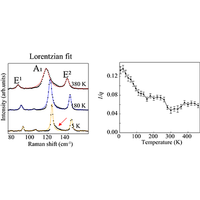
In single-crystal trigonal Te, the low-temperature Fano line shape of the Raman-active A1 mode reflects interference between the phonon and an electronic continuum, whereas four-phonon scattering substantially shortens the lifetimes of low-frequency heat-carrying phonons and lowers the lattice thermal conductivity.

High harmonic spectroscopy from lower-order to higher-order topological insulators

Bryan Lorenzo, Carlos Batista, Milad Jangjan, Dasol Kim, Jean Menotti, Feng Liu, Wenlong Gao, Shambhu Ghimire, Camilo Granados, and Alexis Chacón

Phys. Rev. B 114, 084307 (2026) - Published 24 August, 2026

Here, the authors demonstrate that high-harmonic spectroscopy from lower-order to higher-order topological insulators reveals distinct contributions from bulk, edge, and corner electronic states. By systematically resolving these emission channels, they establish how topological features evolve across different classes of topological materials and clarify the microscopic origin of the emitted harmonics. Their results provide a unified framework for understanding and exploiting high-harmonic generation as a probe of topological quantum matter.

Anharmonic dephasing in the electron-phonon interaction

Mingran Kong and Bartomeu Monserrat

Phys. Rev. B 114, 084303 (2026) - Published 7 August, 2026

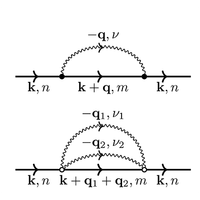
The electron-phonon interaction governs superconductivity, electrical transport, and the optical response of solids, and is now routinely computed from first principles. These calculations typically assume that lattice vibrations live forever, but in reality anharmonic interactions between phonons give them finite lifetimes. The authors derive here a tractable expression that includes this phonon dephasing into the electron-phonon scattering rate, implement it within standard computational workflows, and apply it to silicon, silicon carbide, and lead telluride, thus opening a long-neglected regime to systematic first-principles study.

Electronic conductivity in anharmonic crystals: Phonon dephasing in the electron-phonon interaction

Mingran Kong and Bartomeu Monserrat

Phys. Rev. B 114, L080304 (2026) - Published 7 August, 2026

The electron-phonon interaction governs properties from electrical conductivity to superconductivity, and first-principles calculations of it typically assume that phonons have infinite lifetimes. Here, the authors go beyond this approximation, presenting a theory and first-principles implementation of electrons coupling to finite-lifetime phonons dephased by anharmonic phonon-phonon interactions. In metallic MgB2, this dephasing opens new scattering channels that strongly enhance electron-phonon scattering and suppress the calculated conductivity, improving agreement with experiment and pointing to a broader role for phonon lifetimes in anharmonic metals.

Phonon scattering mechanisms in WTe2 observed by ultrafast coherent phonon spectroscopy

Mizuki Akei, Yu Mizukoshi, and Muneaki Hase

Phys. Rev. B 114, L080303 (2026) - Published 5 August, 2026

Td-WTe2 is a Weyl semimetal, which exhibits unique physical properties of electronic states, such as the Lifshitz transition. Here, using ultrafast laser spectroscopy, the authors reveal contribution of phonon-electron scattering only for the low-frequency A1 optical phonon, in addition to conventional phonon-phonon scattering at low temperatures. The findings of the phonon-electron scattering path possibly induced by the Lifshitz transition pave the way for further exploration of the electronic structure and transport properties in a wide range of quantum materials.

Zitterbewegung velocity in semiclassical electron dynamics

Dimitrie Culcer

Phys. Rev. B 114, L020305 (2026) - Published 29 July, 2026

Zitterbewegung, the trembling motion caused by interband coherence, is usually viewed as a purely quantum effect. Here, the author shows that it also has a natural place in semiclassical electron dynamics as an additional velocity term. This term explains the electric-field-induced position shift of Bloch electrons and reveals a direct connection to the minimum conductivity of massless Dirac fermions.

Open quantum system theory of muon spin relaxation in materials

Elvis F. Arguelles and Osamu Sugino

Phys. Rev. B 114, 034313 (2026) - Published 28 July, 2026

Here, the authors formulate muon spin relaxation as a non-Markovian open quantum spin problem, allowing temporally correlated magnetic noise and retarded environmental response to be treated on equal footing. Applied to Li0.73CoO2, the approach explains zero- and weak-longitudinal-field μSR spectra with a common parameter set and connects the observed relaxation to Li-driven field fluctuations.

Probing Floquet topological phases via non-Hermitian skin effect of reflected waves

Fangqiao Ye and Haiping Hu

Phys. Rev. B 114, 034310 (2026) - Published 16 July, 2026

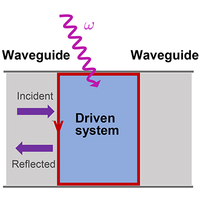
Here, the authors theoretically propose an approach to probe Floquet topological phases utilizing the non-Hermitian skin effect of reflected waves. They demonstrate that in periodically driven systems, unique topological signatures are robustly encoded in the reflection signals at the boundaries. This work provides a practical framework for experimentally identifying nonequilibrium topological phenomena without needing bulk measurements.

Replica Keldysh field theory of quantum-jump processes: General formalism and application to imbalanced and inefficient fermion counting

Felix Kloiber-Tollinger and Lukas M. Sieberer

Phys. Rev. B 114, 024307 (2026) - Published 13 July, 2026

Understanding measurement-induced phenomena beyond idealized measurements of Hermitian observables requires a general theoretical framework. Here, the authors develop a replica Keldysh field theory for quantum-jump processes with non-Hermitian jump operators and inefficient detection. The theory establishes a direct connection between measurement-induced and steady-state phase transitions in driven open quantum systems. Applied to monitored fermionic gain and loss, it reveals that inefficient detection induces volume-law entropy scaling while quantum entanglement remains area-law.

Emergence of many-body chaos in the presence of quasiparticles

Sibaram Ruidas, Sthitadhi Roy, Subhro Bhattacharjee, and Roderich Moessner

Phys. Rev. B 114, 014306 (2026) - Published 10 July, 2026

How does a many-body system transition from near-integrable quasiparticle dynamics to full chaos? Here, the authors develop a theory to describe this generic crossover. By analyzing the spatiotemporal profile of many-body chaos in a classical Heisenberg chain initialised with a dilute density of defects in an otherwise ordered background, they reveal a cascade of light cones seeded by scattering between these defects and the chaos light cone. Their results demonstrate a distinct progression from short-time integrability through an intermediate “scarred” regime, culminating in an avalanche of scattering events that produces the standard signature of many-body chaos.

Majorana string simulation of nonequilibrium dynamics in two-dimensional lattice fermion systems

Matteo D'Anna, Jannes Nys, and Juan Carrasquilla

Phys. Rev. B 114, 034305 (2026) - Published 10 July, 2026

Simulating the real-time dynamics of fermionic systems remains a major open problem at the core of understanding materials, chemistry, and other strongly correlated systems. Here, the authors present Majorana propagation, a Heisenberg-picture algorithm that evolves observables in a Majorana-string basis. Benchmarks against tensor network methods and recent quantum experimental data show that the method provides accurate results in the strongly interacting regime in two-dimensional lattices, a notoriously classically hard regime.

Free-fermion measurement-induced volume- to area-law entanglement transition in the presence of fermion interactions

Matthew S. Foster, Haoyu Guo, Chao-Ming Jian, and Andreas W. W. Ludwig

Phys. Rev. B 114, 024306 (2026) - Published 8 July, 2026

In quantum many-body systems, chaotic dynamics that explore all configurations can give way to a localized phase, frozen into a small corner of possibilities. These phases are distinguished by the extensivity of entanglement. Here, the authors argue that the entanglement transition driven by measurements in a broad class of interacting quantum circuits can be described by free fermions, and they develop a controlled description of the transition via non-Abelian bosonization. The results are also relevant to decodability transitions in certain surface codes with coherent errors.

Exact quench dynamics from thermal pure quantum states

Hui-Huang Chen

Phys. Rev. B 114, L020302 (2026) - Published 8 July, 2026

Here, the authors present an exact solution for the entanglement dynamics following a quench from a thermal pure quantum state in a free-fermion system. The entanglement entropy exhibits a distinctive double-plateau structure, rather than the usual linear growth and saturation. The result is established through conformal field theory, exact lattice simulations, and a quasiparticle picture.

Sign In to Your Journals Account

Filter

Section

Filter

Article Lookup

Enter a citation