Highlights

Impact of anharmonicity on the carrier mobility of the Pb-free CsSnBr3 perovskite

Junwen Yin, Olle Hellman, and Samuel Poncé

Phys. Rev. B 112, L140303 (2025) - Published 27 October, 2025

This study computes charge carrier mobilities in the lead-free perovskite CsSnBr3 using temperature-dependent effective potentials and ab initio Boltzmann transport equations. It shows that the harmonic approximation overestimates mobilities [106/256 cm2/(Vs)] compared to anharmonic results [59/145 cm2/(Vs)], due to neglected scattering from soft modes. This work establishes a first-principles workflow for modeling carrier transport in anharmonic perovskites, improving predictive design of efficient halide perovskite solar cells.

Exactly solvable dissipative dynamics and one-form strong-to-weak spontaneous symmetry breaking in interacting two-dimensional spin systems

Lucas Sá and Benjamin Béri

Phys. Rev. B 112, 144311 (2025) - Published 24 October, 2025

The authors propose and solve here a general class of interacting two-dimensional spin models that is simultaneously exactly solvable and has rich dissipative dynamics. Through analytical and numerical results, they demonstrate the emergence of mixed-state topological order and hallmark features of interacting many-body quantum dynamics, such as the separation of relaxation timescales and anomalous relaxation.

Universality in the anticoncentration of chaotic quantum circuits

Arman Sauliere, Beatrice Magni, Guglielmo Lami, Xhek Turkeshi, and Jacopo De Nardis

Phys. Rev. B 112, 134312 (2025) - Published 22 October, 2025

The authors uncover here a universal functional form governing anticoncentration, which quantifies how broadly the output probabilities of a random quantum circuit are distributed, across architectures, depths, and even finite system sizes. Using analytical models and extensive simulations, they show that these distributions are characterized by just two parameters. Their results highlight finite-size and finite-depth effects and provide a practical framework for benchmarking quantum devices, enabling validation of much larger systems than previously possible.

Temporal evolution of indirectly coupled resonators in open systems

Chenyang Lu, Bentley Turner, Jiguang Yao, Lihua Zhong, Mun Kim, Ying Yang, and Can-Ming Hu

Phys. Rev. B 112, 134309 (2025) - Published 16 October, 2025

Long-range signal propagation is essential for modern communication and quantum technologies, yet it induces travelling wave mediated indirect coupling between distant resonators. This effect is often obscured in steady-state transmission due to interference. Here, the authors demonstrate this information concealment and reveal the hidden coupling in a meter-separated cavity magnon–polariton system. The coupling is observed in time-domain transient measurements, independently confirmed by frequency-domain steady-state absorption. The underlying mechanism is further validated using coupled LRC circuits, providing a unified understanding across platforms.

Tuning the quantum Mpemba effect in an isolated system by initial-state engineering

Yi-Han Yu, Tian-Ren Jin, Lv Zhang, Kai Xu, and Heng Fan

Phys. Rev. B 112, 094315 (2025) - Published 25 September, 2025

The authors report here a novel method to control the quantum Mpemba effect, where a system far from equilibrium relaxes faster than a closer one. By preparing specific initial states, they can trigger the effect on demand, dramatically speeding up relaxation. They also design a simple quantum circuit for experimental verification on current simulators, providing a practical tool for manipulating quantum dynamics and advancing quantum technologies.

Mean-field mixed quantum-classical approach for many-body quantum dynamics of exciton polaritons

Pritha Ghosh, Arshath Manjalingal, Sachith Wickramasinghe, Saeed Rahmanian Koshkaki, and Arkajit Mandal

Phys. Rev. B 112, 104319 (2025) - Published 22 September, 2025

Coupling material excitations to photons inside optical cavities has been experimentally shown to give rise to a wide range of exotic quantum phenomena, and such light–matter hybrid systems have been proposed as versatile platforms for developing quantum devices. However, the theoretical understanding of the interplay between phonon-induced disorder and nonlinear many-body interactions, central to the dynamics of these systems, remains unclear, as incorporating these contributions into direct quantum dynamical simulations is highly challenging. To address this, the authors develop here a mean-field many-body mixed quantum–classical approach, in which the nuclei are propagated quasiclassically while the electronic and photonic degrees of freedom evolve under a nonlinear Schrödinger equation that incorporates many-body effects at the mean-field level. Using this framework, the authors demonstrate that nonlinear interactions and the total number of excitations can be tuned to enhance quantum coherence in light–matter systems and enable enhanced exciton transport in materials placed inside optical cavities.

Phonon-assisted upconversion photoluminescence with high thermal sensitivity of rare-earth doped nanoparticles in vacuum optical tweezers

Xiaojun Guo, Yanzhen Xiao, Xiangtai Xi, Sihan Wang, Hairong Zheng, Volker Deckert, Zhengkun Fu, and Zhenglong Zhang

Phys. Rev. B 112, L100301 (2025) - Published 17 September, 2025

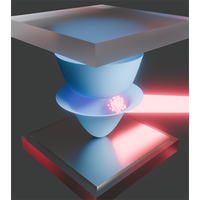
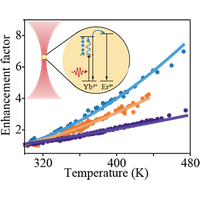
The authors achieve here high thermal sensitivity in upconversion luminescence from optically levitated NaYF4:Yb³⁺/Er³⁺ nanoparticles in vacuum. By tuning excitation wavelength, they control the number of phonons involved in the absorption and energy transfer processes. Larger energy mismatch (e.g., 1064 nm excitation) requires more phonons, resulting in greater thermal enhancement. The temperature-dependent phonon population model explains the observed sensitivity, advancing nanoscale thermometry applications in quantum optics and nanophotonics.

Onset of coherent phonon motion in Peierls-distorted antimony by attosecond transient absorption

Lauren B. Drescher, Bethany R. de Roulet, Yoong Sheng Phang, and Stephen R. Leone

Phys. Rev. B 112, 104310 (2025) - Published 9 September, 2025

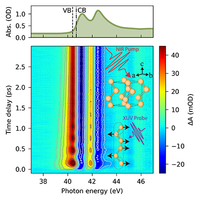
Optical excitation of carriers can launch coherent lattice motion by changing the energy landscape of solids. But how does the relaxation of optically excited carriers affect this coherent motion? Using extreme ultraviolet transient absorption spectroscopy with few-femtosecond temporal resolution, the authors investigate here the onset of coherent phonon motion in Peierls-distorted antimony and find that the carrier relaxation during the first 100 fs following excitation leaves a lasting impact on the phase of the coherent lattice motion.

Selected magnetoelectrical phonon stiffening in Cr2O3

Qiyang Sun, Yaokun Su, Douglas L. Abernathy, Wei Tian, and Chen Li

Phys. Rev. B 112, L060303 (2025) - Published 26 August, 2025

Using inelastic neutron scattering and first-principles calculations, the authors investigate here the origin of anomalous phonon stiffening in Cr₂O₃. They challenge the common belief that dynamic spin-phonon interactions are responsible for this behavior. The findings attribute the stiffening to a static effect—the renormalization of electron states owing to the magnetic transition. This work suggests that the proposed static origin may dominate phonon energy shifts, prompting a reevaluation of phonon stiffening in other magnetic materials.

Phononic frictional losses of a particle crossing a crystal: Linear response theory

Gabriele Riva, Giacomo Piscia, Nicolas Trojani, Giuseppe E. Santoro, Erio Tosatti, and Nicola Manini

Phys. Rev. B 112, 054310 (2025) - Published 18 August, 2025

Sliding friction, caused by phonons elicited by a weakly interacting slider, is accessible to a quantitative analytic formula through linear-response theory unlike most other solid-solid sliding problems, such as Coulomb friction. Here, the authors present an analytic formula, whose practical advantage is to offer an accurate evaluation which is much faster than molecular-dynamics simulations, with which it strikingly agrees.

Nuclear magnetic resonance far off the Larmor frequency: Nonsecular resonances in CaF2

Michael Jurkutat, Kajum Safiullin, Pooja Singh, Stephan L. Grage, Jürgen Haase, Boris V. Fine, and Benno Meier

Phys. Rev. B 112, L060302 (2025) - Published 11 August, 2025

The canonical treatment of spins in high-field magnetic resonance considers the Zeeman transition that occurs at the Larmor frequency, and includes only secular spin-spin interaction terms, which are those terms that commute with the Zeeman interaction. Here, the authors show that nonsecular terms give rise to resonances far off the Larmor frequency even at high field, provided that the applied B1 field is sufficiently strong.

Nonadiabatic dynamics and universal behaviors in non-Hermitian systems under biorthogonal framework

Menghua Deng, Wei Li, Kangyi Hu, Chen Sun, and Fuxiang Li

Phys. Rev. B 112, L020306 (2025) - Published 31 July, 2025

The authors introduce here a novel theoretical framework based on time-dependent biorthogonal quantum formalism to deal with the nonadiabatic dynamics in a driven non-Hermitian quantum system. Applying this framework to a linearly driven system, Kibble-Zurek scaling behavior and defect freezing phenomenon can be observed under different quench paths. These results offer fundamental insights into non-Hermitian dynamics and open new avenues for exploring nonequilibrium quantum phenomena.

Quantum master equation from the eigenstate thermalization hypothesis

Peter O'Donovan, Philipp Strasberg, Kavan Modi, John Goold, and Mark T. Mitchison

Phys. Rev. B 112, 014312 (2025) - Published 22 July, 2025

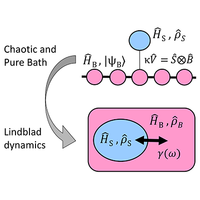
In the theory of open quantum systems, a thermal environment is usually modelled as an infinite, noninteracting system described by an equilibrium Gibbs ensemble. Here, instead, the authors show that chaos – as encoded by the eigenstate thermalisation hypothesis – suffices to derive a quantum master equation, which describes the effect of finite-sized, strongly interacting, nonequilibrium environments without invoking a thermal ensemble. The results are directly relevant to experiments on impurities coupled to isolated quantum many-body systems, e.g., ultracold atomic gases.

Nonperturbative treatment of a quenched Langevin field theory

Friederike Ihssen, Valerio Pagni, Jamir Marino, Sebastian Diehl, and Nicolò Defenu

Phys. Rev. B 112, 024306 (2025) - Published 11 July, 2025

Developing nonperturbative tools to tackle real-time dynamics in many-body systems remains a central challenge in theoretical physics. This work extends the functional renormalization group to dynamical settings by expanding around time-evolving states, rather than static vacua. Applied to aging dynamics in φ⁴ field theory, the method outperforms the two-loop ε-expansion and meets analytic benchmarks. The approach is readily extendable to quantum critical systems out of equilibrium, offering a powerful new tool for characterizing quantum dynamical scaling.

Scrutinizing the Mori memory function for diffusion in periodic quantum systems

Scott D. Linz, Jiaozi Wang, Robin Steinigeweg, and Jochen Gemmer

Phys. Rev. B 112, 024301 (2025) - Published 1 July, 2025

Diffusion is an ubiquitous phenomenological transport behavior in condensed matter physics. Attempts at a complete derivation of the diffusion equation from quantum mechanical first principles remain incomplete. It has been conjectured that a finite area under the correlation function of an observable implies ordinary diffusive transport of that observable. This cannot be generally true since, as is shown in this paper, counterexamples can be constructed. Thus, a additional necessary criterion for diffusion is established, ruling out the given counterexample.

Equivalent eigenvalue approach to nonlinear plane waves revealing nonlinearity-induced bandgap opening and closing phenomena

Weijian Jiao

Phys. Rev. B 111, 214308 (2025) - Published 30 June, 2025

To overcome the limitations of regular perturbation methods that fail to correctly capture some unusual nonlinear dispersion behaviors, the author proposes here an equivalent eigenvalue approach that converts the nonlinear wave equation to an equivalent linear eigenvalue problem. This directly gives the nonlinear dispersion relation and modal vectors. The theoretical approach is employed to 1D and 2D phononic crystals with alternating softening and hardening nonlinearities, revealing nonlinearity-induced band-gap opening and closing phenomena and achieving tunable frequency splitting and focusing effects.

Experimental study of Su-Schrieffer-Heeger edge modes for water waves in linear and nonlinear regimes

Adam Anglart, Paweł Obrępalski, Agnès Maurel, Philippe Petitjeans, and Vincent Pagneux

Phys. Rev. B 111, 224311 (2025) - Published 30 June, 2025

The authors experimentally investigate here the Su-Schrieffer-Heeger model in a periodic water wave channel, observing robust topological edge modes consistent with theoretical predictions and 2D simulations. Remarkably, these sloshing modes localized at the boundaries persist under nonlinear excitation, where bifurcations and secondary resonances emerge. This work connects topological physics and fluid mechanics, providing an accessible platform for exploring wave localization, symmetry protection, and nonlinear dynamics in classical wave systems.

Coherently coupled carrier and phonon dynamics in elemental tellurium probed by extreme ultraviolet transient absorption

Jonah R. Adelman, Hugo Laurell, Lauren B. Drescher, Han K. D. Le, Peidong Yang, and Stephen R. Leone

Phys. Rev. B 111, 184315 (2025) - Published 20 May, 2025

The authors utilize here a broadband extreme ultraviolet probe and a near-infrared pump to study coherent phonon and carrier dynamics in the elemental semiconductor tellurium. By measuring transitions from the tellurium 4d semicore levels to the conduction band, they find that coherent phonon motion couples coherently with the hot holes and electrons. This results in an anticorrelation between the phonon-induced displacement and the electronic temperature. These findings provide insight into the coupling between the lattice and electronic structure in tellurium.

Quantum master equation for many-body systems based on the Lieb-Robinson bound

Koki Shiraishi, Masaya Nakagawa, Takashi Mori, and Masahito Ueda

Phys. Rev. B 111, 184311 (2025) - Published 12 May, 2025

The authors derive here a local quantum master equation for many-body open quantum systems on the basis of the Lieb-Robinson bound, which places a fundamental upper bound on the propagation speed of correlations of observables. This approach clarifies the conditions under which local quantum master equations are valid and provides a microscopic justification for their use in strongly interacting systems. Numerical simulations on a one-dimensional fermionic chain demonstrate the accuracy of the derived equation.

Subharmonic spin correlations and spectral pairing in Floquet time crystals

Alexander-Georg Penner, Harald Schmid, Leonid I. Glazman, and Felix von Oppen

Phys. Rev. B 111, 184308 (2025) - Published 8 May, 2025

The authors show here that the temporal spin correlations in a Floquet time crystal are asymptotically related to the statistics of eigenvalue repulsion of the defining Floquet operator. The eigenvalue statistics are found to be log-normal, which implies that apart from initial transients, the boundary spin correlations can be described analytically and are characterized by two parameters only. The relation between spectral statistics and temporal spin correlations opens new perspectives on time crystals.

Sign In to Your Journals Account

Filter

Section

Filter

Article Lookup

Enter a citation