Highlights

Benchmarking quantum master equations beyond ultraweak coupling

Camilo Santiago Tello Breuer, Tobias Becker, and André Eckardt

Phys. Rev. B 110, 064319 (2024) - Published 21 August, 2024

Open quantum systems are ubiquitous, however, their description beyond ultraweak system-bath coupling is challenging. The standard Redfield master equation can violate positivity. Recently, Nathan and Rudner proposed an alternative equation, not suffering from this problem. The authors compare here both equations to the exact solution of a simple model. The Redfield equation performs noticeably better for transient dynamics. For the steady state it is slightly better for high temperatures, but fails at low temperatures, where the Nathan-Rudner equation is still accurate.

Apparent delay of the Kibble-Zurek mechanism in quenched open systems

Roy D. Jara, Jr. and Jayson G. Cosme

Phys. Rev. B 110, 064317 (2024) - Published 20 August, 2024

The authors demonstrate here that, for open systems quenched using finite-ramp protocols, dissipation results in a delay in detecting phase transitions if a threshold-based criterion for an order parameter is used. This leads to a regime for intermediate quench speeds, in which the transition time follows the predicted universal scaling of the Kibble-Zurek mechanism, despite the system appearing to enter a new phase after the ramp has ended. Their results highlight the subtleties of experimentally observing phase transitions in open systems.

Nanowelding of quantum spin-12 chains at minimal dissipation

Moallison F. Cavalcante, Marcus V. S. Bonança, Eduardo Miranda, and Sebastian Deffner

Phys. Rev. B 110, 064304 (2024) - Published 5 August, 2024

Nonequilibrium phenomena are commonly expected to be nonuniversal, i.e., they depend intricately on the system and processes. Here, the authors show that nevertheless some universal features do persist. They consider the energetic cost of finite-time nano-welding of quantum spin-½ chains. They find that some features depend only on (i) the process speed, (ii) the system’s symmetry, and (iii) the existence of an energy gap. Depending on the strength of SU(2) symmetry breaking, there are striking universalities in (a) the scaling of the cost with the duration time for slowly-varying processes and (b) the functional form of the cost-optimal protocol.

Phonon dispersion of quantum paraelectric SrTiO3 in electric fields

Henrik Jacobsen, Marek Barthkowiak, Tobias Weber, Uwe Stuhr, Bertrand Roessli, Christof Niedermayer, and Urs Staub

Phys. Rev. B 110, 054302 (2024) - Published 1 August, 2024

SrTiO3 is a quantum paraelectric material that is in the vicinity of a paraelectric-to-ferroelectric phase transition. Therefore, the properties of SrTiO3 are strongly sensitive to external electric fields. In particular, the transverse optical (TO) phonon mode of SrTiO3 hardens significantly at the zone center upon the application of a moderate electric field. Here, the authors use neutron scattering to measure the dispersion of the TO mode in applied electric fields.

Dual role of longitudinal optical phonons for generation of coherent oscillations in gallium arsenide under optical pumping

Itsuki Takagi, Yuma Konno, Yosuke Kayanuma, and Kazutaka G. Nakamura

Phys. Rev. B 110, 024314 (2024) - Published 29 July, 2024

The authors propose here a simple picture of the generation dynamics of coherent optical phonons and phonon-plasmon coupled modes by ultrafast infrared pulses in gallium arsenide. This picture can explain the spectral coexistence of the bare phonons and the phonon-plasmon coupled modes by their being in different subspaces of Hilbert space (electronic ground and excited states), rather than separated in real space. The quantum mechanical calculations reproduce well the coherent oscillations obtained in transient reflectivity measurements.

Ultrafast dynamics of photoexcited carriers in tellurium in the vicinity of Weyl nodes

Xiao Zhuo, Qinsheng Wang, Bin Cheng, Delang Liang, Haimen Mu, Lin Li, Zhengfei Wang, Anlian Pan, Changgan Zeng, and Dong Sun

Phys. Rev. B 110, 014311 (2024) - Published 24 July, 2024

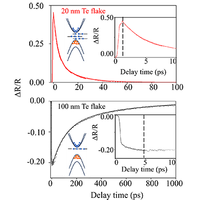
The authors study here the ultrafast dynamics of photoexcited carriers in the Weyl semiconductor Te in the vicinity of Weyl nodes using mid-infrared transient reflection spectroscopy. The relaxation process in a 20-nm Te flake is found to be 10 times faster than a 100-nm flake due to surface defect assisted recombination. The reflection modulation depth of the 20-nm sample is up to 60%, promising great potential for fast optical switch and optical modulator applications in the mid-infrared region.

Real-space topological invariant for time-quasiperiodic Majorana modes

Zihao Qi, Ilyoun Na, Gil Refael, and Yang Peng

Phys. Rev. B 110, 014309 (2024) - Published 18 July, 2024

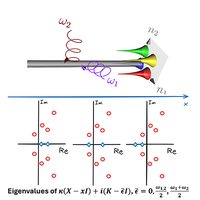
Defining topological invariants in systems with dense energy spectrum is inherently challenging due to the absence of gaps. Here, the authors define a topological invariant for time quasiperiodically driven superconducting systems using spectral localizers, a recently developed tool for probing real-space topology. The invariant is shown to identify the number and quasienergy of quasiperiodic Majorana modes hosted by the system. Drawing insights from non-Hermitian physics, the authors also establish a criterion and provide a physical interpretation for spectral localizers, thereby widening their applicability.

Onsager's regression hypothesis adjusted to quantum systems

Peter Reimann and Christian Eidecker-Dunkel

Phys. Rev. B 110, 014306 (2024) - Published 15 July, 2024

Some 93 years ago, Onsager postulated his so-called regression hypothesis, which relates the time-dependent relaxation of a close-to-equilibrium system to its temporal correlations at thermal equilibrium. As far as quantum systems are concerned, it is long-known that this hypothesis cannot be quantitatively correct. Here, the authors analytically derive a suitably adjusted version of Onsager’s original formula, provide a wide variety of numerical illustrations, and compare it with some pertinent previous works.

Universality of the cross-entropy in Z2 symmetric monitored quantum circuits

Maria Tikhanovskaya, Ali Lavasani, Matthew P. A. Fisher, and Sagar Vijay

Phys. Rev. B 109, 224313 (2024) - Published 25 June, 2024

In monitored quantum many-body dynamics, information about the evolving state can “leak” into the measurement record, as quantified by the linear-cross entropy (LXE). Here, the authors show that the LXE serves as an order parameter that also distinguishes various area-law-entangled phases of monitored circuits with a global Ising symmetry. The behavior of the LXE at a critical point separating these phases quantitatively agrees with predictions from the conformal field theory describing this critical point. This connection between out-of-equilibrium dynamics and equilibrium statistical mechanics suggests the possibility of the LXE as a probe of universal critical behavior in other kinds of monitored quantum evolution.

Many-body quantum heat engines based on free fermion systems

Vincenzo Roberto Arezzo, Davide Rossini, and Giulia Piccitto

Phys. Rev. B 109, 224309 (2024) - Published 20 June, 2024

Devising and constructing quantum many-body heat engines is a key challenge of quantum thermodynamics. Most of the research in this field assumes the strokes to be ideal transformations. Here, the authors study the performance of realistic Otto engines with finite-time duration, whose working substance is made of free-fermion systems. They provide analytic expressions for the work and the power delivered through imperfect adiabatic and isochoric strokes. These findings are applied to the case study of an Ising-like quantum Otto cycle.

Signatures of fragmentation for periodically driven fermions

Somsubhra Ghosh, Indranil Paul, and K. Sengupta

Phys. Rev. B 109, 214304 (2024) - Published 12 June, 2024

The occurrence of prethermal Hilbert space fragmentation (HSF) in periodically driven quantum systems has its roots in the emergence of additional, approximate, kinetic constraints at special driving frequencies. Here, the authors show that the out-of-time-ordered correlators (OTOCs) of a driven fermion chain with open boundary condition exhibit a signature of such HSF. At the special drive frequencies where such prethermal HSF occurs, the OTOCs display periodic unscrambling of information, which provides a yet unexplored, experimentally testable, marker for prethermal fragmentation.

Onset of transmon ionization in microwave single-photon detection

Yuki Nojiri, Kedar E. Honasoge, Achim Marx, Kirill G. Fedorov, and Rudolf Gross

Phys. Rev. B 109, 174312 (2024) - Published 29 May, 2024

Transmon ionization (TI) is detrimental to qubit coherence and manipulation. This study explores how TI, triggered by strong microwave pulses, affects microwave single-photon detectors (SPDs) based on a 3D multimode cavity coupled to a transmon qubit. Experimental and numerical investigations reveal that at a critical pump power transmon population suddenly increases, indicating a quantum-to- classical transition. The authors also outline the challenges and potential solutions for increasing the quantum efficiency of SPDs, being crucial for advancing quantum communication and sensing technologies.

Sound speed and Grüneisen parameter up to three terapascal in shock-compressed iron

M. F. Huff, D. E. Fratanduono, M. C. Marshall, C. A. McCoy, L. E. Hansen, D. N. Polsin, T. Suer, E. A. Smith, B. J. Henderson, X. Gong, G. W. Collins, and J. R. Rygg

Phys. Rev. B 109, 184311 (2024) - Published 22 May, 2024

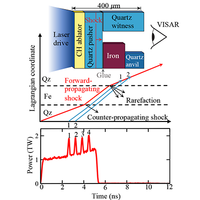
The warm dense matter regime is generally found in materials compressed to several times their densities on the Earth’s surface at temperatures hot enough to produce a conducting fluid, but not so hot that the cohesive binding is overwhelmed by the temperature. This region of phase space is notoriously difficult to constrain with theoretical models. Iron is the most stable element, and is relevant to astrophysics, planetary physics, and industry. The paper here describes experiments using giant kilojoule lasers to shock compress iron to warm dense matter conditions and then send acoustic waves through this compressed material. This method yields the first experimental measurements of sound speed and Grüneisen parameter in shocked iron in the terapascal range, and reveals an interesting dependence on density and melting for these physically important derivatives of the equation of state.

Statistical mechanics model for Clifford random tensor networks and monitored quantum circuits

Yaodong Li, Romain Vasseur, Matthew P. A. Fisher, and Andreas W. W. Ludwig

Phys. Rev. B 109, 174307 (2024) - Published 13 May, 2024

The authors explore critical properties of entanglement phase transitions in random tensor networks and monitored quantum circuits with Clifford tensors/gates for on-site Hilbert space dimensions which are powers of a prime number p. Exact mappings to replica spin models and characterizations of their symmetry groups predict that all universal properties will depend only on p. These predictions are confirmed with extensive numerical simulations. The authors also establish multifractal scaling of the purity, reflected in a continuous spectrum of critical exponents, while the typical exponent is the prefactor of the logarithm in the entanglement entropy.

Selective observation of enantiomeric chiral phonons in α-quartz

Eiichi Oishi, Yasuhiro Fujii, and Akitoshi Koreeda

Phys. Rev. B 109, 104306 (2024) - Published 12 March, 2024

Phonons that have angular momentum and propagate in crystals are known as chiral phonons. The authors demonstrate the selective observation of chiral phonons in α-quartz, the most typical chiral crystal, by circularly polarized Raman spectroscopy. They clarify the Raman tensors of the chiral phonons verifying the angular momentum conservation law in the Raman process, involving photons and the chiral phonon. This study suggests the possibility of controlling the angular momentum and propagation direction of chiral phonons via the Raman process.

Phonon thermal Hall effect in charge-compensated topological insulators

Rohit Sharma, Mahasweta Bagchi, Yongjian Wang, Yoichi Ando, and Thomas Lorenz

Phys. Rev. B 109, 104304 (2024) - Published 8 March, 2024

The observation of surprisingly large thermal Hall ratios in a growing number of mainly oxide-based insulators is a major puzzle and raises the question about potential mechanisms that can induce a thermal Hall effect in materials with dominant charge-neutral heat carriers. Here, the authors report the finding of comparable thermal Hall ratios in a series of charge-compensated topological insulators and discuss this observation in the context of a recent proposal that a thermal Hall effect can result from skew scattering of phonons on charged defects.

Bloch-wave interferometry of driven quasiparticles in bulk GaAs

Seamus D. O'Hara, Joseph B. Costello, Qile Wu, Ken West, Loren Pfeiffer, and Mark S. Sherwin

Phys. Rev. B 109, 054308 (2024) - Published 20 February, 2024

Interferometers that manipulate and detect electromagnetic waves are indispensable to science. Quasiparticles in crystalline solids can be described as Bloch waves, but rapid dephasing of accelerating charged quasiparticles has so far prevented the development of interferometers sensitive to their inertial properties. Here, the authors show that polarizations of near-infrared sidebands emitted by GaAs in strong terahertz fields can be viewed as interferograms from a Michelson-like interferometer for Bloch waves. A simple analytical model connects these inteferograms to quasiparticle masses and dephasing.

Variational density functional perturbation theory for metals

Xavier Gonze, Samare Rostami, and Christian Tantardini

Phys. Rev. B 109, 014317 (2024) - Published 30 January, 2024

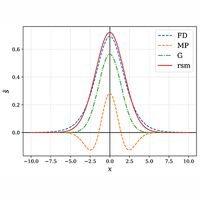
Density Functional Perturbation Theory (DFPT) is a proven method for analyzing molecular and solid responses to perturbations. For metals, challenges arise due to Fermi-Dirac statistics and electronic bands crossing the Fermi energy. This work focuses on variational DFPT for metals, examining the convexity of the entropy function of occupation numbers. It emphasizes benefits from resmearing Fermi-Dirac broadening at finite temperature, details variational expressions for free energy derivatives, and addresses inaccuracies in unperturbed wavefunctions. The formalism is implemented in the ABINIT software.

Bose-Einstein condensation in systems with flux equilibrium

Victor S. L'vov, Anna Pomyalov, Sergey V. Nazarenko, Dmytro A. Bozhko, Alexander J. E. Kreil, Burkard Hillebrands, and Alexander A. Serga

Phys. Rev. B 109, 014301 (2024) - Published 3 January, 2024

Quasiparticles, created in dissipative nonlinear wave systems by external excitation, can form a Bose-Einstein condensate. The authors describe here the physical phenomena and conditions leading to condensation in various regimes of external excitation from weak and stationary to ultrastrong pumping. The authors have developed a stationary nonlinear theory of kinetic instability for the latter, supported by the experimental data for magnons, parametrically pumped in room-temperature films of yttrium iron garnet.

Loss-induced Floquet non-Hermitian skin effect

Yaohua Li, Cuicui Lu, Shuang Zhang, and Yong-Chun Liu

Phys. Rev. B 108, L220301 (2023) - Published 12 December, 2023

A mechanism for a loss-induced Floquet non-Hermitian skin effect (NHSE) is proposed, where gain/loss combined with Floquet engineering leads to the NHSE. This mechanism utilizes periodic coupling, which is a well-established experimental method, to realize the NHSE through loss instead of nonreciprocal coupling. The key to this mechanism is the Floquet-induced next-nearest neighbor coupling. This proposal is also applicable to high-dimensional systems and can be realized in photonic waveguides and other related systems.

Sign In to Your Journals Account

Filter

Section

Filter

Article Lookup

Enter a citation