Highlights

Berry-dipole photovoltaic demon and the thermodynamics of photocurrent generation within the optical gap of metals

Li-kun Shi, Oles Matsyshyn, Justin C. W. Song, and Inti Sodemann Villadiego

Phys. Rev. B 107, 125151 (2023) - Published 27 March, 2023

Employing a detailed model of electrons coupled to a heat bath, this work demonstrates the generation of photocurrents when the frequency of light lies within the optical gap of a metal in the limit of small absorption. Such in-gap rectification is shown to be consistent with thermodynamic principles and is generally dissipative. The nonlinear Hall effect behaves, however, as a special dissipationless “demon” that can perform a highly efficient and reversible transfer of energy between the radiation and an external circuit.

Optimizing the transport of Majorana zero modes in one-dimensional topological superconductors

Bill P. Truong, Kartiek Agarwal, and T. Pereg-Barnea

Phys. Rev. B 107, 104516 (2023) - Published 24 March, 2023

It is well known that Majorana zero modes can be harnessed for applications in topological quantum computation. Transitions away from the ground-state subspace, where computations are performed, are detrimental. The authors study the diabatic error which quantifies these transitions as Majorana zero modes are transported across a superconducting wire. Using the ‘piano key’ approach for transport, the authors find that there exists an optimal number of keys which reduces the diabatic error.

Mapping quantum Hall edge states in graphene by scanning tunneling microscopy

T. Johnsen, C. Schattauer, S. Samaddar, A. Weston, M. J. Hamer, K. Watanabe, T. Taniguchi, R. Gorbachev, F. Libisch, and M. Morgenstern

Phys. Rev. B 107, 115426 (2023) - Published 24 March, 2023

Edge states are the fingerprint of topological materials, specifically of the quantum Hall effect. The authors map quantum Hall edge states along an electrostatically defined potential step in graphene using scanning tunneling microscopy. Tight-binding simulations reproduce the measurements and allow for identifying a parameter range that minimizes the influence of the tip. This enables investigating the edge states while avoiding tip-induced quantum dots within the sample. The image shows a measured edge state featuring the expected antinodal patterns as it meanders along the interface.

Three-dimensional tomographic imaging of the magnetization vector field using Fourier transform holography

Marisel Di Pietro Martínez, Alexis Wartelle, Carlos Herrero Martínez, Farid Fettar, Florent Blondelle, Jean-François Motte, Claire Donnelly, Luke Turnbull, Feodor Ogrin, Gerrit van der Laan, Horia Popescu, Nicolas Jaouen, Flora Yakhou-Harris, and Guillaume Beutier

Phys. Rev. B 107, 094425 (2023) - Published 22 March, 2023

The authors present a new tomographic technique, based on Fourier transform holography. It is a lensless imaging technique to retrieve the object of interest from its diffraction pattern in a single step of computation. A combination of dual-axis tomographic projections provides a 3D vectorial magnetic image of an 800-nm-thick Fe/Gd multilayer in a 5-μm-diameter field of view with a resolution of 80 nm. The reconstruction reveals not only wormlike domains with magnetization pointing mostly out of plane, but also the subtle features of magnetic flux closure around the domain walls.

Generalized multifractality in two-dimensional disordered systems of chiral symmetry classes

Jonas F. Karcher, Ilya A. Gruzberg, and Alexander D. Mirlin

Phys. Rev. B 107, 104202 (2023) - Published 22 March, 2023

Anderson transitions between metals and insulators exhibit fascinating spatial structure, fluctuations, and correlations of electronic wave functions. This structure has been properly characterized by the authors in terms of multifractals with continuous spectra of scaling exponents. In this paper, the authors focus on Anderson transitions in systems with a sublattice (chiral) symmetry. This particular class of Anderson transitions has not been well-studied in the past, and the authors fill this gap with a thorough analytical and numerical study of multifractal spectra in the metallic phase and at the critical point of the Anderson transition.

Spin-orbital order and excitons in magnetoresistive HoBi

J. Gaudet, H.-Y. Yang, E. M. Smith, T. Halloran, J. P. Clancy, J. A. Rodriguez-Rivera, Guangyong Xu, Y. Zhao, W. C. Chen, G. Sala, A. A. Aczel, B. D. Gaulin, F. Tafti, and C. Broholm

Phys. Rev. B 107, 104423 (2023) - Published 22 March, 2023

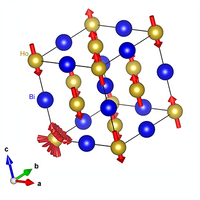
The rare-earth monopnictides RX have been found to exhibit exotic topological three-dimensional states, coupled to unique magnetotransport responses such as extreme magnetoresistance. These findings generated interest to understand the interplay between electronic band topology, transport, and magnetism in RX. While neutron scattering is indispensable to fully characterize magnetism, there is very little modern work on this family of compounds. Since the details of the magnetism have a profound impact on the electronic band topology and transport in materials, the authors present here a thorough characterization of the magnetism in HoBi, based on modern neutron scattering techniques.

Quantum oscillations in the centrosymmetric skyrmion-hosting magnet GdRu2Si2

N. Matsuyama, T. Nomura, S. Imajo, T. Nomoto, R. Arita, K. Sudo, M. Kimata, N. D. Khanh, R. Takagi, Y. Tokura, S. Seki, K. Kindo, and Y. Kohama

Phys. Rev. B 107, 104421 (2023) - Published 21 March, 2023

The skyrmion formation mechanism in centrosymmetric systems remains to be understood, partially because of the lack of fundamental understanding of the electronic structure. The authors observe de Haas–van Alphen and Shubnikov–de Haas oscillations in high magnetic fields up to 58 T on GdRu2Si2, which is one of such centrosymmetric skyrmion-hosting magnets with the shortest skyrmion diameter ever found. Combined with first-principles calculations, the authors now reveal the electronic structure of GdRu2Si2 and its reconstruction at the magnetic phase boundary.

First-principles theory of the pressure-induced invar effect in FeNi alloys

Amanda Ehn, Björn Alling, and Igor A. Abrikosov

Phys. Rev. B 107, 104422 (2023) - Published 21 March, 2023

Beside the classic Fe64Ni36 Invar alloy, which shows an anomalously low thermal expansion at ambient pressure, Fe-Ni alloys with a higher nickel composition can be driven to Invar behavior by pressure. The authors investigate the pressure induced Invar effect theoretically and demonstrate that it can be explained by a magnetic transition from a ferromagnetic state at high volume to a complex noncollinear state upon compression. They relate the Invar effect to the increasing contribution of magnetic entropy with pressure.

Strong lateral exchange coupling and current-induced switching in single-layer ferrimagnetic films with patterned compensation temperature

Zhentao Liu, Zhaochu Luo, Ivan Shorubalko, Christof Vockenhuber, Laura J. Heyderman, Pietro Gambardella, and Aleš Hrabec

Phys. Rev. B 107, L100412 (2023) - Published 20 March, 2023

Interlayer couplings are widely used in spintronic devices based on magnetic multilayers. Here, the authors demonstrate instead a strong tunable coupling between adjacent regions of a single ferrimagnetic layer, based on the exchange interaction. They unveil a large lateral exchange bias by spatially patterning the compensation temperature of the ferrimagnet. Furthermore, they show electrical switching of ferrimagnetic domains utilizing the lateral exchange coupling mechanism in combination with spin-orbit torques.

Higher-order topological superconductivity in twisted bilayer graphene

Aaron Chew, Yijie Wang, B. Andrei Bernevig, and Zhi-Da Song

Phys. Rev. B 107, 094512 (2023) - Published 17 March, 2023

Twisted bilayer graphene, by nature of its symmetries (like the approximate particle-hole symmetry) and anomalous band structure, realizes a higher-order topological superconductor when s-wave pairing is introduced via proximity. Here, the authors demonstrate this exotic phase numerically and analytically, and illustrate a multitude of consequences: zero modes bound to Abrikosov vortices, the fractional Josephson effect, and much more.

Spin and orbital metallic magnetism in rhombohedral trilayer graphene

Chunli Huang, Tobias M. R. Wolf, Wei Qin, Nemin Wei, Igor V. Blinov, and Allan H. MacDonald

Phys. Rev. B 107, L121405 (2023) - Published 17 March, 2023

Lightly doped multilayer graphene surprised researchers with the emergence of superconductivity and magnetism under strong electric displacement fields. The authors interpret the displacement field versus hole-density phase diagram using mean-field theory and experimentally informed band structure. They find that magnetism in these electronic systems is often intertwined with nematic order because of the noncompact Fermi sea topology and fourfold spin-valley degeneracy.

Lattice dynamics and in-plane antiferromagnetism in MnxZn1−xPS3 across the entire composition range

Robert Oliva, Esther Ritov, Faris Horani, Iñigo Etxebarria, Adam K. Budniak, Yaron Amouyal, Efrat Lifshitz, and Mael Guennou

Phys. Rev. B 107, 104415 (2023) - Published 16 March, 2023

Antiferromagnetic MnPS3 and diamagnetic ZnPS3 belong to a family of two-dimensional compounds that exhibit a rich variety of magnetic ordering. Low-temperature Raman spectroscopy and SQUID magnetometer measurements are performed on both compounds and their alloy in order to evaluate a possible Jahn-Teller distortion as well as to reveal magnetic and alloy signatures. With the aid of first-principles calculations, a description of the lattice dynamics of the system is presented, together with the magnetic phase diagram across the entire compositional range.

Interplay of structure and magnetism in LuFe4Ge2 tuned by hydrostatic pressure

M. O. Ajeesh, P. Materne, R. D. dos Reis, K. Weber, S. Dengre, R. Sarkar, R. Khasanov, I. Kraft, A. M. León, W. Bi, J. Zhao, E. E. Alp, S. Medvedev, V. Ksenofontov, H. Rosner, H.-H. Klauss, C. Geibel, and M. Nicklas

Phys. Rev. B 107, 125136 (2023) - Published 16 March, 2023

Competing ground states often lead to the emergence of novel unconventional phases. The presence of magnetic frustration in such materials brings about additional complexity. Here, the authors present a comprehensive study on the ground-state properties of LuFe4Ge2, a ternary intermetallic compound with magnetic frustration and quasi-one-dimensional structure, elucidating the interplay of structure and magnetism. In contrast to the well-studied two-dimensional iron pnictides with competing exchange interactions, LuFe4Ge2 exhibits quasi-one-dimensional chains of geometrically frustrated Fe tetrahedra. It displays a magnetostructural transition at ambient pressure with a change in symmetry from tetragonal to orthorhombic, similar to that in the iron-pnictides, which evolves in an unexpected way under the application of hydrostatic pressure. In that way the intermetallic LuFe4Ge2 material family offers a new perspective on the entanglement of crystal structure and magnetism.

Topological nature of dislocation networks in two-dimensional moiré materials

Rebecca Engelke, Hyobin Yoo, Stephen Carr, Kevin Xu, Paul Cazeaux, Richard Allen, Andres Mier Valdivia, Mitchell Luskin, Efthimios Kaxiras, Minhyong Kim, Jung Hoon Han, and Philip Kim

Phys. Rev. B 107, 125413 (2023) - Published 16 March, 2023

Twisted bilayers of two-dimensional materials contain a moiré superatomic lattice domain that can be bounded by a domain boundary network. The authors show here that the nodes of this network can be considered topological defects. While the nodes in previously studied twisted moiré materials are vortices, the authors discover antivortices formed in strained moiré systems using transmission electron micrographs. This work provides insight into the underlying rules governing moiré structures, inspiring the construction of new types of moiré interfaces.

Topological band inversion in HgTe(001): Surface and bulk signatures from photoemission

Raphael C. Vidal, Giovanni Marini, Lukas Lunczer, Simon Moser, Lena Fürst, Julia Issing, Chris Jozwiak, Aaron Bostwick, Eli Rotenberg, Charles Gould, Hartmut Buhmann, Wouter Beugeling, Giorgio Sangiovanni, Domenico Di Sante, Gianni Profeta, Laurens W. Molenkamp, Hendrik Bentmann, and Friedrich Reinert

Phys. Rev. B 107, L121102 (2023) - Published 14 March, 2023

HgTe is a prime example of a topological material that exhibits a range of topological phases based on its dimensionality and lattice strain. The key to its topological properties lies in the band inversion between the Hg 6s and Te 5p valence levels, leading to the emergence of surface states. In this study, the authors present an in-depth examination of the electronic structure of strained HgTe films using angle-resolved photoelectron spectroscopy and density functional theory. The results offer a direct visualization of the topological band inversion and surface states present in HgTe.

Theoretical investigation of charge transfer between two defects in a wide band gap semiconductor

Rodrick Kuate Defo, Alejandro W. Rodriguez, Efthimios Kaxiras, and Steven L. Richardson

Phys. Rev. B 107, 125305 (2023) - Published 13 March, 2023

In calculating the concentrations of the charge states of various defects, the Fermi level is generally assumed to be uniform throughout a semiconductor. The authors establish the timescales involved in thermally driven charge transfer, ultimately refuting the assumption of Fermi-level uniformity on the timescales over which optically detected magnetic resonance (ODMR) spectroscopy experiments are typically performed for NV centers in diamond. Their results reveal the potential for noninvasive determination of defect distances and average defect concentrations through ODMR spectroscopy.

Structure of charge density waves in La1.875Ba0.125CuO4

J. Sears, Y. Shen, M. J. Krogstad, H. Miao, E. S. Bozin, I. K. Robinson, G. D. Gu, R. Osborn, S. Rosenkranz, J. M. Tranquada, and M. P. M. Dean

Phys. Rev. B 107, 115125 (2023) - Published 10 March, 2023

The cuprate superconductors exhibit periodic modulations of their charge density and crystal structure. Using x-ray diffraction, the authors identify the subtle structural displacements associated with this ordering. The displacements are not confined to a single copper-oxygen layer but rather propagate over a surprisingly large distance through the crystal. The authors attribute this effect to the weak c-axis charge screening in cuprates and suggest that this effect could help couple the charge-density wave between adjacent planes in the crystal.

Spin polarization of exciton-polariton condensate in a photonic synthetic effective magnetic field

R. Mirek, M. Furman, M. Król, B. Seredyński, K. Łempicka-Mirek, K. Tyszka, W. Pacuski, M. Matuszewski, J. Szczytko, and B. Piętka

Phys. Rev. B 107, 125303 (2023) - Published 10 March, 2023

The authors investigate here the spin polarization of localized exciton-polariton condensates in CdTe-based microcavities doped with magnetic ions. They demonstrate that an effective magnetic field originating from the photonic potential landscape leads to the formation of elliptically polarized condensate. The degree of spin polarization of the condensate depends on the excitation power and polarization of the laser. Based on the magnetic field behavior of the condensate in the presence of magnetic ions, they estimate the polariton-polariton interaction strength in a CdTe system.

Minimal one-dimensional model of bad metal behavior from fast particle-hole scattering

Yan-Qi Wang, Roman Rausch, Christoph Karrasch, and Joel E. Moore

Phys. Rev. B 107, L100301 (2023) - Published 10 March, 2023

The authors propose here a mechanism and an explicit one-dimensional model to realize the linear-in-temperature resistivity that is the hallmark of bad metals. They then verify the behavior with advanced DMRG-type simulations. These results open a new approach to understanding the limits of relaxation generated by local interactions in extended many-body systems. This work should push forward research into understanding some of the most basic questions about transport for 1D and critical systems, which bridge quantum matter and quantum chaos.

Assignment of excitonic insulators in ab initio theories: The case of NiBr2

Stefano Di Sabatino, Alejandro Molina-Sánchez, Pina Romaniello, and Davide Sangalli

Phys. Rev. B 107, 115121 (2023) - Published 9 March, 2023
The determination of an excitonic insulator phase relies on the relative value of the excitonic binding energy and the fundamental band gap. With the quite unique case of NiBr2, the authors warn about the risk of running into false positives when using the GW+BSE scheme to determine if a system displays negative excitonic energies, which are a signature of an excitonic insulator phase. They show that consistency between approximations used in the ground-state and excited-state calculations as well as independence from the starting point are essential features for a proper description of excitonic insulators.

Sign In to Your Journals Account

Filter

Section

Filter

Article Lookup

Enter a citation