Highlights

Quantum thermodynamics with fast driving and strong coupling via the mesoscopic leads approach

Artur M. Lacerda, Archak Purkayastha, Michael Kewming, Gabriel T. Landi, and John Goold

Phys. Rev. B 107, 195117 (2023) - Published 10 May, 2023

In the mesoscopic leads technique, continuum environments at finite temperature are modeled via a finite-set modes, which are in turn damped by Markovian dissipation. Here, the authors extended this approach to include arbitrary time dependence in the Hamiltonian of the central system and performed detailed assessment of the thermodynamic quantities. They illustrated their approach by applying the technique to the driven resonant level model and to a driven double dot system, which is a noninteracting system exhibiting rectification.

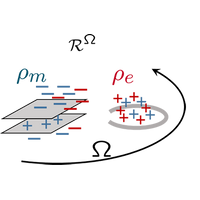
Rest-frame quasistatic theory for rotating electromagnetic systems and circuits

Ben Z. Steinberg and Nader Engheta

Phys. Rev. B 107, 195418 (2023) - Published 10 May, 2023

The omnipresence of rotation, often observed in its own rest frame of reference, profoundly affects human experience, science and technology. Here, the authors develop a formulation governing the rest frame electrodynamics in rotating electromagnetic systems and circuits. This study reveals new rotation-induced effects such as fictitious charges, gain, energy harvesting, and new device functionalities, e.g., positive or negative memristors and their dualities. These effects may potentially offer pathways to new technologies and materials.

Twisted chiral superconductivity in photodoped frustrated Mott insulators

Jiajun Li, Markus Müller, Aaram J. Kim, Andreas M. Läuchli, and Philipp Werner

Phys. Rev. B 107, 205115 (2023) - Published 9 May, 2023

Numerical simulations based on dynamical mean field theory and exact diagonalization demonstrate that photodoping can induce a chiral superconducting phase in Mott insulators on geometrically frustrated lattices. This metastable phase features a phase twist between lattice sites, which breaks both time-reversal and inversion symmetry. Under an external electric pulse, the chiral superconducting state can exhibit a second-order supercurrent perpendicular to the field, similar to a nonlinear anomalous Hall effect.

Reconfigurable topological modes in acoustic non-Hermitian crystals

Haiyan Fan, He Gao, Tuo Liu, Shuowei An, Xianghong Kong, Guoqiang Xu, Jie Zhu, Cheng-Wei Qiu, and Zhongqing Su

Phys. Rev. B 107, L201108 (2023) - Published 9 May, 2023

Recent explorations show that the non-Hermiticity, associated with loss and/or gain, can play a surprisingly significant role in topological insulators, where the topological states can only penetrate the bulk structure if the topological phase changes in the interior. In this work, by introducing non-Hermiticity into an acoustic quadrupole topological insulator, the authors show experimentally that the topological corner and edge states could be engineered at any desired positions without a topological phase transition, making the bulk sites useful.

Spectrum of collective excitations of a quantum fluid of polaritons

F. Claude, M. J. Jacquet, I. Carusotto, Q. Glorieux, E. Giacobino, and A. Bramati

Phys. Rev. B 107, 174507 (2023) - Published 8 May, 2023

The phenomenology of superfluids and Bose-Einstein condensates is generally understood in terms of quantum hydrodynamics, which depend on the dispersion of the collective excitation modes in the quantum fluid. Here, via the implementation of a high-resolution spectroscopy technique, the authors highlight the peculiarities of collective excitations of a polariton superfluid and reveal a wealth of phenomena intrinsically linked to the light-matter and driven-dissipative nature of their system, such as the observation of a ghost branch highlighted in red in the image.

Local density of states fluctuations in a two-dimensional superconductor as a probe of quantum diffusion

Mathieu Lizée, Matthias Stosiek, Igor Burmistrov, Tristan Cren, and Christophe Brun

Phys. Rev. B 107, 174508 (2023) - Published 8 May, 2023

Could disorder enhance superconductivity? Close to the Anderson transition, electronic wave functions show a peculiar multifractal structure, predicted to enhance Cooper pairing. Here, the authors probe the weak disorder limit using an atomic monolayer of lead with high-resolution scanning tunneling spectroscopy. They show that mesoscopic spatial fluctuations of the electronic density of states indicate coherent diffusion of electrons. They use these energy-dependent fluctuations to reveal tiny energy gap fluctuations and to extract the elastic mean free path, dephasing length, as theoretically expected.

Magnetic phase diagram of the breathing-kagome antiferromagnet Nd3BWO9

D. Flavián, J. Nagl, S. Hayashida, M. Yan, O. Zaharko, T. Fennell, D. Khalyavin, Z. Yan, S. Gvasaliya, and A. Zheludev

Phys. Rev. B 107, 174406 (2023) - Published 5 May, 2023

The newly discovered Nd3BWO9 is a rare instance of a disorder-free magnet with an exchange topology interpolating between 2D kagome and 1D spin tubes. In this study, an array of measurements reveals its exotic phase diagram. The complex frustration mechanism results in several ordered phases, including two different, typically two-dimensional 1/3- magnetization plateaux. Meanwhile, one-dimensional tube correlations are unequivocally identified by signatures in both thermodynamic and microscopic probes.

Floquet-Bloch resonances in near-petahertz electroabsorption spectroscopy of SiO2

M. Volkov, S. A. Sato, A. Niedermayr, A. Rubio, L. Gallmann, and U. Keller

Phys. Rev. B 107, 184304 (2023) - Published 5 May, 2023

Complex nonadiabatic dynamics are observed when the quiver energy of an electron-hole pair in a strong laser field becomes comparable to the photon energy. Here, the authors extend quasistatic electromodulation spectroscopy based on the Franz-Keldysh effect to this regime and show that in this limit it is governed by resonant transitions between Floquet-Bloch states. This regime opens opportunities to probe the effective mass as well as the ponderomotive and binding energies of the electron-hole pair on the attosecond timescale.

Prominent quantum many-body scars in a truncated Schwinger model

Jean-Yves Desaules, Ana Hudomal, Debasish Banerjee, Arnab Sen, Zlatko Papić, and Jad C. Halimeh

Phys. Rev. B 107, 205112 (2023) - Published 5 May, 2023

Quantum many-body scars (QMBSs) are a paradigm of weak ergodicity breaking with direct technological applications. The authors show that QMBSs are ubiquitous in quantum link formulations of gauge theories, opening the door to a large venue of models where QMBSs can be explored. They demonstrate that QMBSs are not an artifact of these quantum link formulations, rather, they may be an inherent feature of the ideal gauge theory itself.

Magic angles and correlations in twisted nodal superconductors

Pavel A. Volkov, Justin H. Wilson, Kevin P. Lucht, and J. H. Pixley

Phys. Rev. B 107, 174506 (2023) - Published 4 May, 2023

Stacking 2D materials with a twist has proven to be a successful strategy to realize exotic phases of electrons. Here, the authors apply these ideas to intrinsic 2D nodal superconductors, showing a similar degree of control over neutral Dirac quasiparticles. Their velocity is quenched close to a “magic” angle, where interactions drive a time-reversal breaking phase transition. Gating and application of current and magnetic fields are shown to allow tuning their dispersion in future experiments and to open topological gaps.

Photoemission signature of the competition between magnetic order and Kondo effect in CeCoGe3

Peng Li, Huiqing Ye, Yong Hu, Yuan Fang, Zhiguang Xiao, Zhongzheng Wu, Zhaoyang Shan, Ravi P. Singh, Geetha Balakrishnan, Dawei Shen, Yi-feng Yang, Chao Cao, Nicholas C. Plumb, Michael Smidman, Ming Shi, Johann Kroha, Huiqiu Yuan, Frank Steglich, and Yang Liu

Phys. Rev. B 107, L201104 (2023) - Published 4 May, 2023

Competition between magnetic order and the Kondo effect is essential for the rich physics of heavy-fermion systems, but its photoemission signature remains elusive. Here, using high-resolution resonant photoemission, the authors reveal that the intensity of the 4f quasiparticle band in CeCoGe3 exhibits a clear deviation from Kondo-like behavior around the magnetic ordering temperature. The intensity begins to saturate at lower temperatures, coinciding with a change of the magnetic structure. The results demonstrate a distinct scenario for the microscopic coexistence and competition of these phenomena.

Accumulation of scale-free localized states induced by local non-Hermiticity

Cui-Xian Guo, Xueliang Wang, Haiping Hu, and Shu Chen

Phys. Rev. B 107, 134121 (2023) - Published 28 April, 2023

Systems with local non-Hermiticity are beyond the scope of both Bloch and non-Bloch band descriptions. Here, the authors establish a new paradigm for such systems: the emergence of scale-free localized states induced by local non-Hermiticity. They demonstrate that the scale-free localization is a generic phenomenon, regardless of the parity-time symmetry, the eigenstates’ coalescence, or even the incommensurate disorder. The results also indicate that the bulk properties of the original Hermitian systems can be globally reshaped by local non-Hermiticity.

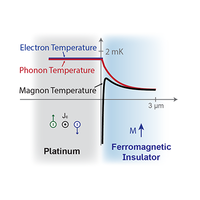
Frequency-dependent phonon-mediated unidirectional magnetoresistance in a metal on an insulator with highly nonequilibrium magnons

Sean E. Sullivan, Hwijong Lee, Annie Weathers, and Li Shi

Phys. Rev. B 107, L140412 (2023) - Published 28 April, 2023

Recent theories have predicted a magnonic unidirectional magnetoresistance (UMR) for a heavy metal on a magnetic insulator due to a nonlinear interfacial spin current. The authors show here that the spin Peltier heat flux carried by the interfacial spin current can cause a much larger UMR than the prediction. Their analytical model reveals how the observed frequency-dependent spin Peltier magnetoresistance and spin Seebeck effect are controlled by the magnon spin and energy relaxation lengths and the thermal penetration depth.

Dynamical mean-field theory for the Hubbard-Holstein model on a quantum device

Steffen Backes, Yuta Murakami, Shiro Sakai, and Ryotaro Arita

Phys. Rev. B 107, 165155 (2023) - Published 27 April, 2023

Utilizing quantum computers for real materials calculations is highly promising, but hinges on qubit fidelity and fault-tolerant quantum algorithms. Here, the authors show that a representative model for real materials, the Hubbard-Holstein model, which describes interacting electrons on a lattice coupled to bosonic degrees of freedom, can be reliably investigated using today’s Quantum processors. Adapting state-of-the-art mathematical tools is shown to be critical to overcome limitations imposed by the noise level of current quantum computing devices.

Excitonic absorption signatures of twisted bilayer WSe2 by electron energy-loss spectroscopy

Steffi Y. Woo, Alberto Zobelli, Robert Schneider, Ashish Arora, Johann A. Preuß, Benjamin J. Carey, Steffen Michaelis de Vasconcellos, Maurizia Palummo, Rudolf Bratschitsch, and Luiz H. G. Tizei

Phys. Rev. B 107, 155429 (2023) - Published 26 April, 2023

The excitonic response in twisted bilayer WSe2 as a function of the moiré angle has been investigated using electron energy loss spectroscopy under cryogenic conditions, and interpreted on the basis of first-principles calculations of the dielectric response of the AA′ stacked bilayer WSe2 relative to monolayer WSe2. This work provides valuable insight into the physical origins of high-energy absorption resonances in twisted bilayers, where the tuning of the excitonic peak C transitions is an effective indicator of the interlayer coupling.

Optical conductivity and vibrational spectra of the narrow-gap semiconductor FeGa3

C. Martin, V. A. Martinez, M. Opačić, S. Djurdjić-Mijin, P. Mitrić, A. Umićević, A. Poudel, I. Sydoryk, Weijun Ren, R. M. Martin, D. B. Tanner, N. Lazarević, C. Petrovic, and D. Tanasković

Phys. Rev. B 107, 165151 (2023) - Published 26 April, 2023

The authors perform optical, Raman, and Mössbauer spectroscopy measurements of the narrow-gap semiconductor FeGa3, along with DFT band structure and vibrational frequencies calculation. The results indicate that the spectral weight below the charge gap of approximately 0.4 eV originates from the impurities and not from the correlation effects. Both the infrared and Raman lines are very narrow, and so too are the Mössbauer spectral lines, which implies a good crystallinity of the sample.

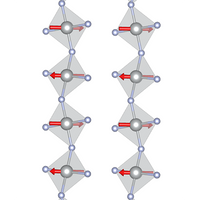
Pressure-induced charge-transfer and structural transition in hexagonal multiferroic HoMnO3

Martin Ottesen, Emma Ehrenreich-Petersen, Camilla Hjort Kronbo, François Baudelet, Lucie Nataf, Innokenty Kantor, Mads Ry Vogel Jørgensen, and Martin Bremholm

Phys. Rev. B 107, 134115 (2023) - Published 25 April, 2023

The improper ferroelectricity and frustrated magnetism observed in hexagonal rare-earth manganites are tied to Mn trimerization in the basal plane. Multiferroic properties interplay via the lattice leading to complex structural behavior with temperature and pressure. Applying hydrostatic pressure to hexagonal HoMnO3 induces a phase transition to a rhombohedrally distorted superstructure, accompanied by disproportionation of Mn(III) and compressibility of the basal plane. These findings reveal new insights into multiferroic manganites under extreme conditions, highlighting the complicated interactions between their properties.

Spectral function of the J1−J2 Heisenberg model on the triangular lattice

Nicholas E. Sherman, Maxime Dupont, and Joel E. Moore

Phys. Rev. B 107, 165146 (2023) - Published 25 April, 2023

Triangular lattice compounds have received extensive attention recently as quantum spin liquid candidates. Here, the authors look at the J1-J2 Heisenberg model on the triangular lattice, and calculate the spectral function relevant for neutron scattering experiments. They find a high-energy spectrum consistent with reports of a spinon Fermi surface state in triangular lattice compounds, although the low-energy spectrum rules out such a phase, and points towards a U(1) Dirac spin liquid. They provide clear signatures to look for in future neutron scattering experiments to distinguish these two phases.

Magnetic anisotropy and low-energy spin dynamics in the van der Waals compounds Mn2P2S6 and MnNiP2S6

J. J. Abraham, Y. Senyk, Y. Shemerliuk, S. Selter, S. Aswartham, B. Büchner, V. Kataev, and A. Alfonsov

Phys. Rev. B 107, 165141 (2023) - Published 24 April, 2023

The multifrequency electron spin resonance study of the van der Waals compounds Mn2P2S6 and MnNiP2S6 shows that they are strongly anisotropic, each having a unique ground state and type of magnetic order. The authors find that increasing the Ni content yields a larger magnon gap in the ordered state and a larger g factor value and its anisotropy in the paramagnetic state. Moreover, the character of the excitations in Mn2P2S6 undergoes a field-induced crossover from a 3D-like toward a 2D XY regime.

Low-temperature magnetism of KAgF3

John M. Wilkinson, Stephen J. Blundell, Sebastian Biesenkamp, Markus Braden, Thomas C. Hansen, Kacper Koteras, Wojciech Grochala, Paolo Barone, José Lorenzana, Zoran Mazej, and Gašper Tavčar

Phys. Rev. B 107, 144422 (2023) - Published 20 April, 2023
KAgF3 is a member of the fluoroargentate family of compounds containing Ag in the rare 2+ oxidation state. These were predicted to be the precursors to a new family of high-Tc superconductors and to host quantum antiferromagnetism. The authors use neutron diffraction, µSR, and density functional theory to investigate the low-temperature magnetism of the compound. They find that the compound is an A-type antiferromagnet at low temperature with an electronic moment of about 0.5 µB, similar to quantum-fluctuating spin-½ cuprates.

Sign In to Your Journals Account

Filter

Section

Filter

Article Lookup

Enter a citation