Highlights

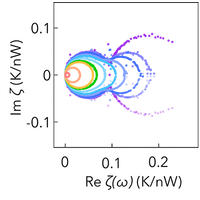
Electronic density of states of a U(1) quantum spin liquid with spinon Fermi surface. II. Zeeman magnetic field effects

Wen-Yu He and Patrick A. Lee

Phys. Rev. B 107, 195156 (2023) - Published 31 May, 2023

This work studies the Zeeman magnetic field effect on a quantum spin liquid with a spinon Fermi surface. In the absence of gauge binding, the quantum spin liquid electronic density of states exhibits no Zeeman shift in the threshold energy. As the gauge binding increases, the band edge resonance peaks exhibit a reduced Zeeman shift and eventually have the Zeeman shift direction reversed for a sufficiently large gauge binding. The authors further suggest to use such anomalous Zeeman response to identify the gapless quantum spin liquid phase.

Symmetries, length scales, magnetic response, and skyrmion chains in nematic superconductors

Martin Speight, Thomas Winyard, and Egor Babaev

Phys. Rev. B 107, 195204 (2023) - Published 30 May, 2023

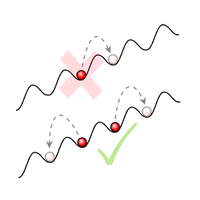
The structure of vortex lattices for unconventional superconductors is mostly unknown and a mathematically challenging problem. The authors propose a general method to find vortex lattices for any superconducting system. They focus on the example of nematic superconductors, demonstrating that in an external magnetic field such superconductors form chains of fractional vortices. Their approach, by describing the geometry of the unit cell, directly maps to the signal such lattices exhibit in muon spin rotation experiments, producing a powerful tool to study the superconducting order parameter.

Symmetry-resolved entanglement in critical non-Hermitian systems

Michele Fossati, Filiberto Ares, and Pasquale Calabrese

Phys. Rev. B 107, 205153 (2023) - Published 30 May, 2023

Non-Hermitian quantum systems display unusual features that set them apart from the Hermitian ones, yet their understanding is still very poor. Here, by studying how entanglement distributes in the symmetry sectors, the authors manage to explain one of these elusive features, namely, the origin of the nonpositiveness of the reduced density.

Ultrafast frustration breaking and magnetophononic driving of singlet excitations in a quantum magnet

F. Giorgianni, B. Wehinger, S. Allenspach, N. Colonna, C. Vicario, P. Puphal, E. Pomjakushina, B. Normand, and Ch. Rüegg

Phys. Rev. B 107, 184440 (2023) - Published 25 May, 2023

Ultrafast laser probing has revolutionized the study of quantum materials. Quantum magnets realize some of the most complex and entangled many-body states in condensed matter. Here, the authors unify ultrafast physics and quantum magnetism by pump-probe experiments on the frustrated magnet SrCu2(BO3)2, using terahertz light pulses to create coherent driving of the lattice phonons, which in turn creates a special singlet spin excitation. Their phonon-based method introduces a universal mechanism for controlling nonequilibrium quantum many-body physics on ultrafast timescales.

Investigating the fast spectral diffusion of a quantum emitter in hBN using resonant excitation and photon correlations

Clarisse Fournier, Kenji Watanabe, Takashi Taniguchi, Julien Barjon, Stéphanie Buil, Jean-Pierre Hermier, and Aymeric Delteil

Phys. Rev. B 107, 195304 (2023) - Published 25 May, 2023

Single-photon emitters in the solid state are subject to spectral broadening processes known as spectral diffusion and pure dephasing. Here, the authors show that a combination of quantum optics techniques, namely coherent laser drive and time-resolved photon correlations, can bring both processes to light in a single experimental protocol. This allows an extensive characterization of a large variety of solid-state quantum emitters. Their method is experimentally applied to a quantum emitter in the 2D material hexagonal boron nitride, further establishing this system as an appealing quantum photonics platform.

Magnon dispersion in ferromagnetic SrRuO3

K. Jenni, S. Kunkemöller, A. Tewari, R. A. Ewings, Y. Sidis, A. Schneidewind, P. Steffens, A. A. Nugroho, and M. Braden

Phys. Rev. B 107, 174429 (2023) - Published 23 May, 2023

Magnetic excitations in the itinerant magnet SrRuO3 were studied by the combination of various neutron scattering techniques. Although a Heisenberg local-moment model well describes the low-energy magnon dispersion, severe suppression of intensities and stiffening of the dispersion at high energies, as well as a strong broadening, are clear finger prints of the itinerant character of magnetism in SrRuO3.

Calorimetric measurement of nuclear spin-lattice relaxation rate in metals

A. Khansili, A. Bangura, R. D. McDonald, B. J. Ramshaw, A. Rydh, and A. Shekhter

Phys. Rev. B 107, 195145 (2023) - Published 23 May, 2023

Rabi, in atomic beams, and, later, Purcell, in solids, led the way in using nuclear spins as a probe of orbital and spin dynamics of electrons. These studies use radio frequency pulses to disturb the nuclear spins from their equilibrium with electrons and then monitor their relaxation. This paper expands the range of materials where electron dynamics can be accessed via their interaction with nuclear spins – this time, using ultrafast nanocalorimeters instead of radio frequency spectrometers.

Quantum pathways of carrier and coherent phonon excitation in bismuth

Azize Koç, Isabel Gonzalez-Vallejo, Matthias Runge, Ahmed Ghalgaoui, Klaus Reimann, Laurenz Kremeyer, Fabian Thiemann, Michael Horn-von Hoegen, Klaus Sokolowski-Tinten, Michael Woerner, and Thomas Elsaesser

Phys. Rev. B 107, L180303 (2023) - Published 23 May, 2023

Ultrafast mid-infrared excitation of an electron-hole plasma breaks the crystal symmetry of bismuth transiently and opens alternative quantum pathways for the excitation of coherent lattice motions. Probing the transient crystal structure directly by femtosecond x-ray diffraction reveals oscillations of diffracted intensity at a frequency of 2.6 THz, which persist on a picosecond time scale. They reflect coherent wave packet motions along back-folded phonon coordinates in the crystal of reduced symmetry. Optically induced symmetry breaking thus allows for modifying phonon excitations.

Explicit formula for high-order sideband polarization by extreme tailoring of Feynman path integrals

Qile Wu and Mark S. Sherwin

Phys. Rev. B 107, 174308 (2023) - Published 18 May, 2023

The authors derive here an explicit formula for a nonperturbative nonlinear optical phenomena called high-order sideband generation (HSG). The formula is valid over a wide range of experimentally accessible conditions. The results indicate a way to extract information on band structures and nonequilibrium dephasing rates from HSG experiments with simple algebraic calculations. This work also provides hints for analysis of HSG in multiband systems with non-Abelian Berry curvatures, as well as interband processes in high-harmonic generation.

Fermi-Dirac staircase occupation of Floquet bands and current rectification inside the optical gap of metals: An exact approach

Oles Matsyshyn, Justin C. W. Song, Inti Sodemann Villadiego, and Li-kun Shi

Phys. Rev. B 107, 195135 (2023) - Published 18 May, 2023

This work demonstrates exactly that, when coupled to an ideal fermionic bath, the occupation of a driven Floquet band deviates from the Fermi-Dirac distribution function of the Floquet energy, and instead becomes a staircase version of this distribution. This allows us to show the existence of a finite rectified electric current within the optical gap of a metal, even in the limit of vanishing carrier relaxation rates.

Neural-network-backed effective harmonic potential study of the ambient pressure phases of hafnia

Sebastian Bichelmaier, Jesús Carrete, Ralf Wanzenböck, Florian Buchner, and Georg K. H. Madsen

Phys. Rev. B 107, 184111 (2023) - Published 17 May, 2023

Machine learning methods, and in particular neural-network force fields (NNFF), are bridging the gap between macroscopically relevant parameters and quantum mechanical simulations. This work describes an NNFF training strategy and uses it as the back end for an effective harmonic potential study of phase transitions in hafnia. While good agreement with experiment is found regarding the monoclinic-tetragonal transition, the commonly assumed transition to a Fm3¯m cubic phase is found to be unlikely for the stoichiometric material

Stochastic magnetic tunnel junction with easy-plane dominant anisotropy

Jonathan Z. Sun, Christopher Safranski, Philip Trouilloud, Christopher D'Emic, Pouya Hashemi, and Guohan Hu

Phys. Rev. B 107, 184433 (2023) - Published 17 May, 2023

Super-paramagnetic fluctuation of a nanomagnet, when confined by a strong easy-plane anisotropy, can yield GHz speed random signal. A magnetic tunnel junction converts such moment movement into conductance fluctuation, and is useful as an entropy source for modern computing circuits. Here, the authors experimentally explore the base-line behavior of easy-plane magnetic tunnel junctions in the super-paramagnetic limit, using a CMOS back-end integrated fabrication process, and introduce some measurement methodologies to identify factors in device materials and fabrication in need of future optimization.

Observation of hybrid magnetic skyrmion bubbles in Fe3Sn2 nanodisks

Lingyao Kong, Jin Tang, Weiwei Wang, Yaodong Wu, Jialiang Jiang, Yihao Wang, Junbo Li, Yimin Xiong, Mingliang Tian, and Haifeng Du

Phys. Rev. B 107, 174425 (2023) - Published 16 May, 2023

It has been widely established that there exist two types of magnetic bubbles. Here, the authors present the theory and experiment of a novel three-dimensional bubble state, referred to as the type-III bubble, which is composed of Néel-twisted skyrmions with topological charge Q = -1 in the near-surface layers and type-II bubbles with Q = 0 in the interior layers. Furthermore, the authors demonstrate a method for creating the type-III bubble and the topological magnetic transformation among the three types of bubbles.

Magnon dynamics in a skyrmion-textured domain wall of antiferromagnets

Seungho Lee, Kouki Nakata, Oleg Tchernyshyov, and Se Kwon Kim

Phys. Rev. B 107, 184432 (2023) - Published 16 May, 2023

The novel interaction of a skyrmion-textured domain wall and magnons is investigated theoretically for 2D antiferromagnets with the aid of supersymmetric quantum mechanics. The scattering of propagating magnons at the domain wall is found to be governed by the emergent magnetic field coming from the skyrmion texture of the domain wall, which gives rise to the tunable spin Nernst effect. The exact theoretical analysis also yields new nonreciprocal magnons, bound to the topologically textured domain wall.

Fractonic Luttinger liquids and supersolids in a constrained Bose-Hubbard model

Philip Zechmann, Ehud Altman, Michael Knap, and Johannes Feldmeier

Phys. Rev. B 107, 195131 (2023) - Published 16 May, 2023

Dynamical constraints have drastic consequences for the properties of many-particle quantum systems. Here, the authors study the quantum ground state phases in a fracton system of interacting bosons with dipole conservation. Through a combination of low-energy field theory and tensor network simulations, they identify a novel dipole Luttinger liquid phase as well as a fracton analogue of a supersolid state.

Dipole condensates in tilted Bose-Hubbard chains

Ethan Lake, Hyun-Yong Lee, Jung Hoon Han, and T. Senthil

Phys. Rev. B 107, 195132 (2023) - Published 16 May, 2023

The authors study a Bose-Hubbard model whose dynamics conserves the total center of mass, a situation which arises in strongly tilted optical lattices. Center of mass conservation is shown to dramatically alter the nature of the quantum phase diagram, which hosts several types of unusual gapless phases. These results hint at a wealth of interesting phenomena waiting to be uncovered in the physics of kinetically constrained many-body systems.

Ab initio study of the nonlinear optical properties and dc photocurrent of the Weyl semimetal TaIrTe4

Álvaro R. Puente-Uriona, Stepan S. Tsirkin, Ivo Souza, and Julen Ibañez-Azpiroz

Phys. Rev. B 107, 205204 (2023) - Published 16 May, 2023

The type-II Weyl semimetal TaIrTe4 exhibits one of the largest nonlinear photoresponses measured to date [Ma et al., Nature Materials 18, 476 (2019)]. The present work provides theoretical calculations on several competing candidate effects that can account for it. The third-order contribution known as the jerk current matches the measured magnitude of the photocurrent as well as its angular distribution. The origin of the large photoresponse is traced back to a constructive interference between the effective mass and the dipole matrix element of the Weyl bands crossing the Fermi level.

Transformer spin-triplet superconductivity at the onset of isospin order in bilayer graphene

Zhiyu Dong, Andrey V. Chubukov, and Leonid Levitov

Phys. Rev. B 107, 174512 (2023) - Published 11 May, 2023

The recently discovered superconductivity in Bernal bilayer graphene features unique behavior that distinguishes it from conventional superconductors. Firstly, the onset of superconductivity is associated with the emergence of an isospin-polarized phase, driven by Stoner instability. Secondly, the superconductivity is activated by a magnetic field and persists beyond the Pauli limit. These properties have sparked the interest of researchers and prompted the search for a pairing mechanism that can account for these findings. This paper reports on recent progress in this quest.​

Polaron hopping through piecewise-linear functionals

Stefano Falletta and Alfredo Pasquarello

Phys. Rev. B 107, 205125 (2023) - Published 11 May, 2023

Polarons have a large impact on transport properties of materials and on related applications in photovoltaics. This work demonstrates that enforcing the piecewise linearity condition leads to robust polaron properties upon variation of the functional. Considered properties include electron densities, lattice bonds, formation energies, hyperfine and superhyperfine parameters, hopping barriers, and transfer rates. This lends justification to the use of efficient semilocal functionals, thus paving the way to accurate and systematic studies of polaronic transport properties from first principles.

Universal inverse electrocaloric effect in perovskites

Xingyue Ma, Mingxing Chen, Jun-Ming Liu, Di Wu, and Yurong Yang

Phys. Rev. B 107, 184105 (2023) - Published 10 May, 2023

The electrocaloric effect offers a promising alternative to traditional gas compressing refrigeration. Unlike the normal electrocaloric effect, the inverse electrocaloric effect is believed to be very rare. In this study, first-principles-based effective Hamiltonian methods are used and the inverse electrocaloric effect is found to be a universal phenomenon in oxide and halide perovskites over different structural phases. Such an unusual effect originates from the entropy change related to the oxygen/halogen octahedron.

Sign In to Your Journals Account

Filter

Section

Filter

Article Lookup

Enter a citation