Highlights

Thermodynamic integration by statistically sampling ensembles of dynamically unstable solids without molecular dynamics

Junsoo Park, Zhigang Wu, and John W. Lawson

Phys. Rev. B 110, 144104 (2024) - Published 7 October, 2024

The anharmonic free energy of dynamically unstable systems can be accurately calculated by thermodynamic integration, if the configurational ensemble obeying the true potential is obtained. This usually requires computationally costly ab initio molecular dynamics (AIMD). The authors present here a way to accomplish this by direct statistical sampling of ensembles using interatomic force constants and without MD. Phase transition temperatures of binary shape-memory alloys are predicted to within 25% error at a speed-up of about three orders of magnitude over AIMD.

Symmetry-enforced Fermi surface degeneracies observed in the purported time-reversal symmetry-broken superconductor LaNiGa2

Matthew Staab, Robert Prater, Sudheer Sreedhar, Journey Byland, Eliana Mann, Davis Zackaria, Yunshu Shi, Henry J. Bowman, Andrew L. Stephens, Myung-Chul Jung, Antia S. Botana, Warren E. Pickett, Valentin Taufour, and Inna Vishik

Phys. Rev. B 110, 165115 (2024) - Published 7 October, 2024

Cleaved single crystals, including along the thin edge, have enabled measurement of the full electronic structure of the purported time-reversal symmetry-broken superconductor LaNiGa2. These data support the nonsymmorphic symmetry-enforced degeneracy, predicted across an entire face of the Brillouin zone. Two topological Dirac points are not lifted by spin-orbit coupling and are analogous to the two graphene valleys, except that they are pinned at the Fermi level. These features, as well as near-degeneracies throughout the band structure, may assist in determining the character of pairing in this unique superconductor.

Information scrambling and butterfly velocity in quantum spin glass chains

Venkata Lokesh K. Y., Surajit Bera, and Sumilan Banerjee

Phys. Rev. B 110, 134202 (2024) - Published 4 October, 2024

Information scrambling may become enhanced for systems with many metastable configurations, such as glasses, when the complex dynamics samples the multitude of configurations. The authors study here the scrambling in chains of quantum dots, modeled via two paradigmatic spin glass models – Sachdev-Ye and p-spin glass – and show that the butterfly velocity characterizing scrambling is enhanced above the glass transition where the dynamics is maximally complex. However, the evolution of glassy complexity with quantum and thermal fluctuations in the two spin glasses is very different.

Increased neutron reflectivity and polarization of neutron-optical engineered Fe/B411CTi multilayer optics

A. Zubayer, N. Ghafoor, K. A. Thorarinsdottir, A. Glavic, J. Stahn, G. Nagy, A. Vorobiev, F. Magnus, J. Birch, and F. Eriksson

Phys. Rev. B 110, 155408 (2024) - Published 4 October, 2024

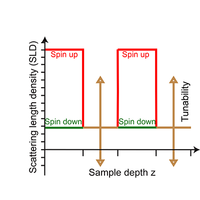
This study explores the use of Fe/11B4CTi multilayers for polarizing neutron optics, with a focus on tuning the scattering length density (SLD). Compared to the conventional Fe/Si systems, Fe/11B4CTi multilayers demonstrate enhanced reflectivity and polarization due to reduced interface width and optimized SLD matching and contrast. By adjusting the ratio of 11B4C and Ti, a wide range of SLD contrasts can be achieved, allowing for fine-tuning of polarization. These findings highlight the potential of SLD-tuned multilayers for advancing thin-film neutron optics applications.

Superdiffusive transport on lattices with nodal impurities

Yu-Peng Wang, Jie Ren, and Chen Fang

Phys. Rev. B 110, 144201 (2024) - Published 2 October, 2024

It is well known that in the 1D Anderson model, the system is always localized, regardless of how small the disorder strength is. Here, the authors demonstrate that by replacing the standard onsite disorder term, ∑iϵiĉi†ĉi, with a nodal disorder term, ∑iϵid̂i†d̂i, where d̂i=ĉi+iĉi+1, the system becomes superdiffusive. The nodal disorder introduces a node in momentum space, resulting in a divergence of the localization length at the nodal momentum. This divergence in localization length induces superdiffusive transport.

Pressure-driven enhancement of antiferromagnetic order in DySbTe single crystals

Xiangqi Wang, Yong Jia, Xiaoping Song, and Jun Tan

Phys. Rev. B 110, 144403 (2024) - Published 2 October, 2024

The authors report here pressure-enhanced antiferromagnetic (AFM) order in DySbTe single crystals. As pressure increases beyond 15 GPa, the resistivity shows a distinct upturn, indicating a strengthened AFM transition near 9 K. Concurrently, magnetotransport measurements reveal shifts in spin-flop and spin-flip transitions, highlighting the complex relationship between pressure, magnetism, and electronic transport in this topological material.

Novel dipole-lattice coupling in the quantum spin liquid material κ−(BEDT−TTF)2Cu2(CN)3

Jesse Liebman, Kazuya Miyagawa, Kazushi Kanoda, and Natalia Drichko

Phys. Rev. B 110, 165105 (2024) - Published 2 October, 2024

The triangular lattice S=½ antiferromagnet κ-(BEDT-TTF)2Cu2(CN)3, found on the verge of the quantum spin liquid state, hosts complex interactions of charges, spins, and the lattice. Below 60 K, Raman scattering spectroscopy detects disordered fluctuating charge dipoles on (BEDT-TTF)2 dimers and their coupling to lattice phonons. The authors suggest here how such dynamic coupling leads to a modulation of the orbital overlap between (BEDT-TTF)2 dimers and of the magnetic exchange between their S=½ spins, resulting in fluctuating spin-singlet pairs.

Measurement-induced phase transitions in systems with diffusive dynamics

Hyunsoo Ha, Akshat Pandey, Sarang Gopalakrishnan, and David A. Huse

Phys. Rev. B 110, L140301 (2024) - Published 2 October, 2024

The universality class of the measurement-induced phase transition changes significantly when a diffusing conserved density is present. The authors analytically show here the impact of diffusive correlations, supported by numerical results from a new model that couples conserved densities into Clifford circuits through projective measurements. Rare-region effects away from the critical point are also explored. This result extends to monitored circuits with U(1) symmetry.

Signatures of a quantum critical endpoint in the Kitaev candidate Na2Co2TeO6

J. Arneth, K.-Y. Choi, R. Kalaivanan, R. Sankar, and R. Klingeler

Phys. Rev. B 110, L140402 (2024) - Published 2 October, 2024

The Kitaev candidate material Na2Co2TeO6 has been recently proposed to undergo a discontinuous order-disorder transition into a quantum spin liquid like state when a magnetic field BC∼6T is applied along the nearest-neighbor Co-Co-bonds. In this PRB Letter, high-resolution dilatometry studies uncover signatures of a quantum critical endpoint (QCEP) near BC by showing that the magnetic Grüneisen parameter changes its sign at the critical field.The presented results expand the class of materials exhibiting a QCEP to honeycomb antiferromagnets with possibly Kitaev-like interactions.

Unconventional discontinuous transitions in a two-dimensional system with spin and valley degrees of freedom

Zachary M. Raines, Leonid I. Glazman, and Andrey V. Chubukov

Phys. Rev. B 110, 155402 (2024) - Published 1 October, 2024

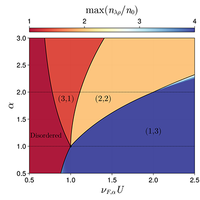
Many interesting quasi-two-dimensional materials host effectively conserved low-energy spin and valley isospin degrees of freedom. In a number of these systems isospin symmetry is broken by a cascade of transitions into fractional metal states, where some number of isospin species are spontaneously depleted. Here, the authors study itinerant isospin symmetry breaking transitions in multivalley system, showing that for a range of parameters there is naturally such a cascade of strongly first-order transitions coinciding with a large enhancement of the associated isospin susceptibilities.

Paired fermions in strong magnetic fields and daughters of even-denominator Hall plateaus

Misha Yutushui, Maria Hermanns, and David F. Mross

Phys. Rev. B 110, 165402 (2024) - Published 1 October, 2024

The vision of realizing and controlling non-Abelian particles is a major driving force in quantum many-body physics, with possible applications in quantum technology. Recent experiments have observed “daughter states” near putative non-Abelian fractional quantum Hall states, suggesting a close relationship. Here, the authors identify these daughters as integer quantum Hall states of composite-fermion pairs and develop their theory. Crucially, the daughter state filling factors are directly related to the parent non-Abelian topological orders, providing a shortcut for measuring the latter.

Guidelines for accurate and efficient calculations of mobilities in two-dimensional semiconductors

Jiaqi Zhou, Samuel Poncé, and Jean-Christophe Charlier

Phys. Rev. B 110, 125304 (2024) - Published 30 September, 2024

Reported carrier mobilities in two-dimensional materials predicted by ab initio calculations differ widely due to various approximations used in different studies, questioning the validity of the Boltzmann transport equation in monolayers. Here, the authors aim to settle the debate and study the impact of many computational choices and approximations, including pseudopotential, quadrupole correction, Berry connection, and spin-orbit coupling (SOC). Based on this, the authors propose a practical approach that balances high accuracy with computational efficiency.

Orbital Kerr effect and terahertz detection via the nonlinear Hall effect

Diego García Ovalle, Armando Pezo, and Aurélien Manchon

Phys. Rev. B 110, 094439 (2024) - Published 26 September, 2024

The optical Kerr effect, widely used for probing magnetic domains, can be used to detect nonequilibrium orbital accumulation, even in the absence of spin-orbit coupling. In certain low-symmetry crystals, this orbital accumulation is associated with a nonlinear Hall effect that can be exploited for terahertz (THz) detection. As a result, the “orbital” Kerr effect is directly related to the THz responsivity of the material. Using first-principles calculations, the authors demonstrate here that this effect in low-symmetry crystals and multilayers can be remarkably large.

Strong pairing from a small Fermi surface beyond weak coupling: Application to La3Ni2O7

Hui Yang, Hanbit Oh, and Ya-Hui Zhang

Phys. Rev. B 110, 104517 (2024) - Published 26 September, 2024

One of the central questions in condensed matter theory is: can a small Fermi surface phase, which violates the Luttinger theorem, give rise to superconductivity? This paper offers an answer to the question by developing an effective model with the large interlayer exchange coupling J⊥ limit in the bilayer model. The model is dubbed the ESD t-J model with six states: one empty state(E), four single states (S), and one double state(D). The authors find that in the normal state with a small doping regime (x=0), the small Fermi surface manifests without symmetry breaking or fractionalization, while the conventional Fermi surface appears at the x=1 limit. Moreover, the superconducting phase at low temperatures is different from the cuprate. The author predicts a doping-tuned BCS to BEC crossover from Feshbach resonance accompanied by superconducting domes near x∼0.5. The theory can be applied to the recently observed high-Tc superconductor La3Ni2O7 under pressure.

Field-free Josephson diode effect in a d-wave superconductor heterostructure

Hamed Vakili, Moaz Ali, and Alexey A. Kovalev

Phys. Rev. B 110, 104518 (2024) - Published 26 September, 2024

This paper investigates the superconducting diode effect in planar Josephson junctions constructed with unconventional d-wave pairing. Distinguishing between various forms of d-wave pairing can be challenging experimentally. The authors show here that, due to differences in their symmetry, various forms of d-wave pairing exhibit unique patterns of superconducting diode effects as the pairing lobe orientation is varied. These distinct patterns offer a potential method for experimentally identifying the specific type of d-wave pairing present in a superconductor.

Unconventional topological mixed-state transition and critical phase induced by self-dual coherent errors

Yu-Hsueh Chen and Tarun Grover

Phys. Rev. B 110, 125152 (2024) - Published 26 September, 2024

Topologically ordered phases host anyons that can condense, leading to a trivial gapped phase. Such a transition can be induced by coupling to an environment. This paper explores a scenario where the coupling between a topologically ordered phase and the environment maintains a self-duality symmetry that interchanges anyons with nontrivial mutual statistics. The authors find that this duality symmetry prevents anyon condensation and, further, for a range of the coupling strength, the topological phase is destroyed in favor of an exotic critical phase.

Berry-dipole semimetals

Zheng-Yang Zhuang, Chaoyi Zhang, Xiao-Jiao Wang, and Zhongbo Yan

Phys. Rev. B 110, L121122 (2024) - Published 26 September, 2024

The authors introduce here a class of topological semimetals, termed “Berry-dipole semimetals” (BDSMs), in three dimensions. Two representative characteristics in the Bloch band structure of BDSMs are the quadratic dispersion and dipole-structure Berry curvature near the band degeneracy. The BDSMs are shown to support a diversity of distinctive properties, such as anomalous paired Fermi arcs with identical spin polarization, anomalous Hall effect, orbital magnetic moment quantized in units of an effective Bohr magneton, and field orientation sensitive Landau levels.

Inductive detection of inverse spin-orbit torques in magnetic heterostructures

Misbah Yaqoob, Fabian Kammerbauer, Tom G. Saunderson, Vitaliy I. Vasyuchka, Dongwook Go, Hassan Al-Hamdo, Gerhard Jakob, Yuriy Mokrousov, Mathias Kläui, and Mathias Weiler

Phys. Rev. B 110, 104432 (2024) - Published 25 September, 2024

Controlling magnetization by electrical currents is a key requirement for spintronic applications. It is well established that heavy-metal layers, such as Pt or Ta, can be used to exert current-driven spin-orbit torques on adjacent ferromagnetic thin films. In contrast to this established approach, the authors of this study demonstrate that specific magnetic multilayers can also serve as an efficient source of current-driven spin-orbit torques. Specifically, they show that [Co/Ni] stacks interfaced with CoFeB thin films can generate significant spin-orbit torques, comparable to those observed in the aforementioned heavy metal/ferromagnet bilayers.

Interlayer Raman modes in twisted bilayer transition metal dichalcogenides

Eileen Schneider, Kenji Watanabe, Takashi Taniguchi, and Janina Maultzsch

Phys. Rev. B 110, 125431 (2024) - Published 25 September, 2024

Interlayer coupling is crucial for the observation of twist-angle induced physical effects in twisted 2D layers. This paper presents a fast method to investigate the interlayer coupling in twisted bilayer transition metal dichalcogenides by Raman spectroscopy. Via resonant excitation near the C exciton energy of the material, so-called interlayer optical Raman modes become observable only if the layers are electronically coupled. The authors demonstrate this effect specifically for twisted bilayers of MoS2 and MoSe2 at multiple twist angles.

Multi-moiré trilayer graphene: Lattice relaxation, electronic structure, and magic angles

Charles Yang, Julian May-Mann, Ziyan Zhu, and Trithep Devakul

Phys. Rev. B 110, 115434 (2024) - Published 24 September, 2024

As the number of layers in a moiré material increases, so does the dimensionality of their twist angle phase space. The authors study here trilayer graphene systems, identifying a “magic line” of configurations they expect to demonstrate strongly-correlated behavior. Some configurations are predicted to mechanically relax into a network of domains, which may exhibit topological or superconducting phases.

Sign In to Your Journals Account

Filter

Section

Filter

Article Lookup

Enter a citation