Highlights

Room-temperature optomechanics with light-matter condensates

Vladislav Yu. Shishkov, Evgeny S. Andrianov, and Anton V. Zasedatelev

Phys. Rev. B 110, 134321 (2024) - Published 29 October, 2024

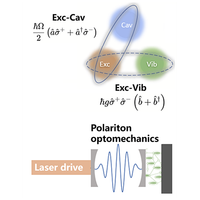
The authors develop here an optomechanical framework for macroscopic quantum states operational at room temperature — light-matter Bose-Einstein condensates with simultaneous strong exciton-photon and exciton-phonon interactions. Under resonant laser drive, they explore different polariton optomechanical scenarios that enable changing dissipative and dispersive properties of the system, assign vibrational states an effective mass, and open up new avenues to control polariton states by vibrations and vice versa.

Magnon transport in antiferromagnetic strained SrMnO3 thin films

J. J. L. van Rijn, B. J. van Wees, and T. Banerjee

Phys. Rev. B 110, 144446 (2024) - Published 29 October, 2024

Detection of long-distance magnon transport in antiferromagnets is challenging due to domain wall scattering, robustness against magnetic fields, and anisotropy dependent excitation modes. The authors demonstrate here both electrically and thermally generated magnons in the easy-plane antiferromagnet and multiferroic SrMnO3, persisting up to long distances of 2.3 µm, and discuss this in the framework of rotating manipulated Néel vectors and occupancy of magnon modes. This work establishes the potential of such easy-plane antiferromagnets as conductor of magnon currents over long distances.

Fading ergodicity

Maksymilian Kliczkowski, Rafał Świętek, Miroslav Hopjan, and Lev Vidmar

Phys. Rev. B 110, 134206 (2024) - Published 24 October, 2024

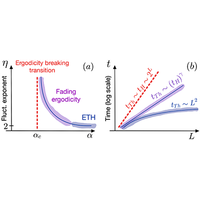
Here, the authors uncover a novel ergodic regime dubbed “fading ergodicity”. This is a regime in which a quantum system is still ergodic, however, it also acts as a precursor of the ergodicity breaking phase transition. In other words, “fading” ergodicity is a synonym of the “fading” colors of the leafs that are just about to fall off the tree. They conjecture this regime to be a generic property of quantum systems approaching the ergodicity breaking phase transition, and therefore, one cannot make a system nonergodic without first making the ergodicity fade.

Resonance energy transfer in the presence of a spherical cavity and dispersive substrate

Elliot K. Beutler, Jon P. Camden, and David J. Masiello

Phys. Rev. B 110, 155435 (2024) - Published 24 October, 2024

Resonator cavities are known to influence the rate of energy exchange between nearby emitters due to their local modifications of the electromagnetic density of states. The emitters’ positions, orientations, and detuning relative to each other and to their cavity environment all affect the degree to which energy transfer is enhanced or suppressed. However, the role of the underlying substrate sometimes used to support the cavity is often underestimated. Here, the authors model the interaction between a pair of emitters in the presence of a composite spherical cavity-substrate system and demonstrate that the resonant features of the substrate may dramatically influence the resulting density of states and energy transfer rate.

Static and fluctuating zigzag order and possible signatures of Kitaev physics in torque measurements of α−RuCl3

S. Froude-Powers, Subin Kim, Jacob Gordon, Hae-Young Kee, Young-June Kim, and S. R. Julian

Phys. Rev. B 110, 134439 (2024) - Published 23 October, 2024

The Kitaev spin liquid is a long-sought state of matter, for which α-RuCl3 has been a leading candidate since the observation of an apparently quantized thermal Hall effect at high magnetic field. In 2021, Gordon and Kee predicted a distinctive signature that must be present in the magnetic torque of such a Kitaev system. The authors of this paper report torque measurements that, after accounting for unexpected signals associated with magnetic order, do not show this predicted signature.

Orbital selective order and Z3 Potts nematicity from a non-Fermi liquid

YuZheng Xie, Andrew Hardy, and Arun Paramekanti

Phys. Rev. B 110, 165158 (2024) - Published 23 October, 2024

Electronic liquid crystals are ubiquitous in strongly correlated matter, and often seen in multiorbital materials exhibiting non-Fermi-liquid transport. The authors propose here and analyze a three-orbital Sachdev-Ye-Kitaev model that hosts a uniform solution corresponding to a ℤ3 Potts nematic. In the atomic limit, this model displays an orbital-selective non-Fermi liquid down to T=0. On the triangular and cubic lattice, this evolves into a nematic with highly anisotropic transport, reminiscent of dynamical mean field theory studies of multiorbital Hubbard models.

Versatile braiding of non-Hermitian topological edge states

Bofeng Zhu, Qiang Wang, You Wang, Qi Jie Wang, and Y. D. Chong

Phys. Rev. B 110, 134317 (2024) - Published 22 October, 2024

The mathematical concept of braiding describes how string-like objects can be interwoven, including topologically distinct “links” and “knots”. A physical setting for realizing braids is the complex energy levels of non-Hermitian systems. The authors introduce here a route to generating energy braids, using topological edge states of non-Hermitian lattices. The model hosts braids like Solomon links and [n]-catenanes, which have not yet been observed physically. The model is experimentally feasible, requiring only a lattice with local gain and loss, without nonreciprocal coupling.

Probing the Berezinskii-Kosterlitz-Thouless vortex unbinding transition in two-dimensional superconductors using local noise magnetometry

Jonathan B. Curtis, Nikola Maksimovic, Nicholas R. Poniatowski, Amir Yacoby, Bertrand Halperin, Prineha Narang, and Eugene Demler

Phys. Rev. B 110, 144518 (2024) - Published 22 October, 2024

Understanding the dynamics of vortices in superconductors is crucial in two dimensions, since these materials are expected to undergo a topological Berezinskii-Kosterlitz-Thouless (BKT) phase transition. It has remained challenging, however, to directly fingerprint this transition and the associated vortex dynamics. Here, the authors show that spin qubit noise magnetometry can potentially detect signatures of the BKT transition via its impact on the magnetic flux noise emanating from the sample as a function of frequency, temperature, and distance.

Thermal crossover from a Chern insulator to a fractional Chern insulator in pentalayer graphene

Sankar Das Sarma and Ming Xie

Phys. Rev. B 110, 155148 (2024) - Published 22 October, 2024

A recent experiment in pentalayer graphene/hBN moiré superlattices uncovered a surprising new phase, with integer quantization at fractional fillings, emerging at lower temperatures than the previously observed FQAHE states. Through theoretical analysis of the transport data, the authors establish here that this low-temperature phase is likely a disorder-induced localized insulating phase, and that the transition between this phase and the higher temperature FQAHE phase is a crossover phenomenon driven by the competition between interaction and disorder energy scales.

Physical proof of the topological entanglement entropy inequality

Michael Levin

Phys. Rev. B 110, 165154 (2024) - Published 22 October, 2024

It is generally believed that two-dimensional gapped phases of matter with anyon excitations have a special pattern of entanglement in their ground-state wave function. Recently, this intuition was formalized by a universal inequality relating the topological entanglement entropy of a gapped ground state to the total quantum dimension of its anyon excitations. This paper presents an alternative, more direct proof of this inequality.

Characterization of antiferromagnetic magnons using nitrogen vacancy center relaxometry

R. C. Heitzer, F. Pinto, E. Rodríguez, R. Rodríguez-Suárez, and J. R. Maze

Phys. Rev. B 110, 134431 (2024) - Published 21 October, 2024

Nitrogen vacancy (NV) centers in diamond are known for their capability of being optically manipulated. They can be coherently initialized in a specific spin state, and it is possible to measure their relaxation time. Here, the authors develop a theoretical description on how these relaxation rates are affected by the magnon (spin wave quanta) energies of different prototypical antiferromagnets, such as MnF2 and NiO. This information is useful to characterize magnetic parameters, such as the anisotropy or the effective exchange field.

Viscous hydrodynamics of excitons in van der Waals heterostructures

V. N. Mantsevich and M. M. Glazov

Phys. Rev. B 110, 165305 (2024) - Published 21 October, 2024

Two-dimensional semiconductors based on transition metal dichalcogenides offer a unique platform to study propagation of excitons. Here, the authors show theoretically that, in addition to the well studied diffusive propagation, excitons can form a viscous fluid. Based on the developed microscopic theory, the authors conclude that such a scenario is possible in two-dimensional semiconductors.

Heat-charge separation in a hybrid superconducting quantum Hall setup

Carlo Panu, Fabio Taddei, Marco Polini, and Amir Yacoby

Phys. Rev. B 110, L161407 (2024) - Published 21 October, 2024

Separating heat from charge in a material is a truly challenging task, since it requires the violation of the Wiedemann-Franz law. Such violations are rare in nature, and typically require, e.g., strong electron-electron interactions. In this Letter, the authors show that such separation can reach 100% efficiency in a hybrid superconducting quantum Hall setup, provided that the quantum Hall system is tuned to the integer filling factor. To illustrate this idea, microscopic calculations for a three-terminal setup are presented.

Beyond Gaussian fluctuations of quantum anharmonic nuclei

Antonio Siciliano, Lorenzo Monacelli, and Francesco Mauri

Phys. Rev. B 110, 134111 (2024) - Published 18 October, 2024

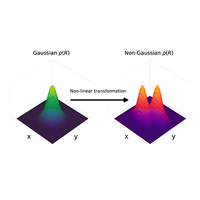
Gaussian fluctuations describe the quantum state of the nuclei, even in strongly anharmonic materials. However, this approximation fails spectacularly in molecular crystals with rotational motions and in tunneling modes. This paper presents a variational approach that overcomes these limitations through a nonlinear transformation of Cartesian coordinates. Employing Monte Carlo sampling of the quantum phase space at finite temperatures, the method maintains an analytical expression for the entropy, which ensures direct access to the free energy and, consequently, the phase diagram of materials.

Majorana multipole response with magnetic point group symmetry

Yuki Yamazaki and Shingo Kobayashi

Phys. Rev. B 110, 134518 (2024) - Published 18 October, 2024

The identification of Cooper pair symmetry is a crucial initial step in the study of topological superconductors (TSCs). Here, the authors develop a theory for the identification of pairing symmetry in time reversal symmetry breaking TSCs, focusing on the electromagnetic responses of Majorana fermions at their surfaces. They explore how the pairing symmetries relate to the electromagnetic response of the Majorana fermions under magnetic point group symmetry. The study also predicts the appearance of a magnetic quadrupole response in odd-parity chiral superconductivity in UTe2 and ferromagnetic superconductivity in UCoGe.

Antiferromagnetic standing spin waves generated in NiO thin films by short strain pulses

Andrei V. Azovtsev and Nikolay A. Pertsev

Phys. Rev. B 110, 144430 (2024) - Published 18 October, 2024

In antiferromagnets, spin dynamics can occur at terahertz (THz) frequencies, but the energy-efficient excitation of antiferromagnetic magnons is challenging. Here, the authors describe the Néel vector oscillations induced by acoustic pulses injected into NiO films. Using advanced micromagnetoelastic simulations, they show that picosecond bipolar pulses can efficiently create antiferromagnetic standing spin waves in the single-crystalline NiO films. The results significantly advance both antiferromagnetic magnonics and straintronics by clarifying conditions for the purely magnetoelastic generation of THz magnons and revealing strong strain effects on the spin-wave dispersion in NiO.

Projective fixed points for non-Fermi liquids: A case study of the Ising-nematic quantum critical metal

Shubham Kukreja, Afshin Besharat, and Sung-Sik Lee

Phys. Rev. B 110, 155142 (2024) - Published 18 October, 2024

Fixed points of the renormalization group flow play a crucial role in classifying phases of matter. In metals, these fixed points are defined only projectively due to the indefinitely increasing Fermi momentum under scale transformations. Here, the authors study the physical implications of the projective nature of metallic fixed points and chart the space of projective fixed points for Ising-nematic quantum critical metals. Their universality classes are characterized by a nontunable universal forward interaction and intrinsic superconducting fluctuations.

Ultrafast magnetostructural dynamics of MnAs

F. Vidal et al.

Phys. Rev. B 110, L140406 (2024) - Published 18 October, 2024

Due to its magnetostructural phase transition, MnAs is a paradigmatic material for studying the strong coupling between lattice and magnetism. Here, the authors explore the subpicosecond magnetic and structure dynamics of MnAs following laser excitation in order to test the transition mechanisms proposed in the literature. Time-resolved x-ray diffraction measurements reveal a differentiation of Mn and As atomic disorder relaxation times in the ferromagnetic phase that is absent in the paramagnetic phase. These results strongly support the predictions of recent density functional theory calculations.

Existence of Hebel-Slichter peak in unconventional kagome superconductors

Yi Dai, Andreas Kreisel, and Brian M. Andersen

Phys. Rev. B 110, 144516 (2024) - Published 17 October, 2024

The type of superconducting pairing symmetry realized in recently discovered kagome metals remains an open question at present. Here, the authors theoretically investigate the spin-lattice relaxation rate of unconventional superconductivity on the kagome lattice, and demonstrate the existence of a Hebel-Slichter peak for d-wave superconductivity. They explain this result from a peculiar sublattice interference effect present on the kagome lattice. This study shows the surprising effect that unconventional kagome superconductors can behave similar to conventional s-wave superconductors.

(3+1)-dimensional path integral state sums on curved U(1) bundles and U(1) anomalies of (2+1)-dimensional topological phases

Ryohei Kobayashi and Maissam Barkeshli

Phys. Rev. B 110, 155140 (2024) - Published 17 October, 2024

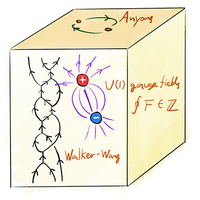
The authors construct here a lattice path integral for a (3+1)D topological phase with U(1) symmetry, realizing (2+1)D topological order on its boundary. The U(1) background gauge field can possibly have a nontrivial Chern number. This allows the derivation of various formulas for anomalies of topological order involving U(1) symmetry, and leads to Walker-Wang construction of a topological insulator and superconductor. Mathematically, they correspond to new combinatorial state sums for invariants of topologically nontrivial, curved U(1) bundles over 4-manifolds, including spinc, pinc structures.

Sign In to Your Journals Account

Filter

Section

Filter

Article Lookup

Enter a citation