Highlights

Imaging antiferromagnetic domains in LiCoPO4 via the optical magnetoelectric effect

B. Tóth, V. Kocsis, Y. Tokunaga, Y. Taguchi, Y. Tokura, and S. Bordács

Phys. Rev. B 110, L100405 (2024) - Published 12 September, 2024

Despite the rising scientific interest in antiferromagnets, the detection and manipulation of antiferromagnetic domains remain challenging. In noncentrosymmetric antiferromagnets, the magnetoelectric effect may provide novel opportunities to access the compensated magnetic order. It may enable unusual optical phenomena such as nonreciprocal directional dichroism (NDD). Here, the authors report strong NDD in the near-infrared and visible spectral ranges in LiCoPO4 between its two antiphase (time-reversed) antiferromagnetic domains. The effect is strongest near the telecommunication wavelength of 1550 nm, where a simple laser scanning technique is used to visualize these domains.

Interface transparency to orbital current

Igor Lyalin and Roland K. Kawakami

Phys. Rev. B 110, 104418 (2024) - Published 11 September, 2024

Orbitronics is an exciting new field closely connected to spintronics. One of the important questions is how efficiently orbital currents can be transferred across interfaces. Here, the authors study spin-orbit torque in Cr/Ni bilayers with the insertion of an ultrathin spacer between them. Using the experimentally measured torque as a proxy for the orbital current transferred from Cr to Ni, they find that across 12 different spacer materials, the apparent interface transparency to the orbital current is comparable to or larger than the spin current.

Autoencoder-based analytic continuation method for strongly correlated quantum systems

Maksymilian Kliczkowski, Lauren Keyes, Sayantan Roy, Thereza Paiva, Mohit Randeria, Nandini Trivedi, and Maciej M. Maśka

Phys. Rev. B 110, 115119 (2024) - Published 11 September, 2024

Analytic continuation of numerical data obtained from quantum Monte Carlo simulations from imaginary time to real frequencies is of great interest in diverse fields. This is a classic ill-posed problem of inverting a Laplace transform. Here, the authors develop an unsupervised encoder-decoder neural network with deeply tunable architecture to address this question. For the repulsive Hubbard model, a paradigmatic model for correlated quantum materials and optical lattices, the authors show that their approach is more robust against noise than maximum entropy methods currently in use.

Signatures of hidden octupolar order from nonlinear Hall effects

Sopheak Sorn and Adarsh S. Patri

Phys. Rev. B 110, 125127 (2024) - Published 11 September, 2024

Discovering long-range hidden orders is a long-standing challenge in the field of unconventional magnetism. Such type of order is elusive to conventional magnetic probes. Here, focusing on the archetypal ferro-octupolar ordering in metallic heavy-fermion compounds, the authors demonstrate through a combination of semiclassical transport and general symmetry analysis that nonlinear Hall transport is the dominant experimental signature.

Impact of electrostatic crosstalk on spin qubits in dense CMOS quantum dot arrays

Jesus D. Cifuentes, Tuomo Tanttu, Paul Steinacker, Santiago Serrano, Ingvild Hansen, James P. Slack-Smith, Will Gilbert, Jonathan Y. Huang, Ensar Vahapoglu, Ross C. C. Leon, Nard Dumoulin Stuyck, Kohei Itoh, Nikolay Abrosimov, Hans-Joachim Pohl, Michael Thewalt, Arne Laucht, Chih Hwan Yang, Christopher C. Escott, Fay E. Hudson, Wee Han Lim, Rajib Rahman, Andrew S. Dzurak, and Andre Saraiva

Phys. Rev. B 110, 125414 (2024) - Published 10 September, 2024

The abundance of historical investment in the integrated circuit sector is playing a crucial role in the quantum era. Progress in semiconductor spin qubits recently enabled the incorporation of foundry-level fabrication techniques into quantum processors, paving the way for scalable and commercial quantum computing. However, current CMOS quantum processors, which use dense gate arrays to define quantum dots, are prone to electrostatic crosstalk due to capacitive coupling. This crosstalk, transferred through spin-orbit interactions, impacts the Larmor frequency of the spin qubits. Utilizing advanced simulation tools and measurements in several state-of-the-art CMOS quantum devices, the authors formulate here a framework illustrating how electric fields interact with electron spins in intricate arrays, offering vital insights for the development of this quantum technology.

Quantum oscillation signatures of the Bloch-Grüneisen temperature in the Dirac semimetal ZrTe5

S. Galeski et al.

Phys. Rev. B 110, L121103 (2024) - Published 10 September, 2024

The electron-phonon interaction is the most fundamental phenomenon governing the intrinsic resistance of metals at finite temperatures. In semimetals, there is a characteristic phonon energy scale: the Bloch-Grüneisen temperature (TBG). This separates the different regimes of e-p scattering and is the temperature at which the average phonon momentum becomes comparable to the Fermi momentum. Here, the authors show, through subkelvin experiments, that due effective recovery of Galilean invariance below TBG , the electronic liquid in small Fermi surface metals undergoes an anomalous increase of viscosity accompanied by an unconventional suppression of quantum oscillation amplitudes.

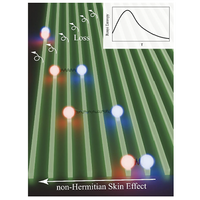
Quantum walks of correlated photons in non-Hermitian photonic lattices

Mingyuan Gao, Chong Sheng, Yule Zhao, Runqiu He, Liangliang Lu, Wei Chen, Kun Ding, Shining Zhu, and Hui Liu

Phys. Rev. B 110, 094308 (2024) - Published 9 September, 2024

Quantum walks have demonstrated capabilities that surpass classical approaches across a range of applications, including quantum computing, quantum simulation, quantum information processing, etc. Recently, quantum walks in non-Hermitian systems have garnered significant attention. The authors experimentally realize here a non-Hermitian photonic lattice on a silicon chip, observing asymmetric quantum walks of single photons induced by the non-Hermitian skin effect. Notably, they investigate the entanglement dynamics of correlated photons, revealing a suppression of entanglement in these non-Hermitian systems.

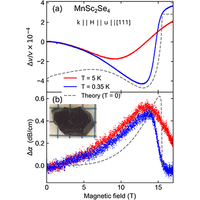
Magnon-phonon interactions in the spinel compound MnSc2Se4

J. Sourd, Y. Skourski, L. Prodan, V. Tsurkan, A. Miyata, J. Wosnitza, and S. Zherlitsyn

Phys. Rev. B 110, 094414 (2024) - Published 9 September, 2024

Magnetic frustration frequently leads to highly correlated spin fluctuations and novel ordered states. MnSc2X4 (X=S, Se) compounds are strongly frustrated magnets because of their diamond magnetic sublattice and the presence of competing ferromagnetic and antiferromagnetic interactions. From the ultrasound results for the longitudinal and transverse acoustic modes and a microscopic model based on linear spin-wave theory, the authors use here the magnon-phonon interactions to explore the quantum-spin fluctuations induced by the magnetic field in the frustrated magnet MnSc2Se4.

Disentangling spin excitation continua in classical and quantum magnets using two-dimensional nonlinear spectroscopy

Emily Z. Zhang, Ciarán Hickey, and Yong Baek Kim

Phys. Rev. B 110, 104415 (2024) - Published 9 September, 2024

Two-dimensional coherent spectroscopy (2DCS) has emerged as a powerful tool for probing nonlinear excitation dynamics in quantum magnets, overcoming the limitations of traditional inelastic neutron scattering as a linear probe. The authors use here classical molecular dynamics simulations to compare the 2DCS responses of various models with large Kitaev interactions, revealing distinct features between quantum spin liquids, classical spin liquids, and large unit cell magnetic orders. These findings underscore the potential for 2DCS in disentangling the complex dynamics of frustrated magnetic systems.

Hofstadter spectrum of Chern bands in twisted transition metal dichalcogenides

Kryštof Kolář, Kang Yang, Felix von Oppen, and Christophe Mora

Phys. Rev. B 110, 115114 (2024) - Published 9 September, 2024

Twisted transition metal dichalcogenide bilayers feature topological flat bands at zero magnetic field, allowing the experimental observation of integer and fractional quantum anomalous Hall effects. This work studies the band structures of these systems under externally applied magnetic fields, uncovering a fingerprint of the zero field topology in the Hofstadter spectra. In particular, it emerges that the Landau-level-like behavior at zero flux can be understood using the band structures at finite flux.

Scandium-based point defect in AlN for quantum information processing

Kamil Czelej, Mark E. Turiansky, Sai Mu, and Chris G. Van de Walle

Phys. Rev. B 110, 125116 (2024) - Published 9 September, 2024

Point defects in wide-band-gap semiconductors are leading qubit candidates for realizing quantum information processing. The authors investigate here the electronic structure and magneto-optical properties of scandium-related point defects in AlN, a material widely used in electronics and optoelectronics. The positively charged scandium−nitrogen-vacancy complex, which has a singlet ground state, exhibits a spin polarization cycle similar to the ST1 center in diamond, with long coherence time resulting from an electron spin being transferred to a nuclear spin, and large optically detected magnetic resonance readout contrast. These properties render the center promising for use as a quantum memory.

Charge separation and directed migration of photoelectrons in LiNbO3:Fe crystals after excitation by nanosecond laser pulses

F. S. Pilyak, E. I. Mareev, A. G. Kulikov, N. M. Asharchuk, N. N. Obydennov, Y. V. Pisarevsky, A. E. Blagov, F. V. Potemkin, and M. V. Kovalchuk

Phys. Rev. B 110, L100302 (2024) - Published 9 September, 2024

Under nanosecond laser excitation, time-delayed changes in the x-ray diffraction parameters of LiNbO3 and LiNbO3:Fe crystals are revealed. On-tip synchronization of 4-ns optical laser pulses with electron bunches in a synchrotron provides a subnanosecond time resolution for diffraction rocking curve (DRC) dynamics. The crystals exhibit a reversible center-of-mass shift and a decrease in DRC integral intensity with recovery in approximately 35 ns. This behavior indicates the formation and decay of a charged layer due to photoelectron migration.

Lieb-Schultz-Mattis theorem with long-range interactions

Ruochen Ma

Phys. Rev. B 110, 104412 (2024) - Published 5 September, 2024

The Lieb-Schultz-Mattis theorem states that a finite-range Hamiltonian in translationally and spin-rotationally invariant spin-1/2 systems cannot have a unique gapped ground state. Here, the author extends the theorem to include Hamiltonians with terms that act on a finite number of sites, but which may be far apart, provided that the interaction strength decays with distance faster than a certain power law. As the spatial dimension increases, the power law required to guarantee the result demands faster decay.

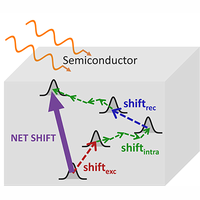
Anomalous shift and optical vorticity in the steady photovoltaic current

Penghao Zhu and A. Alexandradinata

Phys. Rev. B 110, 115108 (2024) - Published 5 September, 2024

Light can be rectified to a direct current by inducing real-space displacements (shifts) of quasiparticles. While the shift due to photon absorption (shiftexc) has received the prevailing attention, shifts due to intraband relaxation and interband recombination have been overlooked in recent decades. Here, the authors demonstrate that these shifts have a quantum geometric origin and can surpass shiftexc by orders of magnitude. The theory is applied to a case study of the three-dimensional semiconductor BiTeI.

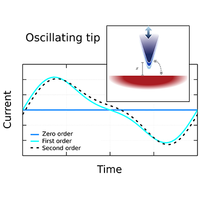
Second-order adiabatic expansion of heat and charge currents within the nonequilibrium Green's function approach

Sebastián E. Deghi and Raúl A. Bustos-Marún

Phys. Rev. B 110, 115409 (2024) - Published 5 September, 2024

Nanoscale heat management and energy conversion require precise control of energy flow. Adiabatic expansions are key tools for studying time-dependent devices such as quantum motors and pumps, but their complexity has limited research to first-order approximations. This work develops a novel theoretical framework to calculate second-order energy, heat, and charge currents, enabling a deeper understanding of quantum thermodynamics and the study of unexplored phenomena, such as second-order monoparametric pumping.

Giant effective magnetic moments of chiral phonons from orbit-lattice coupling

Swati Chaudhary, Dominik M. Juraschek, Martin Rodriguez-Vega, and Gregory A. Fiete

Phys. Rev. B 110, 094401 (2024) - Published 3 September, 2024

Circularly polarized lattice vibrations, also known as chiral phonons, carry angular momentum that leads to magnetic response. Recent experiments revealed responses far exceeding prior theoretical predictions within a classical framework. Here, the authors introduce a microscopic model which explains the large magnetic moments of chiral phonons in magnetic materials, resulting from orbit-lattice couplings that hybridize optical phonons with orbital electronic transitions.

Tunable inter-moiré physics in consecutively twisted trilayer graphene

Wei Ren, Konstantin Davydov, Ziyan Zhu, Jaden Ma, Kenji Watanabe, Takashi Taniguchi, Efthimios Kaxiras, Mitchell Luskin, and Ke Wang

Phys. Rev. B 110, 115404 (2024) - Published 3 September, 2024

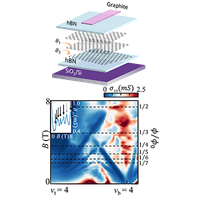
By electrostatically tuning the strength and hierarchy of the inter-moiré interaction in a consecutively twisted trilayer graphene (tTLG) device with two distinct moiré superlattices, the authors observe here a new type of inter-moiré Hofstadter butterfly. The periodical pattern of the butterfly corresponds to one of the intermediate quasicrystal length scales of the reconstructed moiré of moiré (MoM) superlattice. This study sheds new light on emergent physics from competing atomic orders in twisted multilayer 2D material platforms.

Phonon thermal Hall effect in nonmagnetic Y2Ti2O7

Rohit Sharma, Martin Valldor, and Thomas Lorenz

Phys. Rev. B 110, L100301 (2024) - Published 3 September, 2024

The authors report a field-linear thermal Hall effect in single-crystal samples of Y2Ti2O7, Dy2Ti2O7, and DyYTi2O7. The slopes κxy/B show temperature-dependent peaks that align with corresponding peaks in the respective longitudinal thermal conductivities κxx(T). This is consistent with a phononic thermal Hall effect, observed in a growing number of insulating materials. While the presence of magnetic Dy3+ ions significantly influences the longitudinal thermal conductivities, the thermal Hall ratios vary rather weakly between magnetic and nonmagnetic materials, suggesting a primarily nonmagnetic origin of the thermal Hall effect.

Engineering topology in graphene with chiral cavities

Ceren B. Dag and Vasil Rokaj

Phys. Rev. B 110, L121101 (2024) - Published 3 September, 2024

This work elucidates how the quantum nature of photons affects the topology of the correlated photoelectron hybrid wave function. The authors reveal a fundamental relation between the Berry phase and the properties of exchanged photons with matter at light-matter hybridization points in the Brillouin zone. Furthermore, the cavity-mediated electronic interactions in graphene valleys are analytically derived for the case where the material is subject to enhanced vacuum fluctuations in a chiral cavity.

Electron-phonon coupling and competing Kekulé orders in twisted bilayer graphene

Yves H. Kwan, Glenn Wagner, Nick Bultinck, Steven H. Simon, Erez Berg, and S. A. Parameswaran

Phys. Rev. B 110, 085160 (2024) - Published 29 August, 2024

Magic-angle twisted bilayer graphene has attracted significant attention for its strongly correlated phenomena. Recent scanning tunneling experiments have measured graphene-scale Kekulé charge ordering in some of the correlated insulators and nearby metallic phases. While most of these can be explained by the strain-induced incommensurate Kekulé spiral phase, the presence of Kekulé ordering in ultralow strain devices is unexpected within the existing theory. Using Hartree-Fock and strong-coupling calculations, the authors show that such observations can be rationalized by invoking electron-phonon coupling to zone-corner graphene phonons.

Sign In to Your Journals Account

Filter

Section

Filter

Article Lookup

Enter a citation