Highlights

Control of the third dimension in copper-based square-lattice antiferromagnets

Paul A. Goddard, John Singleton, Isabel Franke, Johannes S. Möller, Tom Lancaster, Andrew J. Steele, Craig V. Topping, Stephen J. Blundell, Francis L. Pratt, C. Baines, Jesper Bendix, Ross D. McDonald, Jamie Brambleby, Martin R. Lees, Saul H. Lapidus, Peter W. Stephens, Brendan W. Twamley, Marianne M. Conner, Kylee Funk, Jordan F. Corbey, Hope E. Tran, J. A. Schlueter, and Jamie L. Manson

Phys. Rev. B 93, 094430 (2016) - Published 25 March, 2016

Arranging S=12 spins into planes, chains, or other low-dimensional structures permits an experimental exploration of the effects of quantum fluctuations.In reality, such “arrangements” are often easier said than done. However, the use of molecular building blocks opens new possibilities for creating adjustable networks of spins. The authors of this paper have made and studied a series of two-dimensional square-lattice S=12 antiferromagnets, whose interlayer spacing is varied considerably by the substitution of increasingly bulky axial ligands. Using a variety of techniques, including low-temperature and high-magnetic-field magnetometry, muon-spin relaxation, and electron-spin resonance, they show that the increased layer spacing reduces the interlayer coupling, as desired. However, this also permits a small non-Heisenberg-like perturbation to emerge in the intralayer interaction. This stymies the order-suppressing effect of quantum fluctuations and promotes the development of a long-range ordered state at low-temperatures.

Addressing spin transitions on Bi209 donors in silicon using circularly polarized microwaves

T. Yasukawa, A. J. Sigillito, B. C. Rose, A. M. Tyryshkin, and S. A. Lyon

Phys. Rev. B 93, 121306(R) (2016) - Published 25 March, 2016

The authors demonstrate the selective addressability of two nearly degenerate clock transitions in bismuth-doped 28Si without tuning the magnetic field or microwave frequency. Rather, they vary the microwave polarization between clockwise and counterclockwise circular polarizations, which can be done rapidly. To generate the circularly polarized microwaves, a superconducting coplanar waveguide microresonator was oriented inside a tunable dielectric resonator such that their microwave magnetic fields can be superimposed to give any arbitrary microwave polarization. This work not only opens up additional states near the Si:Bi clock transition, which can be used for different quantum computing schemes, it also demonstrates a clever method for generating arbitrarily polarized microwaves.

Strong anisotropy in nearly ideal tetrahedral superconducting FeS single crystals

Christopher K. H. Borg, Xiuquan Zhou, Christopher Eckberg, Daniel J. Campbell, Shanta R. Saha, Johnpierre Paglione, and Efrain E. Rodriguez

Phys. Rev. B 93, 094522 (2016) - Published 24 March, 2016

Mackinawite, the tetragonal form of FeS, is the newest iron-based superconductor that generates excitement in the field, as it represents a direction away from the purely arsenide- and selenide-based systems. Other sulfides have been shown recently to have superconducting properties, including BaFe2S3 under high pressures and H2S under extreme pressures, but tetragonal FeS is perhaps the simplest sulfide to exhibit superconductivity behavior at ambient pressure. The authors of this work present a novel method for preparing high-quality single crystals of FeS and investigate its superconducting properties. They find that the electronic and magnetic properties of FeS are highly anisotropic. In particular, the level of anisotropy characterized by the ratio of the upper critical fields in two orthogonal directions was found to be the largest of all the iron-based superconductors.

Tuning orbital-selective correlations in superconducting Rb0.75Fe1.6Se2−zSz

Zhe Wang, V. Tsurkan, M. Schmidt, A. Loidl, and J. Deisenhofer

Phys. Rev. B 93, 104522 (2016) - Published 21 March, 2016

Robust tunability of magnetoresistance in half-Heusler RPtBi (R=Gd, Dy, Tm, and Lu) compounds

Eundeok Mun, Sergey L. Bud'ko, and Paul C. Canfield

Phys. Rev. B 93, 115134 (2016) - Published 21 March, 2016

The authors conduct a comprehensive study of thermodynamic and transport properties of RPtBi compounds (R=Gd, Dy, Tm, Lu). Temperature- and field-dependent resistivity measurements on high-quality single crystals reveal an unusually large nonsaturating magnetoresistance (MR) up to 300 K under a moderate magnetic field of 140 kOe. Analysis of the transport data in this series reveals that these rare-earth-based half-Heusler compounds provide opportunities to tune the MR effect through lanthanide contraction and to elucidate the mechanism of nontrivial MR.

Splitting between bright and dark excitons in transition metal dichalcogenide monolayers

J. P. Echeverry, B. Urbaszek, T. Amand, X. Marie, and I. C. Gerber

Phys. Rev. B 93, 121107(R) (2016) - Published 16 March, 2016

The optical properties of 2D semiconductors made of transition metal dichalcogenide monolayers, such as MoX2 and WX2 (X=S, Se), are dominated by excitons. The light emission yield for optoelectronics applications depends on whether the electron-hole transitions are optically allowed (bright) or forbidden (dark). No direct evidence of the energetic ordering of these exciton states is currently available. The authors here solve the Bethe-Salpeter equation with GW wave functions in order to determine the sign and amplitude of the splitting between bright and dark exciton states in the entire MoX2 and WX2 monolayer family. They also evaluate the influence of pin-orbit coupling on the optical spectra and clearly demonstrate the strong impact of the intravalley Coulomb exchange term on the dark-bright exciton splitting, an important ingredient for engineering optoelectronics and spintronics applications.

p-shell carrier assisted dynamic nuclear spin polarization in single quantum dots at zero external magnetic field

C. F. Fong, Y. Ota, E. Harbord, S. Iwamoto, and Y. Arakawa

Phys. Rev. B 93, 125306 (2016) - Published 16 March, 2016

The authors report the first observation of dynamic nuclear spin polarization (DNP) assisted by p-shell carriers in a single self-assembled InAs/GaAs quantum dot (QD) without application of an external magnetic field. With the ideal case of complete nuclear spin polarization remaining an elusive goal, research to improve the degree and efficiency of DNP or to narrow the nuclear field fluctuation distribution has been getting significant attention. The work here has implications that could lead to breaking the current limit of nuclear spin polarization. Furthering our understanding of the mesoscopic nuclear spins in a self-assembled QD is imperative in the pursuit of a stable nuclear spin environment for prolonging spin qubit coherence time.

Anisotropy, phonon modes, and free charge carrier parameters in monoclinic β-gallium oxide single crystals

M. Schubert, R. Korlacki, S. Knight, T. Hofmann, S. Schöche, V. Darakchieva, E. Janzén, B. Monemar, D. Gogova, Q.-T. Thieu, R. Togashi, H. Murakami, Y. Kumagai, K. Goto, A. Kuramata, S. Yamakoshi, and M. Higashiwaki

Phys. Rev. B 93, 125209 (2016) - Published 15 March, 2016

There is growing interest in low-symmetry metal oxides because of their potential use in high-power electronics capable to sustain very high voltages. Very little is known about their fundamental physical properties, such as transverse and longitudinal optical phonon modes, dielectric constants, and how free charge carriers couple with lattice vibrations. This lack of information is partially due to the complexity by which these properties intertwine due to the low symmetry crystal systems. Here, the authors describe a general pathway to the analysis of long-wavelength experiments for monoclinic and triclinic crystal systems, and they report for the first time a complete set of phonon modes for the monoclinic phase of gallium oxide. These parameters may arrive just in time to support computational optimization of charge and heat transport for device designs. The concept for analysis of long wavelength properties in monoclinic and triclinic crystal systems can help access a widely uncharted field in condensed matter physics.

Reorientation of quantum Hall stripes within a partially filled Landau level

Q. Shi, M. A. Zudov, J. D. Watson, G. C. Gardner, and M. J. Manfra

Phys. Rev. B 93, 121404(R) (2016) - Published 14 March, 2016

Nearly half-filled Landau levels of an ultrapure two-dimensional electron gas host electronic nematic phases, commonly known as quantum Hall stripes. While original orientation of stripes is determined by the native symmetry-breaking potential of yet mysterious origin, an in-plane magnetic field can easily rotate stripes by 90 degrees. Experiments by the Minnesota/Purdue group in this paper reveal that, under a modest in-plane field, the stripe orientation can also be changed simply by making the topmost Landau level less or more than half-full. This finding reflects the strong filling factor dependence of the native symmetry-breaking potential and might provide a critical piece of information needed to finally identify its origin.

Even-parity excited states of the acceptor boron in silicon revisited

K. J. Morse, R. J. S. Abraham, D. P. Franke, N. V. Abrosimov, and M. L. W. Thewalt

Phys. Rev. B 93, 125207 (2016) - Published 10 March, 2016

Recently, there has been interest in using the electronic states of the acceptor impurity boron in silicon as active laser media and as qubits for a semiconductor-based quantum information technology. Even though boron is the prototypical acceptor in silicon, the most thoroughly studied semiconductor, questions have recently been raised about the ordering of its excited states. Here, the authors use several experimental techniques, including Raman scattering spectroscopy, two-hole photoluminescence spectroscopy and temperature-dependent infrared absorption spectroscopy, to confirm the assignment of the deepest even-parity excited state and observe new spectral features associated with the even-parity states.

Calculations of planar defect energies in substitutional alloys using the special-quasirandom-structure approach

Maarten de Jong, Liang Qi, David L. Olmsted, Axel van de Walle, and Mark Asta

Phys. Rev. B 93, 094101 (2016) - Published 9 March, 2016

The process of deformation twinning, as schematically indicated in the figure, plays an important role in establishing the ductility of many engineering materials such as titanium and magnesium and some refractory alloys. By fine tuning alloy compositions, the tendency for twin formation can be controlled, which can lead to guidelines for design of advanced alloys for applications spanning biomedical, energy conversion, and high-temperature structural applications. This work presents a theoretical framework to computationally study the effect of alloying on planar defect energies and is expected to be a useful tool for computationally guided alloy design.

Two-dimensional optical nanovortices at visible light

Asaf David, Bergin Gjonaj, and Guy Bartal

Phys. Rev. B 93, 121302(R) (2016) - Published 9 March, 2016

This work demonstrates optical vortices of visible light confined to tens of nanometers. Confinement to such dimensions is considered beyond standard optical capabilities. The significant down-scaling is achieved by engineering a short-wavelength platform, consisting of high-index dielectrics and metals that support hybrid photonic-plasmonic modes of very short wavelength propagating in two dimensions. Additional confinement is achieved using super-oscillations between two guided modes in carefully designed waveguides. The authors utilize phase-resolved near-field measurements to demonstrate optical vortices with topological charge as high as five that are still smaller than the size of a diffraction-limited spot of the illuminating light. The size of the vortices may allow for future orbital-angular-momentum based light-matter interactions with quantum systems.

Influence of magnetic quantum confined Stark effect on the spin lifetime of indirect excitons

P. Andreakou, A. V. Mikhailov, S. Cronenberger, D. Scalbert, A. Nalitov, A. V. Kavokin, M. Nawrocki, L. V. Butov, K. L. Campman, A. C. Gossard, and M. Vladimirova

Phys. Rev. B 93, 115410 (2016) - Published 8 March, 2016

Exciton spin lifetimes in semiconductor quantum wells are usually short and decrease when magnetic field is applied in the plane of the structure. The authors here have discovered that in coupled semiconductor quantum wells, the spin lifetime dependence on magnetic field is quite unusual. It strongly increases at low magnetic fields, then saturates and decreases at higher fields. This behavior is a consequence of mixing between direct and indirect exciton states, via the magnetic quantum confined Stark effect. This effect can be a convenient tool for exciton spin engineering, and may complement the traditional quantum confined Stark effect in structures where inhomogeneity is important.

Nonlinear and time-resolved optical study of the 112-type iron-based superconductor parent Ca1−xLaxFeAs2 across its structural phase transition

J. W. Harter, H. Chu, S. Jiang, N. Ni, and D. Hsieh

Phys. Rev. B 93, 104506 (2016) - Published 7 March, 2016

The authors measure the nonlinear optical response of Ca1-xLaxFeAs2 to investigate the detailed structural symmetries of the recently discovered 112-type family of iron-based superconductors. They find a strong and anisotropic optical second-harmonic response, identifying C2 and C1 as the high- and low-temperature crystallographic point groups, respectively. This makes the 112-type materials the first known high-temperature superconductors to break structural inversion symmetry, allowing for the possible mixing of singlet and triplet Cooper pairs in the superconducting state. In addition, the intrinsically low crystallographic symmetry of this family of materials can potentially stabilize large single domains of the electronic nematic state ubiquitous in the iron-based superconductors without application of strain.

Magnon and electromagnon excitations in multiferroic DyFeO3

T. N. Stanislavchuk, Yazhong Wang, Y. Janssen, G. L. Carr, S.-W. Cheong, and A. A. Sirenko

Phys. Rev. B 93, 094403 (2016) - Published 4 March, 2016

The existence of electric dipole active magnetic excitations, or electromagnons, in rare-earth orthoferrites was theoretically predicted more than two decades ago but their experimental observation has not been confirmed until now. In this work, magnetic modes in DyFeO3 single crystals were studied at low temperatures and in external magnetic fields (H) by means of synchrotron radiation-based far-infrared spectroscopy. The authors report observation of two electromagnons, which appear in the spectra at 20 cm-1 and 50 cm-1 only below the magnetic ordering temperature TN of Dy3+ of 4.2 K. It is demonstrated that electromagnons provide a significant contribution to the static electric permittivity along the c axis εc(0). Both the frequency of the electromagnons and εc(0,H) manifest a strong hysteresis upon cycling of the external magnetic field.

Origin of the kink in the band dispersion of the ferromagnetic perovskite SrRuO3: Electron-phonon coupling

H. F. Yang, Z. T. Liu, C. C. Fan, Q. Yao, P. Xiang, K. L. Zhang, M. Y. Li, H. Li, J. S. Liu, D. W. Shen, and M. H. Jiang

Phys. Rev. B 93, 121102(R) (2016) - Published 4 March, 2016

SrRuO3, a conductive ferromagnetic oxide, is a simple, old, but still fascinating material. Previous angle-resolved photoemission (ARPES) studies found a kink structure in the electron bands, implying unusual electron dynamics. Here, the authors explore the origin of this kink in more detail via ARPES studies of high-quality films of varying thickness. The results indicate that the kink originates from the strong electron-phonon coupling rather than electron-magnon coupling.

Terahertz dynamics of lattice vibrations in Au/CdTe plasmonic crystals: Photoinduced segregation of Te and enhancement of optical response

Lars E. Kreilkamp, Ilya A. Akimov, Vladimir I. Belotelov, Boris A. Glavin, Leonid V. Litvin, Axel Rudzinski, Michael Kahl, Ralf Jede, Maciej Wiater, Tomasz Wojtowicz, Grzegorz Karczewski, Dmitri R. Yakovlev, and Manfred Bayer

Phys. Rev. B 93, 125404 (2016) - Published 3 March, 2016

Currently, there is great interest in the field of “active plasmonics”, where the properties of plasmonic excitations are tuned by an external stimulus. For practical applications, fast and efficient operation is required. Lattice vibrations in the plasmonic medium enable high-frequency modulation. So far, optical control by lattice vibrations was developed for the case of acoustic phonons only, which limits the operation frequencies to the gigaheretz range. Here, the authors go beyond this limit and demonstrate how optical phonons can be efficiently used for high-frequency terahertz modulation of light at the nanoscale. This is achieved by using novel hybrid plasmonic-semiconductor structures, wherein the modulation takes place in a nanometer-thin layer of elemental tellurium that forms under illumination by intense laser pulses.

Strong charge density wave fluctuation and sliding state in PdTeI with quasi-one-dimensional PdTe chains

Hechang Lei (雷和畅), Kai Liu (刘凯), Jun-ichi Yamaura, Sachiko Maki, Youichi Murakami, Zhong-Yi Lu (卢仲毅), and Hideo Hosono

Phys. Rev. B 93, 121101(R) (2016) - Published 1 March, 2016

In quasi-one-dimensional (quasi-1D) systems, because of the finite interchain coupling and fluctuation, the charge density wave (CDW) transition temperature TCDW is much lower than the mean-field-theory predicted TMF and the CDW fluctuation region exists between TCDW and TMF. Usually, CDW fluctuation has little effect on the electronic transport properties. Moreover, the CDW state is usually insensitive to magnetic field. The work done here on a PdTeI single crystal with quasi-1D PdTe chains shows that the above statements need to be revisited. It is found that the CDW fluctuation leads to a gradual decrease of carrier concentration before the static long-range CDW order occurs at T1~110 K. On the other hand, the pinning and sliding of CDW state are observed below T2~6 K. When such a low T2 is combined with the existence of multiple quasi-1D bands, PdTeI exhibits exotic crossover behavior from negative to huge positive magnetoresistance under magnetic field and field-induced localization. It indicates that the CDW fluctuation could have a remarkable influence on transport properties of CDW materials. Moreover, there is an interaction between the CDW state and magnetic field.

Frequency nonreciprocity of surface spin wave in permalloy thin films

O. Gladii, M. Haidar, Y. Henry, M. Kostylev, and M. Bailleul

Phys. Rev. B 93, 054430 (2016) - Published 29 February, 2016

One of the most peculiar properties of spin waves in magnetic thin films is nonreciprocal wave propagation, i.e., a dependence of the wave properties on the propagation direction. The authors study this effect in permalloy films of thickness varying from 6 to 40 nm and find that the difference in the frequencies can reach several tens of MHz. The authors show that this frequency nonreciprocity is mainly caused by asymmetric magnetic anisotropies at the two surfaces of the ferromagnetic film. This result is important to understand recent works on the interfacial Dzyaloshinskii-Moriya interaction, an unconventional chiral magnetic interaction that generates a similar frequency nonreciprocity. The authors demonstrate that while these contributions usually occur at the same time, the two can be distinguished via the difference in their dependence on the film thickness.

Magnetic rigid rotor in the quantum regime: Theoretical toolbox

Cosimo C. Rusconi and Oriol Romero-Isart

Phys. Rev. B 93, 054427 (2016) - Published 26 February, 2016

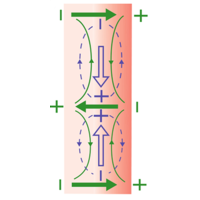
A theoretical framework is developed to study a magnetically levitated nanomagnet in the quantum regime. The system is very rich due to the interaction between its degrees of freedom: position, orientation, and magnetization. In particular, the Einstein–de Haas effect, namely the coupling between the magnetization and the angular momentum of the object, plays a dramatic role. This work sheds new light on one of the few unsolved problem in quantum mechanics, the rigid rotor with a spin. At the same time, it opens up the possibility to model the dynamics of a single magnetic domain nanoparticle in a magnetic trap, an interesting new scenario for future experiments.

Sign In to Your Journals Account

Filter

Section

Filter

Article Lookup

Enter a citation