Highlights

Fully relativistic multiple scattering calculations for general potentials

H. Ebert, J. Braun, D. Ködderitzsch, and S. Mankovsky

Phys. Rev. B 93, 075145 (2016) - Published 23 February, 2016

Spin-orbit coupling gives rise to many interesting phenomena in solids and at surfaces as, for example, the Rashba splitting or the occurrence of the topological surface states in topological insulators. In addition, many technically important properties such as transverse charge and spin conductivities and magnetodichroic phenomena occur due to spin-orbit coupling. To provide a flexible and accurate basis to deal with these phenomena, the authors worked out a coherent scheme to construct the electronic Green function within multiple scattering theory for a general potential. This includes, in particular, the case of a nonlocal and complex potential to account for correlation effects to set up, for example, the framework of dynamical mean field theory. Various technical issues such as the need to distinguish left- and right-handed solutions and their relation to symmetry are discussed in detail.

Spin injection and spin transport in paramagnetic insulators

Satoshi Okamoto

Phys. Rev. B 93, 064421 (2016) - Published 22 February, 2016

Insulators do not transport electrical currents. Recent experimental reports instead show magnetic insulators can conduct spin current in terms of magnons (excitations from magnetic ordering). The spin current could be converted to electric current by the inverse spin Hall effect. Thus, magnetic insulators may not be regarded as insulating. Recent experimental work has suggested such spin transport effects exist even above magnetic transition temperatures, challenging the conventional approach starting from magnetic ordering. In this paper, an alternative approach is taken to this problem using the Schwinger boson method. It is shown that spin pumping and spin current transport are possible at elevated temperatures, even higher than transition temperatures, suggesting that paramagnetic insulators could be used for spintronics applications.

Wiedemann-Franz law in the underdoped cuprate superconductor YBa2Cu3Oy

G. Grissonnanche, F. Laliberté, S. Dufour-Beauséjour, M. Matusiak, S. Badoux, F. F. Tafti, B. Michon, A. Riopel, O. Cyr-Choinière, J. C. Baglo, B. J. Ramshaw, R. Liang, D. A. Bonn, W. N. Hardy, S. Krämer, D. LeBoeuf, D. Graf, N. Doiron-Leyraud, and Louis Taillefer

Phys. Rev. B 93, 064513 (2016) - Published 22 February, 2016

The authors measured the electrical and thermal Hall conductivities of YBa2Cu3Oy in high magnetic fields to investigate the nature of the nonsuperconducting ground state in underdoped cuprates. They found that the Wiedemann-Franz law is obeyed in the T=0 limit as soon as the vortex solid melts at high field. This shows that there is no vortex liquid at T=0 and it imposes a clear constraint on the nature of excitations in the enigmatic pseudogap phase of cuprate superconductors.

Combined first-principles and model Hamiltonian study of the perovskite series RMnO3 (R=La,Pr,Nd,Sm,Eu, and Gd)

Roman Kováčik, Sowmya Sathyanarayana Murthy, Carmen E. Quiroga, Claude Ederer, and Cesare Franchini

Phys. Rev. B 93, 075139 (2016) - Published 19 February, 2016

Understanding the electronic and magnetic properties of 3d transition-metal perovskites is one of the central issues in solid state theory. The physics at play here, involving electron localization and spin/orbital-ordering, is not easily captured by standard theories. By applying a combination of a variety of first-principles methods (DFT, HSE, GW), effective electronic Hamiltonian and Heisenberg spin Hamiltonian the authors study the manganite family RMnO3 (R=La, Pr, Nd, Sm, Eu, and Gd) characterized by a progressive enhancement of the orthorhombic distortion which causes an A-type to E-type magnetic transition. This study provides a comprehensive and accurate account of the dependence of the electronic structure and Néel temperature on the structural distortions. In particular, it is shown that the Coulomb repulsion and the Jahn-Teller coupling strength remain unchanged along the series, and are not responsible for the observed transition. Rather, the orthorhombic distortions induces a progressive reduction of the nearest-neighbor hopping term (kinetic) and a concomitant attenuation of the FM in-plane exchange interaction: this induces a a gradual destabilization of the A-type AFM ordering. Monte Carlo simulations predict Néel temperatures in very good agreement with experiment.

All-in-all-out magnetic domain wall conduction in a pyrochlore iridate heterointerface

T. C. Fujita, M. Uchida, Y. Kozuka, W. Sano, A. Tsukazaki, T. Arima, and M. Kawasaki

Phys. Rev. B 93, 064419 (2016) - Published 17 February, 2016

Metallic surface states emerging at all-in-all-out type antiferromagnetic domain walls in bulk pyrochlore iridates have recently been observed. Such bulk crystals, however, inevitably contain huge amounts of the domains at random, and so it is quite challenging to investigate and utilize these novel surface conducting states. The results presented here are for a pyrochlore iridate heterointerface, which is realized by an advanced thin film growth technique. The authors successfully demonstrate the detection and control of a surface state linked to the antiferromagnetic domain wall, guiding further efforts for utilizing such states for surface transport in electronics and spintronics applications as well as for investigating the emergent topological transport at the interface.

Time-dependent many-body treatment of electron-boson dynamics: Application to plasmon-accompanied photoemission

M. Schüler, J. Berakdar, and Y. Pavlyukh

Phys. Rev. B 93, 054303 (2016) - Published 16 February, 2016

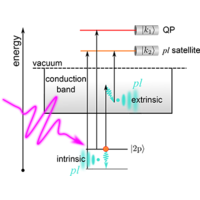
The authors present a time-dependent nonequilibrium Green’s function formalism for electrons interacting with bosonic excitation such as phonons, photons, or plasmons. In this scheme, the equations of motion for the Green’s functions – the Kadanoff-Baym equations – of electrons and bosons are treated on equal footing and therefore require substantial modifications as compared to the usual two-times propagation scheme. Motivated by recent experiments, the authors apply their formalism to time-resolved photoemission from bulk magnesium core states, a prominent system where the excitation of collective electronic motion in the conduction band leads to the characteristic plasmon satellites in the spectrum. The two corresponding pathways for this electron energy-loss effect – intrinsic or extrinsic losses – are usually hard to disentangle due to their quantum interference. The authors demonstrate how the loss channels manifest in a time-dependent picture and discuss how to discern them in the time domain.

Transport in inhomogeneous quantum critical fluids and in the Dirac fluid in graphene

Andrew Lucas, Jesse Crossno, Kin Chung Fong, Philip Kim, and Subir Sachdev

Phys. Rev. B 93, 075426 (2016) - Published 16 February, 2016

The possibility of observing a strongly interacting quantum critical fluid of electrons in a metal has intrigued physicists for a long time. The authors combine insight from string theory and condensed matter physics to develop a hydrodynamic theory of the thermal and electrical conductivity of electron fluids. They use this formalism to explain experimental data from a novel state of Dirac electron fluid in clean samples of graphene near the charge neutrality point, and observe substantially improved quantitative agreement over the existing hydrodynamic theories. This study marks the first quantitative connection between these exotic models of transport and experimentally realizable condensed matter systems.

Dimensionality and irreversibility of field-induced transitions in SrDy2O4

C. Bidaud, O. Simard, G. Quirion, B. Prévost, S. Daneau, A. D. Bianchi, H. A. Dabkowska, and J. A. Quilliam

Phys. Rev. B 93, 060404(R) (2016) - Published 12 February, 2016

In this work, the ultrasound velocity is measured in the frustrated spin liquid material SrDy2O4 as a function of magnetic field and temperature. Experimental data reveals a complex phase diagram that depends heavily on the direction of the magnetic field. Whereas a dome for the three-dimensional long-range magnetic order is induced for magnetic field applied along the b axis, no finite temperature magnetic order is observed for other field directions. When passing between the spin liquid and magnetically ordered phase, significant irreversibility is observed. “Solidification” of the spin liquid (through applied field) proceeds through three distinct steps while melting of the magnetic order into the spin-liquid phase is a more continuous process.

Terahertz ratchet effects in graphene with a lateral superlattice

P. Olbrich, J. Kamann, M. König, J. Munzert, L. Tutsch, J. Eroms, D. Weiss, Ming-Hao Liu (劉明豪), L. E. Golub, E. L. Ivchenko, V. V. Popov, D. V. Fateev, K. V. Mashinsky, F. Fromm, Th. Seyller, and S. D. Ganichev

Phys. Rev. B 93, 075422 (2016) - Published 12 February, 2016

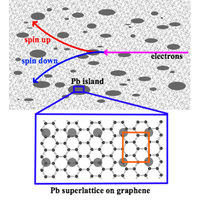
This paper reports on the experimental realization of ratchet effects in graphene, excited by alternating electric fields of terahertz frequency range. Such ratchet effects were previously seen in semiconductors. Two types of graphene lateral superlattices are studied: epitaxially grown and exfoliated graphene with an asymmetric lateral periodic potential. Laser radiation shining on the modulated devices results in the excitation of a direct electric current being sensitive to the radiation’s polarization state. This ratchet current consists of a few linearly independent contributions including the Seebeck thermoratchet effect as well as “linear” and “circular” ratchets. The results are analyzed with a theoretical model. Further development of the theory is required for a quantitative analysis.

Extrinsic spin Hall effect from anisotropic Rashba spin-orbit coupling in graphene

H.-Y. Yang, Chunli Huang, H. Ochoa, and M. A. Cazalilla

Phys. Rev. B 93, 085418 (2016) - Published 11 February, 2016

The study of the spin Hall effect in graphene is an active field of research, but its experimental realization is proven to be difficult due to the inherently weak intrinsic spin-orbit interaction. Thus, one needs to rely on extrinsic spin-orbit scattering to be able to probe this effect in graphene. The authors of this paper have reported some progress in this direction. They predict that adatoms on graphene can induce an anisotropic Rashba spin-orbit coupling, and the degree of anisotropy has a noticeable effect on the energy dependence of the spin Hall angle.

What is the Brillouin zone of an anisotropic photonic crystal?

P. Sivarajah, A. A. Maznev, B. K. Ofori-Okai, and K. A. Nelson

Phys. Rev. B 93, 054204 (2016) - Published 9 February, 2016

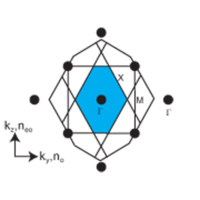
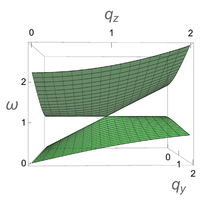
The authors discuss the concept of the Brillouin zone, central to many fields of condensed matter physics. They challenge the universality of defining the Brillouin zone as a Wigner-Seitz cell of the reciprocal lattice. Experimental measurements of terahertz phonon-polariton dispersion in a photonic crystal fabricated in a thin slab of an anisotropic material (lithium niobate) demonstrate that the lowest band gap does not form at the boundary of the conventionally defined Brillouin zone, in contrast to a similar photonic crystal fabricated in a nearly isotropic lithium tantalate. The analysis motivated by this unexpected experimental result shows that in an anisotropic photonic crystal the Wigner-Seitz cell of the reciprocal lattice is no longer bounded by Bragg planes and, consequently, does not conform to the original definition of the Brillouin zone. The authors construct an alternative Brillouin zone bounded by the Bragg planes and show its utility in analyzing the dispersion bands of anisotropic photonic crystals.

Nodeless superconductivity in noncentrosymmetric PbTaSe2 single crystals

G. M. Pang, M. Smidman, L. X. Zhao, Y. F. Wang, Z. F. Weng, L. Q. Che, Y. Chen, X. Lu, G. F. Chen, and H. Q. Yuan

Phys. Rev. B 93, 060506(R) (2016) - Published 5 February, 2016

Noncentrosymmetric superconductors such as PbTaSe2 have been the focus of intensive study due to their unconventional properties and they have also recently been proposed as candidates for topological superconductivity and Majorana fermions. To test this, it is important to characterize the superconducting order parameter. The authors here report precise temperature-dependent measurements of the London penetration depth of PbTaSe2. The results indicate fully gapped s-wave BCS-type superconductivity, which is rather puzzling. This compound is known to have a topologically nontrivial band structure and a strong antisymmetric spin-orbit coupling, which, in 2D superconductors, is expected to produce an order parameter with mixed spin singlet and spin triplet components.

Half-filled Landau level, topological insulator surfaces, and three-dimensional quantum spin liquids

Chong Wang and T. Senthil

Phys. Rev. B 93, 085110 (2016) - Published 5 February, 2016

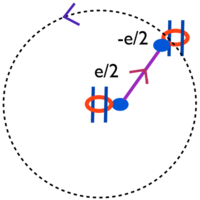
The half-filled Landau level can support a plethora of exotic strongly correlated states. The authors interconnect a recently proposed Dirac particle theory of the half-filled Landau level with the physics of spin liquids and the surface states of topological insulators. Additionally, they suggest that composite fermions can be viewed as dipolar bound states of charge/vortex composites and show that their transport properties violate the conventional Wiedemann-Franz law.

Variational wave functions for the S=12 Heisenberg model on the anisotropic triangular lattice: Spin liquids and spiral orders

Elaheh Ghorbani, Luca F. Tocchio, and Federico Becca

Phys. Rev. B 93, 085111 (2016) - Published 5 February, 2016

The fate of magnetic ordering in frustrated systems with competing magnetic interactions is a long-standing question in the field of strong electronic correlation. Frustration can lead either to exotic phases that do not order down to zero temperature, the so-called spin liquids, or to spiral magnetism. In this paper, the authors consider a model for spins on the anisotropic triangular lattice, by using variational Monte Carlo, where they treat on the same ground spin liquids and magnetic states with spiral order. Moreover, they perform a systematic analysis of the spin-liquid states that can be constructed on the anisotropic triangular lattice by means of the fermionic projective symmetry group classification. The results allow for determining a complete phase diagram, as a function of the frustration ratio, encompassing different physical behaviors. They are relevant for the description of materials that are characterized by stacked triangular layers, such as charge-transfer salts and the compounds Cs2CuCl4 and Cs2CuBr4.

Magnetotransport phenomena related to the chiral anomaly in Weyl semimetals

B. Z. Spivak and A. V. Andreev

Phys. Rev. B 93, 085107 (2016) - Published 4 February, 2016

The authors study the contribution of the chiral anomaly to various magnetotransport coefficients in Weyl semimetals. They do so using quasiclassical transport theory taking into account Berry curvature. In this framework, the authors compute the longitudinal conductivity, thermal conductivity, the spectrum of polaritons, and absorption coefficient for sound waves.

Inverse design of disordered stealthy hyperuniform spin chains

Eli Chertkov, Robert A. DiStasio, Jr., Ge Zhang, Roberto Car, and Salvatore Torquato

Phys. Rev. B 93, 064201 (2016) - Published 3 February, 2016

It has recently been shown that disordered hyperuniform many-particle systems represent new distinguishable states of amorphous matter that are poised between a crystal and a liquid are are endowed with novel physical and thermodynamic properties. Such systems have shown to exist as ground states, i.e., at a temperature of absolute zero. Such “stealthy” and hyperuniform states are unique in that they are transparent to radiation for a range of wavelengths. In this paper, we ask whether Ising models of magnets, called spin chains in one dimension, can possess spin interactions that enable their ground states to be disordered, stealthy, and hyperuniform. Using inverse statistical-mechanical theoretical methods, we do demonstrate the existence of such states, which should be experimentally realizable.

Gapless quantum excitations from an icelike splayed ferromagnetic ground state in stoichiometric Yb2Ti2O7

J. Gaudet, K. A. Ross, E. Kermarrec, N. P. Butch, G. Ehlers, H. A. Dabkowska, and B. D. Gaulin

Phys. Rev. B 93, 064406 (2016) - Published 3 February, 2016

The authors report elastic and inelastic neutron scattering results on the quantum spin ice candidate Yb2Ti2O7. The experiments were performed on a well characterized stoichiometric powder, which displays a large and sharp heat capacity anomaly at 0.26 K. The authors show that, at low temperature, Yb2Ti2O7 exhibits long-range order with an ice-like ferromagnetic structure. However, the onset temperature is much higher than the temperature of the heat capacity anomaly. The spin excitations were found to be gapless on an energy scale < 0.09 meV and organized into a continuum of scattering with vestiges of highly overdamped ferromagnetic spin waves. The same spin dynamics is also observed for the single crystals, which indicates that those spin excitations are robust upon weak disorder.

Scattering matrix invariants of Floquet topological insulators

I. C. Fulga and M. Maksymenko

Phys. Rev. B 93, 075405 (2016) - Published 2 February, 2016

The authors show that static and Floquet topological insulators can be described (classified) by a unified-framework scattering theory, even when bulk Floquet bands fail to capture the topological nature of a phase. The paper introduces and characterizes for the first time invariants of weak topological Floquet insulators in two dimensions. This should help motivate research into Floquet weak topological insulators and Floquet topological crystalline insulators, fields which are largely unexplored.

ν=12 Landau level: Half-empty versus half-full

Ganpathy Murthy and R. Shankar

Phys. Rev. B 93, 085405 (2016) - Published 2 February, 2016

Inspired by the recently proposed Dirac composite fermion picture for half-filled Landau level the authors extend previously developed Hamiltonian formalism to incorporate considerations of particle-hole symmetry. They show that the magnetic translation algebra can be represented in the enlarged space of Dirac fermions, with particle-hole symmetry manifestly defined. A Hartree-Fock approximation then leads to a composite Fermi liquid of Dirac fermions.

Hubbard-like Hamiltonians for interacting electrons in s,p, and d orbitals

M. E. A. Coury, S. L. Dudarev, W. M. C. Foulkes, A. P. Horsfield, Pui-Wai Ma, and J. S. Spencer

Phys. Rev. B 93, 075101 (2016) - Published 1 February, 2016

The multiorbital Hubbard model Hamiltonian is relevant to a host of strongly correlated materials, but there is no consistently accepted form for it. This manuscript derives the most general model Hamiltonian with s, p, and d-shell electrons and also identifies new terms describing pair hopping and quadrupole effects that were missed previously.

Sign In to Your Journals Account

Filter

Section

Filter

Article Lookup

Enter a citation