Highlights

Emergence of integer quantum Hall effect from chaos

Chushun Tian, Yu Chen, and Jiao Wang

Phys. Rev. B 93, 075403 (2016) - Published 1 February, 2016

Quantum kicked rotor (QKR) is a standard model of chaos that describes a particle moving on a ring under time-modulated kicking. This paper demonstrates that a large class of spin-12 quasiperiodic QKR models exhibits a dynamical analog of the integer quantum Hall effect, which is usually associated with two-dimensional electronic systems. Additionally, the authors reveal that the topological theta angle, a fundamental concept in quantum chromodynamics, can emerge in QKR models.

Classification of gapless Z2 spin liquids in three-dimensional Kitaev models

Kevin O'Brien, Maria Hermanns, and Simon Trebst

Phys. Rev. B 93, 085101 (2016) - Published 1 February, 2016

In quantum magnetism, Kitaev’s honeycomb model is well known for its gapped and gapless spin liquid ground states in which the elementary spin degrees of freedom fractionalize into Majorana fermions and a Z2 gauge field. In this paper, the authors discuss the gapless spin liquids arising in three-dimensional Kitaev models and show that the gapless Majorana fermions form metallic states which, depending on the underlying lattice structure, exhibit Fermi surfaces, nodal lines, or Weyl points.

Intervalley scattering in hexagonal boron nitride

G. Cassabois, P. Valvin, and B. Gil

Phys. Rev. B 93, 035207 (2016) - Published 28 January, 2016

The authors have conducted an experimental study of hexagonal boron nitride using steady-state and time-resolved photoluminescence. The assignment of previously observed lines of unknown origin is made convincingly to indirect excitons assisted by acoustic and optical phonons and to defect-assisted transitions. This is further evidence for h-BN being an indirect band-gap semiconductor.

Fine structure of cyclotron resonance in a two-dimensional electron system

V. M. Muravev, I. V. Andreev, S. I. Gubarev, V. N. Belyanin, and I. V. Kukushkin

Phys. Rev. B 93, 041110(R) (2016) - Published 28 January, 2016

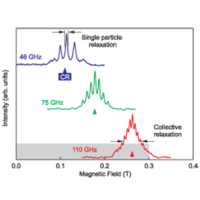
The authors discuss magnetoplasma and cyclotron resonances under microwave excitation in a high quality, GaAs/AlGaAs two-dimensional electron system. They observe that the cyclotron resonance originates as a pure resonance that does not hybridize with dimensional magnetoplasma excitations. The magnetoplasma resonances form a fine structure of the cyclotron resonance.

Superconductivity in metastable phases of phosphorus-hydride compounds under high pressure

José A. Flores-Livas, Maximilian Amsler, Christoph Heil, Antonio Sanna, Lilia Boeri, Gianni Profeta, Chris Wolverton, Stefan Goedecker, and E. K. U. Gross

Phys. Rev. B 93, 020508(R) (2016) - Published 26 January, 2016

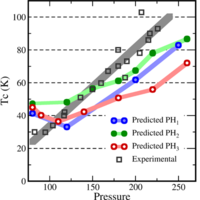
Reports on sulfur hydride attaining metallicity under pressure and exhibiting superconductivity at temperatures as high as 200 K have spurred an intense search for another room-temperature superconductor among hydrogen-rich compounds. Recently, compressed phosphorus hydride (phosphine) was reported to metallize at pressures above 45 GPa, reaching a superconducting transition temperature (Tc) of 100 K at 200 GPa. However, neither the exact composition nor the crystal structure of the superconducting phase have been conclusively determined. This work reports an extensive study of the phase diagram of PHn (n=1–6) by means of \textit{ab initio} crystal structure predictions using the minima hopping method. The results do not support the existence of thermodynamically stable PHn compounds, which exhibit a tendency for elemental decomposition at high pressure even when vibrational contributions to the free energies are taken into account. Although the lowest energy phases of PH1,2,3 display Tc’s comparable to experiments, it remains uncertain if the measured values of Tc can be fully attributed to a phase-pure compound of PHn.

X-ray absorption spectroscopy in electrical fields: An element-selective probe of atomic polarization

V. Ney, F. Wilhelm, K. Ollefs, A. Rogalev, and A. Ney

Phys. Rev. B 93, 035136 (2016) - Published 26 January, 2016

The authors report x-ray absorption spectroscopy of samples in large electrical fields. The observed effect is linear in electric field and only observable in polar materials. It can be thought of as the x-ray analogue of the linear Stark effect. It may open up a new area of research by studying electrical polarization with element specificity for multiconstituent functional materials

Effect of magnetism on lattice dynamics in SrFe2As2 using high-resolution inelastic x-ray scattering

N. Murai, T. Fukuda, T. Kobayashi, M. Nakajima, H. Uchiyama, D. Ishikawa, S. Tsutsui, H. Nakamura, M. Machida, S. Miyasaka, S. Tajima, and A. Q. R. Baron

Phys. Rev. B 93, 020301(R) (2016) - Published 25 January, 2016

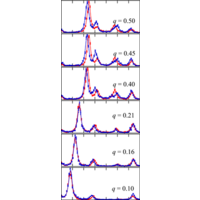
Phonons in iron pnictide materials were predicted to show large effects from magnetic ordering that had not been observed, and, indeed, the overall phonon dispersion has been in poor agreement with \textit{ab initio} calculations. By carefully detwinning a sample of SrFe2As2, clear phonon splitting was observed below TN, allowing the authors to suggest an improved model for the phonon response for both the antiferromagnetically ordered phase below TN and the paramagnetic phase above TN.

Hubbard-U corrected Hamiltonians for non-self-consistent random-phase approximation total-energy calculations: A study of ZnS, TiO2, and NiO

Christopher E. Patrick and Kristian S. Thygesen

Phys. Rev. B 93, 035133 (2016) - Published 25 January, 2016

The authors report a first-principles study of the structural and electronic properties of the transition-metal-based compounds TiO2, ZnS, and NiO. Total energies (and resulting quantities) are calculated within the random-phase approximation (RPA) total-energy functional, which is being discussed actively in the DFT community. The effect of Hubbard U corrections are shown. These calculations should stimulate more study and use of the RPA functional.

Anisotropy of electron and hole g tensors of quantum dots: An intuitive picture based on spin-correlated orbital currents

J. van Bree, A. Yu. Silov, M. L. van Maasakkers, C. E. Pryor, M. E. Flatté, and P. M. Koenraad

Phys. Rev. B 93, 035311 (2016) - Published 25 January, 2016

The g tensor, which describes the interaction energy of the spin with an external magnetic field, plays an essential role in controlling and manipulating single spins in semiconductor quantum dots. Spin-correlated orbital currents can strongly affect the g tensor. This paper investigates theoretically and experimentally how these currents depend on the shape of quantum dots and how they affect the anisotropy of the electron g tensor. It is found that the spin-correlated orbital currents form a simple current loop perpendicular to the magnetic moment’s orientation, and are therefore directly sensitive to the shape of the nanostructure. This simple and intuitive picture is validated by a systematic experimental magnetoluminescence study of the size dependence of the separate electron and hole g tensors of InAs/InP quantum dots.

Absence of many-body mobility edges

Wojciech De Roeck, Francois Huveneers, Markus Müller, and Mauro Schiulaz

Phys. Rev. B 93, 014203 (2016) - Published 22 January, 2016

Phenomenon of many-body localization violates one of the basic rules of statistical mechanics: It states that certain ‘localized’ macroscopic systems cannot act as a bath for themselves and hence do not relax to equilibrium. The authors of this paper find that, whenever a system is not localized at all thermodynamic parameters (particle density, energy density), then local fluctuations into the non-localized phase, dubbed bubbles, can slowly destroy localization globally. This result provides a rather strong restriction on the existence of many-body localized phases and runs contrary to the idea that there could be genuine localization transitions as a function of temperature.

Quantum heat engine based on photon-assisted Cooper pair tunneling

Patrick P. Hofer, J.-R. Souquet, and A. A. Clerk

Phys. Rev. B 93, 041418(R) (2016) - Published 22 January, 2016

A voltage biased Josephson junction coupled to two microwave cavities which are in turn coupled to two “hot” and “cold” thermal environments, constitutes the proposal for the first thermoelectric heat engine where the heat current is completely separated from the electronic degrees of freedom.

Magnetic field dependence of the magnon spin diffusion length in the magnetic insulator yttrium iron garnet

L. J. Cornelissen and B. J. van Wees

Phys. Rev. B 93, 020403(R) (2016) - Published 19 January, 2016

Diffusive transport of magnons in YIG has recently attracted a lot of research attention, particularly in the context of the spin Seebeck effect and the new field of magnon spintronics. Here, the authors perform a systematic study of the influence of an external magnetic field on the magnon spin diffusion length, making use of a nonlocal measurement scheme that allows for direct extraction of this length scale. The results demonstrate a new mechanism for the manipulation of diffusive magnonic spin currents.

Origin of negative density and modulus in acoustic metamaterials

Sam H. Lee and Oliver B. Wright

Phys. Rev. B 93, 024302 (2016) - Published 14 January, 2016

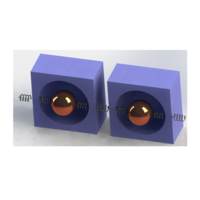
This paper provides a warning to the acoustic metamaterials community to be careful not to mistake the sign or value of the effective parameters, i.e. the density and modulus, of acoustic metamaterials for want of an overall picture of the physics involved. The authors here provide a new picture of the functioning of acoustic metamaterials based on hidden forces and hidden sources of volume. The new ansatz is tested on some established acoustic metamaterials with elements based on membranes, Helmholtz resonators, springs, and masses. It should provide the basis for a clearer vision of acoustic metamaterials and a faster route to real-world applications.

Klein tunneling and supercollimation of pseudospin-1 electromagnetic waves

A. Fang, Z. Q. Zhang, Steven G. Louie, and C. T. Chan

Phys. Rev. B 93, 035422 (2016) - Published 14 January, 2016

Massless Dirac fermions with a pseudospin of 12 are tied to many intriguing properties of graphene. Previous studies have discussed the possibility of constructing a higher pseudospin system in artificial lattices of ultracold atoms, which can also support equally interesting physical properties. The authors of this paper demonstrate that photon transport in certain photonic crystals corresponds to a pseudospin-1 system. This is a significant development because, contrary to ultracold systems, photonic crystals offer a better opportunity to study novel pseudospin-1 physics in experimentally realizable materials and at room temperature.

Origin of inverse Rashba-Edelstein effect detected at the Cu/Bi interface using lateral spin valves

Miren Isasa, M. Carmen Martínez-Velarte, Estitxu Villamor, César Magén, Luis Morellón, José M. De Teresa, M. Ricardo Ibarra, Giovanni Vignale, Evgueni V. Chulkov, Eugene E. Krasovskii, Luis E. Hueso, and Fèlix Casanova

Phys. Rev. B 93, 014420 (2016) - Published 13 January, 2016

Spin-orbitronics, which exploits the coupling between the spin and the orbital momentum of electrons, relies on the possibility to electrically create and detect pure spin currents without need of ferromagnetic elements. An efficient way to achieve this spin-to-charge conversion (and vice versa) is expected by exploiting the Rashba-Edelstein effect. This phenomenon is related to the well-known spin Hall effect, but in the former, the spin-to-charge current conversion occurs at the interface of materials with a strong spin splitting of the surface states, instead of the bulk. This paper reports an observation of the inverse Rashba-Edelstein effect, i.e., conversion of a spin current into a charge current, at a bismuth/copper interface, by using spin absorption with lateral spin valves. The induced charge current changes sign with temperature, a phenomenon that the authors can explain theoretically owing to the complex spin structure and dispersion of the surface states at the Fermi energy.

Existence of featureless paramagnets on the square and the honeycomb lattices in 2+1 dimensions

Chao-Ming Jian and Michael Zaletel

Phys. Rev. B 93, 035114 (2016) - Published 13 January, 2016

In quantum magnetism, peculiar features of quantum spin system sometimes forbid the existence of gapped “featureless” paramagnets which are fully symmetric and unfractionalized. The celebrated Lieb-Schultz-Mattis theorem is an example of such a constraint, but it is not known what the most general restriction might be. For given lattice structure and symmetries, it is an interesting question whether a featureless paramagnetic phase exists. In this paper, the authors focus on the existence of such featureless paramagnets on the square and honeycomb lattices and, on the basis of analytical and numerical arguments, propose the corresponding wave functions for several such models. The existence of these nontrivial states not only offers a proof of principle, but also suggests an exotic field theory description when these states are brought to the vicinity of a second-order phase transition.

Correlated Cooper pair transport and microwave photon emission in the dynamical Coulomb blockade

Juha Leppäkangas, Mikael Fogelström, Michael Marthaler, and Göran Johansson

Phys. Rev. B 93, 014506 (2016) - Published 11 January, 2016

Using a perturbation expansion to the fourth order in a junction critical current, the authors study the generation of nonclassical microwave radiation by inelastic Cooper pair tunneling in a small voltage-biased Josephson junction connected to a superconducting transmission line. The second order in the tunneling current only allows consideration of independent events. Pushing the calculation to the fourth order allows capture of the temporal correlations in the charge transport and their connection to the ones in the emitted electromagnetic radiation.

Dissociation products and structures of solid H2S at strong compression

Yinwei Li, Lin Wang, Hanyu Liu, Yunwei Zhang, Jian Hao, Chris J. Pickard, Joseph R. Nelson, Richard J. Needs, Wentao Li, Yanwei Huang, Ion Errea, Matteo Calandra, Francesco Mauri, and Yanming Ma

Phys. Rev. B 93, 020103(R) (2016) - Published 11 January, 2016

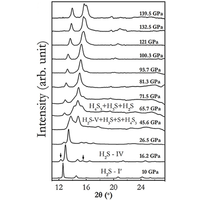
Hydrogen sulfides have recently received a great deal of interest due to the record high-Tc of up to 203 K observed on strong compression of H2S . In this paper, a joint theoretical and experimental study is presented to characterize the dissociation products of compressed H2S , which is essential to understand its complex superconducting states. Based on the results here, the authors found H2S partially decomposes into S + H3S + H4S3 above 27 GPa, and H4S3 emerges as the major component at around 66 GPa. Interestingly, x-ray diffraction (XRD) experiments observed a small fraction of H3S and residual H2S at least up to 140 GPa, which are believed to be responsible for the two superconducting states observed in experiments. This paper provides the first XRD evidence on the existence of H3S at high pressure from the decomposition of H2S.

Antiferromagnetic order in single crystals of the S=2 quasi-one-dimensional chain MnCl3(bpy)

Shin-ichi Shinozaki, Akira Okutani, Daichi Yoshizawa, Takanori Kida, Tetsuya Takeuchi, Shoji Yamamoto, Olivia N. Risset, Daniel R. Talham, Mark W. Meisel, and Masayuki Hagiwara

Phys. Rev. B 93, 014407 (2016) - Published 8 January, 2016

The prevailing theme of “form follows function” requires structural coherence over sufficient distances to allow subtle magnetic coupling to be revealed in high magnetic field studies at low temperatures. Single-crystal studies of the S=2 quasi-one dimensional chain material MnCl3(2,2’-bipridine) allows the long-range order to be identified, while also revealing the presence of an energy gap at the spin-flop transition field, whose nature remains intriguing.

On the unphysical solutions of the Kadanoff-Baym equations in linear response: Correlation-induced homogeneous density-distribution and attractors

Adrian Stan

Phys. Rev. B 93, 041103(R) (2016) - Published 8 January, 2016

In modern quantum many-body physics, the Kadanoff-Baym equations have become a crucial component in the treatment of strongly and weakly correlated systems far from equilibrium. From the one-particle Green function G(t,t′), they allow for the calculation of time-dependent expectation values of all one-particle observables and the total energy. In this work, for isolated Coulomb systems, the numerical behavior of the Kadanoff-Baym equations is investigated. The electron density dynamics are damped to an unphysical homogeneous density distribution, across both the linear and nonlinear response regimes. Unphysical features are shown to exist for Φ-derivable self-energy approximations, such as Hartree-Fock, second-Born, or GW, in Hubbard and Coulomb systems, irrespective of interaction strength. With this degree of universality, these findings are pertinent to all two-time formalisms, and suggest the need for a different approach to the dynamics of quantum systems.

Sign In to Your Journals Account

Filter

Section

Filter

Article Lookup

Enter a citation