Highlights

Interaction correction to the magnetoelectric polarizability of Z2 topological insulators

Karin Everschor-Sitte, Matthias Sitte, and Allan H. MacDonald

Phys. Rev. B 92, 245118 (2015) - Published 10 December, 2015

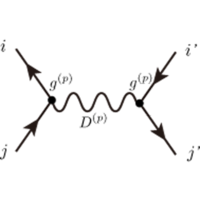
It is usually assumed that the magnetoelectric polarizability, which belongs to a broad family of topological magnetoelectric effects, is exactly quantized based on general topological arguments. By evaluating the Hall conductivity of surface states described by a massive Dirac model, the authors show that there is in fact a nonuniversal interaction correction to the quantized magnetoelectric coefficient of thin films formed from topological insulators.

Spin-Hall magnetoresistance and spin Seebeck effect in spin-spiral and paramagnetic phases of multiferroic CoCr2O4 films

A. Aqeel, N. Vlietstra, J. A. Heuver, G. E. W. Bauer, B. Noheda, B. J. van Wees, and T. T. M. Palstra

Phys. Rev. B 92, 224410 (2015) - Published 8 December, 2015

Multiferroic films have gained a large amount of attention due to the possible applications in spintronics. In this report, the authors provide a systematic study of the spin-Hall magnetoresistance and spin Seebeck effect in CoCr2O4 (CCO) thin films with platinum contacts. Larger responses of the spin-Hall magnetoresistance and spin Seebeck effect at the interface, as opposed to bulk measurements, indicate a greater interaction between interfacial magnetic moments. This interface coupling manifests magnetic- phase-dependent spin transport.

Theoretical and experimental study of the core structure and mobility of dislocations and their influence on the ferroelectric polarization in perovskite KNbO3

P. Hirel, A. F. Mark, M. Castillo-Rodriguez, W. Sigle, M. Mrovec, and C. Elsässer

Phys. Rev. B 92, 214101 (2015) - Published 7 December, 2015

A collaboration of researchers from France, Germany, and Spain present a comprehensive study of the structure and motion of dislocations in a technologically important ferroelectric KNbO3 perovskite.

Berezinskii-Kosterlitz-Thouless transition in homogeneously disordered superconducting films

E. J. König, A. Levchenko, I. V. Protopopov, I. V. Gornyi, I. S. Burmistrov, and A. D. Mirlin

Phys. Rev. B 92, 214503 (2015) - Published 7 December, 2015

A comprehensive theory for the vortex unbinding transition in disordered superconducting films is developed.

Magnetic structure of the quasi-two-dimensional antiferromagnet NiPS3

A. R. Wildes, V. Simonet, E. Ressouche, G. J. McIntyre, M. Avdeev, E. Suard, S. A. J. Kimber, D. Lançon, G. Pepe, B. Moubaraki, and T. J. Hicks

Phys. Rev. B 92, 224408 (2015) - Published 7 December, 2015

Using various macroscopic and microscopic techniques, including magnetometry and neutron and x-ray diffraction measurements, the authors investigate the magnetic properties of the quasi-two-dimensional antiferromagnet NiPS3. Contrary to previous measurements, the authors find that the material orders antiferromagnetically with a propagation vector of k=[010]. This clarification of the magnetic structure is hoped to lead to a better understanding of the overall dynamics in these types of systems.

Long-range magnetic order in models for rare-earth quasicrystals

Stefanie Thiem and J. T. Chalker

Phys. Rev. B 92, 224409 (2015) - Published 7 December, 2015

Understanding the impact of the unique electronic structure of rare-earth quasicrystals on their magnetic properties has been a long-standing problem in the study of these fascinating materials. The issue is addressed here by studying the RKKY interaction of Ising spins that is mediated by electrons on a tight-binding quasiperiodic tiling. After deriving the form of the RKKY interaction, the authors examine the statistical properties of the resulting model using extensive Monte Carlo simulations. They show that, despite the lack of periodicity and the frustrated nature of the interaction between spins, the system displays long-range magnetic quasiperiodic order at low temperatures.

Ab initio downfolding for electron-phonon-coupled systems: Constrained density-functional perturbation theory

Yusuke Nomura and Ryotaro Arita

Phys. Rev. B 92, 245108 (2015) - Published 7 December, 2015

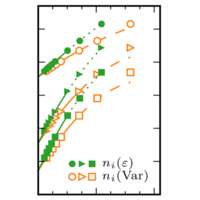
The problem of electron-phonon interactions in strongly correlated systems is addressed by a new method which establishes a rigorous link between \textit{ab initio} density functional perturbation theory and low-energy model Hamiltonians. This allows the construction of model Hamiltonians for strongly correlated systems in a predictable and quantitative way, with respect to material oriented applications, especially where both electron-electron and electron-phonon couplings have the same magnitude. This could lead either to a competition or a cooperation between the two interactions, and stabilize interesting phases such as superconductivity in fullerenes.

Quantifying electronic correlation strength in a complex oxide: A combined DMFT and ARPES study of LaNiO3

E. A. Nowadnick, J. P. Ruf, H. Park, P. D. C. King, D. G. Schlom, K. M. Shen, and A. J. Millis

Phys. Rev. B 92, 245109 (2015) - Published 7 December, 2015

The electronic correlation strength – which is a defining property of correlated materials such as LaNiO3 – is studied in this manuscript experimentally, using angle-resolved photoemission spectroscopy, and theoretically, via density functional and dynamical mean field theory calculations. By carefully comparing the experiment and theory, the authors aim to quantify how accurately the DFT+DMFT approach can describe the correlated physics in LaNiO3. This is important because a precise knowledge of the predictive capabilities of the theory will aid in engineering new emergent properties in the nickelates.

Free-carrier absorption in transparent conducting oxides: Phonon and impurity scattering in SnO2

H. Peelaers, E. Kioupakis, and C. G. Van de Walle

Phys. Rev. B 92, 235201 (2015) - Published 2 December, 2015

Indirect absorption plays an important role in the transparency of transparent conducting oxides. The authors perform a detailed first-principles study of phonon- and charged-impurity-assisted free-carrier absorption, using SnO2 as an example system. They were able to make a quantitative prediction of the absorption cross section due to free carriers, to determine the range of validity of the Fröhlich model, which is commonly used to describe the electron-phonon interaction, and to explain where and how the model breaks down. This study also accounts for the weak temperature dependence of the free-carrier absorption commonly seen by experiment, and compares the phonon-related absorption mechanism with the absorption caused by interactions with defects to find that defects dominate only for concentrations about 1020 cm-3.

Spin-orbit driven magnetic insulating state with Jeff=12 character in a 4d oxide

S. Calder, L. Li, S. Okamoto, Y. Choi, R. Mukherjee, D. Haskel, and D. Mandrus

Phys. Rev. B 92, 180413(R) (2015) - Published 30 November, 2015

The presence of a distinct magnetic insulating state in Sr4RhO6 is revealed. Using various experimental and theoretical methods, the authors find previously unseen long-range magnetic order. While the underlying spin-orbit coupling is reduced in the rhodate compound as compared to an iridate analog, its influence on the physical properties is still strong and relevant.

Magnetic structure of the antiferromagnetic half-Heusler compound NdBiPt

R. A. Müller, A. Desilets-Benoit, N. Gauthier, L. Lapointe, A. D. Bianchi, T. Maris, R. Zahn, R. Beyer, E. Green, J. Wosnitza, Z. Yamani, and M. Kenzelmann

Phys. Rev. B 92, 184432 (2015) - Published 30 November, 2015

Single-crystal neutron diffraction and various bulk probes are used to investigate the magnetic structure and properties of the rare-earth half-Heusler antiferromagnet NdBiPt. While the family of compounds RBiPt (R=Ce–Lu) have been suggested as candidates for a new family of antiferromagnetic topological insulators, the magnetic structure for the Nd compound, as determined in this report, seems to exclude it from this distinction.

Robust determination of the superconducting gap sign structure via quasiparticle interference

P. J. Hirschfeld, D. Altenfeld, I. Eremin, and I. I. Mazin

Phys. Rev. B 92, 184513 (2015) - Published 30 November, 2015

Identifying the symmetry of the superconducting order parameter in multiband systems such as the iron pnictides is a tricky task. A new model-free approach based on the temperature dependence of the momentum-integrated quasiparticle interference data is proposed to resolve this puzzle.

Chirality-protected Majorana zero modes at the gapless edge of Abelian quantum Hall states

Jennifer Cano, Meng Cheng, Maissam Barkeshli, David J. Clarke, and Chetan Nayak

Phys. Rev. B 92, 195152 (2015) - Published 30 November, 2015

Superconductivity is believed to be a key ingredient to the realization of Majorana modes. The authors consider domain walls between different chiral phases of a quantum Hall state and show that, contrary to expectations, neither superconductivity nor even its analogs are necessary for Majorana zero modes in this setup. It is further suggested that Majorana zero modes might be observable in a system composed entirely of GaAs or graphene.

Electron-magnon scattering in magnetic heterostructures far out of equilibrium

Erlend G. Tveten, Arne Brataas, and Yaroslav Tserkovnyak

Phys. Rev. B 92, 180412(R) (2015) - Published 23 November, 2015

A microscopic theory for ultrafast spin dynamics across a wide range of energies in magnetic heterostructures has been developed.

Magnetization of underdoped YBa2Cu3Oy above the irreversibility field

Jing Fei Yu, B. J. Ramshaw, I. Kokanović, K. A. Modic, N. Harrison, James Day, Ruixing Liang, W. N. Hardy, D. A. Bonn, A. McCollam, S. R. Julian, and J. R. Cooper

Phys. Rev. B 92, 180509(R) (2015) - Published 23 November, 2015

The physics of underdoped cuprates has been an unresolved longstanding problem. New measurements at ultrahigh magnetic fields on underdoped YBCO are used to show that superconducting diamagnetism survives at fields far above the irreversibility line at low temperatures. Two scenarios can account for these observations - superconductivity competes with charge order and is considerably diminished or a fluctuating superconductivity survives above a certain magnetic field.

Nuclear spin polarization in the electron spin-flip Raman scattering of singly charged (In,Ga)As/GaAs quantum dots

J. Debus, D. Kudlacik, V. F. Sapega, D. Dunker, P. Bohn, F. Paßmann, D. Braukmann, J. Rautert, D. R. Yakovlev, D. Reuter, A. D. Wieck, and M. Bayer

Phys. Rev. B 92, 195421 (2015) - Published 20 November, 2015

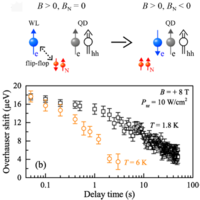
Through an examination of the dynamic nuclear spin polarization and resonant spin-flip Raman scattering, the authors directly measure the optical-induced Overhauser shift in singly charged (In,Ga)As/GaAs quantum dots. Using a two-color laser excitation scheme, they observe the time evolution of the Overhauser shift, which demonstrates the nuclear spin depolarization over a few seconds. Furthermore, it is shown that this depolarization is strongly dependent on temperature.

Anharmonic stabilization and band gap renormalization in the perovskite CsSnI3

Christopher E. Patrick, Karsten W. Jacobsen, and Kristian S. Thygesen

Phys. Rev. B 92, 201205(R) (2015) - Published 20 November, 2015

The perovskite semiconductor CsSnI3 has recently attracted much attention due to its potential applications in solar energy generation. In this work, the authors went beyond the standard (quasi)harmonic approximation, and explained the stability of CsSnI3 at experimental conditions through anharmonic phonon-phonon interactions between the Cs ions and their iodine cages. They also studied the renormalization of the electronic energies due to vibrations and found an unusual opening of the band gap at high temperatures, which demonstrates the importance of anharmonic temperature effects to the realistic modeling of the X(Sn,Pb)Y3 perovskites.

Pair correlations in doped Hubbard ladders

Michele Dolfi, Bela Bauer, Sebastian Keller, and Matthias Troyer

Phys. Rev. B 92, 195139 (2015) - Published 19 November, 2015

There has been some controversy regarding the dominant correlations in weakly doped Hubbard ladders. Analytical approaches find them to be superconducting but numerical approaches have thus far pointed otherwise. Using cutting-edge DMRG techniques on extremely large system sizes this controversy is now resolved to show that superconducting correlations indeed dominate.

Massive Goldstone (Higgs) mode in two-dimensional ultracold atomic lattice systems

Longxiang Liu, Kun Chen, Youjin Deng, Manuel Endres, Lode Pollet, and Nikolay Prokof'ev

Phys. Rev. B 92, 174521 (2015) - Published 18 November, 2015

The two-dimensional superfluid-to-insulator quantum critical point is expected to be accompanied by a collective Goldstone Higgs mode that is massive. However, experimental confirmation within ultracold atoms in an optical lattice is not straightforward. Using Monte Carlo methods and a comparison with recent experiments, the authors of this paper have found that the signature of this massive mode can be observed in the spectral function of the amplitude response under the right conditions.

Optical hyperpolarization of C13 nuclear spins in nanodiamond ensembles

Q. Chen, I. Schwarz, F. Jelezko, A. Retzker, and M. B. Plenio

Phys. Rev. B 92, 184420 (2015) - Published 18 November, 2015

Several established techniques could theoretically be combined to produce a large nuclear polarization in randomly oriented nanodiamonds. This addresses what is currently a critical barrier to the widespread application of nanodiamonds in in-vivo medical diagnostics and MRI.

Sign In to Your Journals Account

Filter

Section

Filter

Article Lookup

Enter a citation