Browse by Subject

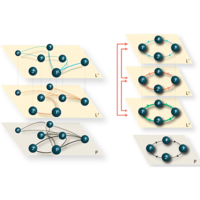
Multiplex Decomposition of Non-Markovian Dynamics and the Hidden Layer Reconstruction Problem

Lucas Lacasa, Inés P. Mariño, Joaquin Miguez, Vincenzo Nicosia, Édgar Roldán, Ana Lisica, Stephan W. Grill, and Jesús Gómez-Gardeñes

Phys. Rev. X 8, 031038 (2018) - Published 7 August, 2018

Multiplex networks can describe complex systems, but it is often difficult to deduce the underlying network structure. A new theory offers a way to experimentally predict the optimal multiplex model in such systems.

Homeostatic Plasticity and External Input Shape Neural Network Dynamics

Johannes Zierenberg, Jens Wilting, and Viola Priesemann

Phys. Rev. X 8, 031018 (2018) - Published 20 July, 2018

Differences in collective behavior between isolated neuron networks and the cortex of mammalian brains can be attributed to the strength of external inputs, a new framework reveals. This could open a path for creating more cortical-like behavior in neuronal networks cultured in a dish.

Immersive Wave Propagation Experimentation: Physical Implementation and One-Dimensional Acoustic Results

Theodor S. Becker, Dirk-Jan van Manen, Carly M. Donahue, Christoph Bärlocher, Nele Börsing, Filippo Broggini, Thomas Haag, Johan O. A. Robertsson, Darren R. Schmidt, Stewart A. Greenhalgh, and Thomas E. Blum

Phys. Rev. X 8, 031011 (2018) - Published 16 July, 2018

A new approach to laboratory acoustic experiments could remove unwanted effects caused by the reflections of acoustic waves from the boundaries of the experimental setup.

Paradoxical Onset of Arrhythmic Waves from Depolarized Areas in Cardiac Tissue Due to Curvature-Dependent Instability

Alexander S. Teplenin, Hans Dierckx, Antoine A. F. de Vries, Daniël A. Pijnappels, and Alexander V. Panfilov

Phys. Rev. X 8, 021077 (2018) - Published 26 June, 2018

New research combining experiments and analytical approaches from quantum mechanics shows that cardiac arrhythmias may originate in sharp corners of damaged heart tissue. This suggests that some arrhythmias might be prevented by making such corners electrically inactive in patients who are at risk.

Tuning Nuclear Quadrupole Resonance: A Novel Approach for the Design of Frequency-Selective MRI Contrast Agents

Christian Gösweiner, Perttu Lantto, Roland Fischer, Carina Sampl, Evrim Umut, Per-Olof Westlund, Danuta Kruk, Markus Bödenler, Stefan Spirk, Andreas Petrovič, and Hermann Scharfetter

Phys. Rev. X 8, 021076 (2018) - Published 25 June, 2018

Magnetic resonance imaging is a powerful diagnostic tool used in modern medicine. A new type of patient-administered contrast agent based on quadrupole relaxation enhancement could provide a new and flexible way to improve tissue contrast.

Terahertz Streaking of Few-Femtosecond Relativistic Electron Beams

Lingrong Zhao, Zhe Wang, Chao Lu, Rui Wang, Cheng Hu, Peng Wang, Jia Qi, Tao Jiang, Shengguang Liu, Zhuoran Ma, Fengfeng Qi, Pengfei Zhu, Ya Cheng, Zhiwen Shi, Yanchao Shi, Wei Song, Xiaoxin Zhu, Jiaru Shi, Yingxin Wang, Lixin Yan, Liguo Zhu, Dao Xiang, and Jie Zhang

Phys. Rev. X 8, 021061 (2018) - Published 8 June, 2018

A new technique for time-stamping bunches of electrons with terahertz pulses allows the electron arrival time to be recorded with 1.5-fs accuracy, paving the way for greatly improved time resolution in apparatuses that probe ultrafast, atomic-scale processes.

Two-Stage Dynamics of In Vivo Bacteriophage Genome Ejection

Yi-Ju Chen, David Wu, William Gelbart, Charles M. Knobler, Rob Phillips, and Willem K. Kegel

Phys. Rev. X 8, 021029 (2018) - Published 1 May, 2018

Analysis of the dynamics of a virus injecting its host with DNA reveals new insight into the underlying physical mechanisms responsible for viral infection in bacteria.

Cell Growth Rate Dictates the Onset of Glass to Fluidlike Transition and Long Time Superdiffusion in an Evolving Cell Colony

Abdul N. Malmi-Kakkada, Xin Li, Himadri S. Samanta, Sumit Sinha, and D. Thirumalai

Phys. Rev. X 8, 021025 (2018) - Published 27 April, 2018

Numerical simulations describe cell dynamics in the early stages of tumor development and find surprising connections to soft glassy materials, providing insight that aids in understanding not just tumor growth but a host of abiotic systems evolving far from equilibrium.

Statistics of Shared Components in Complex Component Systems

Andrea Mazzolini, Marco Gherardi, Michele Caselle, Marco Cosentino Lagomarsino, and Matteo Osella

Phys. Rev. X 8, 021023 (2018) - Published 20 April, 2018

A mathematical analysis explores the statistics of shared components in complex systems and demonstrates what can be learned about the system based on those statistics, a result that impacts a wide range of contexts from LEGO sets to genomic analysis.

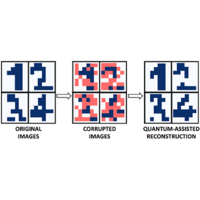
Quantum-Assisted Learning of Hardware-Embedded Probabilistic Graphical Models

Marcello Benedetti, John Realpe-Gómez, Rupak Biswas, and Alejandro Perdomo-Ortiz

Phys. Rev. X 7, 041052 (2017) - Published 30 November, 2017

Quantum computing could greatly speed up machine learning techniques that rely on sampling complex probability distributions, but limitations prevent demonstrations of feasibility. A new technique implemented on a quantum annealer surpasses these limitations and shows how quantum computing can assist in machine learning tasks.

Second-Order Free-Riding on Antisocial Punishment Restores the Effectiveness of Prosocial Punishment

Attila Szolnoki and Matjaž Perc

Phys. Rev. X 7, 041027 (2017) - Published 30 October, 2017

The effectiveness of punishment can be challenged by an unwillingness to shoulder the costs of punishment and by noncooperators who punish cooperators. Simulations based on techniques from statistical physics show how these can cancel one another in an unlikely and counterintuitive evolutionary outcome.

Background-Free 3D Nanometric Localization and Sub-nm Asymmetry Detection of Single Plasmonic Nanoparticles by Four-Wave Mixing Interferometry with Optical Vortices

George Zoriniants, Francesco Masia, Naya Giannakopoulou, Wolfgang Langbein, and Paola Borri

Phys. Rev. X 7, 041022 (2017) - Published 27 October, 2017

Despite many advances, rapid, precise 3D tracking of nanoscale particles in a complex environment remains challenging. A new technique based on four-wave mixing interferometry not only precisely tracks a gold nanoparticle but also is sensitive to particle asymmetry and orientation.

Global Formation of Topological Defects in the Multiferroic Hexagonal Manganites

Q. N. Meier, M. Lilienblum, S. M. Griffin, K. Conder, E. Pomjakushina, Z. Yan, E. Bourret, D. Meier, F. Lichtenberg, E. K. H. Salje, N. A. Spaldin, M. Fiebig, and A. Cano

Phys. Rev. X 7, 041014 (2017) - Published 20 October, 2017

The Kibble-Zurek mechanism describes the formation of topological defects in the wake of continuous phase transitions. A new analysis presents a global upgrade to this picture that reveals new phenomena as fluctuations in the system transform from strongly interacting to noninteracting.

Super-Resolution Community Detection for Layer-Aggregated Multilayer Networks

Dane Taylor, Rajmonda S. Caceres, and Peter J. Mucha

Phys. Rev. X 7, 031056 (2017) - Published 26 September, 2017

Detecting anomalous clusters within networks is vital to cybersecurity in detecting attacks and intrusions, but such analysis is typically ad hoc with no overarching, unifying methodology. A new analysis shows how layer aggregation can be used in a variety of time-varying networks as a filter for preprocessing data to allow the detection of communities that would otherwise go unnoticed.

Using Huygens Multipole Arrays to Realize Unidirectional Needle-Like Radiation

Richard W. Ziolkowski

Phys. Rev. X 7, 031017 (2017) - Published 26 July, 2017

Experimentally confining radiation to certain limited directions (“needle radiation”) has numerous practical applications in wave-matter interaction disciplines. A theoretical proposal for realizing such superdirectivity is presented.

High-Performance Versatile Setup for Simultaneous Brillouin-Raman Microspectroscopy

F. Scarponi, S. Mattana, S. Corezzi, S. Caponi, L. Comez, P. Sassi, A. Morresi, M. Paolantoni, L. Urbanelli, C. Emiliani, L. Roscini, L. Corte, G. Cardinali, F. Palombo, J. R. Sandercock, and D. Fioretto

Phys. Rev. X 7, 031015 (2017) - Published 21 July, 2017

Spectroscopy of soft matter such as biological material suffers from low contrast and low resolution. A prototype of a new instrument concept that combines Raman and Brillouin spectrometry, however, demonstrates superior performance for studying the chemical makeup and mechanical properties of matter in a variety of applications.

Spatial Evolution of Human Dialects

James Burridge

Phys. Rev. X 7, 031008 (2017) - Published 17 July, 2017

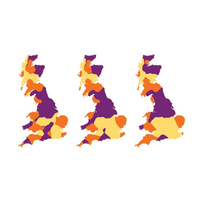
A new model of language evolution assumes that changes in the spatial boundaries between dialects are controlled by a surface tension effect.

Black Hole on a Chip: Proposal for a Physical Realization of the Sachdev-Ye-Kitaev model in a Solid-State System

D. I. Pikulin and M. Franz

Phys. Rev. X 7, 031006 (2017) - Published 13 July, 2017

General relativity and quantum mechanics are at odds in the extreme environments of black holes, but black holes can only be observed from large distances. Scientists propose a solid-state “black hole on a chip” using the interface between a three-dimensional topological insulator and an ordinary superconductor.

Detection and Implications of Laser-Induced Raman Scattering at Astronomical Observatories

Frédéric P. A. Vogt, Domenico Bonaccini Calia, Wolfgang Hackenberg, Cyrielle Opitom, Mauro Comin, Linda Schmidtobreik, Jonathan Smoker, Israel Blanchard, Marcela Espinoza Contreras, Ivan Aranda, Julien Milli, Yara L. Jaffe, Fernando Selman, Johann Kolb, Pascale Hibon, Harald Kuntschner, and Pierre-Yves Madec

Phys. Rev. X 7, 021044 (2017) - Published 22 June, 2017

Raman scattering could contaminate astronomical observations that use “laser guide stars” to correct for the effect of atmospheric turbulence.

Disease Localization in Multilayer Networks

Guilherme Ferraz de Arruda, Emanuele Cozzo, Tiago P. Peixoto, Francisco A. Rodrigues, and Yamir Moreno

Phys. Rev. X 7, 011014 (2017) - Published 2 February, 2017

Multilayer networks can be used to describe many phenomena such as the flow of information and the spread of disease. A new mathematical description of these networks in the context of disease transmission reveals behaviors such as multiple transmission rates and localization of disease in a network layer.

Sign In to Your Journals Account

Filter

Subject

Filter

Article Lookup

Enter a citation