Browse by Subject

Mechanisms for Spontaneous Symmetry Breaking in Developing Visual Cortex

Francesco Fumarola, Bettina Hein, and Kenneth D. Miller

Phys. Rev. X 12, 031024 (2022) - Published 11 August, 2022

Scientists may have answered a longstanding question in biophysics: how the brain learns to recognize features in images before a newborn even opens its eyes.

Ergodicity Breaking in Area-Restricted Search of Avian Predators

Ohad Vilk, Yotam Orchan, Motti Charter, Nadav Ganot, Sivan Toledo, Ran Nathan, and Michael Assaf

Phys. Rev. X 12, 031005 (2022) - Published 8 July, 2022

Tracking of bird movements shows that the animals don’t spread outward like molecules in a gas, as ecologists often assume.

Nonparametric Power-Law Surrogates

Jack Murdoch Moore, Gang Yan, and Eduardo G. Altmann

Phys. Rev. X 12, 021056 (2022) - Published 10 June, 2022

A new approach to applying a power-law model to describe extreme events avoids traditional pitfalls and offers a more robust approach to predicting and mitigating risk.

Exploring the Tropical Pacific Manifold in Models and Observations

Fabrizio Falasca and Annalisa Bracco

Phys. Rev. X 12, 021054 (2022) - Published 8 June, 2022

Methods from dynamical systems and manifold learning offer a simpler, physically sound framework for evaluating and improving upon climate models.

Learning the Architectural Features That Predict Functional Similarity of Neural Networks

Adam Haber and Elad Schneidman

Phys. Rev. X 12, 021051 (2022) - Published 3 June, 2022

A metric for neural networks’ similarity, based on synaptic differences, provides accurate predictions of how novel networks function, thus identifying a key relation between structure and function.

Enhancing Generative Models via Quantum Correlations

Xun Gao, Eric R. Anschuetz, Sheng-Tao Wang, J. Ignacio Cirac, and Mikhail D. Lukin

Phys. Rev. X 12, 021037 (2022) - Published 13 May, 2022

Quantum nonlocality and contextuality are the source of improvements to machine learning algorithms enhanced by ideas from quantum physics.

Emergence of Irregular Activity in Networks of Strongly Coupled Conductance-Based Neurons

A. Sanzeni, M. H. Histed, and N. Brunel

Phys. Rev. X 12, 011044 (2022) - Published 8 March, 2022

An analysis of neural network models with biophysically realistic descriptions of synaptic connections shows that irregular neuronal activity—observed in experiments—emerges naturally from interactions between cells.

Theory of Gating in Recurrent Neural Networks

Kamesh Krishnamurthy, Tankut Can, and David J. Schwab

Phys. Rev. X 12, 011011 (2022) - Published 18 January, 2022

The success of recurrent neural networks owes much to gating, a multiplicative interaction that controls the flow of information. New models lead to a comprehensive theory of gating that can help engineers and neuroscientists.

Probing Symmetries of Quantum Many-Body Systems through Gap Ratio Statistics

Olivier Giraud, Nicolas Macé, Éric Vernier, and Fabien Alet

Phys. Rev. X 12, 011006 (2022) - Published 10 January, 2022

The statistics of ratios between successive energy levels in certain quantum systems can reveal additional, possibly hidden, symmetries as well as distinguish between regular and chaotic behavior.

Criticality in Cell Adhesion

Kristian Blom and Aljaž Godec

Phys. Rev. X 11, 031067 (2021) - Published 27 September, 2021

An analysis of the response of adhering cells to changes in membrane rigidity and external forces reveals collective effects relevant for tissue remodeling, cancer metastasis, and immune response.

Games in Rigged Economies

Luís F. Seoane

Phys. Rev. X 11, 031058 (2021) - Published 15 September, 2021

A game-theoretical model of a rigged economy predicts the emergence of cartels followed by a risk of instability as the economy becomes more complex.

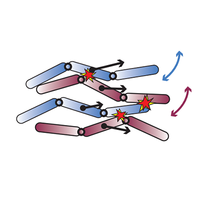
Collective Synchronization of Undulatory Movement through Contact

Wei Zhou, Zhuonan Hao, and Nick Gravish

Phys. Rev. X 11, 031051 (2021) - Published 7 September, 2021

Physical contact among simple robots with undulatory gaits leads to rich collective dynamics including synchronization, thus showing how some populations in nature sync their movements when in close proximity.

Dirac-Type Nodal Spin Liquid Revealed by Refined Quantum Many-Body Solver Using Neural-Network Wave Function, Correlation Ratio, and Level Spectroscopy

Yusuke Nomura and Masatoshi Imada

Phys. Rev. X 11, 031034 (2021) - Published 12 August, 2021

New machine-learning methods show evidence of a quantum spin liquid in a 2D model, offering a guide to search for materials hosting this exotic state, in which electrons splinter into spinons, with potential use in quantum devices.

3D Shape of Epithelial Cells on Curved Substrates

Nicolas Harmand, Anqi Huang, and Sylvie Hénon

Phys. Rev. X 11, 031028 (2021) - Published 4 August, 2021

Analysis of the thickness of living epithelial tissue allows for the validation of differential surface tensions and apical line tension as the ingredients of a minimal model that accounts for the shape of epithelial cells.

Role of the Cell Cycle in Collective Cell Dynamics

Jintao Li, Simon K. Schnyder, Matthew S. Turner, and Ryoichi Yamamoto

Phys. Rev. X 11, 031025 (2021) - Published 30 July, 2021

A new model connects a living cell’s internal biochemical cycle to the physical forces that arise among collections of cells, providing a framework for exploring how the cell cycle influences colony dynamics.

Machine Learning Link Inference of Noisy Delay-Coupled Networks with Optoelectronic Experimental Tests

Amitava Banerjee, Joseph D. Hart, Rajarshi Roy, and Edward Ott

Phys. Rev. X 11, 031014 (2021) - Published 20 July, 2021

A new approach to inferring the network of interactions among dynamic individuals trains an artificial neural network to do so in the case of delayed interactions and noisy dynamics.

Pseudospectrum and Black Hole Quasinormal Mode Instability

José Luis Jaramillo, Rodrigo Panosso Macedo, and Lamis Al Sheikh

Phys. Rev. X 11, 031003 (2021) - Published 6 July, 2021

A new analysis of black hole vibrational spectra identifies which frequencies are stable to perturbations—information pertinent for gravitational-wave analysis and quantum gravity modeling.

Frequency Domain Analysis of Fluctuations of mRNA and Protein Copy Numbers within a Cell Lineage: Theory and Experimental Validation

Chen Jia and Ramon Grima

Phys. Rev. X 11, 021032 (2021) - Published 11 May, 2021

A new theoretical framework connects the fluctuations in gene expression with fundamental cell dynamics including cellular division and DNA replication.

Long-Range Cooperative Disassembly and Aging During Adenovirus Uncoating

Natalia Martín-González, Pablo Ibáñez-Freire, Álvaro Ortega-Esteban, Mara Laguna-Castro, Carmen San Martín, Alejandro Valbuena, Rafael Delgado-Buscalioni, and Pedro J. de Pablo

Phys. Rev. X 11, 021025 (2021) - Published 30 April, 2021

The disassembly of a virus’ protein shell must happen at the right time to ensure transfer of the viral genome to its host. New experiments reveal that aging determines the dynamics of this unraveling.

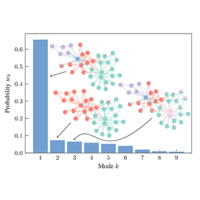
Revealing Consensus and Dissensus between Network Partitions

Tiago P. Peixoto

Phys. Rev. X 11, 021003 (2021) - Published 5 April, 2021

A new method for analyzing summaries of network structure given by clustering algorithms provides a way to characterize competing solutions and extract more meaningful results.

Sign In to Your Journals Account

Filter

Subject

Filter

Article Lookup

Enter a citation