Browse by Subject

Exact Analysis of the Subthreshold Variability for Conductance-Based Neuronal Models with Synchronous Synaptic Inputs

Logan A. Becker, Baowang Li, Nicholas J. Priebe, Eyal Seidemann, and Thibaud Taillefumier

Phys. Rev. X 14, 011021 (2024) - Published 16 February, 2024

Achieving realistic subthreshold variability in a biophysical neuronal model requires low-level synchrony in its synaptic input drive, a finding that challenges current theories to explain spiking activity in cortical neurons.

Epidemic Spreading in Group-Structured Populations

Siddharth Patwardhan, Varun K. Rao, Santo Fortunato, and Filippo Radicchi

Phys. Rev. X 13, 041054 (2023) - Published 20 December, 2023

Disease contagion is suppressed when different social groups have a large overlap in membership.

Multiscale Data-Driven Energy Estimation and Generation

Tanguy Marchand, Misaki Ozawa, Giulio Biroli, and Stéphane Mallat

Phys. Rev. X 13, 041038 (2023) - Published 30 November, 2023

A new multiscale approach allows for estimating high-dimensional probability distributions and fast sampling of many-body systems in various domains, from statistical physics to cosmology.

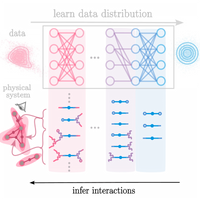
Learning Interacting Theories from Data

Claudia Merger, Alexandre René, Kirsten Fischer, Peter Bouss, Sandra Nestler, David Dahmen, Carsten Honerkamp, and Moritz Helias

Phys. Rev. X 13, 041033 (2023) - Published 20 November, 2023

Models of systems in physics usually start with elementary processes. New work with a neural network shows how models can also be built by observing the system as a whole and deducing the underlying interactions.

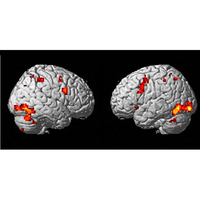
Optimality Pressures toward Lateralization of Complex Brain Functions

Luís F. Seoane

Phys. Rev. X 13, 031028 (2023) - Published 13 September, 2023

A mathematical model shows how increased intricacy of cognitive tasks can break the mirror symmetry of the brain’s neural network.

Self-Learning Machines Based on Hamiltonian Echo Backpropagation

Víctor López-Pastor and Florian Marquardt

Phys. Rev. X 13, 031020 (2023) - Published 18 August, 2023

A wide class of physical systems could be turned into learning machines, thanks to a new general approach to training them based entirely on physical dynamics combined with a time-reversal operation.

State of Cell Unjamming Correlates with Distant Metastasis in Cancer Patients

Pablo Gottheil, Jürgen Lippoldt, Steffen Grosser, Frédéric Renner, Mohamad Saibah, Dimitrij Tschodu, Anne-Kathrin Poßögel, Anne-Sophie Wegscheider, Bernhard Ulm, Kay Friedrichs, Christoph Lindner, Christoph Engel, Markus Löffler, Benjamin Wolf, Michael Höckel, Bahriye Aktas, Hans Kubitschke, Axel Niendorf, and Josef A. Käs

Phys. Rev. X 13, 031003 (2023) - Published 10 July, 2023

A concept in condensed-matter physics called jamming provides a possible prognostic tool for cancer.

Emergence of Geometric Turing Patterns in Complex Networks

Jasper van der Kolk, Guillermo García-Pérez, Nikos E. Kouvaris, M. Ángeles Serrano, and Marián Boguñá

Phys. Rev. X 13, 021038 (2023) - Published 22 June, 2023

By describing network topology using an underlying geometric space, spatial Turing patterns can be found in the geometric embeddings of real networks.

A Nonlinear Fluctuation-Dissipation Test for Markovian Systems

Kirsten Engbring, Dima Boriskovsky, Yael Roichman, and Benjamin Lindner

Phys. Rev. X 13, 021034 (2023) - Published 12 June, 2023

A new test for determining whether time-series data is Markovian overcomes limitations of existing techniques and lays a foundation for the simple classification of diverse nonequilibrium systems.

Molecular Tug of War Reveals Adaptive Potential of an Immune Cell Repertoire

Hongda Jiang and Shenshen Wang

Phys. Rev. X 13, 021022 (2023) - Published 10 May, 2023

A study of the mechanical forces in certain immune cells may give new insights into how organisms deal with ever-evolving pathogens.

Limits and Performances of Algorithms Based on Simulated Annealing in Solving Sparse Hard Inference Problems

Maria Chiara Angelini and Federico Ricci-Tersenghi

Phys. Rev. X 13, 021011 (2023) - Published 20 April, 2023

A new theory, supported by large-scale numerical simulations, explores the conditions under which two Monte Carlo–based optimization algorithms can extract a signal from noisy data.

Appropriate Mechanical Confinement Inhibits Multipolar Cell Division via Pole-Cortex Interaction

Longcan Cheng, Jingchen Li, Houbo Sun, and Hongyuan Jiang

Phys. Rev. X 13, 011036 (2023) - Published 10 March, 2023

Segregation of chromosomes in dividing cells can be disrupted if the cells are constrained by their surroundings.

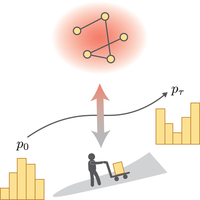
Thermodynamic Unification of Optimal Transport: Thermodynamic Uncertainty Relation, Minimum Dissipation, and Thermodynamic Speed Limits

Tan Van Vu and Keiji Saito

Phys. Rev. X 13, 011013 (2023) - Published 3 February, 2023

A new, unified thermodynamic theory reveals an intimate relationship between optimal transport distances and stochastic and quantum thermodynamics in discrete-state systems.

Laser-Driven Neutron Generation Realizing Single-Shot Resonance Spectroscopy

A. Yogo, Z. Lan, Y. Arikawa, Y. Abe, S. R. Mirfayzi, T. Wei, T. Mori, D. Golovin, T. Hayakawa, N. Iwata, S. Fujioka, M. Nakai, Y. Sentoku, K. Mima, M. Murakami, M. Koizumi, F. Ito, J. Lee, T. Takahashi, K. Hironaka, S. Kar, H. Nishimura, and R. Kodama

Phys. Rev. X 13, 011011 (2023) - Published 31 January, 2023

Experiments identify the mechanism that accelerates ions in a laser-driven neutron source (LDNS) as well as a scaling law for the neutron yield, key insights that move LDNS closer to practical neutron generation.

Forgetting Leads to Chaos in Attractor Networks

Ulises Pereira-Obilinovic, Johnatan Aljadeff, and Nicolas Brunel

Phys. Rev. X 13, 011009 (2023) - Published 27 January, 2023

A model for information storage in the brain reveals how memories decay with age.

Optical Guiding in 50-Meter-Scale Air Waveguides

A. Goffin, I. Larkin, A. Tartaro, A. Schweinsberg, A. Valenzuela, E. W. Rosenthal, and H. M. Milchberg

Phys. Rev. X 13, 011006 (2023) - Published 23 January, 2023

A waveguide sculpted in air with lasers transmits light over a distance of nearly 50 meters, which is 60 times farther than previous air-waveguide schemes.

Tie-Line Analysis Reveals Interactions Driving Heteromolecular Condensate Formation

Daoyuan Qian, Timothy J. Welsh, Nadia A. Erkamp, Seema Qamar, Jonathon Nixon-Abell, Georg Krainer, Peter St. George-Hyslop, Thomas C. T. Michaels, and Tuomas P. J. Knowles

Phys. Rev. X 12, 041038 (2022) - Published 30 December, 2022

A new method for determining the ratios and interaction strengths among compounds that form biomolecular condensates relies on measurements of just one solute in one phase.

Transverse Electron-Beam Shaping with Light

Marius Constantin Chirita Mihaila, Philipp Weber, Matthias Schneller, Lucas Grandits, Stefan Nimmrichter, and Thomas Juffmann

Phys. Rev. X 12, 031043 (2022) - Published 26 September, 2022

A new method that uses laser light to both generate and shape electron beams could improve the resolution of electron microscopy.

Geometry Adaptation of Protrusion and Polarity Dynamics in Confined Cell Migration

David B. Brückner, Matthew Schmitt, Alexandra Fink, Georg Ladurner, Johannes Flommersfeld, Nicolas Arlt, Edouard Hannezo, Joachim O. Rädler, and Chase P. Broedersz

Phys. Rev. X 12, 031041 (2022) - Published 20 September, 2022

Experiments demonstrate that biological cells actively change shape to respond to their surroundings when moving in confined regions.

Driven Disordered Systems Approach to Biological Evolution in Changing Environments

Suman G. Das, Joachim Krug, and Muhittin Mungan

Phys. Rev. X 12, 031040 (2022) - Published 20 September, 2022

A bacterial genome’s evolution under changing drug concentrations displays effects of memory formation and mimics how disordered solids respond to external forces.

Sign In to Your Journals Account

Filter

Subject

Filter

Article Lookup

Enter a citation