Browse by Subject

Ultrasensitive Atomic Spin Measurements with a Nonlinear Interferometer

R. J. Sewell, M. Napolitano, N. Behbood, G. Colangelo, F. Martin Ciurana, and M. W. Mitchell

Phys. Rev. X 4, 021045 (2014) - Published 9 June, 2014

Interferometry plays a key role in new technologies such as atomic clocks and optical magnetometers. Scientists experimentally confirm that nonlinear measurements of atomic spin achieve state-of-the-art sensitivities that surpass the best possible linear measurements.

Robust Two-Qubit Gates for Donors in Silicon Controlled by Hyperfine Interactions

Rachpon Kalra, Arne Laucht, Charles D. Hill, and Andrea Morello

Phys. Rev. X 4, 021044 (2014) - Published 6 June, 2014

Recent breakthrough demonstrations of the measurement and control of a single atom’s electrons and nuclear spins in silicon have added momentum to the pursuit of quantum computing. New results show that two-qubit quantum logic gates can perform with high fidelity, without the need for placing atoms with subnanometer precision.

Experimental Test of the State Estimation-Reversal Tradeoff Relation in General Quantum Measurements

Geng Chen, Yang Zou, Xiao-Ye Xu, Jian-Shun Tang, Yu-Long Li, Jin-Shi Xu, Yong-Jian Han, Chuan-Feng Li, Guang-Can Guo, Hai-Qiao Ni, Ying Yu, Mi-Feng Li, Guo-Wei Zha, Zhi-Chuan Niu, and Yaron Kedem

Phys. Rev. X 4, 021043 (2014) - Published 5 June, 2014

Futuristic technologies of quantum communication and encryption rely on verifying quantum-mechanical principles. Scientists experimentally show that a measurement-disturbance relationship, similar to Heisenberg’s uncertainty principle, is satisfied using a two-level qubit system.

Entanglement in a Quantum Annealing Processor

T. Lanting et al.

Phys. Rev. X 4, 021041 (2014) - Published 29 May, 2014

D-wave computers are designed to implement a single quantum algorithm called quantum annealing. Are these computers really quantum? Researchers have found strong evidence that qubits in a processor running the algorithm are entangled quantum mechanically.

How Many-Body Effects Modify the van der Waals Interaction between Graphene Sheets

John F. Dobson, Tim Gould, and Giovanni Vignale

Phys. Rev. X 4, 021040 (2014) - Published 29 May, 2014

How do quantum-mechanical effects contribute to the properties of graphene? Researchers examine how different quantum-mechanical scenarios are reflected in the cohesive force between micron-sized graphene flakes. Measurements of this force will shed light on the mechanism of self-assembly of graphene-based nanostructures.

Optimization of Quantum Trajectories Driven by Strong-Field Waveforms

S. Haessler, T. Balčiunas, G. Fan, G. Andriukaitis, A. Pugžlys, A. Baltuška, T. Witting, R. Squibb, A. Zaïr, J. W. G. Tisch, J. P. Marangos, and L. E. Chipperfield

Phys. Rev. X 4, 021028 (2014) - Published 19 May, 2014

Lasers can be used to steer an electron, yielding extreme-ultraviolet light pulses when the accelerated electron recollides with its parent atom. Researchers have enhanced the flux of the extreme-ultraviolet pulses by a factor of 100, enabling the study of extremely fast (subfemtosecond) electron dynamics.

Classical and Quantum Shortcuts to Adiabaticity for Scale-Invariant Driving

Sebastian Deffner, Christopher Jarzynski, and Adolfo del Campo

Phys. Rev. X 4, 021013 (2014) - Published 22 April, 2014

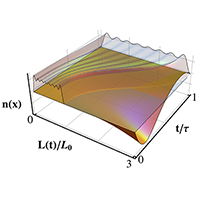
A natural nonequilibrium process that takes a system from one equilibrium state to another in a short time always involves dissipation. But, it’s actually possible in quantum control to design and implement dissipationless “shortcuts” for quantum systems. Scientists add a few concrete practical tools for achieving this goal.

Hilbert-Glass Transition: New Universality of Temperature-Tuned Many-Body Dynamical Quantum Criticality

David Pekker, Gil Refael, Ehud Altman, Eugene Demler, and Vadim Oganesyan

Phys. Rev. X 4, 011052 (2014) - Published 31 March, 2014

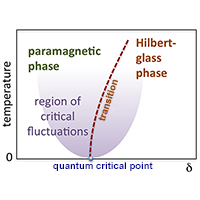
Conventional phase transitions are usually characterized by a change in a fundamental thermodynamic observable, e.g., in density when liquid changes to vapor. A theoretical study of a one-dimensional disordered quantum spin chain reveals a new class of quantum phase transitions that leave no such signatures and pins down their origin.

Robust Extraction of Tomographic Information via Randomized Benchmarking

Shelby Kimmel, Marcus P. da Silva, Colm A. Ryan, Blake R. Johnson, and Thomas Ohki

Phys. Rev. X 4, 011050 (2014) - Published 25 March, 2014

Quantum processing tomography typically reconstructs an unknown quantum dynamical operation by measuring its effects on known states of a quantum device. Taking a different approach of comparing the operation of interest to a set of finite and easily implementable reference operations, a new method can reconstruct any quantum operation reliably.

Quantum Spectroscopy of Plasmonic Nanostructures

Dmitry A. Kalashnikov, Zhenying Pan, Arseniy I. Kuznetsov, and Leonid A. Krivitsky

Phys. Rev. X 4, 011049 (2014) - Published 25 March, 2014

Ultrasensitive optical sensing based on surface plasmons requires nonintrusive weak light and a large signal-to-noise ratio. Using quantum mechanically entangled photon pairs, experimentalists exploit the quantum entanglement for noise cancellation and achieve sensing at the single-photon scale and in the presence of a noise level 70 times higher than the signal.

When Amplification with Weak Values Fails to Suppress Technical Noise

George C. Knee and Erik M. Gauger

Phys. Rev. X 4, 011032 (2014) - Published 6 March, 2014

“Weak-value amplification,” a quantum-mechanical phenomenon discovered only two decades ago, has received considerable interest for its potential as a metrological tool. However, its operation requires special circumstances, therefore carries costs. A new analysis shows that the associated costs outweigh the advantages when compared to other methods of signal amplification.

Magnetic Vortex Crystals in Frustrated Mott Insulator

Y. Kamiya and C. D. Batista

Phys. Rev. X 4, 011023 (2014) - Published 25 February, 2014

Large-scale ordering of nonelementary mesoscopic magnetic structures is both fundamentally fascinating and technologically relevant. A theoretical study of frustrated quantum magnets predicts the emergence of a new class of stable magnetic vortex crystals under general conditions.

Publisher’s Note: Laser Theory for Optomechanics: Limit Cycles in the Quantum Regime [Phys. Rev. X 4, 011015 (2014)]

Niels Lorch, Jiang Qian, Aashish Clerk, Florian Marquardt, and Klemens Hammerer

Phys. Rev. X 4, 019902 (2014) - Published 20 February, 2014

Subdiffraction-Limited Quantum Imaging within a Living Cell

Michael A. Taylor, Jiri Janousek, Vincent Daria, Joachim Knittel, Boris Hage, Hans-A. Bachor, and Warwick P. Bowen

Phys. Rev. X 4, 011017 (2014) - Published 4 February, 2014

Quantum effects may help devise new imaging schemes that can overcome classical constraints posed by noise and diffraction. By using squeezed states of light in photonic force microscopy (PFM), scientists have demonstrated a 14% quantum enhancement of PFM’s spatial resolution, imaging details of living yeast cells with a resolution of 10 nm.

Publisher’s Note: Security of Device-Independent Quantum Key Distribution in the Bounded-Quantum-Storage Model [Phys. Rev. X 3, 031007 (2013)]

S. Pironio, Ll. Masanes, A. Leverrier, and A. Acín

Phys. Rev. X 4, 019901 (2014) - Published 31 January, 2014

Quantum Enigma Machines and the Locking Capacity of a Quantum Channel

Saikat Guha, Patrick Hayden, Hari Krovi, Seth Lloyd, Cosmo Lupo, Jeffrey H. Shapiro, Masahiro Takeoka, and Mark M. Wilde

Phys. Rev. X 4, 011016 (2014) - Published 31 January, 2014

Quantum data locking (QDL), proposed as a conceptually different alternative to quantum key distribution, uses a small secret key to lock a much longer message for secure transmission. For practical use, QDL must be robust against noise. Theorists lay the necessary theoretical ground for development of QDL protocols using noisy quantum channels.

Laser Theory for Optomechanics: Limit Cycles in the Quantum Regime

Niels Lörch, Jiang Qian, Aashish Clerk, Florian Marquardt, and Klemens Hammerer

Phys. Rev. X 4, 011015 (2014) - Published 31 January, 2014

In optomechanics it is known that driving a micromechanical oscillator with a laser field can lead to generation of “nonclassical” quantum states of the oscillator. Researchers now fill a theoretical gap by offering an analytical theory to describe the laser-oscillator interaction in a regime of interesting oscillator quantum mechanics and predict “nonclassical” oscillator states where they were unexpected.

Generation of Nondiffracting Electron Bessel Beams

Vincenzo Grillo, Ebrahim Karimi, Gian Carlo Gazzadi, Stefano Frabboni, Mark R. Dennis, and Robert W. Boyd

Phys. Rev. X 4, 011013 (2014) - Published 30 January, 2014

By putting electrons through a phase-modulation hologram, a thin film of silicon nitride with nanoscale grooves of different thicknesses, scientists achieve, for the first time, the generation of diffraction-free electron Bessel beams.

Driven Nonlinear Dynamics of Two Coupled Exchange-Only Qubits

Arijeet Pal, Emmanuel I. Rashba, and Bertrand I. Halperin

Phys. Rev. X 4, 011012 (2014) - Published 30 January, 2014

Realization of quantum computing requires not only qubits that are robust against noise but also control over the crosstalk (entanglement) between them. Following the very recent experimental realization of quantum-dot-based “exchange” qubits, theorists propose a practically feasible method for entangling two such qubits in a controllable way.

Characterization of Quantum Correlations with Local Dimension Constraints and Its Device-Independent Applications

Miguel Navascués, Gonzalo de la Torre, and Tamás Vértesi

Phys. Rev. X 4, 011011 (2014) - Published 30 January, 2014

Device-independent quantum cryptography protocols exploit quantum correlations generated by “black box” quantum devices. The physical dimensionality of such devices may act as a constraint. But which quantum correlations are fundamentally attainable and can be exploited under this constraint? Scientists now develop a new and timely numerical method that answers this question.

Sign In to Your Journals Account

Filter

Filter

Article Lookup

Enter a citation