Browse by Subject

Coherent versus Measurement Feedback: Linear Systems Theory for Quantum Information

Naoki Yamamoto

Phys. Rev. X 4, 041029 (2014) - Published 14 November, 2014

Deciding whether to conduct a measurement is a fundamental tenant of quantum physics. A new analysis finds situations in the linear regime where measurement-based feedback control of a quantum system has no merit.

Local Convertibility and the Quantum Simulation of Edge States in Many-Body Systems

Fabio Franchini, Jian Cui, Luigi Amico, Heng Fan, Mile Gu, Vladimir Korepin, Leong Chuan Kwek, and Vlatko Vedral

Phys. Rev. X 4, 041028 (2014) - Published 13 November, 2014

Quantum simulators pave the way for quantum computers, which promise to be smaller and faster than current classical machines. Researchers show that Majorana edge states can result in genuinely quantum long-range correlations, which are a fundamental property of quantum machines.

Optimizing the Choice of Spin-Squeezed States for Detecting and Characterizing Quantum Processes

Lee A. Rozema, Dylan H. Mahler, Robin Blume-Kohout, and Aephraim M. Steinberg

Phys. Rev. X 4, 041025 (2014) - Published 7 November, 2014

Quantum metrology is focused on making exquisitely precise measurements. New results show that different techniques are optimal for noise detection and noise characterization.

Tensor Networks for Lattice Gauge Theories with Continuous Groups

L. Tagliacozzo, A. Celi, and M. Lewenstein

Phys. Rev. X 4, 041024 (2014) - Published 6 November, 2014

Gauge theories have applications in fundamental interactions and superconductivity. Researchers use tensor networks to describe gauge theories, avoiding some of the drawbacks of Monte Carlo simulations.

Quantum Phenomena Modeled by Interactions between Many Classical Worlds

Michael J. W. Hall, Dirk-André Deckert, and Howard M. Wiseman

Phys. Rev. X 4, 041013 (2014) - Published 23 October, 2014

Researchers propose a new “many-interacting-worlds” theory that could explain quantum mechanics in all its strangeness. Numerical simulations reproduce wave behavior in double-slit experiments assuming as few as 40 worlds.

Community Detection in Quantum Complex Networks

Mauro Faccin, Piotr Migdał, Tomi H. Johnson, Ville Bergholm, and Jacob D. Biamonte

Phys. Rev. X 4, 041012 (2014) - Published 21 October, 2014

Networks composed of multiple parts are ubiquitous in nature and society. A technique for detecting such subnetworks in quantum systems is presented.

Microwave-Controlled Generation of Shaped Single Photons in Circuit Quantum Electrodynamics

M. Pechal, L. Huthmacher, C. Eichler, S. Zeytinoğlu, A. A. Abdumalikov, Jr., S. Berger, A. Wallraff, and S. Filipp

Phys. Rev. X 4, 041010 (2014) - Published 17 October, 2014

Futuristic communication networks may be based on quantum information processing. New results show how photon pulses that are symmetric in time, which are crucial for connecting nodes in quantum networks, can be generated.

Observation and Interpretation of Motional Sideband Asymmetry in a Quantum Electromechanical Device

A. J. Weinstein, C. U. Lei, E. E. Wollman, J. Suh, A. Metelmann, A. A. Clerk, and K. C. Schwab

Phys. Rev. X 4, 041003 (2014) - Published 7 October, 2014

Electromagnetic resonators can be used to probe the quantum properties of mechanical objects. Scientists show that an imbalance between phonon absorption and emission—a distinct quantum signature—can be traced back to quantum fluctuations of either mechanical or microwave fields, depending on the measurement details.

Heralded Magnetism in Non-Hermitian Atomic Systems

Tony E. Lee and Ching-Kit Chan

Phys. Rev. X 4, 041001 (2014) - Published 2 October, 2014

Decaying atoms are described by non-Hermitian models. Researchers show that non-Hermitian systems of atomic spins exhibit frustration.

Effective Lagrangian for Nonrelativistic Systems

Haruki Watanabe and Hitoshi Murayama

Phys. Rev. X 4, 031057 (2014) - Published 29 September, 2014

Order appears to be a common property of a wide range of objects at low temperatures. A long-sought general theory to describe the behavior of ordered systems is presented.

Observation of a Dissipation-Induced Classical to Quantum Transition

J. Raftery, D. Sadri, S. Schmidt, H. E. Türeci, and A. A. Houck

Phys. Rev. X 4, 031043 (2014) - Published 8 September, 2014

A circuit for microwave photons provides a useful test bed for nonequilibrium physics.

Optical Signatures of Antiferromagnetic Ordering of Fermionic Atoms in an Optical Lattice

Francisco Cordobes Aguilar, Andrew F. Ho, and Janne Ruostekoski

Phys. Rev. X 4, 031036 (2014) - Published 2 September, 2014

Recent optical imaging techniques have allowed scientists to probe magnetic atomic correlations. Researchers show how atomic spins can be imprinted in the fluctuations of light scattered off atoms.

Light Guiding by Effective Gauge Field for Photons

Qian Lin and Shanhui Fan

Phys. Rev. X 4, 031031 (2014) - Published 22 August, 2014

Integrated photonics rely on optical waveguides in which light is confined to a core. Researchers theorize about a gauge-field waveguide that achieves single-mode, one-way guiding.

Assessing the Nonequilibrium Thermodynamics in a Quenched Quantum Many-Body System via Single Projective Measurements

L. Fusco, S. Pigeon, T. J. G. Apollaro, A. Xuereb, L. Mazzola, M. Campisi, A. Ferraro, M. Paternostro, and G. De Chiara

Phys. Rev. X 4, 031029 (2014) - Published 19 August, 2014

Nonequilibrium thermodynamics is relatively common in a range of scientific fields. Scientists show that observations of nonequilibrium thermodynamics can yield predictions of quantum many-body systems.

Locality of Temperature

M. Kliesch, C. Gogolin, M. J. Kastoryano, A. Riera, and J. Eisert

Phys. Rev. X 4, 031019 (2014) - Published 31 July, 2014

Measuring temperature on very small scales is a difficult task and it is not clear if temperature as a local property is even meaningful at such scales. New mathematical tools show that an intensive definition of temperature is possible whenever the global temperature is above a critical value.

Parity-Time Symmetry Breaking beyond One Dimension: The Role of Degeneracy

Li Ge and A. Douglas Stone

Phys. Rev. X 4, 031011 (2014) - Published 21 July, 2014

Scientists studying multidimensional systems invariant under a combined mirror-reflection and time-reversal operation find that the presence of degeneracy plays an important role in determining the spontaneous symmetry-breaking transition.

Generation of Nonclassical Biphoton States through Cascaded Quantum Walks on a Nonlinear Chip

Alexander S. Solntsev, Frank Setzpfandt, Alex S. Clark, Che Wen Wu, Matthew J. Collins, Chunle Xiong, Andreas Schreiber, Fabian Katzschmann, Falk Eilenberger, Roland Schiek, Wolfgang Sohler, Arnan Mitchell, Christine Silberhorn, Benjamin J. Eggleton, Thomas Pertsch, Andrey A. Sukhorukov, Dragomir N. Neshev, and Yuri S. Kivshar

Phys. Rev. X 4, 031007 (2014) - Published 14 July, 2014

Developing quantum computing relies on realizing controllable nonclassical states of light or matter. Researchers show that photon pairs can feature strong quantum entanglement and reconfigurable nonclassical correlations.

Quantum Speedup for Active Learning Agents

Giuseppe Davide Paparo, Vedran Dunjko, Adi Makmal, Miguel Angel Martin-Delgado, and Hans J. Briegel

Phys. Rev. X 4, 031002 (2014) - Published 8 July, 2014

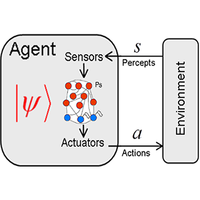
Artificial intelligence will only become more ubiquitous with time. Scientists reveal that using quantum physics in autonomous learning agents yields a quadratic increase in speed in active learning.

Quantum Bidding in Bridge

Sadiq Muhammad, Armin Tavakoli, Maciej Kurant, Marcin Pawłowski, Marek Żukowski, and Mohamed Bourennane

Phys. Rev. X 4, 021047 (2014) - Published 12 June, 2014

In a game of duplicate bridge, better information sharing between two partners about their cards means better chances of winning. Researchers devise, and experimentally demonstrate, the first quantum information-sharing protocol that lets players improve their bids, expanding the understanding and use of quantum resources.

Anisotropic Rabi model

Qiong-Tao Xie, Shuai Cui, Jun-Peng Cao, Luigi Amico, and Heng Fan

Phys. Rev. X 4, 021046 (2014) - Published 11 June, 2014

Rabi models—describing how two-level atoms interact with fields—are used in quantum optics, solid-state physics, and mesoscopic physics. Now scientists extend their range of applications further by calculating the energies and eigenstates of an anisotropic Rabi model.

Sign In to Your Journals Account

Filter

Filter

Article Lookup

Enter a citation