Recent Articles

Narrow Optical Transitions in Erbium-Implanted Silicon Waveguides

Andreas Gritsch, Lorenz Weiss, Johannes Früh, Stephan Rinner, and Andreas Reiserer

Phys. Rev. X 12, 041009 (2022) - Published 25 October, 2022

Improved fabrication methods for qubits made from erbium-doped silicon waveguides give these qubits the key prerequisites for becoming a contender for future quantum computers.

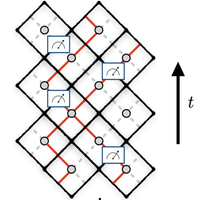
Beating the Thermal Limit of Qubit Initialization with a Bayesian Maxwell’s Demon

Mark A. I. Johnson, Mateusz T. Mądzik, Fay E. Hudson, Kohei M. Itoh, Alexander M. Jakob, David N. Jamieson, Andrew Dzurak, and Andrea Morello

Phys. Rev. X 12, 041008 (2022) - Published 25 October, 2022

A new method for initializing an electron spin qubit in its low-energy state achieves a 20-fold reduction in preparation error by using a digital “Maxwell’s demon” to effectively cool the electron far below its initial temperature.

RETRACTED: Dynamics of Stochastic Integrate-and-Fire Networks

Gabriel Koch Ocker

Phys. Rev. X 12, 041007 (2022) - Published 19 October, 2022

A new theory of neural population dynamics incorporates biophysical nonlinearities not included in other models, bridging the gap between the complex biophysics of single neurons and simplified population-level models.

Localized Elasticity Governs the Nonlinear Rheology of Colloidal Supercooled Liquids

Dejia Kong, Wei-Ren Chen, Ke-Qi Zeng, Lionel Porcar, and Zhe Wang

Phys. Rev. X 12, 041006 (2022) - Published 17 October, 2022

Short-lived elastic regions in colloidal supercooled liquids under shear flow provide the mechanism for nonlinear viscoelasticity in these fluids, shedding light on more general flow behavior of soft condensed matter.

Optically Probing the Asymmetric Interlayer Coupling in Rhombohedral-Stacked MoS2 Bilayer

Jing Liang, Dongyang Yang, Jingda Wu, Jerry I. Dadap, Kenji Watanabe, Takashi Taniguchi, and Ziliang Ye

Phys. Rev. X 12, 041005 (2022) - Published 14 October, 2022

Optical spectroscopy reveals that a unique switchable spontaneous electric polarization in a type of transition-metal dichalcogenide arises from an asymmetric interlayer coupling.

Dynamics of Visons and Thermal Hall Effect in Perturbed Kitaev Models

Aprem P. Joy and Achim Rosch

Phys. Rev. X 12, 041004 (2022) - Published 12 October, 2022

A new theoretical study unravels the dynamic properties of a vison—the elementary excitation of an emergent gauge field—and may help detect them in real materials.

Editorial: A Welcoming Home for Applied Science

Jessica Thomas and Michael Thoennessen

Phys. Rev. X 12, 040001 (2022) - Published 11 October, 2022

Accurate Nonempirical Range-Separated Hybrid van der Waals Density Functional for Complex Molecular Problems, Solids, and Surfaces

Vivekanand Shukla, Yang Jiao, Jung-Hoon Lee, Elsebeth Schröder, Jeffrey B. Neaton, and Per Hyldgaard

Phys. Rev. X 12, 041003 (2022) - Published 10 October, 2022

A new exchange-correlation energy functional approximation—key for density-functional theory predictions of atomic-scale properties—proves highly accurate for a broad range of problems.

Entanglement and Charge-Sharpening Transitions in U(1) Symmetric Monitored Quantum Circuits

Utkarsh Agrawal, Aidan Zabalo, Kun Chen, Justin H. Wilson, Andrew C. Potter, J. H. Pixley, Sarang Gopalakrishnan, and Romain Vasseur

Phys. Rev. X 12, 041002 (2022) - Published 7 October, 2022

In a model of quantum spins, the identification of phase transitions triggered by differing measurement rates provides new insight into the scrambling of quantum information in systems with symmetry.

Can We Make Sense of Dissipation without Causality?

L. Gavassino

Phys. Rev. X 12, 041001 (2022) - Published 3 October, 2022

A fluid dynamics theory that violates causality would always generate paradoxical instabilities—a result that could guide the search for a theory for relativistic fluids.

Experimentally Finding Dense Subgraphs Using a Time-Bin Encoded Gaussian Boson Sampling Device

S. Sempere-Llagostera, R. B. Patel, I. A. Walmsley, and W. S. Kolthammer

Phys. Rev. X 12, 031045 (2022) - Published 30 September, 2022

A new implementation of a specialized quantum device known as a Gaussian boson sampling machine outperforms a classical algorithm at finding dense subgraphs of a graph.

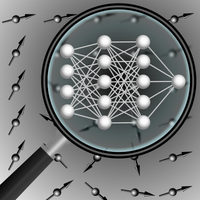
Replacing Neural Networks by Optimal Analytical Predictors for the Detection of Phase Transitions

Julian Arnold and Frank Schäfer

Phys. Rev. X 12, 031044 (2022) - Published 28 September, 2022

A new theory for how neural networks detect phase transitions from data reveals that popular methods rely on detecting changes in probability distributions rather than recognizing prevalent patterns.

Transverse Electron-Beam Shaping with Light

Marius Constantin Chirita Mihaila, Philipp Weber, Matthias Schneller, Lucas Grandits, Stefan Nimmrichter, and Thomas Juffmann

Phys. Rev. X 12, 031043 (2022) - Published 26 September, 2022

A new method that uses laser light to both generate and shape electron beams could improve the resolution of electron microscopy.

Beyond Conventional Ferromagnetism and Antiferromagnetism: A Phase with Nonrelativistic Spin and Crystal Rotation Symmetry

Libor Šmejkal, Jairo Sinova, and Tomas Jungwirth

Phys. Rev. X 12, 031042 (2022) - Published 23 September, 2022

Magnetic phases are traditionally ferromagnetic or antiferromagnetic. An analysis of spin symmetries reveals a third phase, dubbed altermagnetism, that opens new fronts in magnetism and spintronics research.

Geometry Adaptation of Protrusion and Polarity Dynamics in Confined Cell Migration

David B. Brückner, Matthew Schmitt, Alexandra Fink, Georg Ladurner, Johannes Flommersfeld, Nicolas Arlt, Edouard Hannezo, Joachim O. Rädler, and Chase P. Broedersz

Phys. Rev. X 12, 031041 (2022) - Published 20 September, 2022

Experiments demonstrate that biological cells actively change shape to respond to their surroundings when moving in confined regions.

Driven Disordered Systems Approach to Biological Evolution in Changing Environments

Suman G. Das, Joachim Krug, and Muhittin Mungan

Phys. Rev. X 12, 031040 (2022) - Published 20 September, 2022

A bacterial genome’s evolution under changing drug concentrations displays effects of memory formation and mimics how disordered solids respond to external forces.

Emergence of Gapless Quantum Spin Liquid from Deconfined Quantum Critical Point

Wen-Yuan Liu, Juraj Hasik, Shou-Shu Gong, Didier Poilblanc, Wei-Qiang Chen, and Zheng-Cheng Gu

Phys. Rev. X 12, 031039 (2022) - Published 19 September, 2022

An analysis of a common theoretical model of antiferromagnetic interactions reveals the deep relationship between two pillars of condensed-matter physics: quantum spin liquids and deconfined quantum critical points.

Multi-GeV Electron Bunches from an All-Optical Laser Wakefield Accelerator

B. Miao, J. E. Shrock, L. Feder, R. C. Hollinger, J. Morrison, R. Nedbailo, A. Picksley, H. Song, S. Wang, J. J. Rocca, and H. M. Milchberg

Phys. Rev. X 12, 031038 (2022) - Published 16 September, 2022

A new, compact laser-driven particle accelerator achieves electron energies of 5 GeV in just 20 cm—about 40% of the acceleration possible at the kilometer-long Linac Coherent Light Source.

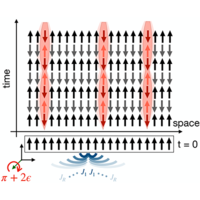
Discrete Time-Crystalline Response Stabilized by Domain-Wall Confinement

Mario Collura, Andrea De Luca, Davide Rossini, and Alessio Lerose

Phys. Rev. X 12, 031037 (2022) - Published 14 September, 2022

A proposal for stabilizing time-crystalline states of matter avoids hard-to-control features required by current experimental methods, introducing a new idea in the effort to stabilize nonequilibrium phases in general.

Sign In to Your Journals Account

Filter

Recent Issues

Vol. 16, Iss. 4
October - December 2026
Vol. 16, Iss. 3
July - September 2026
Vol. 16, Iss. 2
April - June 2026
Vol. 16, Iss. 1
January - March 2026
Category
Article Type

Filter

Article Lookup

Enter a citation