Recent Articles

Growth of Rényi Entropies in Interacting Integrable Models and the Breakdown of the Quasiparticle Picture

Bruno Bertini, Katja Klobas, Vincenzo Alba, Gianluca Lagnese, and Pasquale Calabrese

Phys. Rev. X 12, 031016 (2022) - Published 25 July, 2022

The rate of growth of entanglement in a quantum many-body system that is out of equilibrium can unexpectedly be interpreted as an equilibrium quantity.

Quasi-Two-Dimensional Anomalous Hall Mott Insulator of Topologically Engineered Jeff=1/2 Electrons

Junyi Yang, Hidemaro Suwa, Derek Meyers, Han Zhang, Lukas Horak, Zhaosheng Wang, Gilberto Fabbris, Yongseong Choi, Jenia Karapetrova, Jong-Woo Kim, Daniel Haskel, Philip J. Ryan, M. P. M. Dean, Lin Hao, and Jian Liu

Phys. Rev. X 12, 031015 (2022) - Published 22 July, 2022

An experiment that realizes hallmarks of both weak- and strong-coupling between electrons at the same time offers a novel platform for exploring the rich physics connecting these two limits of quantum materials.

Optimal Purification of a Spin Ensemble by Quantum-Algorithmic Feedback

Daniel M. Jackson, Urs Haeusler, Leon Zaporski, Jonathan H. Bodey, Noah Shofer, Edmund Clarke, Maxime Hugues, Mete Atatüre, Claire Le Gall, and Dorian A. Gangloff

Phys. Rev. X 12, 031014 (2022) - Published 21 July, 2022

A new method for cooling a collection of spins reveals their state to within one spin flip and could be used to create exciting new quantum states.

Many-Body Quantum Teleportation via Operator Spreading in the Traversable Wormhole Protocol

Thomas Schuster, Bryce Kobrin, Ping Gao, Iris Cong, Emil T. Khabiboulline, Norbert M. Linke, Mikhail D. Lukin, Christopher Monroe, Beni Yoshida, and Norman Y. Yao

Phys. Rev. X 12, 031013 (2022) - Published 20 July, 2022

A new mechanism for quantum teleportation leverages the thermalizing dynamics of complex quantum systems and points the way to a powerful experimental tool for characterizing these dynamics.

Anomalous Dimensions of Monopole Operators at the Transitions between Dirac and Topological Spin Liquids

Éric Dupuis, Rufus Boyack, and William Witczak-Krempa

Phys. Rev. X 12, 031012 (2022) - Published 19 July, 2022

A theoretical analysis reveals how monopoles in quantum spin liquids behave at quantum phase transitions and supports a duality that connects unrelated transitions.

Generalized Entropy Production in Collisionless Plasma Flows and Turbulence

Vladimir Zhdankin

Phys. Rev. X 12, 031011 (2022) - Published 18 July, 2022

A new general theoretical framework for entropy production helps demonstrate, in simulations, the production of entropy in collisionless plasmas, whose entropy evolution has long been an outstanding problem.

Generation of High-Resolution Handwritten Digits with an Ion-Trap Quantum Computer

Manuel S. Rudolph, Ntwali Bashige Toussaint, Amara Katabarwa, Sonika Johri, Borja Peropadre, and Alejandro Perdomo-Ortiz

Phys. Rev. X 12, 031010 (2022) - Published 15 July, 2022

A machine-learning algorithm that includes a quantum circuit generates realistic handwritten digits and performs better than its classical counterpart.

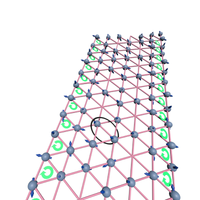
Topological Chiral and Nematic Superconductivity by Doping Mott Insulators on Triangular Lattice

Yixuan Huang and D. N. Sheng

Phys. Rev. X 12, 031009 (2022) - Published 14 July, 2022

Numerical simulations reveal several routes to realizing topological superconductivity—prized for its potential quantum computing applications—that involve doping weak magnetic Mott insulators and chiral spin liquids.

Amplification of Superconducting Fluctuations in Driven YBa2Cu3O6+x

A. von Hoegen, M. Fechner, M. Först, N. Taherian, E. Rowe, A. Ribak, J. Porras, B. Keimer, M. Michael, E. Demler, and A. Cavalleri

Phys. Rev. X 12, 031008 (2022) - Published 13 July, 2022

Experiments show that the mechanism of light-induced superconductivity in YBa2Cu3O6+x bilayer cuprates involves amplification of superconducting fluctuations, which is observed throughout the pseudogap phase.

Nonzero Momentum Requires Long-Range Entanglement

Lei Gioia and Chong Wang

Phys. Rev. X 12, 031007 (2022) - Published 12 July, 2022

A new theorem demonstrates a deep connection between quantum entanglement and discrete translation symmetry, a link with far-reaching applicability given that this type of symmetry is ubiquitous.

Active Microphase Separation in Mixtures of Microtubules and Tip-Accumulating Molecular Motors

Bezia Lemma, Noah P. Mitchell, Radhika Subramanian, Daniel J. Needleman, and Zvonimir Dogic

Phys. Rev. X 12, 031006 (2022) - Published 11 July, 2022

A novel class of self-organizing structures—molecular motors that accumulate on the ends of stiff filaments and form evolving shapes—add a new tool for the study of active matter.

Ergodicity Breaking in Area-Restricted Search of Avian Predators

Ohad Vilk, Yotam Orchan, Motti Charter, Nadav Ganot, Sivan Toledo, Ran Nathan, and Michael Assaf

Phys. Rev. X 12, 031005 (2022) - Published 8 July, 2022

Tracking of bird movements shows that the animals don’t spread outward like molecules in a gas, as ecologists often assume.

In situ Tuning of the Electric-Dipole Strength of a Double-Dot Charge Qubit: Charge-Noise Protection and Ultrastrong Coupling

P. Scarlino, J. H. Ungerer, D. J. van Woerkom, M. Mancini, P. Stano, C. Müller, A. J. Landig, J. V. Koski, C. Reichl, W. Wegscheider, T. Ihn, K. Ensslin, and A. Wallraff

Phys. Rev. X 12, 031004 (2022) - Published 7 July, 2022

Two studies improve the status of artificial atoms—called quantum dots—as qubit candidates for quantum technologies.

Energy Transfer into Period-Tripled States in Coupled Electromechanical Modes at Internal Resonance

Yingming Yan, X. Dong, L. Huang, K. Moskovtsev, and H. B. Chan

Phys. Rev. X 12, 031003 (2022) - Published 6 July, 2022

A demonstration of a new way to transfer energy between coupled modes in a nanoscale resonator presents novel opportunities for information applications that go beyond the standard binary representation.

Translational Covariance of Flexoelectricity at Ferroelectric Domain Walls

Oswaldo Diéguez and Massimiliano Stengel

Phys. Rev. X 12, 031002 (2022) - Published 5 July, 2022

A new way to connect the macroscopic description of ferroelectrics to their atomistics boosts the predictive power of macroscopic theories based on polarization and strain.

Field-Angle Dependence Reveals Odd-Parity Superconductivity in CeRh2As2

J. F. Landaeta, P. Khanenko, D. C. Cavanagh, C. Geibel, S. Khim, S. Mishra, I. Sheikin, P. M. R. Brydon, D. F. Agterberg, M. Brando, and E. Hassinger

Phys. Rev. X 12, 031001 (2022) - Published 1 July, 2022

Observations reveal the angle dependence of the magnetic field needed to suppress superconductivity in CeRh2As2. Uniquely, the behavior of “odd parity” superconductors is revealed.

Unidirectional Magnetoresistance in Antiferromagnet/Heavy-Metal Bilayers

Soho Shim, M. Mehraeen, Joseph Sklenar, Junseok Oh, Jonathan Gibbons, Hilal Saglam, Axel Hoffmann, Steven S.-L. Zhang, and Nadya Mason

Phys. Rev. X 12, 021069 (2022) - Published 30 June, 2022

Observation of a unidirectional magnetoresistance in an antiferromagnet offers a way to monitor the direction of microscopic magnetic moments in such devices, a crucial ability for future spintronics technologies.

Resonant Inelastic X-Ray Scattering Study of Electron-Exciton Coupling in High-Tc Cuprates

F. Barantani, M. K. Tran, I. Madan, I. Kapon, N. Bachar, T. C. Asmara, E. Paris, Y. Tseng, W. Zhang, Y. Hu, E. Giannini, G. Gu, T. P. Devereaux, C. Berthod, F. Carbone, T. Schmitt, and D. van der Marel

Phys. Rev. X 12, 021068 (2022) - Published 29 June, 2022

Observations of electron-exciton coupling in a high-temperature superconductor offers new insight into the formation of Cooper pairs and a novel way to actively manipulate superconductivity.

Interaction-Driven Metal-Insulator Transition with Charge Fractionalization

Yichen Xu, Xiao-Chuan Wu, Mengxing Ye, Zhu-Xi Luo, Chao-Ming Jian, and Cenke Xu

Phys. Rev. X 12, 021067 (2022) - Published 28 June, 2022

A new theory of an exotic transition from metal to insulator in a transition metal dichalcogenide moiré heterostructure brings theoretical understanding more in line with recent experiments.

Location and Topology of the Fundamental Gap in Photonic Crystals

Thomas Christensen, Hoi Chun Po, John D. Joannopoulos, and Marin Soljačić

Phys. Rev. X 12, 021066 (2022) - Published 27 June, 2022
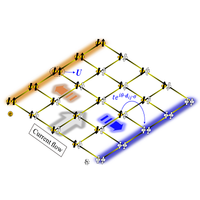
Using tools from topological band theory, a new analysis reveals where the first photonic band gap in photonic crystals can be opened for every type of crystalline symmetry.

Sign In to Your Journals Account

Filter

Recent Issues

Vol. 16, Iss. 4
October - December 2026
Vol. 16, Iss. 3
July - September 2026
Vol. 16, Iss. 2
April - June 2026
Vol. 16, Iss. 1
January - March 2026
Category
Article Type

Filter

Article Lookup

Enter a citation