Recent Articles

Controlling Atom-Photon Bound States in an Array of Josephson-Junction Resonators

Marco Scigliuzzo, Giuseppe Calajò, Francesco Ciccarello, Daniel Perez Lozano, Andreas Bengtsson, Pasquale Scarlino, Andreas Wallraff, Darrick Chang, Per Delsing, and Simone Gasparinetti

Phys. Rev. X 12, 031036 (2022) - Published 12 September, 2022

Two superconducting qubits coupled to an array of resonators are dressed by two photonic clouds that mediate their interaction and create two atom-photon bound states, an architecture that could be used for quantum simulation of spin models.

Generation of a Single-Cycle Acoustic Pulse: A Scalable Solution for Transport in Single-Electron Circuits

Junliang Wang, Shunsuke Ota, Hermann Edlbauer, Baptiste Jadot, Pierre-André Mortemousque, Aymeric Richard, Yuma Okazaki, Shuji Nakamura, Arne Ludwig, Andreas D. Wieck, Matias Urdampilleta, Tristan Meunier, Tetsuo Kodera, Nobu-Hisa Kaneko, Shintaro Takada, and Christopher Bäuerle

Phys. Rev. X 12, 031035 (2022) - Published 7 September, 2022

Like a surfer riding a wave, a single electron is transported by an acoustic pulse traveling along the surface of a microchip.

Second Law for Active Heat Engines

Arya Datta, Patrick Pietzonka, and Andre C. Barato

Phys. Rev. X 12, 031034 (2022) - Published 6 September, 2022

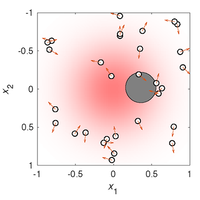
A reformulation of the second law of thermodynamics describes the unusual behavior of cyclic heat engines in contact with an active bath and explains how they operate in regimes not accessible to passive heat engines.

Quantifying n-Photon Indistinguishability with a Cyclic Integrated Interferometer

Mathias Pont, Riccardo Albiero, Sarah E. Thomas, Nicolò Spagnolo, Francesco Ceccarelli, Giacomo Corrielli, Alexandre Brieussel, Niccolo Somaschi, Hêlio Huet, Abdelmounaim Harouri, Aristide Lemaître, Isabelle Sagnes, Nadia Belabas, Fabio Sciarrino, Roberto Osellame, Pascale Senellart, and Andrea Crespi

Phys. Rev. X 12, 031033 (2022) - Published 2 September, 2022

A new optical device measures photon indistinguishability—an important property for future light-based quantum computers.

Direct X-Ray Detection of the Spin Hall Effect in CuBi

Sandra Ruiz-Gómez, Rubén Guerrero, Muhammad W. Khaliq, Claudia Fernández-González, Jordi Prat, Andrés Valera, Simone Finizio, Paolo Perna, Julio Camarero, Lucas Pérez, Lucía Aballe, and Michael Foerster

Phys. Rev. X 12, 031032 (2022) - Published 1 September, 2022

X-ray spectromicroscopy provides a direct measurement of the spin accumulation due to the spin Hall effect in the surface of a copper-bismuth alloy electrode.

Stirring by Staring: Measurement-Induced Chirality

Matthew Wampler, Brian J. J. Khor, Gil Refael, and Israel Klich

Phys. Rev. X 12, 031031 (2022) - Published 24 August, 2022

In quantum mechanics, the observer necessarily plays an active role in the dynamics of the system, making it difficult to probe a system without disturbing it. Here, we show that this apparent difficulty may be turned into a tool for driving an initially trivial system into a desired quantum many-body state simply by observing it.

First-Principle Coarse-Graining Framework for Scale-Free Bell-Like Association and Dissociation Rates in Thermal and Active Systems

Josip Augustin Janeš, Cornelia Monzel, Daniel Schmidt, Rudolf Merkel, Udo Seifert, Kheya Sengupta, and Ana-Sunčana Smith

Phys. Rev. X 12, 031030 (2022) - Published 22 August, 2022

A new theory of ligand-receptor bonds in biological cells that accounts for membrane fluctuations reveals an orders-of-magnitude increase in binding rates and the range over which a receptor can recognize its ligand.

DeepLSS: Breaking Parameter Degeneracies in Large-Scale Structure with Deep-Learning Analysis of Combined Probes

Tomasz Kacprzak and Janis Fluri

Phys. Rev. X 12, 031029 (2022) - Published 19 August, 2022

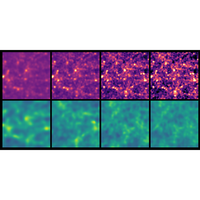
Cosmological constraints can be improved by applying machine learning to a combination of data from two leading probes of the large-scale structure of the Universe.

Enhancing Spin Coherence in Optically Addressable Molecular Qubits through Host-Matrix Control

S. L. Bayliss, P. Deb, D. W. Laorenza, M. Onizhuk, G. Galli, D. E. Freedman, and D. D. Awschalom

Phys. Rev. X 12, 031028 (2022) - Published 18 August, 2022

The spin state of molecular qubits can be made more stable by changing the chemical environment in which the qubits sit.

Cell-Matrix Elastocapillary Interactions Drive Pressure-Based Wetting of Cell Aggregates

Muhammad Sulaiman Yousafzai, Vikrant Yadav, Sorosh Amiri, Michael F. Staddon, Youssef Errami, Gwilherm Jaspard, Shiladitya Banerjee, and Michael Murrell

Phys. Rev. X 12, 031027 (2022) - Published 17 August, 2022

Observations of pressure-driven motion of cells reveal a novel type of cell migration and cooperation between cellular- and tissue-level forces that may point to unexplored modes of cancer cell movement and early organism development.

Probing Transport and Slow Relaxation in the Mass-Imbalanced Fermi-Hubbard Model

N. Darkwah Oppong, G. Pasqualetti, O. Bettermann, P. Zechmann, M. Knap, I. Bloch, and S. Fölling

Phys. Rev. X 12, 031026 (2022) - Published 16 August, 2022

Experiments reveal a particularly slow relaxation timescale when a mixture of heavy and light particles is brought out of equilibrium.

Thermodynamic Inference in Partially Accessible Markov Networks: A Unifying Perspective from Transition-Based Waiting Time Distributions

Jann van der Meer, Benjamin Ertel, and Udo Seifert

Phys. Rev. X 12, 031025 (2022) - Published 12 August, 2022

A novel method reconstructs the entropy production in systems whose evolution can be described as hopping among discrete states even if only a few transitions are observed.

Mechanisms for Spontaneous Symmetry Breaking in Developing Visual Cortex

Francesco Fumarola, Bettina Hein, and Kenneth D. Miller

Phys. Rev. X 12, 031024 (2022) - Published 11 August, 2022

Scientists may have answered a longstanding question in biophysics: how the brain learns to recognize features in images before a newborn even opens its eyes.

Formation of an Electron-Phonon Bifluid in Bulk Antimony

Alexandre Jaoui, Adrien Gourgout, Gabriel Seyfarth, Alaska Subedi, Thomas Lorenz, Benoît Fauqué, and Kamran Behnia

Phys. Rev. X 12, 031023 (2022) - Published 5 August, 2022

In elemental antimony at cryogenic temperatures, experiments show that electron-electron collisions dominate the degradation of charge and heat flow thanks in part to a tight phonon-electron coupling.

Topological Multipartite Entanglement in a Fermi Liquid

Pok Man Tam, Martin Claassen, and Charles L. Kane

Phys. Rev. X 12, 031022 (2022) - Published 2 August, 2022

Theoretical work establishes a connection for the many-electron quantum states of metals between topology and entanglement, two powerful principles for characterizing complex quantum states.

Ultrastable Shear-Jammed Granular Material

Yiqiu Zhao (赵逸秋), Yuchen Zhao (赵雨辰), Dong Wang (王东), Hu Zheng (郑虎), Bulbul Chakraborty, and Joshua E. S. Socolar

Phys. Rev. X 12, 031021 (2022) - Published 1 August, 2022

Experiments on shearing a layer of plastic disks reveal the emergence of a novel type of disordered solid state, offering new insight into the stability of granular materials.

Skyrmions in Twisted Bilayer Graphene: Stability, Pairing, and Crystallization

Yves H. Kwan, Glenn Wagner, Nick Bultinck, Steven H. Simon, and S. A. Parameswaran

Phys. Rev. X 12, 031020 (2022) - Published 29 July, 2022

When charges are added to correlated insulators in twisted bilayer graphene, spin and pseudospin textures called skyrmions can appear and even pair up to create an exotic superconductor.

Valley Isospin Controlled Fractional Quantum Hall States in Bilayer Graphene

Ke Huang, Hailong Fu, Danielle Reifsnyder Hickey, Nasim Alem, Xi Lin, Kenji Watanabe, Takashi Taniguchi, and Jun Zhu

Phys. Rev. X 12, 031019 (2022) - Published 28 July, 2022

A demonstration of fine control over the valley isospin in bilayer graphene leads to evidence of an unusual type of fractional quantum Hall effect and uncovers properties of its many-body wave function.

Observation of Light-Induced Dipole-Dipole Forces in Ultracold Atomic Gases

Mira Maiwöger, Matthias Sonnleitner, Tiantian Zhang, Igor Mazets, Marion Mallweger, Dennis Rätzel, Filippo Borselli, Sebastian Erne, Jörg Schmiedmayer, and Philipp Haslinger

Phys. Rev. X 12, 031018 (2022) - Published 27 July, 2022

Experiments reveal for the first time how a laser illuminating a cloud of ultracold atoms triggers an effective force between the atoms, offering a new way to trap and control ultracold atoms.

Monitoring Fast Superconducting Qubit Dynamics Using a Neural Network

G. Koolstra, N. Stevenson, S. Barzili, L. Burns, K. Siva, S. Greenfield, W. Livingston, A. Hashim, R. K. Naik, J. M. Kreikebaum, K. P. O’Brien, D. I. Santiago, J. Dressel, and I. Siddiqi

Phys. Rev. X 12, 031017 (2022) - Published 26 July, 2022

A new method for weakly monitoring a quantum state uses a neural network to learn and adapt to detector effects that typically prevent measurements of rapidly changing states.

Sign In to Your Journals Account

Filter

Recent Issues

Vol. 16, Iss. 4
October - December 2026
Vol. 16, Iss. 3
July - September 2026
Vol. 16, Iss. 2
April - June 2026
Vol. 16, Iss. 1
January - March 2026
Category
Article Type

Filter

Article Lookup

Enter a citation