Recent Articles

Long-Distance Entanglement of Spin Qubits via Ferromagnet

Luka Trifunovic, Fabio L. Pedrocchi, and Daniel Loss

Phys. Rev. X 3, 041023 (2013) - Published 4 December, 2013

Atomlike spin-based nitrogen-vacancy centers in diamond have emerged as a promising class of candidates for qubits in room-temperature quantum computing. Making them interact with each other in a controlled and scalable way even when they are separated over long distances is the next step. A new proposal shows that this goal can be achieved by coupling the spin qubits to a common ferromagnet and exploiting the fast traveling magnons in the ferromagnet as the agent mediating long-range qubit-qubit interactions.

Mathematical Formulation of Multilayer Networks

Manlio De Domenico, Albert Solé-Ribalta, Emanuele Cozzo, Mikko Kivelä, Yamir Moreno, Mason A. Porter, Sergio Gómez, and Alex Arenas

Phys. Rev. X 3, 041022 (2013) - Published 4 December, 2013

A “monoplex” network, like a Facebook-based social network, can be represented by a set of nodes (people) linked by their Facebook connections (interactions). But real-world networks can be “multiplex,” with multiple types of interactions and where one type of interaction can influence another. A unifying framework for describing “multiplex” networks has been missing so far. Deftly employing the concept of tensors, theorists now present such a framework that will power studies of “multiplex” networks across many scientific disciplines.

Correlation of Positive and Negative Reciprocity Fails to Confer an Evolutionary Advantage: Phase Transitions to Elementary Strategies

Attila Szolnoki and Matjaž Perc

Phys. Rev. X 3, 041021 (2013) - Published 27 November, 2013

Why do humans cooperate with other unrelated humans? Correlated use of both a “reward” and a “punishment” strategy has been thought to be an evolutionary force underlying our predisposition for cooperation: if others are kind to us, we are kind to them; if they are exploitive, we may stop cooperating or tend to punish them. Recent human experiments show, however, that individuals mostly use one strategy or the other, rarely both. Now, statistical physical simulations of an evolutionary game model lend significant support to these findings.

Thermally Activated Contact Strengthening Explains Nonmonotonic Temperature and Velocity Dependence of Atomic Friction

Mykhaylo Evstigneev and Peter Reimann

Phys. Rev. X 3, 041020 (2013) - Published 26 November, 2013

Recent experiments on friction between a moving atomic-scale tip and a smooth surface have shown that the friction has a nonmonotonic dependence on temperature and decreases with the tip’s velocity. No single theoretical model provides consistent rationalizations of all these experimental data. A new theory based on the notion of “contact aging”—a thermally activated process of the tip-surface contact strengthening—correctly predicts all these recent results.

Waveguide-Plasmon Polaritons Enhance Transverse Magneto-Optical Kerr Effect

Lars E. Kreilkamp, Vladimir I. Belotelov, Jessie Yao Chin, Stefanie Neutzner, Daniel Dregely, Thomas Wehlus, Ilya A. Akimov, Manfred Bayer, Bernd Stritzker, and Harald Giessen

Phys. Rev. X 3, 041019 (2013) - Published 25 November, 2013

Properties of light propagating in some materials can be influenced by a static magnetic field. Such magneto-optical effects are useful, but their strength is limited traditionally by the materials used. Scientists demonstrate that a hybrid structure of a magneto-optical photonic waveguide with plasmonic (gold) nanowires significantly boosts an important effect, the so-called transverse magneto-optical Kerr effect, through resonant interaction between the waveguide photons and the plasmons.

Quantum Simulation of a Lattice Schwinger Model in a Chain of Trapped Ions

P. Hauke, D. Marcos, M. Dalmonte, and P. Zoller

Phys. Rev. X 3, 041018 (2013) - Published 22 November, 2013

Gauge theories such as quantum electrodynamics, in principle, give us a precise understanding of the interactions between subatomic particles, but often the calculations involved are beyond current computational capabilities. Quantum simulators based on experimental many-body systems could be a solution to this problem. Scientists exploit the current state-of-the-art experimental technology for manipulating cold trapped ions and propose a simulator of the one-dimensional version of quantum electrodynamics.

Boosting Majorana Zero Modes

Torsten Karzig, Gil Refael, and Felix von Oppen

Phys. Rev. X 3, 041017 (2013) - Published 22 November, 2013

Realization of Majorana fermions in solid-state systems offers a promising candidate for qubits in fault-tolerant quantum computing. How fast such qubits can be manipulated without loss in their quantum coherence motivates the need to understand the dynamics of solid-state Majorana fermions. Scientists discover that the dynamics is actually described by an effective variation of the original Dirac equation for the simpler relativistic free Majorana fermions and establish the speed limit for basic qubit manipulation.

Non-Abelian Topological Order on the Surface of a 3D Topological Superconductor from an Exactly Solved Model

Lukasz Fidkowski, Xie Chen, and Ashvin Vishwanath

Phys. Rev. X 3, 041016 (2013) - Published 21 November, 2013

The surface electronic structure of a three-dimensional topological superconductor is characterized by a Majorana cone—Majorana-fermion-like electronic excitations whose energies form a gapless continuum, rendering the surface conducting. It was believed that a gap in that electronic structure could only be created if time-reversal symmetry were broken. Theorists now show that, in the presence of strong electronic interaction, “gapping” and time-reversal symmetry can coexist if the surface has a special type of electronic excitations that are “anyons.”

Dissipationless Flow and Sharp Threshold of a Polariton Condensate with Long Lifetime

Bryan Nelsen, Gangqiang Liu, Mark Steger, David W. Snoke, Ryan Balili, Ken West, and Loren Pfeiffer

Phys. Rev. X 3, 041015 (2013) - Published 21 November, 2013

Exciton polaritons are essentially photons “dressed” by and interacting via their interaction with excitons in a semiconductor. As bosons, they exhibit Bose-Einstein condensation, in which they self-organize into a coherent state. Scientists have now extended their lifetime from 10 to 100 picoseconds and have observed a number of dramatic new effects, including a new and dynamic coherent state of spatially localized polaritons at high densities.

Time-Shift Invariance Determines the Functional Shape of the Current in Dissipative Rocking Ratchets

José A. Cuesta, Niurka R. Quintero, and Renato Alvarez-Nodarse

Phys. Rev. X 3, 041014 (2013) - Published 18 November, 2013

Rocking ratchets are utilized in many different systems to create a directed current of energy or material and much of their behavior is universal across the systems. Scientists discover the time-shift invariance of the ratchet current to be the origin of the universality and based on this insight build a unified theory for rocking ratchets that can guide and interpret future research and applications.

Error Suppression and Error Correction in Adiabatic Quantum Computation: Techniques and Challenges

Kevin C. Young, Mohan Sarovar, and Robin Blume-Kohout

Phys. Rev. X 3, 041013 (2013) - Published 13 November, 2013

Adiabatic quantum computing (AQC) has intrinsic robustness to noise, but whether it’s fault-tolerant—robust to all forms of noise—has not been explored. While fault tolerance through error correction is theoretically achievable in standard quantum computing, scientists show that it may not be achievable in AQC.

Biofilm Growth and Fossil Form

A. P. Petroff, N. J. Beukes, D. H. Rothman, and T. Bosak

Phys. Rev. X 3, 041012 (2013) - Published 13 November, 2013

Stromatolites are fossilized remains of microbial mats that stopped growing billions of years ago. A large class of them have similar conical shapes. Understanding their growth dynamics would seem like a daunting task. However, positing diffusion of calcium ions and inorganic carbon-based molecules in microbial mats and their diffusion-limited precipitation as the primary growth mechanisms, a mathematical model not only successfully predicts the conical shape but also concludes that the thickness of the ancient microbial mats was similar to that of modern-day mats.

Experimental Demonstration of Active Electromagnetic Cloaking

Michael Selvanayagam and George V. Eleftheriades

Phys. Rev. X 3, 041011 (2013) - Published 12 November, 2013

An “active” invisibility cloak achieves its goal by canceling the electromagnetic field scattered by the cloaked object, thus making it invisible. Scientists demonstrate the first experimental realization of such a cloak for microwaves using thin layers of antennas and phase shifters that can be tuned for field cancellation on demand.

Microfluidic Microdialysis: Spatiotemporal Control over Solution Microenvironments Using Integrated Hydrogel Membrane Microwindows

Joel S. Paustian, Rodrigo Nery Azevedo, Sean-Thomas B. Lundin, Matthew J. Gilkey, and Todd M. Squires

Phys. Rev. X 3, 041010 (2013) - Published 4 November, 2013

Inspired by the two-step circulation-diffusion distribution strategy of human circulatory system, scientists have developed “hydrogel membrane microwindows” in microfludic devices as a powerful and versatile means to establish and manipulate chemical and electric-field gradients with speed.

Rotational Coherence Encoded in an “Air-Laser” Spectrum of Nitrogen Molecular Ions in an Intense Laser Field

Haisu Zhang, Chenrui Jing, Jinping Yao, Guihua Li, Bin Zeng, Wei Chu, Jielei Ni, Hongqiang Xie, Huailiang Xu, See Leang Chin, Kaoru Yamanouchi, Ya Cheng, and Zhizhan Xu

Phys. Rev. X 3, 041009 (2013) - Published 29 October, 2013

When exposed to intense infrared laser pulses of femtosecond duration, molecules such as N2, CO2, and H2O not only become ionized but can also produce lasers as a result of simultaneous population inversion. Scientists look deep into this “air lasing” phenomenon in N2 gas and uncover both quantum coherence in the rotational wave packets of the lasing molecular ions and its footprint in the air-laser spectrum.

Measurement of the Electronic Thermal Conductance Channels and Heat Capacity of Graphene at Low Temperature

Kin Chung Fong, Emma E. Wollman, Harish Ravi, Wei Chen, Aashish A. Clerk, M. D. Shaw, H. G. Leduc, and K. C. Schwab

Phys. Rev. X 3, 041008 (2013) - Published 29 October, 2013

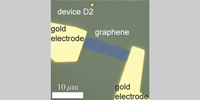
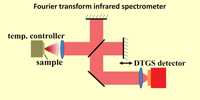
At ambient temperatures, graphene conducts heat via lattice vibrations called phonons, but at very low temperatures, electron-phonon coupling becomes weak and thermal conductance is mostly due to electron diffusion. High-sensitivity measurements across a wide temperature range provide new, state-of-the-art data on electron-phonon coupling, and reveal intriguing deviations from theoretical predictions regarding electron-based thermal and electric transport.

Degree Distribution in Quantum Walks on Complex Networks

Mauro Faccin, Tomi Johnson, Jacob Biamonte, Sabre Kais, and Piotr Migdał

Phys. Rev. X 3, 041007 (2013) - Published 24 October, 2013

Google’s search engine algorithmically determines the relative importance of the world’s webpages by exploiting the physics of a classical random walker on the complex network of nodes (pages) and links (hyperlinks). What happens if the classical random walker is replaced by a quantum one? Researchers develop and investigate a simple model of a quantum walker on a complex network, uncovering interesting quantum-classical correspondence as well as fundamentally intriguing differences.

Frequency-Stabilized Source of Single Photons from a Solid-State Qubit

Jonathan H. Prechtel, Andreas V. Kuhlmann, Julien Houel, Lukas Greuter, Arne Ludwig, Dirk Reuter, Andreas D. Wieck, and Richard J. Warburton

Phys. Rev. X 3, 041006 (2013) - Published 23 October, 2013

Single-photon sources required for quantum communication and computation are commonly based on semiconductor quantum dots; however, charge fluctuations in the semiconductor lead to unwanted variations in the “color” (wavelength) of the emitted photons. Scientists use a hybrid system of a quantum dot and a constant-wavelength laser to measure and then cancel out fluctuations in the wavelength, generating a perfect stream of single photons of one color.

Do Cloaked Objects Really Scatter Less?

Francesco Monticone and Andrea Alù

Phys. Rev. X 3, 041005 (2013) - Published 21 October, 2013

Known metamaterial-based “invisibility cloaks” have been observed to work only for narrow ranges of electromagnetic waves, for example, making an object invisible to red light, but highly visible to blue light. With a comprehensive and quantitative theoretical analysis, researchers now provide a concrete understanding of the observations and also propose a design for broadband cloaks using diamagnetic or superconducting thin cloaking layers.

Vanadium Dioxide as a Natural Disordered Metamaterial: Perfect Thermal Emission and Large Broadband Negative Differential Thermal Emittance

Mikhail A. Kats, Romain Blanchard, Shuyan Zhang, Patrice Genevet, Changhyun Ko, Shriram Ramanathan, and Federico Capasso

Phys. Rev. X 3, 041004 (2013) - Published 21 October, 2013

Thermal radiation from conventional emitters, such as the warm glow of a light bulb, increases with temperature: the hotter the bulb, the more it glows. Thermal emitters that buck this trend could lead to many unconventional thermal devices. Researchers have engineered such a (meta)material by exploiting the unique structural and electronic phase changes of vanadium oxide at around 70∘C.

Sign In to Your Journals Account

Filter

Recent Issues

Vol. 16, Iss. 4
October - December 2026
Vol. 16, Iss. 3
July - September 2026
Vol. 16, Iss. 2
April - June 2026
Vol. 16, Iss. 1
January - March 2026
Category
Article Type

Filter

Article Lookup

Enter a citation