Recent Articles

Topological Invariants and Ground-State Wave functions of Topological Insulators on a Torus

Zhong Wang and Shou-Cheng Zhang

Phys. Rev. X 4, 011006 (2014) - Published 21 January, 2014

Topological insulators are classified by “topological invariants” characterizing their electronic structures. Identifying and computing topological invariants for insulators in which electron-electron interactions are important is, however, difficult. Theorists now present a way to accomplish this task for a wide range of topological insulators.

Giant Circular Dichroism in Individual Carbon Nanotubes Induced by Extrinsic Chirality

A. Yokoyama, M. Yoshida, A. Ishii, and Y. K. Kato

Phys. Rev. X 4, 011005 (2014) - Published 21 January, 2014

Optical activity—the ability to rotate the polarization of light—was long thought to be only the property of organic molecules without intrinsic structural mirror symmetry. Scientists now demonstrate experimentally that single carbon nanotubes, which have internal mirror symmetry, can be externally induced to exhibit both giant optical activity and a broad range of variability.

Intramembrane Cavitation as a Predictive Bio-Piezoelectric Mechanism for Ultrasonic Brain Stimulation

Michael Plaksin, Shy Shoham, and Eitan Kimmel

Phys. Rev. X 4, 011004 (2014) - Published 21 January, 2014

Recent discovery of neuronal stimulation by low-intensity, focused ultrasound waves has ignited high hope and research effort to develop a noninvasive way to assess and control brain activity with millimeter spatial resolution. But how does the phenomenon work? Scientists now propose the first concrete biophysical model to explain, both qualitatively and quantitatively, the discovery and to guide the methodological development.

Orientation-Dependent Handedness and Chiral Design

Efi Efrati and William T. M. Irvine

Phys. Rev. X 4, 011003 (2014) - Published 16 January, 2014

The handedness of an object has always been a binary concept: either left handed or right handed. Scientists now show that quantifying handedness as direction-dependent properties actually makes fundamental physical sense and can guide both our understanding of known handedness phenomena and design of materials with novel handed-response properties.

Transition-Metal Pentatelluride ZrTe5 and HfTe5: A Paradigm for Large-Gap Quantum Spin Hall Insulators

Hongming Weng, Xi Dai, and Zhong Fang

Phys. Rev. X 4, 011002 (2014) - Published 15 January, 2014

Quantum spin Hall (QSH) insulators, with their insulating interior and conducting edges, have great potential for technological applications. But, scarcity and difficulty in fabrication are major obstacles to their wide applications. Theorists now predict that single sheets that can be exfoliated from two well-known layered thermoelectric compounds, ZrTe5 and HfTe5, are the most promising QSH insulator candidates to date.

Holographic Path to the Turbulent Side of Gravity

Stephen R. Green, Federico Carrasco, and Luis Lehner

Phys. Rev. X 4, 011001 (2014) - Published 9 January, 2014

Gravity/fluid correspondence depicts the recent realization that the dynamics of the latter actually finds analogue in the former. Investigating this correspondence further, theorists now discover a counterpart of fluid turbulence in gravitationally perturbed black holes that gives rise to long-lived, large-scale ”gravitational wave tornadoes.”

Optical Properties of Gallium-Doped Zinc Oxide—A Low-Loss Plasmonic Material: First-Principles Theory and Experiment

Jongbum Kim, Gururaj V. Naik, Alexander V. Gavrilenko, Krishnaveni Dondapati, Vladimir I. Gavrilenko, S. M. Prokes, Orest J. Glembocki, Vladimir M. Shalaev, and Alexandra Boltasseva

Phys. Rev. X 3, 041037 (2013) - Published 31 December, 2013

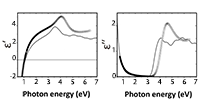
Heavily doped transparent conducting oxides are believed to be promising alternatives to noble metals in low-loss plasmonic applications in the technologically important near-infrared range of light. Scientists now report a timely study of the optical properties of doped zinc oxide, assessing its performance in plasmonic devices and establishing a hitherto unrealized connection from doping to crystal structure and optical properties.

Longitudinal Spin Excitations and Magnetic Anisotropy in Antiferromagnetically Ordered BaFe2As2

Chong Wang, Rui Zhang, Fa Wang, Huiqian Luo, L. P. Regnault, Pengcheng Dai, and Yuan Li

Phys. Rev. X 3, 041036 (2013) - Published 30 December, 2013

The proximity of an antiferromagnetic phase to the superconducting phase in iron pnictides raises the tantalizing possibility of a fundamental connection between magnetism and superconductivity. With an experiment of unprecedented precision, scientists find unequivocal evidence that puts that possibility on a firmer footing.

Comprehensive Search for New Phases and Compounds in Binary Alloy Systems Based on Platinum-Group Metals, Using a Computational First-Principles Approach

Gus L. W. Hart, Stefano Curtarolo, Thaddeus B. Massalski, and Ohad Levy

Phys. Rev. X 3, 041035 (2013) - Published 30 December, 2013

Binary metallic Platinum Group Metal (PGM) systems are a class of materials important for chemical, petroleum, and automotive industries as well as for aeronautics and electronics. A state-of-the-art high-throughput computational materials modeling yields a large number of predictions of stable new PGM systems that will keep experimental materials scientists busy for years to come.

Supercurrent Spectroscopy of Andreev States

L. Bretheau, Ç. Ö. Girit, C. Urbina, D. Esteve, and H. Pothier

Phys. Rev. X 3, 041034 (2013) - Published 27 December, 2013

When two superconductors are connected through a weak link, discrete quasiparticle states localized at the link, called Andreev levels, are known to appear and leave their signatures in a “supercurrent” that flows through the link. Using microwave excitation and supercurrent measurements, scientists reveal the fundamental nature of the Andreev levels associated with a single-atom link.

Examining Electron-Boson Coupling Using Time-Resolved Spectroscopy

Michael Sentef, Alexander F. Kemper, Brian Moritz, James K. Freericks, Zhi-Xun Shen, and Thomas P. Devereaux

Phys. Rev. X 3, 041033 (2013) - Published 26 December, 2013

Pump-probe spectroscopy based on ultrashort laser pulses is gaining a surging interest as a method for probing electronic dynamics in solid-state materials. But how to make sense of the spectroscopic measurements remains a fundamental challenge. Theorists now report a timely development of a concrete and general understanding of pump-probe spectroscopy studies of electron-phonon coupling.

Collision of Akhmediev Breathers in Nonlinear Fiber Optics

B. Frisquet, B. Kibler, and G. Millot

Phys. Rev. X 3, 041032 (2013) - Published 19 December, 2013

Recently nonlinear fiber optics has revealed the existence of “breathers,” a new form of solitons with periodic oscillations on a finite background. But, how do such breathers, when they appear at the same time, interact with each other? A new experiment demonstrates that two such breathers, when their initial shapes and propagations are properly controlled, can collide to make a new giant “rogue” wave.

Observation of Discrete, Vortex Light Bullets

Falk Eilenberger, Karin Prater, Stefano Minardi, Reinhard Geiss, Ulrich Röpke, Jens Kobelke, Kay Schuster, Hartmut Bartelt, Stefan Nolte, Andreas Tünnermann, and Thomas Pertsch

Phys. Rev. X 3, 041031 (2013) - Published 18 December, 2013

Light bullets, solitarily propagating spatiotemporal waves recently observed in a two-dimensional waveguide array, are complex solitons. For the first time, scientists observe and investigate vortex light bullets—stably bound and propagating triplets of light bullets with an energy vortex at their centers.

Breaking of PT Symmetry in Bounded and Unbounded Scattering Systems

Philipp Ambichl, Konstantinos G. Makris, Li Ge, Yidong Chong, A. Douglas Stone, and Stefan Rotter

Phys. Rev. X 3, 041030 (2013) - Published 18 December, 2013

Coupling a light-amplifying gain material with a light-absorbing lossy material should, if their strengths are carefully balanced, result in a system with no net amplification or absorption. However, this overall symmetry can spontaneously break down at a specific value of gain-loss strength. Surprisingly, scientists find that this “symmetry-breaking” point is extremely robust to modifications of the system by its optical boundary conditions and explain why.

Realization and Modeling of Metamaterials Made of rf Superconducting Quantum-Interference Devices

M. Trepanier, Daimeng Zhang, Oleg Mukhanov, and Steven M. Anlage

Phys. Rev. X 3, 041029 (2013) - Published 18 December, 2013

A radio receiver that can tune to and digitize millions of frequencies per second, even if the signals are very weak, requires isolating the desired signal from stronger, unwanted noise. Scientists demonstrate a new kind of metamaterial, built with individual radio-frequency superconducting quantum-interference devices (rf SQUIDs), that allows such fast and long-range tuning by exploiting the large tunability of the nonlinear effective inductance of the Josephson junction in each SQUID.

Creation, Storage, and On-Demand Release of Optical Quantum States with a Negative Wigner Function

Jun-ichi Yoshikawa, Kenzo Makino, Shintaro Kurata, Peter van Loock, and Akira Furusawa

Phys. Rev. X 3, 041028 (2013) - Published 13 December, 2013

Nonclassical quantum states—those with no correspondence to classical states—can be characterized by a negative Wigner function and are vital to quantum-information processing. A new all-optical scheme achieves, for the first time, creation, storage, and on-demand release of highly nonclassical photonic states by using two coupled optical cavities, one for creation and storage, and the other for dynamical tuning of the release.

Nonvolatile Resistive Switching in Pt/LaAlO3/SrTiO3 Heterostructures

Shuxiang Wu, Xin Luo, Stuart Turner, Haiyang Peng, Weinan Lin, Junfeng Ding, Adrian David, Biao Wang, Gustaaf Van Tendeloo, Junling Wang, and Tom Wu

Phys. Rev. X 3, 041027 (2013) - Published 12 December, 2013

Many commonly used electrical resistive switching devices are based on films of metal-oxide-metal “sandwiches.” Now scientists have observed ultrafast and reversible resistive switching in a thin-film device composed of a metallic platinum layer and two ultrathin layers of insulating oxides, LaAlO3 and SrTiO3, and revealed its origin in the oxides’ charge-carrying oxygen vacancies.

Focal Conic Flower Textures at Curved Interfaces

Daniel A. Beller, Mohamed A. Gharbi, Apiradee Honglawan, Kathleen J. Stebe, Shu Yang, and Randall D. Kamien

Phys. Rev. X 3, 041026 (2013) - Published 10 December, 2013

The ability of liquid-crystal materials to self-assemble into different structures extends even to the defects in them. Ordered arrays of defect-induced structures are used in optical applications, such as microlenses. By inserting colloid particles—which behave as defects—into layered (smectic) liquid crystals to control molecular alignment, scientists develop a new way of generating and manipulating specific optical “flower textures” that may see applications.

PtSi Clustering in Silicon Probed by Transport Spectroscopy

Massimo Mongillo, Panayotis Spathis, Georgios Katsaros, Silvano De Franceschi, Pascal Gentile, Riccardo Rurali, and Xavier Cartoixà

Phys. Rev. X 3, 041025 (2013) - Published 9 December, 2013

Metallic silicides interface with silicon in most microelectronic devices. But when the miniaturization of the devices takes their sizes down to the nanoscale, is the chemical and structural integrity of the interfacing materials maintained, and if not, how are the electronic properties of the device affected? Scientists investigate nanoscale transistors based on PtSi/Si/PtSi heterostructures and find that Pt diffuses into the silicon channel to form PtSi clusters that behave as metallic quantum dots in a semiconductor matrix.

Kondo Hybridization and the Origin of Metallic States at the (001) Surface of SmB6

E. Frantzeskakis, N. de Jong, B. Zwartsenberg, Y. K. Huang, Y. Pan, X. Zhang, J. X. Zhang, F. X. Zhang, L. H. Bao, O. Tegus, A. Varykhalov, A. de Visser, and M. S. Golden

Phys. Rev. X 3, 041024 (2013) - Published 9 December, 2013

Whether SmB6 is a true Kondo insulator has been a 40-year-old puzzle, as its unexpected finite low-temperature electric conductance defies that simple stereotyping. Using angle-resolved photoelectron spectroscopy, scientists find an important piece of the puzzle in the material’s electronic band structure, including the signature of topological surface conducting states.

Sign In to Your Journals Account

Filter

Recent Issues

Vol. 16, Iss. 4
October - December 2026
Vol. 16, Iss. 3
July - September 2026
Vol. 16, Iss. 2
April - June 2026
Vol. 16, Iss. 1
January - March 2026
Category
Article Type

Filter

Article Lookup

Enter a citation