Recent Articles

Vibrational and thermal properties of amorphous alumina from first principles

Angela F. Harper, Kamil Iwanowski, William C. Witt, Mike C. Payne, and Michele Simoncelli

Phys. Rev. Materials 8, 043601 (2024) - Published 2 April, 2024

Incomplete monolayer regime and mixed regime of nanowire growth

Frank Glas

Phys. Rev. Materials 8, 043401 (2024) - Published 1 April, 2024

Size-dependent ferroelectric-to-paraelectric sliding transformations and antipolar-to-ferroelectric topological phase transitions in binary homobilayers

Alejandro Pacheco-Sanjuan, Pradeep Kumar, and Salvador Barraza-Lopez

Phys. Rev. Materials 8, 044001 (2024) - Published 1 April, 2024

Magnetotransport properties of epitaxial films and Hall bar devices of the correlated layered ruthenate Sr3Ru2O7

Prosper Ngabonziza, Anand Sharma, Anna Scheid, Sethulakshmi Sajeev, Peter A. van Aken, and Jochen Mannhart

Phys. Rev. Materials 8, 044401 (2024) - Published 1 April, 2024

Origin and quantification of the ultimate carrier concentration limits in In2O3 and Sn-doped In2O3

Andreas Klein, Alexander Frebel, Kim Alexander Creutz, and Binxiang Huang

Phys. Rev. Materials 8, 044601 (2024) - Published 1 April, 2024

Electronic structure in a rare-earth based nodal-line semimetal candidate PrSbTe

Sabin Regmi, Iftakhar Bin Elius, Anup Pradhan Sakhya, Milo Sprague, Mazharul Islam Mondal, Nathan Valadez, Volodymyr Buturlim, Kali Booth, Tetiana Romanova, Krzysztof Gofryk, Andrzej Ptok, Dariusz Kaczorowski, and Madhab Neupane

Phys. Rev. Materials 8, L041201 (2024) - Published 1 April, 2024

Giant anisotropy of magnetic damping in an epitaxial Cr/Fe bilayer with the absence of magnetocrystalline anisotropy

Thanh-Huong Thi Nguyen, Jungmin Park, Jae-Hyun Ha, Soogil Lee, Van Quang Nguyen, Nyun Jong Lee, Byong-Guk Park, Sunglae Cho, Jung-Il Hong, and Sanghoon Kim

Phys. Rev. Materials 8, L041401 (2024) - Published 1 April, 2024

Piezomagnetic properties in altermagnetic MnTe

Takuya Aoyama and Kenya Ohgushi

Phys. Rev. Materials 8, L041402 (2024) - Published 1 April, 2024

This study presents experimental results of the piezomagnetic effect in MnTe, one of the candidate materials for altermagnets. The piezomagnetic effect is a cross-correlation between magnetization and stress that is allowed in materials with broken time-reversal symmetry. The authors observed magnetization proportional to the stress below the antiferromagnetic transition temperature, indicating that MnTe has characteristics of altermagnets. They also demonstrated that the altermagnetic domains can be controlled via the piezomagnetic effect.

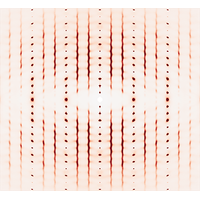
Models of polaron fluctuations in LuFe2O4

Kristoffer Andreas Holm Støckler, Nikolaj Roth, Anders Agentoft Feidenhans'l, Seiya Takahashi, Eiji Nishibori, and Bo Brummerstedt Iversen

Phys. Rev. Materials 8, 034409 (2024) - Published 29 March, 2024

Above its charge ordering temperature, LuFe2O4 becomes disordered with local order governed by polarons originating from the mixed valence Fe sublattice. The hidden order of the Fe valence is not easily probed by conventional scattering methods. However, the correlated ion displacements associated with the polaron fluctuations extracted by 3D-ΔPDF informed Monte Carlo modeling expose aspects of this hidden order hinting at a Jahn-Teller polaronic nature of the charge carriers.

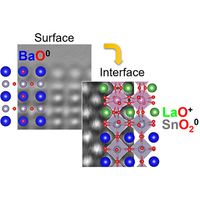
Polar discontinuity governs surface segregation and interface termination: A case study of LaInO3/BaSnO3

Martina Zupancic, Wahib Aggoune, Alexandre Gloter, Georg Hoffmann, Franz-Philipp Schmidt, Zbigniew Galazka, Daniel Pfützenreuter, Aysha A. Riaz, Christoph Schlueter, Houari Amari, Anna Regoutz, Jutta Schwarzkopf, Thomas Lunkenbein, Oliver Bierwagen, Claudia Draxl, and Martin Albrecht

Phys. Rev. Materials 8, 034602 (2024) - Published 29 March, 2024

Interfacial polar discontinuities play a crucial role in promoting unique two-dimensional electron gases in perovskite systems such as LaInO3/BaSnO3. This study sheds light on the intricate relationship between polar discontinuity compensation and surface segregation, pivotal factors in formation of interfaces. Transmission electron microscopy and density functional theory (DFT) confirm the surface of BaSnO3 (001) are BaO terminated. In contrast, the LaInO3/BaSnO3 interface is found to terminate with SnO2, accompanied by Ba surface segregation as confirmed by electron energy loss spectroscopy and x-ray photoelectron spectroscopy. DFT calculations highlight the significant influence of the polar discontinuity in driving Ba segregation. This study advances our understanding of oxide interfaces by highlighting the critical role of polar discontinuity compensation in shaping the structure of interfaces in perovskite systems.

Temperature dependence of the Ge(111) surface electronic structure probed by inelastic H atom scattering

Kerstin Krüger, Nils Hertl, Alec M. Wodtke, and Oliver Bünermann

Phys. Rev. Materials 8, 034603 (2024) - Published 29 March, 2024

Resolving the trap levels of Se and Se1−xTex via deep-level transient spectroscopy

Xin Chen, Songxue Bai, Ruiming Li, Yujie Yang, and Qianqian Lin

Phys. Rev. Materials 8, 033805 (2024) - Published 28 March, 2024

Tunable magnetism in bilayer transition metal dichalcogenides

Li-Ya Qiao, Xiu-Cai Jiang, Ze Ruan, and Yu-Zhong Zhang

Phys. Rev. Materials 8, 034003 (2024) - Published 28 March, 2024

Magnetic transition and spin-polarized two-dimensional electron gas controlled by polarization switching in strained CaMnO3/BaTiO3 slabs

S. Di Napoli, A. Román, A. M. Llois, M. H. Aguirre, L. B. Steren, and M. A. Barral

Phys. Rev. Materials 8, 034408 (2024) - Published 27 March, 2024

Domain nucleation across the metal-insulator transition of self-strained V2O3 films

Alexandre Pofelski, Sergio Valencia, Yoav Kalcheim, Pavel Salev, Alberto Rivera, Chubin Huang, Mohamad Assaad Mawass, Florian Kronast, Ivan K. Schuller, Yimei Zhu, and Javier del Valle

Phys. Rev. Materials 8, 035003 (2024) - Published 27 March, 2024

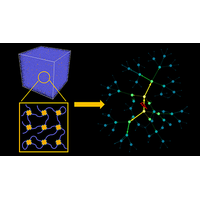
Predicting failure locations in model end-linked polymer networks

Han Zhang (张菡) and Robert A. Riggleman

Phys. Rev. Materials 8, 035604 (2024) - Published 27 March, 2024

Understanding the relationship between the macroscopic behaviors of polymer networks and their molecular structures is a challenging and long-standing problem in polymer physics and soft matter research. Combining molecular dynamics simulations and network analysis techniques, this study sheds light on the topological and geometric features governing the fracture process of model end-linked polymer networks. Geodesic edge betweenness centrality, local defect concentration and the orientation of network strands, extracted from the initial undeformed network conformations, are found to be served as effective predictors for identifying failure locations under uniaxial deformation. This work demonstrates the potential of a universal approach utilizing network analysis tools to address outstanding questions in soft matter society and to design the next generation of network materials with exceptional properties.

Role of chemical disorder in slowing down diffusion in complex concentrated alloys

Shi-Cheng Dai, Yong Yang, and Yun-Jiang Wang

Phys. Rev. Materials 8, 033607 (2024) - Published 26 March, 2024

Polymorphism of two-dimensional antiferromagnets, AgF2 and CuF2

Daniel Jezierski and Wojciech Grochala

Phys. Rev. Materials 8, 034407 (2024) - Published 26 March, 2024

Dislocation-mediated ultrahigh mechanical properties in nano-TiN

Jie Zhou, Fang Peng, Fang Hong, and Binbin Yue

Phys. Rev. Materials 8, 036001 (2024) - Published 26 March, 2024

Collinear-spin machine learned interatomic potential for Fe7Cr2Ni alloy

Lakshmi Shenoy, Christopher D. Woodgate, Julie B. Staunton, Albert P. Bartók, Charlotte S. Becquart, Christophe Domain, and James R. Kermode

Phys. Rev. Materials 8, 033804 (2024) - Published 22 March, 2024

Sign In to Your Journals Account

Filter

Recent Issues

Vol. 10, Iss. 11
November 2026
Vol. 10, Iss. 10
October 2026
Vol. 10, Iss. 9
September 2026
Vol. 10, Iss. 8
August 2026
Category
Article Type
Section

Filter

Article Lookup

Enter a citation