Highlights

Effective Delocalization in the One-Dimensional Anderson Model with Stealthy Disorder

Carlo Vanoni, Jonas Karcher, Mikael C. Rechtsman, Boris L. Altshuler, Paul J. Steinhardt, and Salvatore Torquato

Phys. Rev. Lett. 136, 150404 (2026) - Published 14 April, 2026

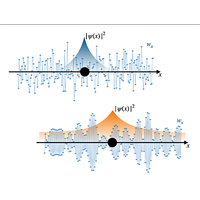
The systematic cancellation of leading self-energy terms causes the localization length in the 1D Anderson model to increase far beyond typical system sizes, effectively producing delocalized behavior in a regime where localization is expected.

Momentum-Resolved Spectroscopy of Superconductivity with the Quantum Twisting Microscope

Yuval Waschitz, Ady Stern, and Yuval Oreg

Phys. Rev. Lett. 136, 156501 (2026) - Published 14 April, 2026

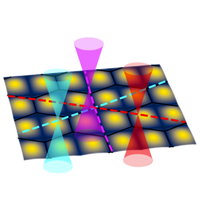
By conserving in-plane momentum, the quantum twisting microscope directly measures Bogoliubov coherence factors and pairing amplitudes with full momentum resolution, providing information inaccessible to existing probes.

Non-Abelian Chern Band in Rhombohedral Graphene Multilayers

Taketo Uchida, Takuto Kawakami, and Mikito Koshino

Phys. Rev. Lett. 136, 156602 (2026) - Published 14 April, 2026

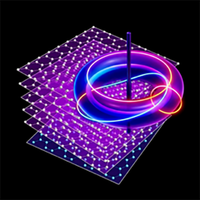
Self-consistent Hartree–Fock calculations show that electron interactions spontaneously generate a doubly degenerate Chern band with non-Abelian Berry curvature driven by a Fock-term–induced nonsymmorphic symmetry.

Krylov Winding and Emergent Coherence in Operator Growth Dynamics

Rishik Perugu, Bryce Kobrin, Michael O. Flynn, and Thomas Scaffidi

Phys. Rev. Lett. 136, 150402 (2026) - Published 13 April, 2026

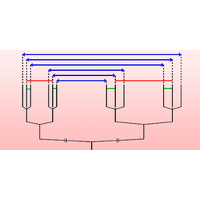
Operator growth at finite temperature in quantum chaotic systems relies on coherent spreading in the Krylov basis.

Imaging Kekulé Spiral Order in Graphene

Can Zhang, Hua Chen, Ying Su, Fudi Zhou, Lili Zhou, Zhaoteng Dong, Mengya Ren, Lijun Zhang, Yu Zhang, and Yeliang Wang

Phys. Rev. Lett. 136, 156401 (2026) - Published 13 April, 2026

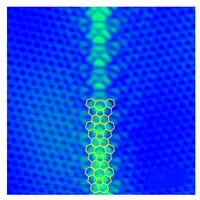
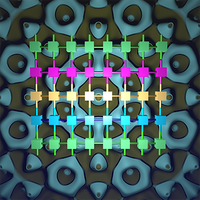
The first experimental evidence that a 1D nanostructure induces Kekulé spiral order in graphene.

Tensor Network Method for Real-Space Topology in Quasicrystal Chern Mosaics

Tiago V. C. Antão, Yitao Sun, Adolfo O. Fumega, and Jose L. Lado

Phys. Rev. Lett. 136, 156601 (2026) - Published 13 April, 2026

A quantum-many-body-inspired tensor-network algorithm can compute local topological invariants for systems with hundreds of millions of sites by avoiding an explicit storage of Hamiltonian matrices.

Anomalous Terahertz Nonlinearity in Disordered s-Wave Superconductor Close to the Superconductor-Insulator Transition

Hao Wang, Jiayu Yuan, Hongkai Shi, Haojie Li, Xiaoqing Jia, Xiaohui Song, Liyu Shi, Tianyi Wu, Li Yue, Yangmu Li, Kui Jin, Dong Wu, Jianlin Luo, Xinbo Wang, Tao Dong, and Nan-Lin Wang

Phys. Rev. Lett. 136, 146004 (2026) - Published 10 April, 2026

A persistent normal-state third-harmonic generation (THG) signal extending up to ten times Tc and a multipeak THG spectrum in the superconducting state reveal an unexpected interplay between disorder, electronic correlations, and superconducting inhomogeneity.

Observation of Gyroscopic Coupling in a Nonspinning Levitated Ferromagnet

Felix Ahrens and Andrea Vinante

Phys. Rev. Lett. 136, 146703 (2026) - Published 10 April, 2026

An isolated magnet’s intrinsic angular momentum induces gyroscopic motion, an observation that could lead to ultrasensitive magnetometers.

High-Precision Penning Trap Spectroscopy of the Ground State Spin Structure of HD+

Charlotte M. König, Matthew Bohman, Fabian Heiße, Jonathan Morgner, Tim Sailer, Bingsheng Tu, Klaus Blaum, Sven Sturm, Dimitar Bakalov, Hugo D. Nogueira, Jean-Philippe Karr, Ossama Kullie, and Stephan Schiller

Phys. Rev. Lett. 136, 143002 (2026) - Published 8 April, 2026

Precise spectroscopy of a simple molecular ion opens a new path toward stringent tests of quantum electrodynamics.

Finite-Size Spectral Signatures of Order by Quantum Disorder: A Perspective from Anderson’s Tower of States

Subhankar Khatua, Griffin C. Howson, Michel J. P. Gingras, and Jeffrey G. Rau

Phys. Rev. Lett. 136, 146702 (2026) - Published 8 April, 2026

Order by quantum disorder leaves distinct finite-size signatures in the exact diagonalization spectrum that are captured by an effective quantum-rotor description analogous to the Anderson tower of states.

Strongly Nonlinear Nanocavity Exciton Polaritons in Gate-Tunable Monolayer Semiconductors

Zhi Wang, Bumho Kim, Bo Zhen, and Li He

Phys. Rev. Lett. 136, 146901 (2026) - Published 8 April, 2026

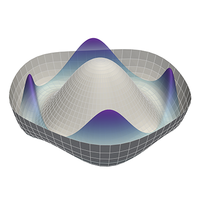
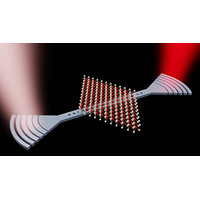
Precise adjustment of the doping level in a transition metal dichalcogenide heterostructure using electrostatic gating demonstrates a wide range of tunability in the exciton oscillator strength and thus the exciton photon hybridization.

Excitation Spectra of the C12(p,d) Reaction near the η′-Meson Emission Threshold Measured in Coincidence with High-Momentum Protons

R. Sekiya et al. (η-PRiME Collaboration and Super-FRS Experiment Collaboration)

Phys. Rev. Lett. 136, 142501 (2026) - Published 7 April, 2026

Experiments with a proton beam striking a carbon target have uncovered events that may be due to a short-lived meson residing within a nucleus.

Observation of Radially Emitted Proton Beams from Low-Mass X-Pinch Plasmas

D. Klir, V. Munzar, J. Novotny, K. Rezac, A. M. Bedel, N. G. Chalmers, J. M. Chen, J. Cikhardt, B. Cikhardtova, N. M. Jordan, V. Juras, P. Kubes, J. Malir, L. R. Tafoya, K. Turek, D. A. Hammer, and R. D. McBride

Phys. Rev. Lett. 136, 145101 (2026) - Published 7 April, 2026

Experimental demonstration of the radial acceleration of protons in a low-mass hybrid X pinch shows that an X-pinch-driven proton source could be a novel platform to study pulsed-power plasmas.

Inertia-Dilatancy Interplay Governs Shear Thickening Drop Impact

Anahita Mobaseri, Leonardo Gordillo, Charles Burton, Soyoon Yoon, Dong Lee, Satish Kumar, Michelle M. Driscoll, and Xiang Cheng

Phys. Rev. Lett. 136, 148201 (2026) - Published 7 April, 2026

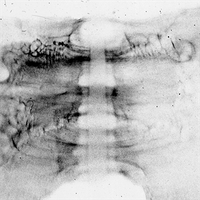
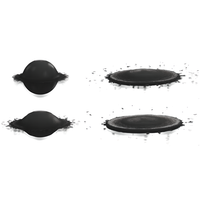
Dense drops of cornstarch and water usually stiffen when they strike a surface, but sometimes they flow fleetingly like a liquid.

Microscopy of Cavity-Induced Density-Wave Ordering in Ultracold Gases

Tabea Bühler, Aurélien Fabre, Gaia Bolognini, Zeyang Xue, Timo Zwettler, Giulia Del Pace, and Jean-Philippe Brantut

Phys. Rev. Lett. 136, 143401 (2026) - Published 6 April, 2026

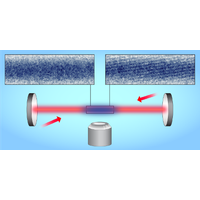
A new microscope captures how atoms rearrange themselves when they are illuminated inside an optical cavity.

Magnetoresistance Oscillations in Few-Layer NbSe2 in Superconducting Fluctuation Regime

Xiaolong Yin, Congzhe Cao, Yibin Feng, Kenji Watanabe, Takashi Taniguchi, Jiawei Mei, Qi-Kun Xue, and Shuo-Ying Yang

Phys. Rev. Lett. 136, 146301 (2026) - Published 6 April, 2026

The observation of magnetoresistance oscillation in NbSe2 thin films, reminiscent of Little-Parks oscillations, is attributed to superconducting phase fluctuations unlike other previously reported oscillations.

Conservation Laws and Slow Dynamics Determine the Universality Class of Interfaces in Active Matter

Raphaël Maire, Andrea Plati, Frank Smallenburg, and Giuseppe Foffi

Phys. Rev. Lett. 136, 148301 (2026) - Published 6 April, 2026

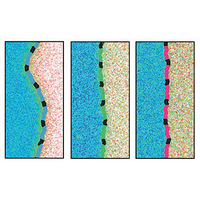
A nonequilibrium model of active hard disks exhibits phase separation between a gas and a liquid, crystal, or glass, with interfaces displaying distinct nonequilibrium universality classes.

Symmetry-Protected Acoustic “Ghost Tunnels”

Changqing Xu, Zihao Su, Lingzhe Kong, Ze-Guo Chen, and Yun Lai

Phys. Rev. Lett. 136, 137001 (2026) - Published 3 April, 2026

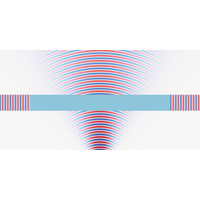
Acoustic waves can be guided through a narrow “tunnel” that lacks walls and thus presents no obstruction to sound traveling across its path.

Nanoscale Imaging of Magnetotransport around a Circular p−n Junction in Graphene

Zachary J. Krebs, Wyatt A. Behn, Keenan J. Smith, Margaret A. Fortman, Kenji Watanabe, Takashi Taniguchi, Pathak S. Parashar, Michael M. Fogler, and Victor W. Brar

Phys. Rev. Lett. 136, 136301 (2026) - Published 2 April, 2026

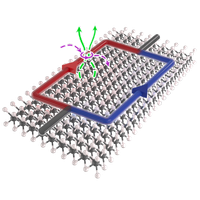
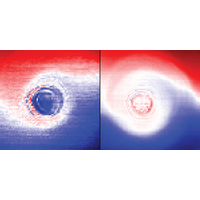
Electrons in graphene follow various spiraling paths when they flow around a circular barrier under the influence of a magnetic field.

Electrically Driven Plasmon-Polaritonic Bistability in Dirac Electron Tunneling Transistors

Shuai Zhang, Yang Xu, Junhe Zhang, Dihao Sun, Yinan Dong, Matthew Fu, Takashi Taniguchi, Kenji Watanabe, Cory Dean, Monica Allen, Jeffery Allen, F. Javier García de Abajo, Antti J. Moilanen, Lukas Novotny, and D. N. Basov

Phys. Rev. Lett. 136, 136904 (2026) - Published 2 April, 2026

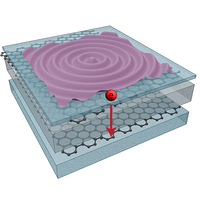
An electrically driven nonlinear mechanism based on resonant tunneling, plasmon-polaritonic bistability, unlocks the potential realization of polaritonic on-chip optical memory and switching.

Sign In to Your Journals Account

Filter

Section

Filter

Article Lookup

Enter a citation