Highlights

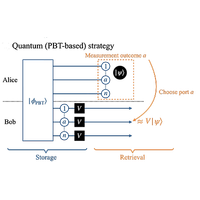
Quantum Advantage in Storage and Retrieval of Isometry Channels

Satoshi Yoshida, Jisho Miyazaki, and Mio Murao

Phys. Rev. Lett. 136, 190601 (2026) - Published 13 May, 2026

For isometry channels, quantum protocols based on port-based teleportation outperform classical estimate-and-prepare strategies in terms of both query complexity and program cost, achieving a provable asymptotic advantage.

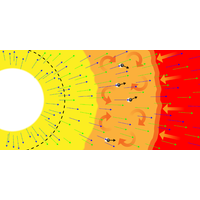
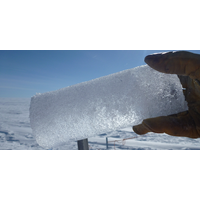
Local Interstellar Cloud Structure Imprinted in Antarctic Ice by Supernova Fe60

Dominik Koll, Annabel Rolofs, Florian Adolphi, Sebastian Fichter, Maria Hoerhold, Johannes Lachner, Stefan Pavetich, Georg Rugel, Stephen Tims, Frank Wilhelms, Sebastian Zwickel, and Anton Wallner

Phys. Rev. Lett. 136, 192701 (2026) - Published 13 May, 2026

Iron-60 buried in Antarctica reveals changes in the local interstellar environment.

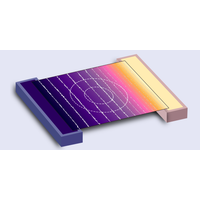
Dual-Zero-Scattering in Diffusive Transport

Yiyang Zhang, Jinrong Liu, Liujun Xu, Peng Jin, Fabio Marchesoni, and Jiping Huang

Phys. Rev. Lett. 136, 196901 (2026) - Published 13 May, 2026

A new metamaterial design eliminates internal distortions that can adversely affect applications in cloaking and sensing.

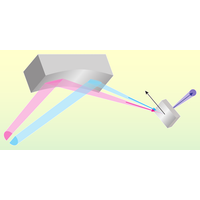
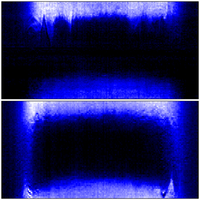
Background-Free Intensity Autocorrelation for Femtosecond X-Ray Pulses

Taito Osaka, Shotaro Matsumura, Masafumi Miyake, Yasuhisa Sano, Ichiro Inoue, Yuichi Inubushi, Kensuke Tono, Kenji Tamasaku, and Makina Yabashi

Phys. Rev. Lett. 136, 195002 (2026) - Published 12 May, 2026

An adapted optical technique reveals the temporal structure of ultrafast x-ray pulses by eliminating background light.

Breakdown of the Wiedemann-Franz Law in an Interacting Quantum Hall Metamaterial

Patrice Roche, Carles Altimiras, François D. Parmentier, and Olivier Maillet

Phys. Rev. Lett. 136, 196301 (2026) - Published 12 May, 2026

Interacting quantum Hall metamaterials violate the Wiedemann-Franz law, with a Lorenz ratio scaling as the square root of the chain length.

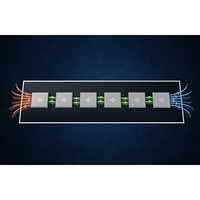
Nonlocal Response in Arrays of Nanoscale Metallic Islands: Fractionalized Entropy and Anomalous Heat Transport

Nitay Hurvitz, Gleb Finkelstein, and Eran Sela

Phys. Rev. Lett. 136, 196302 (2026) - Published 12 May, 2026

A theoretical framework for metallic-island arrays coupled by quantum Hall edge channels shows that strong Coulomb constraints endow these systems with emergent fractionalized degrees of freedom.

Multistimuli-Controlled Topological Nucleation of Skyrmion Loops and Monopoles in Liquid Crystals

Qingtian Shi, Jing Zhang, Wentao Tang, Zhawure Asilehan, Kun Tian, Xinda Zheng, Fernando Vergara, Ruijie Wang, Jingyu Li, Rui Zhang, Jinghua Jiang, and Chenhui Peng

Phys. Rev. Lett. 136, 198101 (2026) - Published 12 May, 2026

A new method for creating twisted structures in liquid crystals could be helpful in controlling them for possible memory-storage applications.

Bifurcated Impact of Neutrino Fast Flavor Conversion on Core-Collapse Supernovae Informed by Multiangle Neutrino Radiation Hydrodynamics

Ryuichiro Akaho, Hiroki Nagakura, Wakana Iwakami, Shun Furusawa, Akira Harada, Hirotada Okawa, Hideo Matsufuru, Kohsuke Sumiyoshi, and Shoichi Yamada

Phys. Rev. Lett. 136, 191002 (2026) - Published 11 May, 2026

By incorporating a detailed model of neutrino-flavor oscillations in simulations of collapsing stars, researchers have shown that the phenomenon can both promote and inhibit supernovae.

Observation of Spin-Duality Breaking in Pancharatnam-Berry Metasurfaces

Haoye Qin, Wenjing Lv, Junda Wang, Kaili Sun, Xinyang Mu, Zhanghua Han, Qinghua Song, and Cheng-Wei Qiu

Phys. Rev. Lett. 136, 183805 (2026) - Published 8 May, 2026

An experiment shows that geometric phase of Pancharatnam-Berry metasurfaces can be preserved while their intrinsic spin duality is deliberately broken.

Experimental Observation of Anomalous Stopping of Mega-ampere Electron Current in Porous Materials

K. Jiang, Z. G. Deng, T. W. Huang, K. J. Luo, P. Chen, M. Y. Yu, L. Xu, S. Li, L. Yang, F. Lu, W. W. Wang, Z. Q. Yuan, H. Peng, R. Li, H. Zhang, S. Z. Wu, H. B. Zhuo, W. Luo, W. M. Zhou, Y. Q. Gu, and C. T. Zhou

Phys. Rev. Lett. 136, 185102 (2026) - Published 8 May, 2026

An intense electron beam is stopped more efficiently by a highly porous material than by a less porous material, suggesting new strategies for controlling beams.

Cooling Mechanism Controls Motility-Induced Phase Separation in Inertial Active Liquids

Manuel Mayo, Lorenzo Caprini, María Isabel García de Soria, Umberto Marini Bettolo Marconi, Pablo Maynar, Luca Pizzoli, and Andrea Puglisi

Phys. Rev. Lett. 136, 188301 (2026) - Published 8 May, 2026

A novel cooling-induced mechanism driving phase separation in inertial active matter exhibits both similarities to and differences from phenomena observed in granular gases.

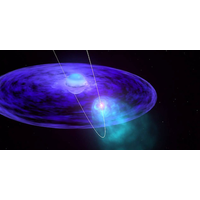
First Detection of Ultrahigh Energy Emission from Gamma-Ray Binary LS I +61° 303

Zhen Cao et al. (LHAASO Collaboration)

Phys. Rev. Lett. 136, 181001 (2026) - Published 6 May, 2026

The observation of ultrahigh-energy radiation from a binary star system suggests that such “gamma-ray binaries” could be significant contributors to the cosmic-ray spectrum.

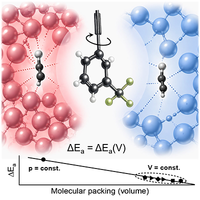
Resolving the Arrhenius Paradox by Isochoric Analysis of Rotational Barriers in Molecular Glasses

Marzena Rams-Baron, Alfred Błażytko, Riccardo Casalini, and Marian Paluch

Phys. Rev. Lett. 136, 188202 (2026) - Published 6 May, 2026

The long-standing Arrhenius paradox in molecular glasses is resolved by showing that activation energy decreases linearly with temperature as a consequence of density-driven variations of the barrier.

Coupling of a Nuclear Transition to a Surface Acoustic Wave

Albert Nazeeri, Chiara Brandenstein, Chengjie Jia, Lorenzo Magrini, and Giorgio Gratta

Phys. Rev. Lett. 136, 183801 (2026) - Published 5 May, 2026

Coupling a film of enriched 57Fe to a surface acoustic wave produces a comb of absorption sidebands in the Mossbauer spectrum, consistent with coherent phase modulation of the nuclear transition.

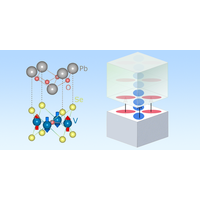
Altermagnetic Proximity Effect

Ziye Zhu, Richang Huang, Xianzhang Chen, Zhou Cui, Xunkai Duan, Jiayong Zhang, Igor Žutić, and Tong Zhou

Phys. Rev. Lett. 136, 186702 (2026) - Published 5 May, 2026

According to theory, a property called altermagnetism can be acquired by a nonmagnetic material that is adjacent to an altermagnet.

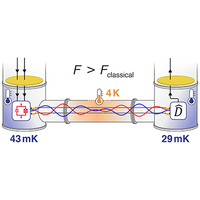
Quantum Teleportation over Thermal Microwave Network

W. K. Yam, S. Gandorfer, F. Fesquet, M. Handschuh, K. E. Honasoge, A. Marx, R. Gross, and K. G. Fedorov

Phys. Rev. Lett. 136, 180801 (2026) - Published 4 May, 2026

The deterministic quantum teleportation of microwave coherent states between two spatially-separated dilution refrigerators connected via a superconducting channel operating at temperatures up to 4 Kelvin demonstrates the experimental feasibility of quantum communication over a thermal microwave network.

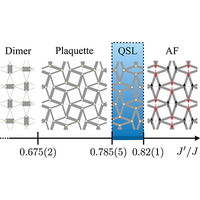
Quantum Spin Liquid Phase in the Shastry-Sutherland Model Revealed by High-Precision Infinite Projected Entangled-Pair States

Philippe Corboz, Yining Zhang, Boris Ponsioen, and Frédéric Mila

Phys. Rev. Lett. 136, 186701 (2026) - Published 4 May, 2026

High-precision tensor network calculations in the 2D thermodynamic limit reveal a narrow quantum spin liquid phase, consistent with previous studies, but based on variational states significantly closer to the exact ground state in the thermodynamic limit.

Violation of the Third Law of Black Hole Mechanics in Vacuum Gravity

John R. V. Crump, Maxime Gadioux, Harvey S. Reall, and Jorge E. Santos

Phys. Rev. Lett. 136, 171405 (2026) - Published 1 May, 2026

The violation of the third law of black hole mechanics in higher dimensional vacuum gravity is numerically demonstrated.

Microwave Imaging of Edge Conductivity in Graphene at Charge Neutrality and Quantum Hall States

Hongtao Yan, Chun-Chih Tseng, Anzhuoer Li, Manish Kumar, Kaile Wang, Shizai Chu, Kenji Watanabe, Takashi Taniguchi, Allan H. MacDonald, Matthew Yankowitz, and Keji Lai

Phys. Rev. Lett. 136, 176603 (2026) - Published 1 May, 2026

The contrasting edge evolution between ν=0, consistent with a canted antiferromagnetic phase, and |ν|≥1 chiral edge channels reveals the microscopic distinction between trivial and topological states.

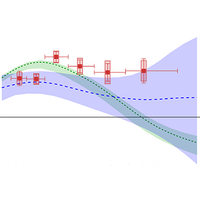
Final SeaQuest Results on the Flavor Asymmetry of the Proton Light-Quark Sea with Proton-Induced Drell-Yan Process

C. H. Leung et al. (FNAL E906/SeaQuest Collaboration)

Phys. Rev. Lett. 136, 171901 (2026) - Published 30 April, 2026
Final measurements from the SeaQuest collaboration with improved statistics finds clear signatures of more anti-d quarks compared to anti-u quarks within a proton, including at larger x>0.25 in agreement with theoretical models.

Sign In to Your Journals Account

Filter

Section

Filter

Article Lookup

Enter a citation