Recent Articles

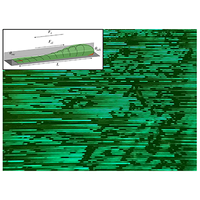
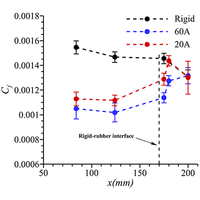
Investigations of skin friction drag mitigation over viscoelastic surfaces in supersonic flows

Soumen Chakravarty and V. Narayanaswamy

Phys. Rev. Fluids 9, 054609 (2024) - Published 22 May, 2024

This article presents the first ever systematic demonstration of the drag reduction at supersonic speed regime caused by non-rigid surfaces prepared using compliant viscoelastic coating. This work lays the foundation to a new engineering paradigm that fuses engineered surfaces to create positive aerodynamic outcomes at speeds that are relevant to aerial vehicles.

Editorial: Coauthor! Coauthor!

Randall D. Kamien and Daniel Ucko

Phys. Rev. Fluids 9, 050001 (2024) - Published 21 May, 2024

Wall modes and the transition to bulk convection in rotating Rayleigh-Bénard convection

Xuan Zhang, Philipp Reiter, Olga Shishkina, and Robert E. Ecke

Phys. Rev. Fluids 9, 053501 (2024) - Published 21 May, 2024

Wall modes and bulk modes compete in small-aspect-ratio rapidly rotating Rayleigh-Bénard convection. Wall modes remain robust in the presence of bulk convection and contribute substantially to the global heat transport.

Experimental collisions of varying roughness wetted particles in the pendular regime compared to numerical simulations

Oscar J. Punch, Daniel J. Holland, Andreas Baumann, and Peter Eberhard

Phys. Rev. Fluids 9, 054302 (2024) - Published 21 May, 2024

Numerical simulations of wet particles often use the particle roughness as a minimum separation criterion to limit the viscous force. Here we investigate the validity of this through a comparison of experiments of binary wet particle collisions to numerical discrete element method (DEM) and smoothed particle hydrodynamics (SPH) simulations.

Exit dynamics of a sphere launched underneath a liquid bath surface

Xiaofeng Wei, Dege Li, Jing Lei, Jinglu Li, Javier Rivero-Rodríguez, Fangye Lin, Dongyun Wang, and Benoit Scheid

Phys. Rev. Fluids 9, 054003 (2024) - Published 17 May, 2024

In this paper, we investigate the exit dynamics of a sphere launched underneath a liquid bath surface at a prescribed impact velocity. Spheres with radii approximate or smaller than the capillary length are considered. The process can be sequenced into a partial exit stage that forms a coated layer, and a full exit stage with an attached ligament. A bouncing-off regime, a lower pinch-off penetration regime, and an upper pinch-off penetration regime are identified, separating by a penetration Weber number and a switching Weber number. The phase diagram is revealed, where the two critical Weber numbers are functions of the Bond number.

Study on transition to turbulence of rotating-disk boundary layer in a rotor-stator cavity with temperature gradient

Qiang Du, Yaguang Xie, Lei Xie, and Ruonan Wang

Phys. Rev. Fluids 9, 053908 (2024) - Published 15 May, 2024

We integrated theoretical analysis and numerical simulations to investigate the turbulence transition through a crossflow instability in the boundary layer of a cooler rotating disk within a rotor-stator cavity, influenced by a temperature gradient. This gradient induces centrifugal buoyancy forces that alter the radial inflection points in the mean flow. These changes lead to premature bifurcation of spiral waves, crucial in the transition process, resulting in an early onset of turbulence in the boundary layer of the rotating disk. Our findings underscore the importance of manipulating boundary layer stability via temperature gradients to control turbulent transitions.

Eddy self-similarity in turbulent pipe flow

L. H. O. Hellström, T. Van Buren, J. C. Vaccaro, and A. J. Smits

Phys. Rev. Fluids 9, 054607 (2024) - Published 15 May, 2024

To investigate the existence of geometrically self-similar eddies in fully developed turbulent pipe flow, stereoscopic particle image velocimetry measurements were performed in two parallel cross-sectional planes, for friction Reynolds numbers Reτ = 1310, 2430, and 3810. The instantaneous turbulence structures are sorted by width using an azimuthal Fourier decomposition, then azimuthally aligned to create a set of average eddy velocity profiles. The streamwise similarity is investigated using two-point correlations. Over the range of scales examined, the candidate structures establish full three-dimensional geometric self-similarity.

Scraping of a thin layer of viscoplastic fluid

J. J. Taylor-West and A. J. Hogg

Phys. Rev. Fluids 9, 053301 (2024) - Published 14 May, 2024

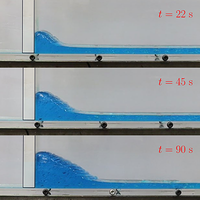
Scraping of a thin layer of viscoplastic fluid from a horizontal surface by a translating rigid scraper generates a mound of fluid upstream of the scraper and a residual layer behind it. We compute numerical solutions for the system modeled via viscoplastic shallow-layer theory. The unsteady dynamics of this system exhibit a variety of self-similar regimes, for which we construct solutions explicitly and identify key scalings for the temporal development of the mound. We further report experimental results, which are compared with predictions from the shallow-layer theory, obtaining reasonable agreement once a slip boundary condition is included in the model.

Free object in a confined active contractile nematic fluid: Fixed-point and limit-cycle behaviors

Jonathan B. Freund

Phys. Rev. Fluids 9, 053302 (2024) - Published 14 May, 2024

The dynamics of a free object in an active nematic suspension in a circular container are simulated. For ranges of parameters, unstable chaotic wanderings eventually reach either a fixed-point or limit-cycle (shown) behavior. These flows are analyzed, and similar behaviors confirmed to also occur in more complex geometries.

Free-space and near-wall dynamics of a flexible sheet sedimenting in Stokes flow

Yijiang Yu and Michael D. Graham

Phys. Rev. Fluids 9, 054104 (2024) - Published 14 May, 2024

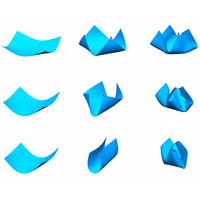
We present a numerical study of a thin elastic sheet with small extensibility sedimenting in a viscous fluid in free space or near a wall. The interplay between gravity and the elastic response of sheets gives rise to complex deformation and reorientation dynamics. Near a vertical wall, sheets exhibit asymmetric conformations that cause the sheet to drift toward or away from the wall. Near an inclined wall, sheets show qualitatively different dynamics when the wall angle is large: they either deposit on or slide along the wall with a fixed wall-normal distance.

Increased solidification delays fragmentation and suppresses rebound of impacting drops

Varun Kulkarni, Suhas Tamvada, Nikhil Shirdade, Navid Saneie, Venkata Yashasvi Lolla, Vijayprithiv Batheyrameshbapu, and Sushant Anand

Phys. Rev. Fluids 9, 053604 (2024) - Published 13 May, 2024

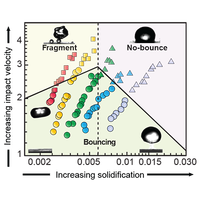
Drops impacting supercooled surfaces adhere to them due to contact line pinning and their solidification. However, distinguishing the influence of each phenomenon on post-impact behavior is challenging since even repellent materials exhibit some drop adhesion. In this study, we examine the impact of water and alkane drops on an omniphobic dry ice surface. We show that the solidification extent within the drop, combined with thermal, elastic, and surface tension forces, dictate outcomes like fragmentation, rebound, or no-bounce. Our findings have critical implications for material design in 3D printing, frost-resistant coatings, and safe biological material transport in cold climates.

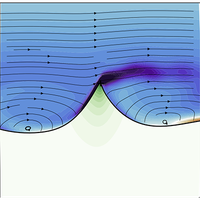
Contact-angle hysteresis provides resistance to drainage of liquid-infused surfaces in turbulent flows

Sofia Saoncella, Si Suo, Johan Sundin, Agastya Parikh, Marcus Hultmark, Wouter Metsola van der Wijngaart, Fredrik Lundell, and Shervin Bagheri

Phys. Rev. Fluids 9, 054002 (2024) - Published 13 May, 2024

Liquid infused surfaces (LISs) are a nature-inspired surface technology that demonstrates multiple functionalities under laminar and controlled flow conditions. We study experimentally the behavior of the infused lubricant under submerged conditions and turbulent flow. When exposed to turbulence, the lubricant layer develops into a pattern of droplets, the length of which depends on the balance between shear and contact force. The stability of the droplets prevents complete drainage of the lubricant and increases the robustness of the LIS in the presence of turbulence. We identify a model that predicts the equilibrium length of the droplets and validate it with numerical simulations.

Energetic inception of breaking in surface gravity waves under wind forcing

Daniel G. Boettger, Shane R. Keating, Michael L. Banner, Russel P. Morison, and Xavier Barthélémy

Phys. Rev. Fluids 9, 054803 (2024) - Published 13 May, 2024

We examine the influence of wind forcing on the inception of breaking in surface gravity waves using an ensemble of high-resolution numerical simulations. We find that there is a critical point in the energetic evolution of the wave in which the convergence of kinetic energy at the wave crest can no longer be offset by conversion to potential energy, resulting in a rapid growth of kinetic energy up to breaking onset. This energetic signature is shown to consistently differentiate between non-breaking and breaking waves under a range of wind forcing speeds.

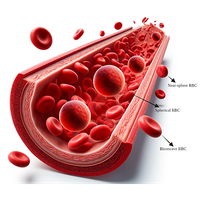
Blood flow efficiency in response to red blood cell sphericity

Mohammed Bendaoud, Mehdi Abbasi, Alexis Darras, Hamid Ez-Zahraouy, Christian Wagner, and Chaouqi Misbah

Phys. Rev. Fluids 9, 053603 (2024) - Published 10 May, 2024

Exploring how the shape of red blood cells influences their flow properties, this study uses numerical simulations to analyze changes from healthy bi-concave forms to abnormal spherical shapes associated with disorders like spherocytosis. The research reveals complex, non-monotonic relationships between cell shape and flow rate across varying channel widths, and its impact on blood perfusion.

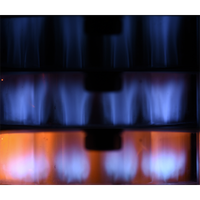
Longitudinal and azimuthal thermoacoustic modes in a pressurized annular combustor with bluff-body-stabilized methane-hydrogen flames

Byeonguk Ahn, Håkon T. Nygård, Nicholas A. Worth, Zhijian Yang, and Larry K. B. Li

Phys. Rev. Fluids 9, 053907 (2024) - Published 10 May, 2024

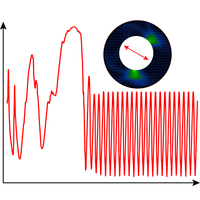
To explore the dynamics of annular combustors, we investigate azimuthal thermoacoustic instabilities under a range of hydrogen power fractions and operating conditions. Using time-series analysis and mode detection techniques, we examine the relationship between longitudinal and azimuthal modes, identifying a transition from chaos to high-amplitude periodic states. Our research sheds light on how hydrogen enrichment affects combustor stability and presents the first identification of type-II Pomeau–Manneville intermittency in annular combustors. These findings contribute to knowledge of the modal dynamics within combustors, with implications for the design and operation of future systems.

Engineering of polydisperse porous media for enhanced fluid flows through systematic topology tuning via differentiable direct numerical simulation

Mohammed G. Alhashim and Michael P. Brenner

Phys. Rev. Fluids 9, 054103 (2024) - Published 10 May, 2024

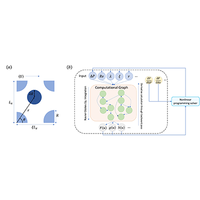
Recent advancements in automatic differentiation, which played a pivotal role in deep learning, offer a promising approach to addressing challenges in controlling fluid flow behavior. We demonstrate the power of the method by optimizing the packing of a polydisperse system of periodically arranged circular rods to minimize the pressure drop across the media. We show how the optimum topology of the porous media changes with changing the packing fraction.

Slender phoretic loops and knots

Panayiota Katsamba, Matthew D. Butler, Lyndon Koens, and Thomas D. Montenegro-Johnson

Phys. Rev. Fluids 9, 054201 (2024) - Published 10 May, 2024

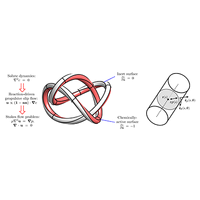
We present an asymptotic theory for the dynamics of slender chemically propelled loops and knots. It is valid for nonintersecting three-dimensional centerlines, with arbitrary chemical patterning and varying (circular) cross-sectional radius, allowing many slender active loops and knots to be studied. The theory has closed-form solutions in simpler cases, enabling us to derive the swimming speeds of chemically patterned tori, and the pumping strength (stresslet) of uniformly active slender tori. Using numerical solutions, we find the behavior of exotic active particle geometries, such as a bumpy uniformly active torus that spins and a Janus trefoil knot, which rotates as it swims forwards.

Particle-resolved multiphase Rayleigh-Bénard convection

Xianyang Chen and Andrea Prosperetti

Phys. Rev. Fluids 9, 054301 (2024) - Published 10 May, 2024

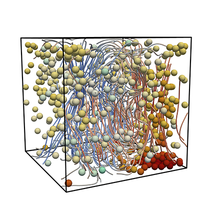
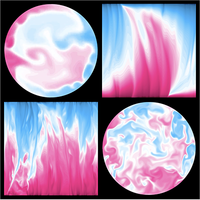
500 resolved particles, colored by their temperature, are suspended in Rayleigh-Bénard convection at a Rayleigh number of 107. The lines are streamlines colored according to the fluid vertical velocity. Near the cell bottom, the fluid circulation pushes the particles from the base of the descending to that of the ascending plume where they accumulate into a dune. The particles that follow are dragged up the dune acquiring a vertical velocity component which promotes their resuspension. The lift force plays no role in this process. Depending on the particle number (from 500 to 3000) up to 20% of the fluid gravitational energy can be transferred to the particles.

Multiscale analysis of the space-time properties in incompressible wall-bounded turbulence

Tian Liang, Cheng Cheng, and Lin Fu

Phys. Rev. Fluids 9, 054606 (2024) - Published 10 May, 2024

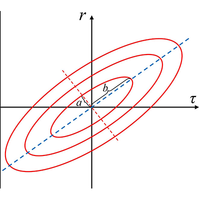
The space-time correlations of both wall-shear fluctuations and the streamwise velocity fluctuations carried by wall-attached eddies are investigated in a multiscale manner, by coupling the inner-outer interaction model (IOIM) with the attached eddy hypothesis. The present results demonstrate that the space-time correlations for the wall-shear stress fluctuation are mainly dominated by near-wall small-scale motions, and wall-attached eddies at a given length scale feature distinctly different space-time properties as compared to those of ensembled eddies with multiple length scales, which provides a new perspective for analyzing the decorrelation mechanisms in turbulence theory.

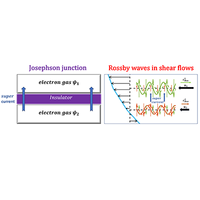
Relating interfacial Rossby wave interaction in shear flows with Feynman's two-state coupled quantum system model for the Josephson junction

Eyal Heifetz, Nimrod Bratspiess, Anirban Guha, and Leo Maas

Phys. Rev. Fluids 9, 054802 (2024) - Published 10 May, 2024
Super-currents, tunneling across insulators in Josephson junctions, have a one-to-one classical analog to action-at-a-distance between two interfacial Rossby waves in shear flows. Quantum avoided crossing between eigenstates, described by the Klein-Gordon equation, is obtained as well for the Rossby wave normal modes. Both the quantum and the classical dynamics are formulated as coupled two-state systems and presented on a Bloch sphere, where the Hadamard gate transforms the two normal modes into an intuitive computational basis of two single Rossby waves. Yet, lacking analogs to quantum collapse and entanglement, the Rossby wave system cannot serve as a qubit prototype, even in principle.

Sign In to Your Journals Account

Filter

Recent Issues

Vol. 11, Iss. 10
October 2026
Vol. 11, Iss. 9
September 2026
Vol. 11, Iss. 8
August 2026
Vol. 11, Iss. 7
July 2026
Category
Article Type
Section

Filter

Article Lookup

Enter a citation