Recent Articles

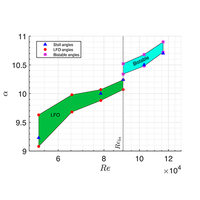
From low-frequency oscillations to Markovian bistable stall dynamics

Ivan Kharsansky Atallah, Luc Pastur, Romain Monchaux, and Laurent Zimmer

Phys. Rev. Fluids 9, 063902 (2024) - Published 5 June, 2024

An experimental study is conducted on a thin symmetric airfoil at stall. Below a critical Reynolds number, the flow exhibits low-frequency oscillations (LFOs) characterized by a broadband peak in the aerodynamic force spectrum. Beyond this threshold, the LFOs are replaced by intermittent random switches between two states of either high or low lift (attached or detached flow). The states are explored randomly in time for a fixed angle of attack, contrary to the classical hysteresis often observed in airfoil flows at stall, where both states are absorbing. We model this using a continuous Markov chain and extreme value theory, a framework that can determine the system bifurcation points.

Mean and fluctuating helicity in swirling jet flows

Rodion Stepanov, Peter Frick, Vladimir Dulin, and Dmitriy Markovich

Phys. Rev. Fluids 9, L062601 (2024) - Published 5 June, 2024

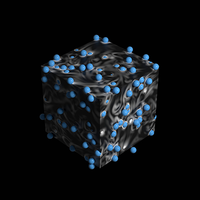
Our experimental research demonstrates that helicity in turbulent flows undergoes a direct spectral transfer from large to small scales. Tomographic particle image velocimetry provides insights into the spatial and spectral segregation of turbulent flows with different helicity signs. We show that helicity generation and decay along the jet dramatically depends on the inflow swirl. Notably, we provide direct experimental evidence of the helicity cascade, discovering that swirls of the same sign can impart turbulent helicity of the opposite sign, challenging conventional assumptions. These findings offer valuable benchmarks for numerical simulations using different turbulent closure methods.

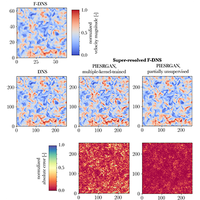
Influence of adversarial training on super-resolution turbulence reconstruction

Ludovico Nista, Heinz Pitsch, Christoph D. K. Schumann, Mathis Bode, Temistocle Grenga, Jonathan F. MacArt, and Antonio Attili

Phys. Rev. Fluids 9, 064601 (2024) - Published 4 June, 2024

We compare supervised super-resolution convolutional neural networks (CNNs) against generative adversarial networks (GANs)-based architectures in the ability to reconstruct turbulent flow fields. GANs demonstrated superior in-sample performance but faced challenges with out-of-sample flows. Incorporating a partially unsupervised adversarial training step with large eddy simulation inputs and dynamic upsampling selection improved GANs’ out-of-sample robustness, capturing small-scale features and turbulence statistics better than standard supervised CNNs. The study recommends integrating discriminator-based training to enhance super-resolution CNNs’ reconstruction capabilities.

Impact of rotation change on the emptying of an ideal bottle of water

A. Caquas, L. R. Pastur, and A. Genty

Phys. Rev. Fluids 9, 064701 (2024) - Published 4 June, 2024

Have you ever tried spinning your water bottle to empty it more quickly? This experiment, familiar to the general public, has rarely been studied in the scientific literature, which focuses mainly on the non-rotational case. We show that this popular experiment is surprisingly complex. Our study reveals the presence of three flow regimes, which have a direct impact on the efficiency of the draining process.

Influence of plasticity on inertialess viscoelastic instabilities in elongational flow regimes

V. Dzanic, C. S. From, and E. Sauret

Phys. Rev. Fluids 9, 063301 (2024) - Published 3 June, 2024

This study explores, for the first time, the impact of plasticity on inertialess viscoelastic instabilities in strong elongational flows. Through detailed numerical simulations, it reveals how elastoviscoplastic effects induce complex and dynamic flow behaviors, leading to new flow states. Crucially, our findings reveal that plasticity can laminarize and suppress these instabilities, offering new strategies for controlling the instability mechanism.

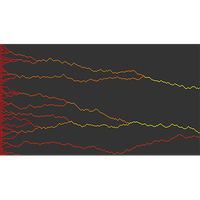
Influence of the imposed flow rate boundary condition on the flow of Bingham fluid in porous media

Laurent Talon, Andreas Andersen Hennig, Alex Hansen, and Alberto Rosso

Phys. Rev. Fluids 9, 063302 (2024) - Published 3 June, 2024

We consider different boundary conditions for imposing flow of yield stress fluids in porous media. In contrast to Newtonian fluids in porous media, imposing pressure or a given flow profile at the boundary leads to significantly different flow fields. In particular, we show that imposing a flow profile leads to a merging tree structure whose properties are governed by the dynamics of a directed polymer in a random medium.

Three-dimensional receptivity of hypersonic sharp and blunt cones to free-stream planar waves using hierarchical input-output analysis

David A. Cook and Joseph W. Nichols

Phys. Rev. Fluids 9, 063901 (2024) - Published 3 June, 2024

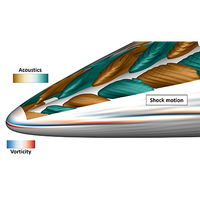
Hypersonic boundary layers are susceptible to flow instabilities that cause laminar flow to transition to turbulence, significantly increasing aerodynamic drag and wall heating. We focus on how these instabilities are triggered by the environment by applying a control systems theory technique called “input-output analysis” that relies in part upon solving the Navier-Stokes equations in reverse, tracing instabilities back to their origins. In the complex interactions between atmospheric disturbances, shock waves created near the nose cone of a hypersonic vehicle, and boundary layer instabilities, we find two physical processes strongly connected to the bluntness of the nose cone tip.

Emergence of dissipation and hysteresis from interactions among reversible, nondissipative units: The case of fluid-fluid interfaces

Ran Holtzman, Marco Dentz, Marcel Moura, Mykyta V. Chubynsky, Ramon Planet, and Jordi Ortín

Phys. Rev. Fluids 9, 064001 (2024) - Published 3 June, 2024

Fluid-fluid displacement is often irreversible—exhibiting hysteresis where reversal of the driving force (e.g. external pressure) does not reverse the fluids’ configuration. This irreversibility is linked to energy dissipation, a key to efficient design of engineering operations such as subsurface cleanup or energy storage. Here, we analyze (analytically, numerically, and experimentally) a novel model system that exposes a striking phenomenon: emergence of hysteresis and dissipation in a system made of individually “reversible” (non-hysteretic) entities, due to their spatial interactions mediated by interfacial tension.

Dynamic coupling of rigid in-plane pore oscillations and flow through nanoporous two-dimensional membranes

J. P. Martínez Cordeiro and N. R. Aluru

Phys. Rev. Fluids 9, 064201 (2024) - Published 3 June, 2024

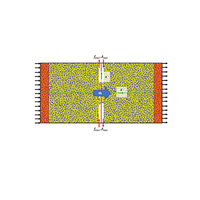
Most of the literature on flow through nanoporous two-dimensional membranes has focused on static membranes, yet various studies have shown the relevance of fluid-structure interactions – particularly dynamic coupling – on flow through nanopores. Herein, we use Molecular Dynamics (MD) simulations to study the effects of rigid in-plane harmonic pore oscillations on water flow through nanoporous graphene. First, we repurpose a used technique as a framework to isolate the physical mechanisms caused by the dynamic pore from the injected heat. We show that dynamic opening/closing of flow routes inside the pore enhances flow by increasing axial velocity and decreasing water density inside the pore.

Spheres and fibers in turbulent flows at various Reynolds numbers

Ianto Cannon, Stefano Olivieri, and Marco E. Rosti

Phys. Rev. Fluids 9, 064301 (2024) - Published 3 June, 2024

We use immersed boundary methods to simulate finite-size spheres and fibers in turbulent flows across a range of Taylor Reynolds numbers (12.8<Reλ<442) and solid mass fractions (0≤M≤1). Both particle shapes act as a “spectral shortcut” to the flow, with fibers extending this effect further into the dissipative range. Spheres enhance dissipation in two-dimensional sheets, while fibers enhance dissipation in structures with dimension between one and two. However, the particles’ effect on the anomalous dissipation tends to vanish as Reλ→∞. These findings have implications for microplastics in oceans, volcanic ash clouds, and sandstorms.

Volumetric visualization of vanishing vortices in wind turbine wakes

Johannes N. Hillestad, Srikar Yadala, Ingrid Neunaber, Leon Li, R. Jason Hearst, and Nicholas A. Worth

Phys. Rev. Fluids 9, L052701 (2024) - Published 31 May, 2024

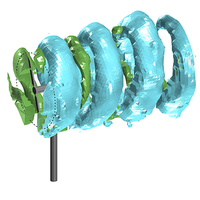
The “anomalous” peaks in experimentally obtained power spectral density plots in the wake of wind turbines are investigated with time-resolved volumetric measurements. To promote early tip vortex interaction, blades with different angles-of-attack are used on the same rotor. Using an advanced volumetric technique to obtain the velocity field in the wake, the tip vortex interaction is visualized and quantified. The captured tip vortices corroborate the findings from power spectral density plots at different downstream locations that only one vortex is dominant, demonstrating that a difference in initial vortex strength can result in vortical energy being distributed at unexpected frequencies.

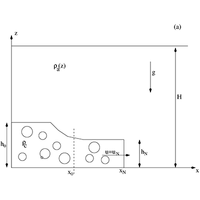
Polydisperse particle-driven gravity currents propagating into a stratified ambient in containers of general cross sections

T. Zemach

Phys. Rev. Fluids 9, 054105 (2024) - Published 28 May, 2024

We investigate high-Reynolds-number polydisperse gravity currents propagating along a channel of general cross-section into a linearly stratified ambient fluid. We formulate and solve numerically the shallow water equations and present typical height and velocity profiles of the current and particle mass concentration. Two dimensionless parameters, Stratification (S) and particle buoyancy (Π), are relevant. Increasing S decreases the current velocity propagation, but as Π increases, the current propagates faster. For a specific S, Π dependence, an equilibrium occurs for a significant time and the system behaves like a system without particles propagating into the ambient of constant density.

Turbulent drag reduction in water-lubricated channel flow of highly viscous oil

Alessio Roccon, Francesco Zonta, and Alfredo Soldati

Phys. Rev. Fluids 9, 054611 (2024) - Published 28 May, 2024

The transportation of oil through pipelines and channels is a highly energy-intensive operation, primarily due to the significant viscosity of the oil and the consequent high friction. Among the various friction reduction methods utilized in this domain, the water-lubricated approach has emerged as particularly promising. Our investigation focuses on assessing the efficacy of this technique through direct numerical simulations of turbulent channel flow. In this setup, we introduce two thin water layers near the walls, which serve to lubricate the flow of oil within the core.

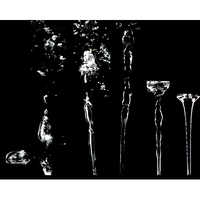
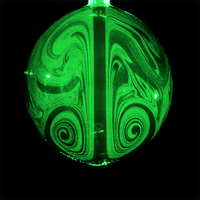
Dynamics of soap bubble inflation

Saini Jatin Rao, Siddhant Jain, and Saptarshi Basu

Phys. Rev. Fluids 9, L051602 (2024) - Published 28 May, 2024

Often considered a childhood pastime, soap bubbles emerged as a captivating domain for rigorous scientific inquiry for generations. While blowing soap bubbles is familiar to everyone, the underlying physics of inflating them remains unanswered. In our investigation, we visualize the previously unexplored internal airflow experimentally, revealing a toroidal vortical flow that resembles a bound vortex ring. The air enters the bubble as a round jet, emerging from the nozzle opening and impinges on the expanding concave interior to form this toroidal vortex. We also predict several scaling laws for the inflation rate and dynamics of this confined vortical flow by varying the source pressure.

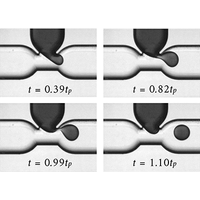
Microfluidic droplet pinch-off modified by hard and soft colloids: A scaling transition

Loïc Chagot, Simona Migliozzi, and Panagiota Angeli

Phys. Rev. Fluids 9, L052201 (2024) - Published 28 May, 2024

In this Letter, we explore the influence of colloids at liquid-liquid interfaces on droplet pinch-off dynamics in microfluidic devices. We uncover a significant deviation in droplet formation time compared to pure systems, similarly to surfactant-laden systems. Yet notably, colloids exert minimal impact on droplet size, indicating potential nonlinear effects. The dynamics of neck thinning without colloids agree with the classic pendant drop scaling laws, while particle presence replaces traditional viscous and inertial-viscous regimes with a single power law, suggesting an elastic behavior driven by soft particle interactions.

Mesoscopic lattice Boltzmann modeling of dense gas flows in curvilinear geometries

Sergiu Busuioc

Phys. Rev. Fluids 9, 053401 (2024) - Published 23 May, 2024

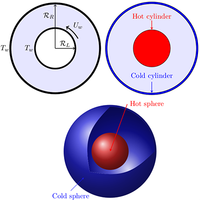
This paper derives the Enskog equation in the context of orthonormal vielbein fields, allowing the use of arbitrary coordinate systems to describe spatial geometry. Additionally, an adapted coordinate system in momentum space is employed, which is connected to physical space via vielbeins. A suitable finite-difference lattice Boltzmann model is developed and validated against a direct simulation Monte Carlo particle-based method for solving the Enskog equation in curvilinear geometries. The test scenarios include cylindrical Couette and Fourier flow between coaxial cylinders, and spherical Fourier flow between concentric spheres.

Mean temperature scalings in compressible wall turbulence

Cheng Cheng and Lin Fu

Phys. Rev. Fluids 9, 054610 (2024) - Published 23 May, 2024

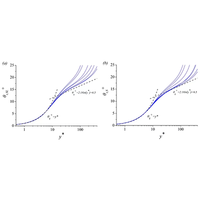
We report a new Mach number invariant function for the mean temperature field in compressible wall turbulence. We demonstrate its validation by comparing it with the invariant functions derived in the previous studies, i.e., the semi-local-type and van-Driest-type scalings, case by case. The newly proposed temperature transformations based on the new scaling show an improvement in channel flows over adiabatic walls and supersonic/hypersonic turbulent boundary layers with cold walls. The effects of the generated high-order terms during derivation are also clarified. These findings may be revealing for the development of the near-wall model in high-speed aerodynamics.

Electroconvection in electrodeposition: Electrokinetic regularization mechanisms of shortwave instabilities

I. Rubinstein and B. Zaltzman

Phys. Rev. Fluids 9, 053701 (2024) - Published 22 May, 2024

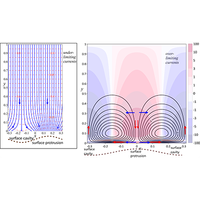
Dendrite formation resulting from morphological instability in cathodic electrodeposition of a metal and, especially, the role that related fluid flows play, has long been of major interest to physicists. We focus on the physical mechanisms behind: (1) Underlimiting currents: Selection of electrokinetic-reactive length scale, which is the geometric average of the electric double layer width and the reaction-diffusion length defined as the ratio of cation diffusivity to electrode reaction rate; (2) Overlimiting currents: Domination of emerging electroconvective flow, selecting the cathodic diffusion layer width as dominant length scale for morphological instability and emerging dendrites.

Rheology of granular mixtures with varying size, density, particle friction, and flow geometry

Eric C. P. Breard, Luke Fullard, and Josef Dufek

Phys. Rev. Fluids 9, 054303 (2024) - Published 22 May, 2024

This work studies the rheology of dense granular media, exploring the effects of varying particle size, density, friction and shear profiles across different flow regimes. Utilizing the discrete element method (DEM), the research extends current models by integrating volumetric contributions and introducing a new power-law scaling that unifies local and nonlocal rheology data onto a single master curve. This approach bridges the μ(I)-rheology and Kinetic Theory, offering a framework for predicting the behavior of granular flows in various settings, from geophysical flows to industrial processes.

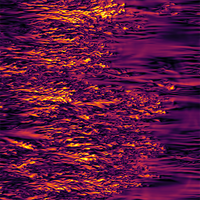
Self-similarity in single-point turbulent statistics across different quadrants in turbulent rotor wakes

Xue-Lu Xiong (熊雪露), Shujin Laima (赖马树金), Hui Li (李惠), and Yi Zhou (周毅)

Phys. Rev. Fluids 9, 054608 (2024) - Published 22 May, 2024

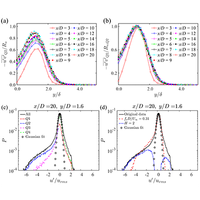
We present a self-similarity analysis of single-point turbulent statistics across different quadrants in turbulent wakes. We show here that within the wake self-similar region, the distribution of the Reynolds shear stress in different quadrants can also attain a state of self-similarity. The length scaling is the same for the Reynolds shear stress and its different quadrant contributions, while there exists a difference in velocity scaling. There exists a strong connection between ejection events and large-scale coherent structures, as well as deceleration extreme events.

Sign In to Your Journals Account

Filter

Recent Issues

Vol. 11, Iss. 10
October 2026
Vol. 11, Iss. 9
September 2026
Vol. 11, Iss. 8
August 2026
Vol. 11, Iss. 7
July 2026
Category
Article Type
Section

Filter

Article Lookup

Enter a citation