Browse Issues:

HIGHLIGHTED ARTICLES

Gravity-driven feeding currents in veliger larvae of the eastern oyster

Houshuo Jiang

Phys. Rev. Fluids 11, 093101 (2026) - Published 16 September, 2026

Feeding by marine invertebrate larvae depends critically on the low-Reynolds-number fluid mechanics of the feeding currents they generate. However, the relative importance of gravity-driven and drag-driven mechanisms in shaping these feeding currents has remained unresolved. By combining μPIV measurements with an analytical Stokes-flow model, this study demonstrates that feeding currents of eastern oyster (Crassostrea virginica) veligers are gravity-dominated despite their submillimeter size, and quantifies how excess weight, swimming kinematics, and ciliary propulsion together determine larval clearance rates and flow structure.

Patterning surface textured plates with a viscoplastic fluid

Vanessa R. Kern, Marcel Moura, Pål E. S. Olsen, and Andreas Carlson

Phys. Rev. Fluids 11, 093301 (2026) - Published 28 September, 2026

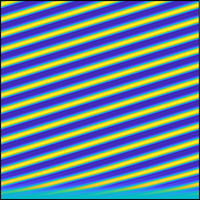
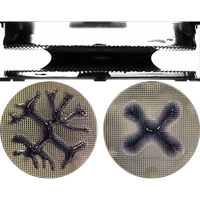
Viscoplastic fluids can retain complex shapes after deposition, but controlling these shapes through interfacial instabilities remains challenging. Experiments with simultaneous side and bottom imaging in a lifted Hele-Shaw cell shows that submillimetric substrate structures can direct the fingering dynamics and determine the symmetry and morphology of the deposited fluid. The adhesive force decay as the plate is lifting is an interplay between capillary, yield-stress, and viscous forces, where a dynamic permeability links the preferred invasion directions to the anisotropy introduced by the substrate texture.

Motility and interfacial instability of confined chemically active droplets

Pawan Kumar, Sobiya Ashraf, Naveen Tiwari, Dipin Pillai, and Rahul Mangal

Phys. Rev. Fluids 11, 094005 (2026) - Published 21 September, 2026

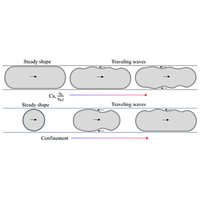
This work investigates how confinement and the physicochemical properties of the surrounding medium influence the dynamics of chemically active droplets in a capillary channel. We demonstrate that the Yeh-Marangoni instability induces peristaltic interfacial traveling waves on confined chemically active droplets, enabling adaptive oscillatory locomotion through narrow channels.

Turbulence without the viscous tilting of vorticity

Amr Emam, Mostafa Kamal, and Perry L. Johnson

Phys. Rev. Fluids 11, 094607 (2026) - Published 28 September, 2026

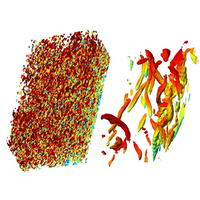
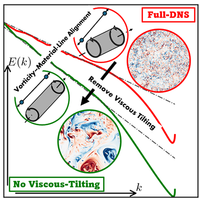
While vortex stretching in turbulence is commonly understood in analogy to material line stretching, the viscous tilting of vorticity prevents sustained alignment with material lines. In this paper, it is shown via numerical simulation that the surgical removal of viscous tilting from the vorticity evolution equations in isotropic turbulence results in dramatic deviations from basic turbulence scaling laws. These observations demonstrate that the viscous tilting of vorticity, and thus the difference between vorticity stretching and that of material lines, is an essential characteristic of turbulence.

Boundary layer beneath a tornado-like vortex

Leven Davies, P. A. Davidson, and John K. Harvey

Phys. Rev. Fluids 11, 094703 (2026) - Published 21 September, 2026

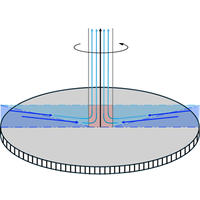
How is the boundary layer structured beneath a tornado, the surface flow that feeds the vortex above it? Because field observations are challenging, much of what is known rests on theory. A classical asymptotic analysis predicts a composite layer: a thin viscous layer carrying the shear stress, capped by a thicker layer carrying the inward mass flux. We test this quantitatively using particle image velocimetry of a tornado-like vortex in a water tank. The measurements support the two-layer structure and expose a surprising feature within it: fluid is entrained downward at all radii, yet the inner layer still detrains mass into the outer layer.

ARTICLES

Invited Articles

Getting a viscous drop into and out of a well

Souradeep Roychowdhury, Henry Lutz, Rajarshi Chattopadhyay, Alexander Z. Zinchenko, and Robert H. Davis

Phys. Rev. Fluids 11, 090501 (2026) - Published 21 September, 2026
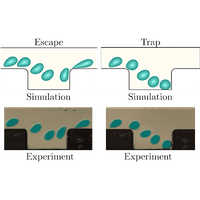
Trapping and releasing deformable drops in confined chambers are central to many microfluidic applications, from single-cell assays to droplet microreactors. Combining three-dimensional boundary-integral simulations with flow-cell experiments, we show how gravity, viscous forcing, drop deformability, and chamber geometry determine whether a drop escapes, becomes trapped, or breaks up near a well corner. The results also identify practical strategies for controlled drop removal after trapping.

Generative priors for spatiotemporal turbulence: Toward conditionable and scalable flow foundation models

Jian-Xun Wang

Phys. Rev. Fluids 11, 090502 (2026) - Published 21 September, 2026
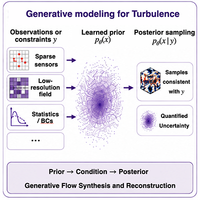
Turbulence modeling increasingly requires probabilistic tools that can generate, condition, and complete instantaneous flow fields under sparse data and high simulation cost. This Perspective presents transport-based generative models, including diffusion and flow matching, as reusable probabilistic priors for spatiotemporal turbulence. Through training-free conditional sampling, a single learned prior can unify forward generation, reconstruction, data assimilation, restoration, and solver-constrained inference. This framework offers a path toward conditionable, uncertainty-aware statistical backbones for future turbulence foundation models.

Modeling and prediction of high-speed turbulent boundary layers

Johan Larsson

Phys. Rev. Fluids 11, 090503 (2026) - Published 21 September, 2026
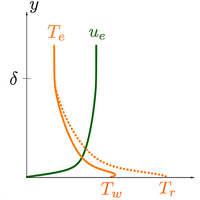
The conversion of kinetic energy into internal energy in high-speed boundary layers creates non-uniform density and viscosity fields, which invalidate many foundational theoretical models of wall-bounded turbulence flow, most notably the incompressible log-law for the mean velocity profile. The paper sets up the general problem and describes the author’s personal perspective on our current theoretical understanding of it, along with what has worked and what remains to be solved in this research area.

Contact-network organization and motion statistics in shear-thickening suspensions

Michel Orsi, Rahul Pandare, Brolin Adu-Poku, Bulbul Chakraborty, and Jeffrey F. Morris

Phys. Rev. Fluids 11, 090504 (2026) - Published 21 September, 2026
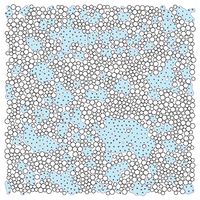
Shear thickening in dense suspensions is associated with the growth of frictional contact networks, but how those networks organize particle motion has remained unclear. Using large-scale discrete-elements simulations, we show that contact number, percolation, and rigidity all strengthen in the same region where translational velocity correlations grow and neighboring non-affine rotations become increasingly anticorrelated. These observables provide complementary signatures of the collective organization that precedes shear jamming.

Challenges of fluid mechanics in dealing with marine oil spills

Hyungmin Park, Jaebeen Lee, and Linfeng Piao

Phys. Rev. Fluids 11, 090505 (2026) - Published 28 September, 2026
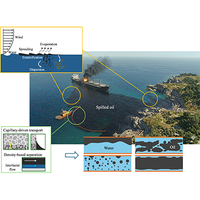
Marine oil-spill response remains largely field-driven, only loosely related to advances in multiphase-flow and interfacial physics. The IMO 2020 sulfur cap has signified this situation by introducing low-sulfur fuel oils (LSFOs), whose wax-driven, temperature-sensitive rheology and strong adhesion violate assumptions of classical spreading, recovery, and transport models. Using fluid mechanics we synthesize how LSFO’s compositional differences from conventional heavy fuel oils affect spreading, capillary- and density-based recovery, and pipeline fouling, and outlines how multiphase-flow and data-driven strategies could improve recovery robustness and transport efficiency for these fuels.
LETTERS

Turbulent Flows

Joint multifractal description of small-scale turbulence: Unifying longitudinal and transverse velocity intermittency

Dhawal Buaria

Phys. Rev. Fluids 11, L092601 (2026) - Published 18 September, 2026

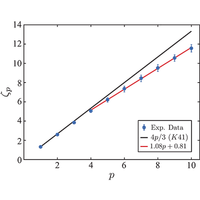
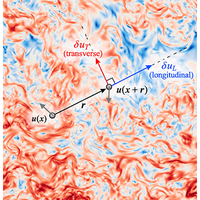
Small scales of turbulence are known to exhibit strong intermittency. But why do longitudinal and transverse fluctuations display different intermittent scaling? A new joint multifractal framework developed here unifies these two aspects by connecting the anomalous scaling of longitudinal and transverse increments in the inertial range to the distinct Reynolds-number scaling of their gradients in the dissipation range. Validated against state-of-the-art DNS, the framework provides a unified picture of longitudinal and transverse intermittency across scales.

ARTICLES

Biological and Biomedical Flows

Gravity-driven feeding currents in veliger larvae of the eastern oyster

Houshuo Jiang

Phys. Rev. Fluids 11, 093101 (2026) - Published 16 September, 2026

Feeding by marine invertebrate larvae depends critically on the low-Reynolds-number fluid mechanics of the feeding currents they generate. However, the relative importance of gravity-driven and drag-driven mechanisms in shaping these feeding currents has remained unresolved. By combining μPIV measurements with an analytical Stokes-flow model, this study demonstrates that feeding currents of eastern oyster (Crassostrea virginica) veligers are gravity-dominated despite their submillimeter size, and quantifies how excess weight, swimming kinematics, and ciliary propulsion together determine larval clearance rates and flow structure.

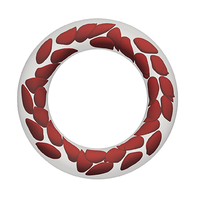
Effect of capillary vessel curvature on red blood cells' flow pattern and effective viscosity

Yu Terada, Tomoaki Watamura, Satoshi Ii, and Shu Takagi

Phys. Rev. Fluids 11, 093102 (2026) - Published 17 September, 2026

In microvessels, red blood cells (RBCs) exhibit distinct flow patterns, such as single-file and double-file flows. This study reveals that vessel curvature, as well as vessel radius, affects these flow patterns and that a transition to double-file flow occurs when the effect of vessel curvature becomes significant. We also demonstrate the impact of this transition on RBC positions and motions, effective viscosity, and energy dissipation. In addition, we show that swollen RBCs preferentially form single-file flow, providing insights into blood disorders associated with RBC swelling, such as malaria.

Collinear swimming of a squirmer pair in Newtonian and shear-thinning fluids

Chih-Tang Liao, Ali Gürbüz, Victor Bueno Garcia, Yuan-Nan Young, Devanayagam Palaniappan, and On Shun Pak

Phys. Rev. Fluids 11, 093103 (2026) - Published 28 September, 2026

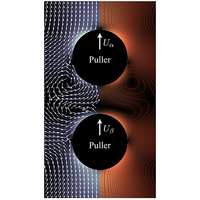
Pairwise hydrodynamic interactions between microswimmers are fundamental building blocks for understanding their more complex collective behaviors. Here, we revisit the canonical problem of two squirmers swimming along their common line of centers in both Newtonian and shear-thinning fluids. Our results reveal how different system parameters shape the dynamics and energetics of pairwise swimmer interactions. The study establishes quantitative benchmarks for future investigations of more complex and realistic swimmer configurations.

Dynamical comparison and superimposition of morphing submodes in biological wing motion

Zhi Cheng, Zixiao Wei, and Grace X. Gu

Phys. Rev. Fluids 11, 093104 (2026) - Published 29 September, 2026

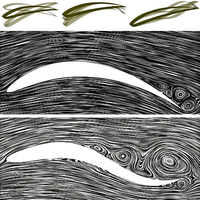
Biological wings achieve remarkable maneuverability through coordinated deformation, yet the distinct fluid-dynamic roles of their fundamental morphing motions remain poorly understood. We systematically compare five representative sub-modes: pitching, bending, extending, flapping, and twisting. The results reveal frequency-dependent dynamic benefits and a flow-locking regime in which morphing regularizes vortex shedding and homogenizes aerodynamic forces. Combining selected sub-modes further increases lift with minimal drag penalty, offering new principles for actively morphing wings.

Combustion Fluid Mechanics and Reacting Flows

Effects of reflected shock-boundary layer interactions on detonation initiation in shock-focusing systems

Jie Sun, Pengfei Yang, Dehai Yu, Yiqing Wang, and Zheng Chen

Phys. Rev. Fluids 11, 093201 (2026) - Published 21 September, 2026

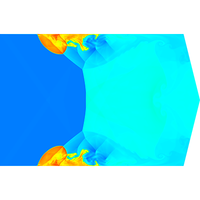
Shock focusing is a promising route to detonation initiation, but most prior studies used inviscid models, leaving boundary-layer effects poorly understood. Using two-dimensional viscous simulations with detailed hydrogen-air chemistry, this work shows that reflected shock-boundary layer interactions can decisively trigger ignition and detonation by driving boundary-layer separation and localized viscous heating. Neglecting these effects gives qualitatively skewed predictions of initiation mode and critical Mach number, revealing shock-boundary layer interaction as an essential, previously overlooked driver of detonation initiation in shock-focusing systems.

Direct numerical simulation of premixed hydrogen-air flames subject to thermodiffusive effects in a fully developed turbulent channel flow at Reτ=530

Felix Rong, Max Schneider, Hendrik Nicolai, Christian Hasse, and Andrea Gruber

Phys. Rev. Fluids 11, 093202 (2026) - Published 24 September, 2026

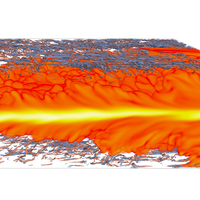
Direct numerical simulations reveal how thermo-diffusive instabilities interact with wall-bounded shear-driven turbulence in fuel-lean premixed hydrogen-air flames. As the flame approaches the wall, the stretch factor increases with the local Karlovitz number and reaches its maximum in the buffer layer, co-located with the peak Reynolds stresses. This reveals a pronounced synergistic interaction between thermo-diffusive phenomena and wall turbulence, resulting in enhanced reactivity and increased local flame propagation speeds.

Complex and Non-Newtonian Fluids

Patterning surface textured plates with a viscoplastic fluid

Vanessa R. Kern, Marcel Moura, Pål E. S. Olsen, and Andreas Carlson

Phys. Rev. Fluids 11, 093301 (2026) - Published 28 September, 2026

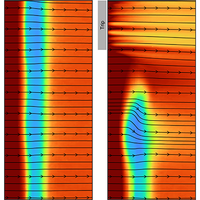
Viscoplastic fluids can retain complex shapes after deposition, but controlling these shapes through interfacial instabilities remains challenging. Experiments with simultaneous side and bottom imaging in a lifted Hele-Shaw cell shows that submillimetric substrate structures can direct the fingering dynamics and determine the symmetry and morphology of the deposited fluid. The adhesive force decay as the plate is lifting is an interplay between capillary, yield-stress, and viscous forces, where a dynamic permeability links the preferred invasion directions to the anisotropy introduced by the substrate texture.

Drops, Bubbles, Capsules, and Vesicles

Simultaneous evaporation and imbibition of a droplet on a fully flooded porous substrate

David Craig, Alexander W. Wray, Khellil Sefiane, and Stephen K. Wilson

Phys. Rev. Fluids 11, 093601 (2026) - Published 14 September, 2026

A mathematical model for the evolution of, and deposition from, a thin particle-laden droplet on a fully flooded porous substrate undergoing simultaneous evaporation and imbibition is formulated and analyzed. While the physical mechanisms driving evaporation and imbibition are rather different, it is found that there are several qualitative and quantitative similarities in the behavior of the droplet as it loses mass to its environment. Not only are these results of theoretical interest, but they are also relevant to a wide variety of practical applications that would benefit from an improved ability to predict and/or control the pattern of the final deposit left on the substrate.

Vortex ring cavitation induced by an impulsively expanding bubble in a confined tube

Tianyuan Zhang, Shuai Li, Sinan Long, Ziqian Yue, and A-Man Zhang

Phys. Rev. Fluids 11, 093602 (2026) - Published 16 September, 2026

Vortex cavitation in submerged jets is usually associated with turbulent continuous flows, yet an impulsively expanding bubble in a confined tube can trigger cavitation in a remarkably organized vortex ring. Combining experiments, theory, and simulations, we show that the intense initial acceleration of the jet generates an over-pressure contribution to vortex ring circulation, producing unusually high incipient cavitation numbers. This mechanism also explains why larger nozzles promote cavitation, revealing a size-scale effect in impulsive jets.

Dynamics of periodic red blood cell suspensions in confined Poiseuille flows

Zhe Gou, Hengdi Zhang, Alexander Farutin, and Chaouqi Misbah

Phys. Rev. Fluids 11, 093603 (2026) - Published 18 September, 2026

Red blood cells in microcirculation migrate toward the vessel center to reduce blood dissipation, yet their collective dynamics remain elusive. Using periodic boundary conditions, we uncover a concentration-driven symmetry-breaking bifurcation from centered parachutes to off-centered slippers and identify a scaling law for migration velocity. Remarkably, intrinsic viscosity collapses onto a universal curve set by cellular organization. The periodic suspension captures non-periodic behavior at a very low computational cost, providing an efficient framework for studying concentrated blood flow and confined rheology.

Geophysical, Geological, Urban, and Ecological Flows

Effects of the Coriolis force on the coherent structures in conventionally neutral atmospheric boundary layers

Changlong Wang, Luoqin Liu, Xiang I. A. Yang, and Ruifeng Hu

Phys. Rev. Fluids 11, 093801 (2026) - Published 21 September, 2026

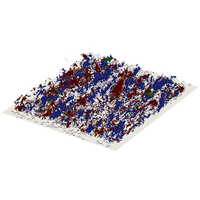
While the Coriolis force due to Earth’s rotation is well known to induce wind veer in the mean velocity of atmospheric boundary layers (ABLs), its effects on turbulent coherent structures remain poorly understood. Using large-eddy simulation of conventionally neutral ABLs, we show that the Coriolis force causes distinct deflection of coherent velocity structures away from both the mean wind and mean shear directions. A universal relationship between relative structure deflection and relative wind veer angles is established, independent of latitude or geostrophic wind speed. The Coriolis force also modifies the inclination of large-scale structures, likely due to the Coriolis-induced deflection.

Instability, Transition, and Control

Effect of localized surface roughness on laminar separation bubbles

Nianhua Liu and Serhiy Yarusevych

Phys. Rev. Fluids 11, 093901 (2026) - Published 1 September, 2026

Lifting surfaces operating at aerodynamically low Reynolds numbers often have laminar separation bubbles (LSBs) whose characteristics can significantly affect performance. We investigate the effect of localized surface roughness, which might form due to manufacturing, local contamination, damage or icing, on LSBs. We find that the localized roughness eliminates downstream laminar separation and modifies the LSB topology and dynamics over a substantial spanwise region extending well beyond the roughness itself. The associated effect on aerodynamic performance is considerably greater than would be expected based solely on the relative spanwise extent of the localized roughness.

Data-driven control of extreme events in turbulent flows through latent space clustering

Youssef Shehata, Kevin Schuurman, Pablo Domínguez Estévez, and Nguyen Anh Khoa Doan

Phys. Rev. Fluids 11, 093902 (2026) - Published 10 September, 2026

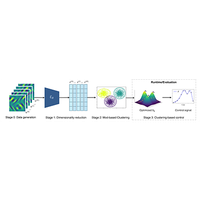
Extreme events in turbulent flows are rare, abrupt bursts in the system observable, posing significant challenges for prediction and control due to their nonlinearity and high dimensionality. Here, we present a predominantly data-driven framework for their suppression, combining dimensionality reduction through symmetry-aware autoencoders and data-driven clustering in the latent space of the former for the identification of precursors. A control law defined in this latent space substantially reduces the frequency and intensity of extreme events, by up to 99.4% in a canonical chaotic flow, demonstrating scalability to higher-Reynolds-number regimes and practical control limitations.

Mixing, anisotropy, and Lagrangian dispersion in Rayleigh-Taylor turbulence under variable acceleration

Dongxiao Zhao and Gaojin Li

Phys. Rev. Fluids 11, 093903 (2026) - Published 18 September, 2026

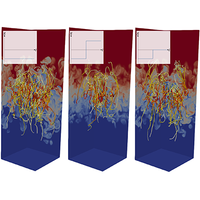
Rayleigh-Taylor turbulence is well understood under steady acceleration, but many high-energy-density and astrophysical flows experience accelerations that vanish or reverse. Simulations with Lagrangian particle tracking show that gravity removal preserves vertical velocity memory and drives inertial coasting, whereas reversal creates a stably stratified, Brunt-Väisälä-oscillating state. The flow state at switching controls both the subsequent mixing dynamics and the suppression of absolute and relative particle transport.

Interfacial Phenomena and Flows

Transition from dripping to jetting of a film flowing down a vertical fiber

Atefeh Pour Karimi, Reinhold Kneer, Marc Böttner, Wilko Rohlfs, and Benoit Scheid

Phys. Rev. Fluids 11, 094001 (2026) - Published 9 September, 2026

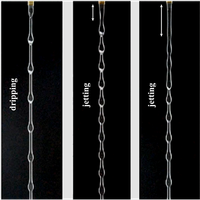
Liquid films flowing along fibers can exhibit distinct dripping and jetting regimes, yet the differences in bead-formation mechanisms and the transition between these regimes have received limited attention. By combining experiments with a theoretical model, we discuss the mechanisms governing bead formation in both regimes and introduce a method for identifying and predicting the transition range across different fiber-nozzle geometries. This work advances the fundamental understanding of bead formation and regime transitions in film flows on fibers.

Thermosolutal instabilities in inertialess thin self-rewetting liquid films on a vertical heated cylinder

Mohammed Zubair and Rajagopal Vellingiri

Phys. Rev. Fluids 11, 094002 (2026) - Published 14 September, 2026

Self-rewetting fluids that exhibit a quadratic dependence of surface tension with temperature result in thermocapillary flows that are markedly different from normal fluids. However, their behavior in the presence of an insoluble surfactant is not yet fully understood. We consider an inertialess surfactant-laden self-rewetting fluid film flowing down a heated cylinder under gravity, by deriving a reduced-order model under the lubrication approximation. A systematic linear stability analysis of our models indicates the stabilizing influence of surfactants at small wavenumbers, whereas conventional (anomalous) thermocapillarity is destabilizing (stabilizing) at mid-wavenumbers.

Peristaltic pumping under poroelastic confinement

Avery Trevino, Roberto Zenit, and Mauro Rodriguez, Jr.

Phys. Rev. Fluids 11, 094003 (2026) - Published 18 September, 2026

This study presents an analytical model of peristalsis within poroelastic confinement which occurs in engineered and biological contexts, such as microfluidic devices and the flow of cerebrospinal fluid in the brain. We describe the poroelastic boundary deformation and both Lagrangian and Eulerian flow behavior, relating each to poroelastic material properties. There are regimes of forward and reverse flow relative to the peristaltic wave direction depending on permeability and interfacial slip between the Stokes and Darcy regions. We show a framework for directed fluid pumping near and through soft, porous materials.

Axisymmetric radiation and decay of gravity-capillary waves

Yukun Sun, Benjamin Weiss, Sungyon Lee, Sunghwan Jung, Chris Roh, and Daisuke Takagi

Phys. Rev. Fluids 11, 094004 (2026) - Published 21 September, 2026

The water surface is naturally contaminated with biological and chemical impurities. Even a trace amount of contaminants can introduce elasticity and impact wave damping that is not fully appreciated. By accounting for water viscosity and surface elasticity, this study predicts the radial propagation and decay of linear waves in good agreement with experiments. The results offer insight into the possible range of interactions between surface-dwelling organisms in nature.

Motility and interfacial instability of confined chemically active droplets

Pawan Kumar, Sobiya Ashraf, Naveen Tiwari, Dipin Pillai, and Rahul Mangal

Phys. Rev. Fluids 11, 094005 (2026) - Published 21 September, 2026

This work investigates how confinement and the physicochemical properties of the surrounding medium influence the dynamics of chemically active droplets in a capillary channel. We demonstrate that the Yeh-Marangoni instability induces peristaltic interfacial traveling waves on confined chemically active droplets, enabling adaptive oscillatory locomotion through narrow channels.
Micro- and Nanofluidics

Molecular-based apparent permeability model with combined roughness and confinement effects in nanoporous media

Peiyao Liu, Ruiping Niu, Baochao Shan, and Zhaoli Guo

Phys. Rev. Fluids 11, 094201 (2026) - Published 10 September, 2026

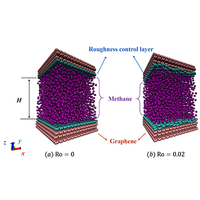
Gas transport in nanoporous media is strongly influenced by surface roughness, wettability, and molecular confinement, yet these effects are difficult to incorporate consistently into continuum-scale descriptions. We develop a molecular-based apparent permeability model that combines roughness corrections derived from molecular dynamics simulations with confinement and fluid–solid interaction effects. The model provides a systematic framework for disentangling these nanoscale mechanisms and predicting their combined influence on apparent permeability.

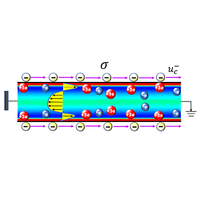
Role of ion-ion correlations on electroosmosis of multivalent electrolytes in hydrophobic channels with mobile surface charge

Shubhra Sahu and Somnath Bhattacharyya

Phys. Rev. Fluids 11, 094202 (2026) - Published 21 September, 2026

The electroosmotic flow (EOF) of electrolytes with multivalent counterions is investigated in a hydrophobic channel with laterally mobile surface charges. The lateral mobility of surface ions modifies the conventional slip boundary condition. Under strong electrostatic coupling, counterions become condensed near the surface, leading to charge over-screening and the formation of a layered ionic structure, consistent with experimental observations. Increasing the slip flow diffuses part of the condensed counterion layer, which suppresses EOF reversal. In addition, the lateral mobility of surface ions increases the surface conductivity, which further weakens counterion condensation.

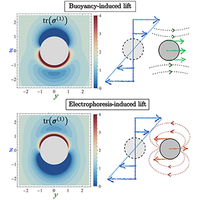
Tuning cross-stream lift in viscoelastic shear: Distinct hydrodynamic signatures of force-bearing and force-free mechanisms

Soumyodeep Chowdhury, Kushagra Tiwari, Jitendra Dhakar, and Akash Choudhary

Phys. Rev. Fluids 11, 094203 (2026) - Published 18 September, 2026

We show that a particle translating relative to a weakly viscoelastic shear flow can experience fundamentally different lift and drag corrections, depending on whether its relative motion is driven by an external force (such as buoyancy) or by a force-free mechanism (electrophoresis, microswimming). The analytical results show that these two modes of motion generate lift forces in opposite directions because they produce fundamentally different flow signatures and polymeric stress fields. In addition to the explicit derivation of first-order fields in the Weissenberg number, we ascertain these results via the reciprocal theorem.

Multiphase, Granular, and Particle-Laden Flows

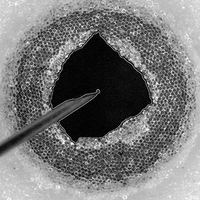
Rupture dynamics of dense granular films: From liquidlike bursting to solidlike fracturing

Paul Gauthier, Nabil Retailleau, Yacine Khidas, and Florence Rouyer

Phys. Rev. Fluids 11, 094301 (2026) - Published 8 September, 2026

In granular films, where grains bridge the two interfaces of a soap film, the liquid pressure controls the transition from bursting to a jammed state. Even more, a single bursting event combines liquid- and solid-like mechanical responses. By identifying both an effective surface viscosity governing the early liquid-like regime and an internal dissipation controlling the late fracture dynamics, we provide a unified physical picture and highlight the differences between granular films and granular rafts. The concepts introduced here may prove relevant for a broad range of systems in which particles and interfaces interact, from particle-laden foams to biological or bio-inspired membranes.

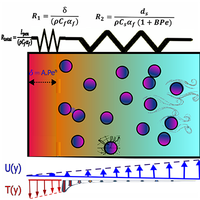
Thermal diffusivity measurements in a sheared particle-laden suspension

A. P. Merin and Vinod Srinivasan

Phys. Rev. Fluids 11, 094302 (2026) - Published 8 September, 2026

Thermal diffusivity measurements in a sheared particle-fluid suspension are performed in a Taylor-Couette cell with outer cylinder rotation. The enhancement in diffusivity follows a power law with Peclet number with an exponent of 0.5 for Peclet numbers below 700 at all volume fractions studied (0.14, 0.22, 0.30 and 0.36). The data do not fit existing theory and are consistent with a model that assumes the formation of a particle-free fluid layer near the inner cylinder which causes deviation from an initially linear behavior at low particle Peclet numbers.

Added-mass and added-moment-of-inertia tensors of porous fractal flocs

Lucja Stawikowska, Samuel Briney, Xiao Yu, and S. Balachandar

Phys. Rev. Fluids 11, 094303 (2026) - Published 10 September, 2026

Fractal flocs occur in sediments, aerosols, and many particulate flows, yet their unsteady hydrodynamic inertia is often approximated using equivalent-sphere or free-draining models. We compute the added-mass and added-moment-of-inertia tensors of large ensembles of porous flocs over a range of sizes and fractal dimensions. The results reveal morphology-dependent anisotropy, systematic departures from simple approximations, and decreasing floc-to-floc variability with increasing size. We provide compact stochastic closures that can be used in large-scale simulations.
Drafting-kissing-tumbling dynamics of two particles subjected to horizontal oscillations

Fabian Kleischmann and Bernhard Vowinckel

Phys. Rev. Fluids 11, 094304 (2026) - Published 16 September, 2026

The drafting–kissing–tumbling (DKT) interaction of settling particles is a canonical problem in multiphase flow research, yet its behavior in oscillatory environments remains largely unexplored. Using particle-resolved direct numerical simulations, we investigate how horizontal oscillations modify binary particle interactions over a wide frequency and amplitude range. We show that oscillatory effects become significant only when oscillation-induced inertia exceeds viscous forces (Rep > 1), leading to changes in contact duration and a preferential particle alignment perpendicular to the oscillation direction. Pressure field analysis reveals the underlying hydrodynamic mechanism.

Preferential sampling enabled by particle finite size and anisotropic shape

Helena E. Schreder, Kartik Krishna, Steven L. Brunton, and Michelle H. DiBenedetto

Phys. Rev. Fluids 11, 094305 (2026) - Published 18 September, 2026

Preferential sampling of a flow is normally due to particle inertia or attracting regions. In our study, we identify preferential sampling by a distinct mechanism: inertialess particles that are finite in size and anisotropic in shape can cross fluid pathlines in any nonlinear flow. We demonstrate this by simulating slender rods in a Taylor-Green vortex, where the rods oversample both high- and low-vorticity regions. This sampling bias strongly correlates with flow nonlinearity where we observe rods spend more time in the linear regions of the flow. We associate this preferential sampling with chaotic trajectories emerging in the most nonlinear regions.

Pressure sensitivity in nonlocal flow behavior of dense hydrogel particle suspensions

Zohreh Farmani, Nazanin Ghods, Harkirat Singh, Jing Wang, Ralf Stannarius, Stefan Radl, David L. Henann, and Joshua A. Dijksman

Phys. Rev. Fluids 11, 094306 (2026) - Published 24 September, 2026

Sand flows through your fingers like a liquid yet carries your weight like a solid. Where such particulate media yield, they do so in shear bands whose width no local flow law can explain. We probe this with a suspension of soft, slippery hydrogel spheres in water, in which the confining stress can be tuned, and follow the flow with Magnetic Resonance Imaging, discrete element simulations and continuum modeling. We find that a confinement pressure of several tens of pascals collapses an extremely wide shear zone into a narrow zone in experiments, numerical simulations, and continuum modeling, showing that pressure sensitivity is an essential component of slow granular flow.

Numerical study of primary breakup in close-coupled gas atomization

Tiansong Cheng, René van Hout, and Bo Kong

Phys. Rev. Fluids 11, 094307 (2026) - Published 23 September, 2026

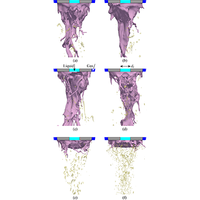
This work presents a high-fidelity three-dimensional numerical investigation of primary liquid breakup in close-coupled gas atomization (CCGA) — a configuration widely used in industrial applications but poorly understood due to strong gas recirculation and complex interfacial dynamics. Our results reveal a fundamental shift in fragmentation physics: at low-to-intermediate Weber numbers, breakup is scale-invariant and follows a power-law droplet size distribution; at high Weber number (We=360), filming dominates, leading to complete jet disintegration and a log-normal droplet size distribution indicative of characteristic-scale breakup.

Transport and Mixing

Shear versus stretching as drivers for mixing in three-dimensional porous media flows

Manuel Maeritz, Tanguy Le Borgne, Daniel R. Lester, and Joris Heyman

Phys. Rev. Fluids 11, 094501 (2026) - Published 17 September, 2026

In three-dimensional porous media, fluid deformation is asymptotically governed by exponential stretching, arising from the chaotic stretching and folding of fluid elements. However, early time deformation may be dominated by shear, induced by no-slip boundary conditions at grain surfaces, leading to linear elongation. Yet, the persistence and relative contributions of shear and stretching to fluid deformation and solute mixing remain poorly understood. Here, we address this question by quantifying the deformation of elementary Lagrangian surfaces as a function of their initial orientation with respect to streamlines in a numerical flow through body-centered cubic bead packs.

Turbulent Flows

Noise-robust temporal super-resolution of three-dimensional turbulent flow using an attention-enhanced convolutional LSTM network

Lei Dong, Dandan Xiao, Jie Yao, and Xuerui Mao

Phys. Rev. Fluids 11, 094601 (2026) - Published 10 September, 2026

Existing temporal super-resolution methods struggle to reconstruct three-dimensional turbulent flows across large time gaps, often losing coherent vortical structures and giving flow-specific performance. We introduce ResSE-LSTM, an attention-enhanced convolutional LSTM (long short-term memory) framework that recovers intermediate 3D velocity fields from two sparse snapshots and remains robust to noisy inputs. A Kolmogorov-scale temporal parameter, Π𝑡, unifies performance across Reynolds numbers. The model recovers Reynolds stresses and coherent structures up to Π𝑡 ≤ 4, versus Π𝑡 ≤ 0.8 for a CNN baseline, enabling reliable reconstruction from sparse simulations and measurements.

Circulation in free-surface turbulence: Experimental observation of the area rule and bifractality

Guotao Wu, Qi Gao, Filippo Coletti, and Yaxing Li

Phys. Rev. Fluids 11, 094602 (2026) - Published 18 September, 2026

Velocity circulation is experimentally investigated for surface flows with homogeneous turbulence in the underlying bulk. The classical area rule and bifractal inertial‑range scaling are found to remain valid, indicating a certain degree of robustness across turbulent systems of differing effective dimensionalities.

Radius-dependent looseness of the far-field Calderón-Zygmund bound in turbulent vortex stretching

Jesper Lyng Jensen

Phys. Rev. Fluids 11, 094603 (2026) - Published 21 September, 2026

To ask whether vortex stretching can blow up, mathematics must assume the worst: that distant vorticity everywhere conspires to amplify. Turbulence does not cooperate. Arriving with opposing signs, far-field contributions largely cancel — a restraint the flow imposes on itself, leaving the classical Calderón–Zygmund bound having application room that the flow never claims. This work measures that directly, and finds the restraint eases at the most violent vorticity events, precisely where amplification matters most.

Optimal surfaces for turbulent circulation statistics

L. Moriconi and R. M. Pereira

Phys. Rev. Fluids 11, 094604 (2026) - Published 22 September, 2026

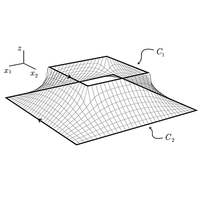
Small-sized vortices abound in turbulent flows. Their elementary circulations and density correlations work together in a capricious way to make minimal surfaces the optimal geometries for describing the statistics of turbulent circulation. The figure shows a non-simply connected minimal surface associated with the turbulent circulation fluctuations around the combined contours C1 and C2.

State-dependent Markov memory in the turbulent energy cascade

Y. Sungtaek Ju

Phys. Rev. Fluids 11, 094605 (2026) - Published 23 September, 2026

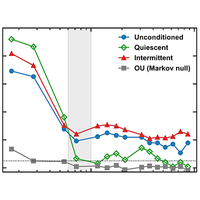
The turbulent energy cascade is widely modeled as a Markov process in scale, valid above a coherence length of about one Taylor microscale. Using direct numerical simulation results and null surrogates that are Markov by construction, the present work shows that this coherence length is state dependent: quiescent regions of the inertial range recover the canonical value, while intermittent regions require 3 to 4 times the scale separation, and the ordering reverses near the dissipation range. The Markov approximation underlying cascade Fokker-Planck and fluctuation-theorem analyses is therefore more restrictive for the intermittent component of the cascade than has generally been assumed.

Influence of turbulent entrainment on the mean flow dynamics of unsteady continuous gravity currents

M. Harrouk, B. Arcen, R. Mehaddi, and Y. Dossmann

Phys. Rev. Fluids 11, 094606 (2026) - Published 25 September, 2026

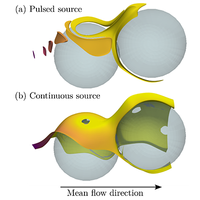
Not all parts of an unsteady continuous gravity current entrain fluid the same way. Using DNS data, we decompose the length of the current into three regions of varying entrainment dynamics, namely the hydraulic jump, the body, and the head. Therefore, the outer geometry, vertical profiles, and mean flow quantities are assessed depending on the state at the source. Ultimately, an entrainment law based on the theory of Morton, Taylor, and Turner (MTT) successfully models turbulent entrainment at the hydraulic jump.

Turbulence without the viscous tilting of vorticity

Amr Emam, Mostafa Kamal, and Perry L. Johnson

Phys. Rev. Fluids 11, 094607 (2026) - Published 28 September, 2026

While vortex stretching in turbulence is commonly understood in analogy to material line stretching, the viscous tilting of vorticity prevents sustained alignment with material lines. In this paper, it is shown via numerical simulation that the surgical removal of viscous tilting from the vorticity evolution equations in isotropic turbulence results in dramatic deviations from basic turbulence scaling laws. These observations demonstrate that the viscous tilting of vorticity, and thus the difference between vorticity stretching and that of material lines, is an essential characteristic of turbulence.

Turbulent boundary layers over high-skewness surfaces

Ioannis K. Kaminaris, Elias Balaras, and Michael P. Schultz

Phys. Rev. Fluids 11, 094608 (2026) - Published 29 September, 2026

Understanding turbulence structure over irregular, highly skewed topographies and its impact on drag is among the biggest challenges in hydrodynamics. Direct numerical simulations of zero-pressure-gradient boundary layers up to 135δ long and Reτ ≈ 4,500 over biofouling surfaces show that the boundary layer evolution and the total drag scale with the mean roughness height across multiple surfaces. Outer-layer similarity, assessed against two scalings and various blockage ratios, holds to second order. Quadrant analysis unveils similarities between smooth- and rough-wall turbulence structure, while a height-based occupancy ratio extends Schlichting’s boundary layer equations to rough walls.

Vortex Dynamics

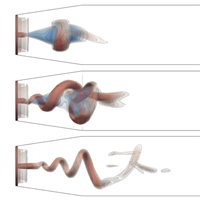
Vortex breakdown in a hydropower turbine draft tube swirling jet

Artur Gesla and Eunok Yim

Phys. Rev. Fluids 11, 094701 (2026) - Published 3 September, 2026

This study investigates the formation of the helical vortex rope in a Francis hydropower turbine by treating it as an unstable vortex breakdown mode in a simplified laminar flow. The vortex rope emerges through a supercritical Hopf bifurcation from an axisymmetric base flow in the draft tube. Without wall friction, a central recirculation zone develops, revealing subcritical solutions and hysteresis under partial-load conditions. The work describes the cyclic formation and collapse of the recirculation bubble as the helical vortex evolves. As flow approaches nominal load, the steady solution branch undergoes a transcritical bifurcation at finite Reynolds number.

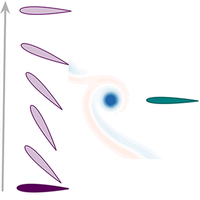
Generation of an isolated vortex gust through a heaving and pitching foil

Bingfei Yan, Eric E. Handy-Cardenas, Kenneth S. Breuer, and Jennifer A. Franck

Phys. Rev. Fluids 11, 094702 (2026) - Published 8 September, 2026

This study introduces a novel approach for generating isolated vortex gusts in both computational and experimental settings. Utilizing a symmetric airfoil undergoing simultaneous heaving and pitching, this method delivers coherent vortices while minimizing persistent wake disruption downstream. The result is a customizable approach allowing precise, systematic control over vortex strength, orientation, and position.

Boundary layer beneath a tornado-like vortex

Leven Davies, P. A. Davidson, and John K. Harvey

Phys. Rev. Fluids 11, 094703 (2026) - Published 21 September, 2026

How is the boundary layer structured beneath a tornado, the surface flow that feeds the vortex above it? Because field observations are challenging, much of what is known rests on theory. A classical asymptotic analysis predicts a composite layer: a thin viscous layer carrying the shear stress, capped by a thicker layer carrying the inward mass flux. We test this quantitatively using particle image velocimetry of a tornado-like vortex in a water tank. The measurements support the two-layer structure and expose a surprising feature within it: fluid is entrained downward at all radii, yet the inner layer still detrains mass into the outer layer.

Wave Dynamics, Free Surface Flows, Stratified, and Rotating Flows

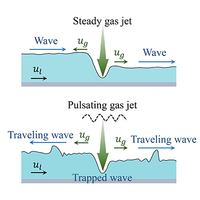
Experimental study on the free surface of liquid metal film flow under the influence of gas jet impingement

Lin-Ling Li (李临玲), Juan-Cheng Yang (阳倦成), and Ming-Jiu Ni (倪明玖)

Phys. Rev. Fluids 11, 094801 (2026) - Published 1 September, 2026

Compared with a static liquid film, gas jet impingement on a flowing liquid metal film produces a shallower cavity and a strongly asymmetric profile through upstream liquid accumulation. Counter-current coupling upstream and co-current coupling downstream cause the wave-amplitude response to jet momentum to weaken upstream but strengthen downstream as the liquid Reynolds number increases. Under pulsating jets, an attenuation coefficient correlates wave amplitude with jet momentum and characterizes a pronounced spatial asymmetry in momentum transfer. These findings clarify how gas jets influence the liquid metal film flow and provide a reference for the design of liquid metal divertors.

Methods: New Experiments, Algorithms, and Theory (NEAT)

Hidden in plain sight: How evaporation impacts the pendant drop method

Pim J. Dekker, Christian Diddens, Marjolein N. van der Linden, and Detlef Lohse

Phys. Rev. Fluids 11, 094901 (2026) - Published 3 September, 2026

Surface tension is frequently measured with the pendant drop method, while the ambient humidity is usually an afterthought. With carefully calibrated experiments and detailed numerical simulations, we show that evaporative cooling lowers the drop temperature by up to 9.5 K which in turn raises the measured surface tension by more than 1 mN/m. Evaporation-driven and Marangoni-induced flows additionally deform the drop, but only marginally. A passive humidity control removes these artifacts entirely and reveals the shallow minimum in the surface tension of aqueous 1,2-hexanediol mixtures.

Capturing multiscale interactions in fluid flow via Lagrangian coherent structures and modal analysis

Morgan R. Jones, Charles J. Klewicki, Oliver Khan, Steven L. Brunton, and Mitul Luhar

Phys. Rev. Fluids 11, 094902 (2026) - Published 11 September, 2026

What if we could learn not just which mode structures dominate a flow, but how they actually drive fluid-particle transport? This paper bridges Eulerian modal analysis and Lagrangian coherent structures by introducing modal-trajectory uncertainty, a sensitivity-based framework that reveals where specific modes influence particle trajectories and finite-time Lyapunov exponent (FTLE) structures. Across cylinder wakes, an oscillating-foil wake, and turbulent channel flow, the approach reveals interactions spanning vortex shedding, shear-layer instabilities, and large-scale turbulent motions.

Bayesian experimental design for nonequilibrium gas phase chemistry models

Agnivo Ghosh and Anabel del Val

Phys. Rev. Fluids 11, 094903 (2026) - Published 21 September, 2026

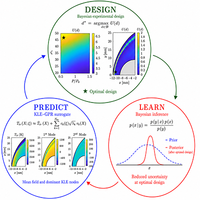
Experimental validation of hypersonic chemistry models is costly, making it important to extract as much information as possible from each test. We develop a Bayesian experimental design framework that identifies the conditions and measurement locations expected to most effectively reduce uncertainty in model parameters. Coupled with reduced-order surrogates for high-dimensional flow data, the approach provides a systematic way to plan targeted, information-rich validation experiments for thermochemical nonequilibrium models.

Sign In to Your Journals Account

Filter

Filter

Article Lookup

Enter a citation