Recent Articles

Publisher's Note: Angular velocity of a spheroid log rolling in a simple shear at small Reynolds number [Phys. Rev. Fluids 1, 084203 (2016)]

J. Meibohm, F. Candelier, T. Rosén, J. Einarsson, F. Lundell, and B. Mehlig

Phys. Rev. Fluids 2, 019901 (2017) - Published 10 January, 2017

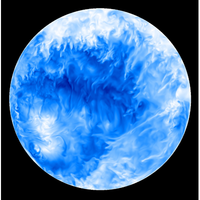
Impact of trailing edge shape on the wake and propulsive performance of pitching panels

T. Van Buren, D. Floryan, D. Brunner, U. Senturk, and A. J. Smits

Phys. Rev. Fluids 2, 014702 (2017) - Published 9 January, 2017

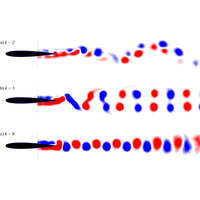
The effects of trailing-edge shape on the wake and propulsive performance of a pitching panel are examined. Concave trailing edges delay the natural vortex bending and compression of the wake, whereas convex trailing edges promote wake compression. The trailing edge alters performance significantly.

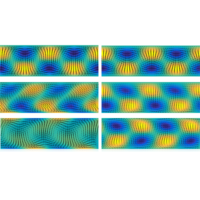
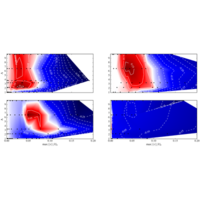
Stability of the flow in a plane microchannel with one or two superhydrophobic walls

Jan O. Pralits, Edoardo Alinovi, and Alessandro Bottaro

Phys. Rev. Fluids 2, 013901 (2017) - Published 6 January, 2017

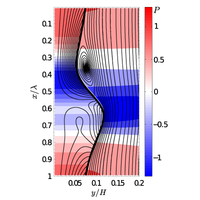
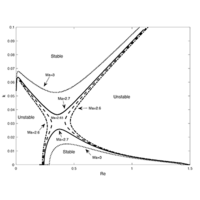
A modal and nonmodal linear stability analysis of the flow in a microchannel coated with a superhydrophobic material, with a surface topography of arbitrarily aligned microridges, is presented. A new wall-vortex instability is revealed when the ridges are sufficiently inclined with respect to the mean pressure gradient.

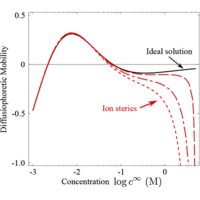
Influence of ion sterics on diffusiophoresis and electrophoresis in concentrated electrolytes

Robert F. Stout and Aditya S. Khair

Phys. Rev. Fluids 2, 014201 (2017) - Published 6 January, 2017

It is typically presumed that the phoretic motion of particles vanishes at large electrolyte concentration. A new study shows that while this is true for electrophoresis, the diffusiophoretic mobility increases dramatically due to a gradient of steric repulsion between finite-sized ions.

Eddy diffusivities of inertial particles in random Gaussian flows

S. Boi, A. Mazzino, and P. Muratore-Ginanneschi

Phys. Rev. Fluids 2, 014602 (2017) - Published 6 January, 2017

Analytic expressions are derived for the eddy diffusivities for generic Stokes times that are exact for shear.

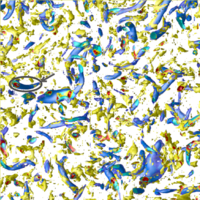
Topological features and properties associated with development/decay of vortices in isotropic homogeneous turbulence

K. Nakayama

Phys. Rev. Fluids 2, 014701 (2017) - Published 6 January, 2017

A theoretical study elucidates the characteristics of the local flow geometry of vortices in an isotropic homogeneous decaying turbulence, using swirlity, sourcity, and the vortical flow symmetry quantity.

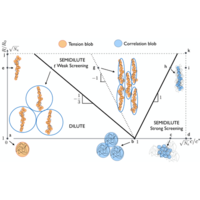
Effect of stretching-induced changes in hydrodynamic screening on coil-stretch hysteresis of unentangled polymer solutions

Ranganathan Prabhakar, Chandi Sasmal, Duc At Nguyen, Tam Sridhar, and J. Ravi Prakash

Phys. Rev. Fluids 2, 011301(R) (2017) - Published 5 January, 2017

Extensional rheometry and Brownian dynamics simulations of flexible polymer solutions demonstrate that chain stretching strengthens intermolecular hydrodynamic screening in dilute solutions, but weakens it in semidilute solutions.

Ultraefficient reduced model for countercurrent two-layer flows

Gianluca Lavalle, Jean-Paul Vila, Mathieu Lucquiaud, and Prashant Valluri

Phys. Rev. Fluids 2, 014001 (2017) - Published 5 January, 2017

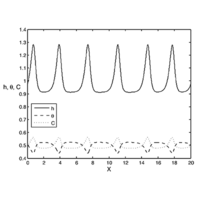
A reduced two-phase model suitable for industrial uptake is introduced to predict the onset of flow reversal in falling films under countercurrent flow. Analysis of spatiotemporal stability and wave topology shows that vortex distribution plays a crucial role in the incipience of flow reversal.

Anisotropic character of low-order turbulent flow descriptions through the proper orthogonal decomposition

Nicholas Hamilton, Murat Tutkun, and Raúl Bayoán Cal

Phys. Rev. Fluids 2, 014601 (2017) - Published 5 January, 2017

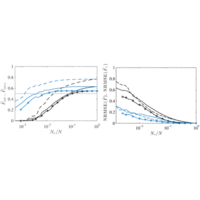
Dependence of turbulence anisotropy on low-order flow descriptions via the proper orthogonal mode basis is detailed for example cases. Truncation based on a fixed level of anisotropy divides the basis into anisotropic and isotropic contributions. Residual error is reduced by a constant correction factor.

Effect of pivot location and passive heave on propulsion from a pitching airfoil

A. W. Mackowski and C. H. K. Williamson

Phys. Rev. Fluids 2, 013101 (2017) - Published 4 January, 2017

What would it take to have an underwater vehicle propel itself like a fish or whale? Using a simplified model—an airfoil that pivots back and forth around some axis to produce thrust—the effect on propulsion when the axis of rotation is changed and when springs (passive dynamics) are added to such a system is investigated.

Quasilaminar regime in the linear response of a turbulent flow to wall waviness

Paolo Luchini and François Charru

Phys. Rev. Fluids 2, 012601(R) (2017) - Published 3 January, 2017

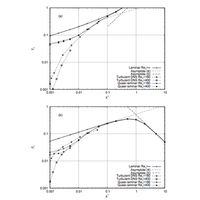
The linear response of near-wall turbulence to small-amplitude wall roughness is analyzed. The spectral region where the response is largest is found to be amenable to a simplified quasilaminar analysis.

Thermosolutal Marangoni effects on the inclined flow of a binary liquid with variable density. I. Linear stability analysis

J. P. Pascal and S. J. D. D'Alessio

Phys. Rev. Fluids 1, 083603 (2016) - Published 30 December, 2016

A linear stability analysis is conducted on the inclined flow of heated binary liquid mixtures. The variation in the density of the liquid with temperature and solutal concentration is found to augment the Marangoni and Soret effects and have a significant impact on interfacial instability.

Thermosolutal Marangoni effects on the inclined flow of a binary liquid with variable density. II. Nonlinear analysis and simulations

S. J. D. D'Alessio and J. P. Pascal

Phys. Rev. Fluids 1, 083604 (2016) - Published 30 December, 2016

A weighted residual model is developed and implemented to carry out a nonlinear stability analysis of the gravity-driven flow of heated binary liquids with variable mass density.

Heat transfer and wall temperature effects in shock wave turbulent boundary layer interactions

M. Bernardini, I. Asproulias, J. Larsson, S. Pirozzoli, and F. Grasso

Phys. Rev. Fluids 1, 084403 (2016) - Published 30 December, 2016

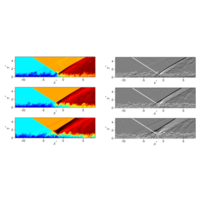
Direct numerical simulations reveal that the wall temperature has a strong effect on shock-wave/turbulent boundary layer interactions.

Effect of particle injection on heat transfer in rotating Rayleigh-Bénard convection

Pranav Joshi, Hadi Rajaei, Rudie P. J. Kunnen, and Herman J. H. Clercx

Phys. Rev. Fluids 1, 084301 (2016) - Published 29 December, 2016

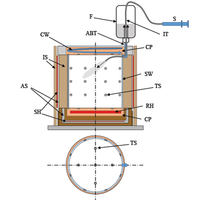
An experimental study of rotating Rayleigh-Benard convection investigates the role of the thermal boundary conditions.

Transitional boundary layers in low-Prandtl-number convection

Jörg Schumacher, Vinodh Bandaru, Ambrish Pandey, and Janet D. Scheel

Phys. Rev. Fluids 1, 084402 (2016) - Published 29 December, 2016

Thermal and viscous boundary layers in a series of turbulent convection flows at a very low Prandtl number are analyzed. After the removal of the large-scale motion, a Rayleigh number beyond which the viscous boundary layer will become fully turbulent is predicted.

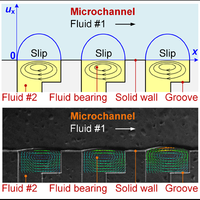
“Fluid bearing” effect of enclosed liquids in grooves on drag reduction in microchannels

Haosheng Chen, Yang Gao, Howard A. Stone, and Jiang Li

Phys. Rev. Fluids 1, 083904 (2016) - Published 28 December, 2016

Vortical structures form in an enclosed fluid within transverse grooves along a laminar flow in a microchannel, and act as fluid bearings on the boundary for lubrication. The fluid bearings generated from low-viscosity fluids can be used to transport high-viscosity fluids for drag reduction.

Potential singularity mechanism for the Euler equations

Michael P. Brenner, Sahand Hormoz, and Alain Pumir

Phys. Rev. Fluids 1, 084503 (2016) - Published 28 December, 2016

Could velocity fields form infinite gradients in high Reynolds number flows? A proposed iterative mechanism, which involves transformation of vortex tubes to sheets and back to tubes, is analyzed using elementary fluid mechanics.

Reynolds number dependence of large-scale friction control in turbulent channel flow

Jacopo Canton, Ramis Örlü, Cheng Chin, and Philipp Schlatter

Phys. Rev. Fluids 1, 081501(R) (2016) - Published 27 December, 2016

New direct numerical simulations find that the control strategy of Schoppa and Hussain fails to deliver drag reduction due to a failure to penetrate the near-wall region.

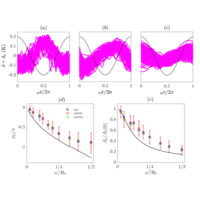
Dynamical and statistical phenomena of circulation and heat transfer in periodically forced rotating turbulent Rayleigh-Bénard convection

Sebastian Sterl, Hui-Min Li, and Jin-Qiang Zhong

Phys. Rev. Fluids 1, 084401 (2016) - Published 27 December, 2016

Laboratory experiments and a theoretical model shed light on the dynamical phenomena observed in turbulent Rayleigh-Bénard convection with modulated rotations, including phase lags in convection roll movement and nonlinear amplitude responses of the circulation strength.

Sign In to Your Journals Account

Filter

Recent Issues

Vol. 11, Iss. 11
November 2026
Vol. 11, Iss. 10
October 2026
Vol. 11, Iss. 9
September 2026
Vol. 11, Iss. 8
August 2026
Category
Article Type
Section

Filter

Article Lookup

Enter a citation