Recent Articles

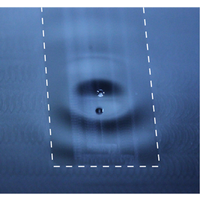
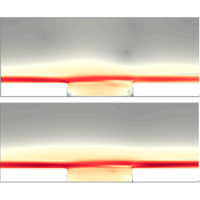
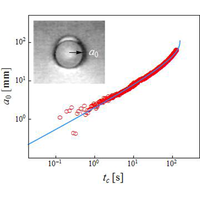
Wetting dynamics of a collapsing fluid hole

J. B. Bostwick, J. A. Dijksman, and M. Shearer

Phys. Rev. Fluids 2, 014006 (2017) - Published 26 January, 2017

The collapse dynamics of an axisymmetric fluid cavity that wets the bottom of a rotating bucket is studied. The model captures the effect of capillary, gravitational, and centrifugal forces on this converging contact-line flow. Predictions for the collapse time appear as a power law whose exponent compares favorably to experiment.

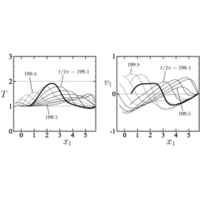
Fluid transport and mixing by an unsteady microswimmer

Peter Mueller and Jean-Luc Thiffeault

Phys. Rev. Fluids 2, 013103 (2017) - Published 25 January, 2017

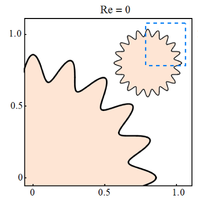
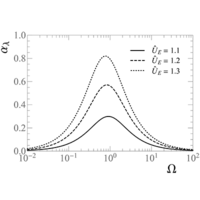
Swimming at low Reynolds numbers typically requires time-periodic motion that breaks time-reversal symmetry, creating an actual unsteady velocity field around swimming microorganisms. A study of the effect of “unsteadiness” on enhanced diffusivity and tracer displacement statistics takes a step further in considering and modeling realistic microorganisms.

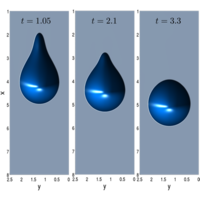
Interaction between a large buoyant bubble and turbulence

Aurore Loisy and Aurore Naso

Phys. Rev. Fluids 2, 014606 (2017) - Published 25 January, 2017

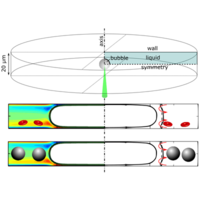
Direct numerical simulations are conducted to investigate the free rise of isolated, large, deformable bubbles in otherwise homogeneous and isotropic turbulence. The key features of the bubbles’ Lagrangian statistics and of the flow sampled by them are presented.

Unsteady motion of a slightly rarefied gas caused by a plate oscillating in its normal direction

Kazuo Aoki, Shingo Kosuge, Taiga Fujiwara, and Thierry Goudon

Phys. Rev. Fluids 2, 013402 (2017) - Published 24 January, 2017

Unsteady motion of a slightly rarefied gas between two parallel plates—caused when one of the plates starts a harmonic oscillation in its normal direction—is analyzed numerically using the compressible Navier-Stokes equations and the correct temperature-jump boundary condition.

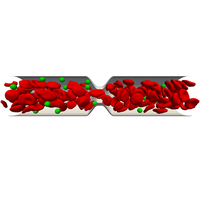
Clustering of microscopic particles in constricted blood flow

Christian Bächer, Lukas Schrack, and Stephan Gekle

Phys. Rev. Fluids 2, 013102 (2017) - Published 23 January, 2017

Microparticles flowing through a constricted blood vessel (stenosis) tend to form clusters while red blood cells pass the constriction unhindered. New simulations explain that this striking difference is caused by an interplay between margination and the stenosed geometry.

Droplet wetting transitions on inclined substrates in the presence of external shear and substrate permeability

Leonardo Espín and Satish Kumar

Phys. Rev. Fluids 2, 014004 (2017) - Published 23 January, 2017

A lubrication-theory-based model of gravity-driven droplet motion on inclined substrates predicts that external shear can either suppress or drive wetting transitions depending on its direction, whereas substrate permeability generally suppresses wetting transitions.

Spray formation in a quasiplanar gas-liquid mixing layer at moderate density ratios: A numerical closeup

Yue Ling, Daniel Fuster, Stéphane Zaleski, and Grétar Tryggvason

Phys. Rev. Fluids 2, 014005 (2017) - Published 23 January, 2017

Direct numerical simulations of spray formation in a gas-liquid mixing layer obtain a high-fidelity numerical closeup of the detailed mechanisms of spray formation.

Lubricated wrinkles: Imposed constraints affect the dynamics of wrinkle coarsening

Ousmane Kodio, Ian M. Griffiths, and Dominic Vella

Phys. Rev. Fluids 2, 014202 (2017) - Published 23 January, 2017

A new study on the interaction between a thin elastic plate and a lubricated liquid layer under a constant end-end displacement shows that the dynamics are affected by the imposed constraints.

Shearing flow from transient bubble oscillations in narrow gaps

Milad Mohammadzadeh, Fenfang Li, and Claus-Dieter Ohl

Phys. Rev. Fluids 2, 014301 (2017) - Published 23 January, 2017

Cavitation bubbles in microfluidic gaps can generate strong shear stress and impulsively deform soft objects nearby, such as biological cells. A computational fluid dynamics model allows scientists to analyze the important flow features and explain the strong dependency of deformation on the shape of the objects.

Non-Markovian closure models for large eddy simulations using the Mori-Zwanzig formalism

Eric J. Parish and Karthik Duraisamy

Phys. Rev. Fluids 2, 014604 (2017) - Published 23 January, 2017

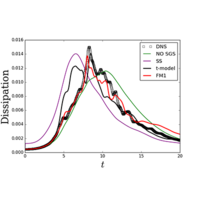
The Mori-Zwanzig formalism, a concept originating from statistical mechanics, is used to develop non-Markovian subgrid scale models. The form of the closure is imposed by the mathematics of the coarse-graining procedure and is shown to yield accurate predictions in a range of turbulent flows.

Analysis of geometrical and statistical features of Lagrangian stretching in turbulent channel flow using a database task-parallel particle tracking algorithm

Perry L. Johnson, Stephen S. Hamilton, Randal Burns, and Charles Meneveau

Phys. Rev. Fluids 2, 014605 (2017) - Published 23 January, 2017

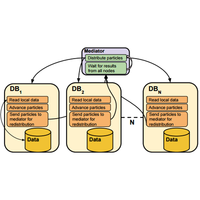
A careful, thorough, theoretical study of turbulent stretching behaviors in confined flow is presented.

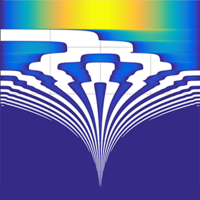
Inertia-induced dendriticlike patterns in lifting Hele-Shaw flows

Pedro H. A. Anjos, Eduardo O. Dias, and José A. Miranda

Phys. Rev. Fluids 2, 014003 (2017) - Published 20 January, 2017

A theoretical analysis of inertial effects in viscous fingering instabilities in a lifting Hele-Shaw cell provides a physical explanation for the dendriticlike patterns observed in experiments where large lifting speeds are used. A generalized Darcy’s law description and a perturbative mode-coupling theory are used to properly account for inertial effects, verifying that inertia induces a mechanism for finger side-branching formation and favors the intensification of finger competition events.

Duality principle from rarefied to dense gas and extended thermodynamics with six fields

Takashi Arima, Tommaso Ruggeri, and Masaru Sugiyama

Phys. Rev. Fluids 2, 013401 (2017) - Published 19 January, 2017

An extended thermodynamics theory of dissipative dense gases, based on six fields, for those flows where viscous stresses and heat transfer are negligible is presented.

Spectral analysis of near-wall turbulence in channel flow at Reτ=4200 with emphasis on the attached-eddy hypothesis

Lionel Agostini and Michael Leschziner

Phys. Rev. Fluids 2, 014603 (2017) - Published 18 January, 2017

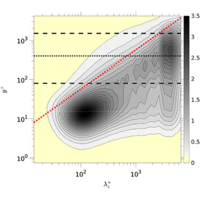
Results from a large direct numerical simulation of channel flow with a friction Reynolds number of 4200 are used to examine the structural and spectral properties of near-wall turbulence.

Detailed hydrodynamic characterization of harmonically excited falling-film flows: A combined experimental and computational study

Alexandros Charogiannis, Fabian Denner, Berend G. M. van Wachem, Serafim Kalliadasis, and Christos N. Markides

Phys. Rev. Fluids 2, 014002 (2017) - Published 17 January, 2017

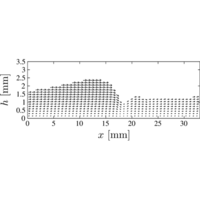
Planar laser-induced fluorescence is applied simultaneously with particle image/tracking velocimetry and complemented by direct numerical simulations, towards the detailed hydrodynamic characterization of harmonically excited liquid-film flows falling under the action of gravity.

Electrohydrodynamic Quincke rotation of a prolate ellipsoid

Quentin Brosseau, Gregory Hickey, and Petia M. Vlahovska

Phys. Rev. Fluids 2, 014101 (2017) - Published 17 January, 2017

An experimental study of the effect of shape on the Quincke phenomenon is presented.

Relative role of convective and diffusive mixing in the miscible Rayleigh-Taylor instability in porous media

S. S. Gopalakrishnan, J. Carballido-Landeira, A. De Wit, and B. Knaepen

Phys. Rev. Fluids 2, 012501(R) (2017) - Published 13 January, 2017

Experimental and numerical studies of fingers of Rayleigh-Taylor instabilities in a porous medium find that convection dominates near the tips of the fingers but that lateral diffusion can dominate away from the tips.

Walking droplets in linear channels

Boris Filoux, Maxime Hubert, Peter Schlagheck, and Nicolas Vandewalle

Phys. Rev. Fluids 2, 013601 (2017) - Published 12 January, 2017

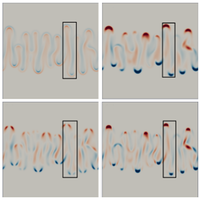
An investigation shows that confinement of a walking droplet above a rectangular cavity is possible thanks to the Faraday wavefield, overdamped outside the cavity.

Equilibrium energy spectrum of point vortex motion with remarks on ensemble choice and ergodicity

J. G. Esler

Phys. Rev. Fluids 2, 014703 (2017) - Published 11 January, 2017

The equilibrium energy spectrum of the point vortex system is shown to be predictable as a function of the vortex interaction (Hamiltonian) energy.

Frequency selection mechanisms in the flow of a laminar boundary layer over a shallow cavity

Ubaid Ali Qadri and Peter J. Schmid

Phys. Rev. Fluids 2, 013902 (2017) - Published 10 January, 2017
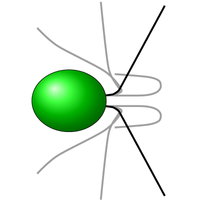
A theoretical study identifies the regions that are influential in the amplification of disturbance kinetic energy by harmonic forcing of the flow over shallow cavities.

Sign In to Your Journals Account

Filter

Recent Issues

Vol. 11, Iss. 11
November 2026
Vol. 11, Iss. 10
October 2026
Vol. 11, Iss. 9
September 2026
Vol. 11, Iss. 8
August 2026
Category
Article Type
Section

Filter

Article Lookup

Enter a citation